If you have spent any time reading Aruba trip reports, you have probably run into a comment warning that the wind "never stops" or "ruins the beach." Take a breath. We live here, and the wind is one of the best things about this island, not a reason to second-guess a booking. Here is the honest answer, the real seasonal pattern, and exactly how to plan around it so a breezy afternoon never costs you a beach day.
So, is Aruba windy? Yes, almost every day
Aruba sits inside the steady belt of the northeast trade winds, and that means a genuine, near-constant breeze moves across the island on close to every day of the year. This is not a storm system and it is not unusual weather. It is simply the island's climate, the same steady airflow that has shaped Aruba for as long as anyone can remember.
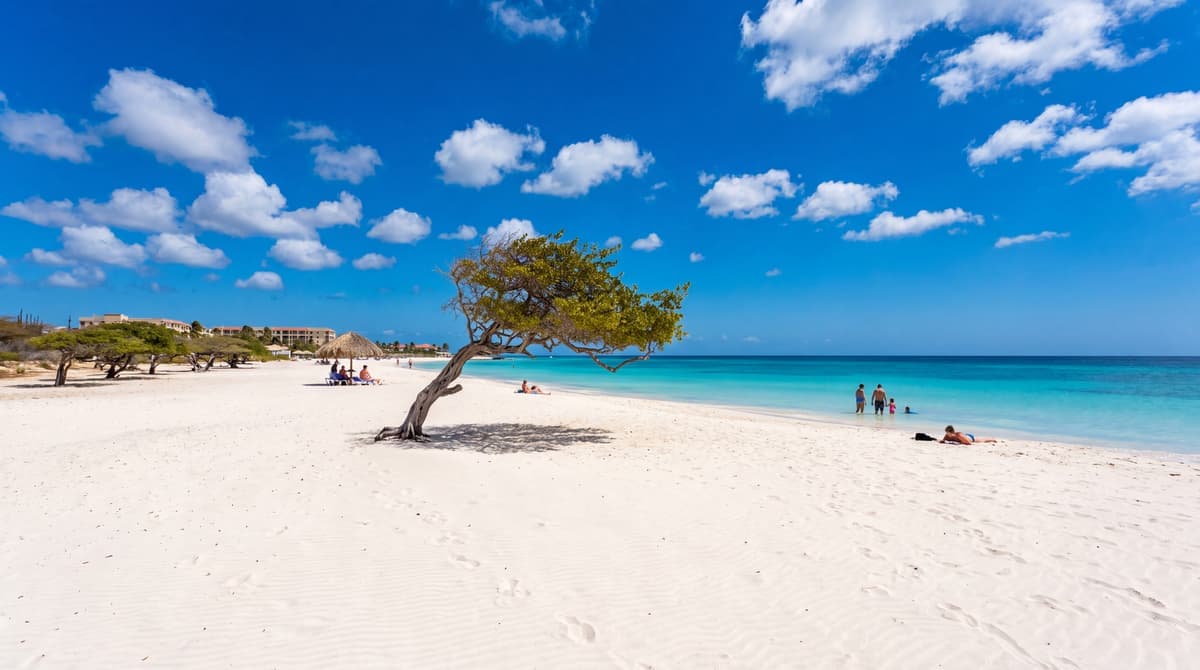
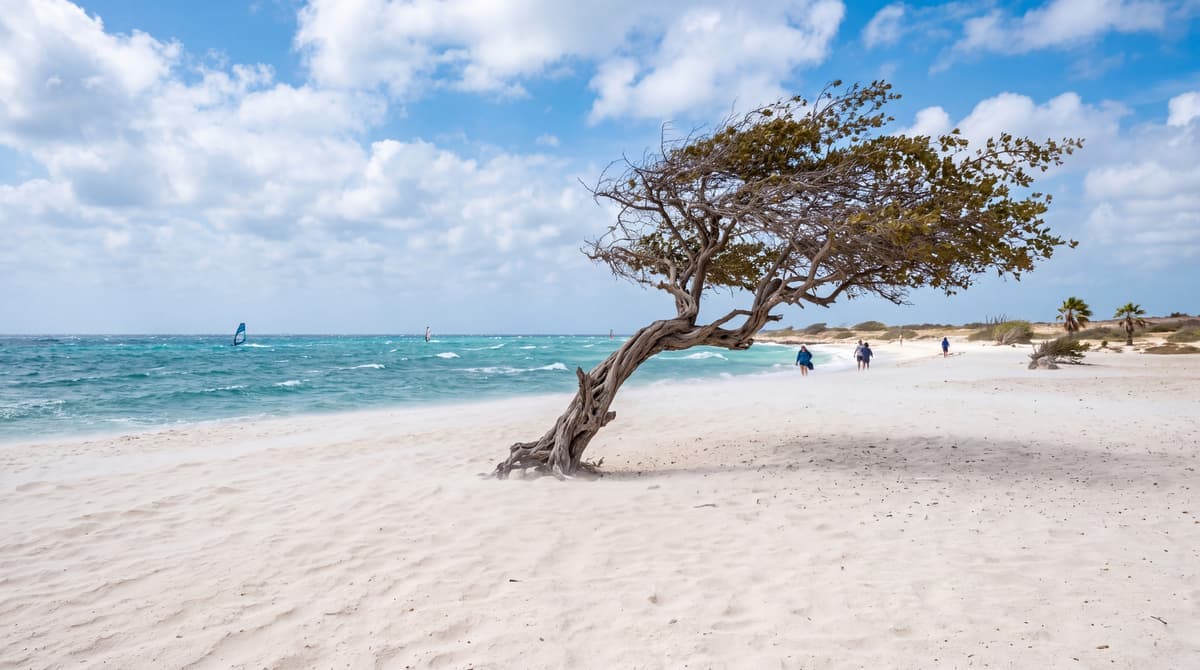
The clearest proof of just how constant it is stands right on the coastline: Aruba's divi-divi trees grow permanently bent and leaning toward the southwest, sculpted that way over years by the same relentless northeast wind. Locals have historically used the divi-divi as a natural compass, and it remains one of the most photographed sights on the island for exactly that reason, a living record of how steady the wind really is.
Typical sustained wind speeds run roughly 15 to 22 mph (about 13 to 19 knots) depending on the season, with gusts reaching into the low 30s mph on the breeziest days. Treat those as typical climate averages rather than a guarantee for any single afternoon, since any given day can run calmer or gustier than the norm.
Browse 32 vetted Aruba experiences
Most confirm instantly with free cancellation up to 24h, and 4 of them are free.
The seasonal pattern a lot of sites get wrong
Here is where the confusion usually starts. A lot of advice frames it as "windy in spring, calm the rest of the year." That is not quite right, and it is worth getting the real pattern straight before you pick your dates.
Aruba is breezy for most of the year, winter included. Winter (December through February) stays close to the island's normal breezy baseline rather than turning genuinely calm. The windiest stretch actually runs from late spring into summer, with June the single windiest month on average, part of a broader peak that spans roughly May through July, when monthly averages climb to around 20 to 21 mph.
There really is only one true lull, and it is worth knowing exactly when it falls: roughly September through November, when monthly averages drop to around 15 to 16 mph. October is the calmest month of the year on average.
If you are reading this in August 2026, that calm window is just about to open. September through November is the gentlest stretch of trade winds all year, still enough breeze to keep the island comfortable, just noticeably less of it than the rest of the calendar. If your dates have any flexibility, that roughly ten-to-twelve-week window is worth building a trip around. Our best time to visit Aruba guide lines up that calmer stretch against rain, crowds, and pricing so you can see the full picture before you book.
Which beaches actually feel the wind
This is the single most useful thing to know, because it solves most of the "will it be too windy" worry on its own. Aruba's wind hits the two coasts very differently.
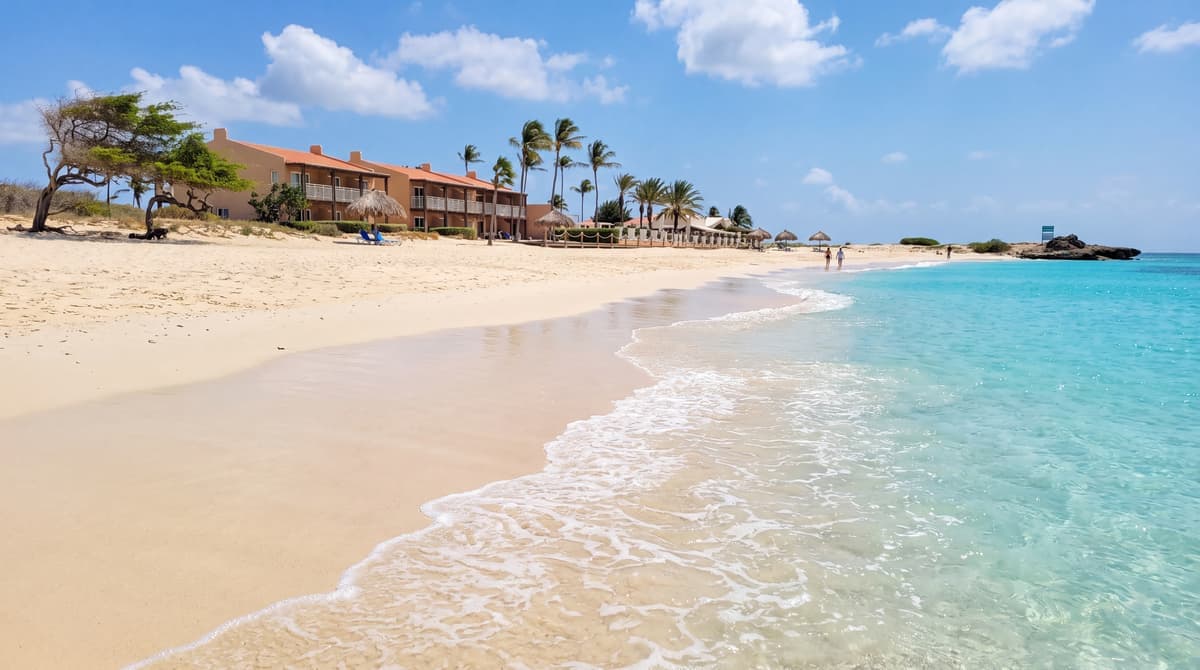
The west and south coast is the leeward side, sheltered by the island's own landmass from the direct trade wind, and it is exactly where the classic postcard beaches sit: Eagle Beach, Palm Beach, Baby Beach, Manchebo, and Druif. These stay calm and protected, built for swimming, floating, and easy lounging, even on a day the wind is doing its usual thing everywhere else. Our beaches guide runs down every one of them, and the Eagle Beach, Palm Beach, and Baby Beach pages each go deeper on what a normal day feels like at that specific stretch of sand.
The east and north coast is the windward side, facing the open Atlantic directly, and it shows. Spots like Boca Grandi and the Atlantic coves around Andicuri and Dos Playa catch real surf, stronger current, and more consistent breeze, dramatic and absolutely worth a visit, just not built for a casual swim the way the leeward beaches are.
Even within a single beach, the wind is not perfectly even. It is commonly reported that along Palm Beach specifically, the more open northern stretch catches noticeably more breeze than the sheltered southern end, so a short walk down the sand can genuinely change how calm your afternoon feels.
What to adjust on a gusty day
Most days on the leeward beaches, the wind is simply pleasant, the kind of steady breeze that keeps you from ever feeling overheated. But on a day that runs breezier than usual, a few small habits help. Skip the flimsy beach umbrella and loosely draped towels, or anchor them well; a light beach skirt or wrap behaves a lot better than a floppy hat that keeps lifting off. If you had your heart set on a more exposed spot and the day turns out gustier than expected, the sheltered leeward beaches above are the easy backup, along with a palapa or any spot tucked in the lee of a dune or building.
Boat days deserve one honest note too. Catamaran sails and sunset cruises are, by nature, a little breezy and occasionally choppier on a windier afternoon, but the overwhelming majority of trips run just fine, and plenty of travelers find the breeze part of the fun rather than a downside. Operators may adjust a route or timing on an unusually strong day, so if you are weighing a sunset catamaran cruise or comparing snorkel cruise options, it is a reasonable habit to glance at the week's conditions before you go, not something to stress over.
The upside nobody mentions enough
Here is the part that gets buried under all the anxious forum threads: the wind is doing you a favor. Many locals and visitors find that the constant breeze acts like natural air conditioning, cutting how hot and humid the island feels compared to the raw temperature, and it is commonly credited with keeping mosquitoes down, a genuine perk on a Caribbean island.
The wind also makes Aruba a real, established destination for windsurfing and kitesurfing, not an occasional one. Fisherman's Huts (also known as Hadicurari), right near Palm Beach, and Boca Grandi on the windward side are the two named spots riders travel here specifically for. The island hosts the Aruba Hi-Winds event every year in mid-May (the 2026 edition ran May 13 to 18), the annual gathering built around this exact wind, already behind us for the year but worth knowing about if a windsurfing-focused trip is on next season's radar. Our kitesurfing guide covers where and how to try it, and lessons and gear are bookable through our activities page.
Want a local to plan the whole trip?
Our concierge builds your days around what you actually want, from $149. Real people who live in Aruba.
One more honest note: sargassum and the wind
If warnings about seaweed washing up in Aruba have also crossed your feed, the wind connects to that too, in a reassuring way. Aruba sits well outside the main Atlantic Sargassum Belt, so seaweed reaching the island at all is genuinely rare, and when it does show up, the same trade winds that blow across the island push it toward the windward east coast, not the leeward beaches where you will actually be swimming. Our sargassum guide covers the full picture if you want more detail before you go.
The honest verdict
Aruba is windy, close to every day of the year, and that is simply the island's climate, not a defect to plan around with dread. It keeps the beaches comfortable, the bugs scarce, and it built an entire watersport culture most Caribbean islands cannot touch. Pick the leeward west or south coast for a calm, classic swim day, expect the windward side to run rougher and more dramatic, and if your dates are flexible, September through November is the real calm season, already underway as you read this. Plan around the coast rather than worrying about the calendar, and the wind stops being a concern and becomes one of the better parts of an Aruba trip. When you are ready to build the rest of the week, our trip planning hub can help you sort it around whichever beach, and whichever breeze, you actually want.