If you are pricing out a summer Aruba trip and stopping yourself because of hurricane season, you are not alone. It is the single most common reason US travelers talk themselves out of visiting between June and November, and it is almost entirely based on a geographic misunderstanding. We explain this to visitors regularly. Here is the full picture.
Where Aruba sits on the map
Aruba lies at roughly 12 degrees north latitude, about 15 miles off the northwest coast of Venezuela. That position places it well south of the main Atlantic hurricane development track, which runs through the Lesser Antilles island arc (Barbados, Saint Lucia, Martinique, Dominica) before curving northwest toward Puerto Rico and the US Virgin Islands. Most Atlantic storms develop in the warm ocean between 15 and 25 degrees north and follow that arc toward the Caribbean's more exposed islands.
Aruba sits three to five degrees south of where most storms form and intensify. The island also belongs to the ABC group alongside Bonaire and Curacao, a cluster of islands hugging the Venezuelan coast where the atmosphere near the continental landmass consistently weakens tropical systems before they can reach full strength.
Want a local to plan the whole trip?
Our concierge builds your days around what you actually want, from $149. Real people who live in Aruba.
What the historical record actually shows
Here is the most clarifying fact about Aruba and hurricanes: in the entire Atlantic hurricane database that NOAA has maintained back to 1851, no storm has ever made a direct hit on Aruba.
The closest brush in modern memory was Hurricane Felix in September 2007, which tracked north of the island and produced some rough surf and elevated wind but no significant damage or injuries. Felix went on to devastate parts of Nicaragua as a Category 5 storm, while Aruba came through essentially untouched.
Compare that to islands inside the main hurricane corridor. Saint Martin, Puerto Rico, Barbuda, the Bahamas, and parts of the Dominican Republic have all been directly struck and badly damaged in the past decade alone. The difference is not luck, it is geography.
We will not promise a weather guarantee, because no point on Earth can offer that. A slow-moving system in an unusual year could still produce elevated rain and rough seas near Aruba. What the record shows is that the probability of a storm meaningfully disrupting an Aruba trip during hurricane season is far lower than the same risk in Florida, Cancun, or the Punta Cana area. For a direct comparison, see our Aruba vs Punta Cana guide.
What the US government says
The U.S. Department of State rates Aruba at Level 1 ("Exercise Normal Precautions"), the lowest possible advisory tier, year-round including hurricane season. That puts Aruba in the same category as Canada, Japan, and most of Northern Europe. You can verify the current advisory at travel.state.gov before any trip.
What summer actually looks like on the ground
The experience of being on Aruba in July or August is not dramatically different from January. Here is the honest comparison.
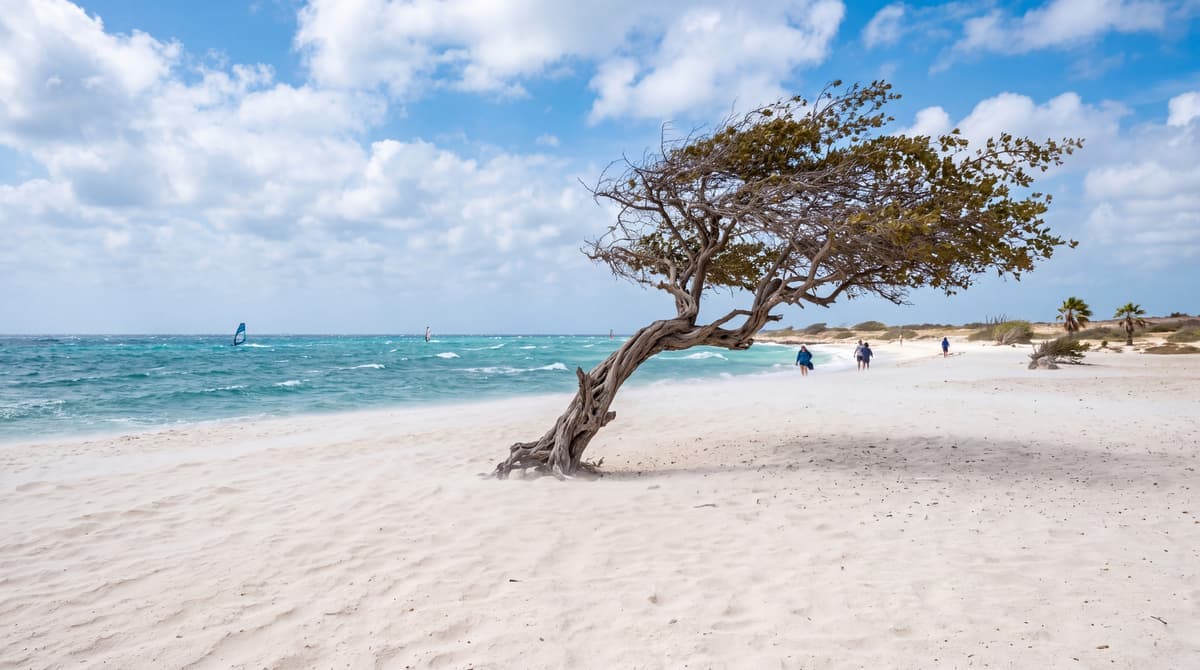
Daytime highs in summer sit around 88 to 92 degrees, a few degrees warmer than the peak-season average near 82 to 85 degrees. The constant trade winds that make Aruba feel cooler than its temperature suggests blow at roughly 15 to 25 mph year-round and continue through summer. Stand on Eagle Beach in July and you feel the same steady breeze as in February. The air rarely feels stagnant.
Rainfall is marginally higher in late summer into early fall, but Aruba is one of the driest islands in the entire Caribbean. July averages about 1 inch of rain for the whole month, compared to around 0.5 inches in February. That difference almost always shows up as a quick overnight squall that clears before breakfast, not as the gray, persistent rain you might get in Cancun or Barbados during the same months.
The sea temperature in summer sits at around 84 to 86 degrees, warm and clear, and visibility at the Antilla shipwreck and around Boca Catalina stays consistently good through the summer months. Snorkeling conditions are as good in July as they are in peak season.
Why summer is worth a harder look
The fear keeping most travelers away from summer Aruba is exactly what makes it a better trip for those who go.
Hotel rates drop roughly 30 to 40 percent from the December through April peak. A Palm Beach resort room that lists at $450 in February often runs $270 to $320 in July for the exact same category. Rental cars and several tours follow a similar downward curve in the low season. For a full price breakdown, see our Aruba vacation cost guide.
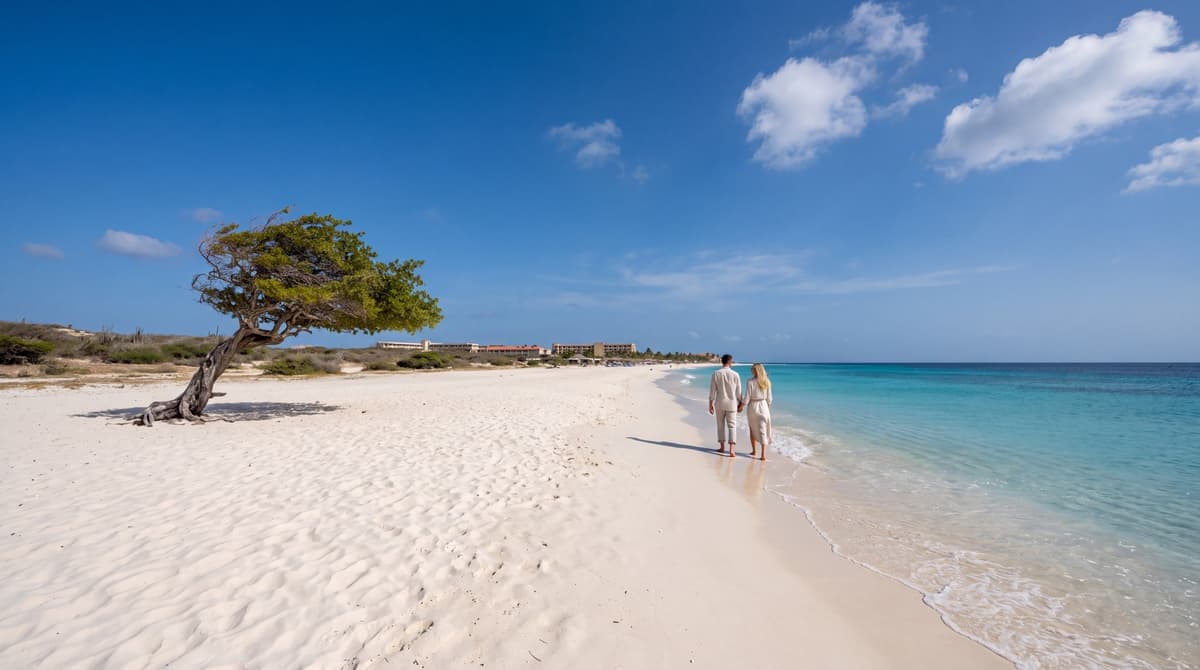
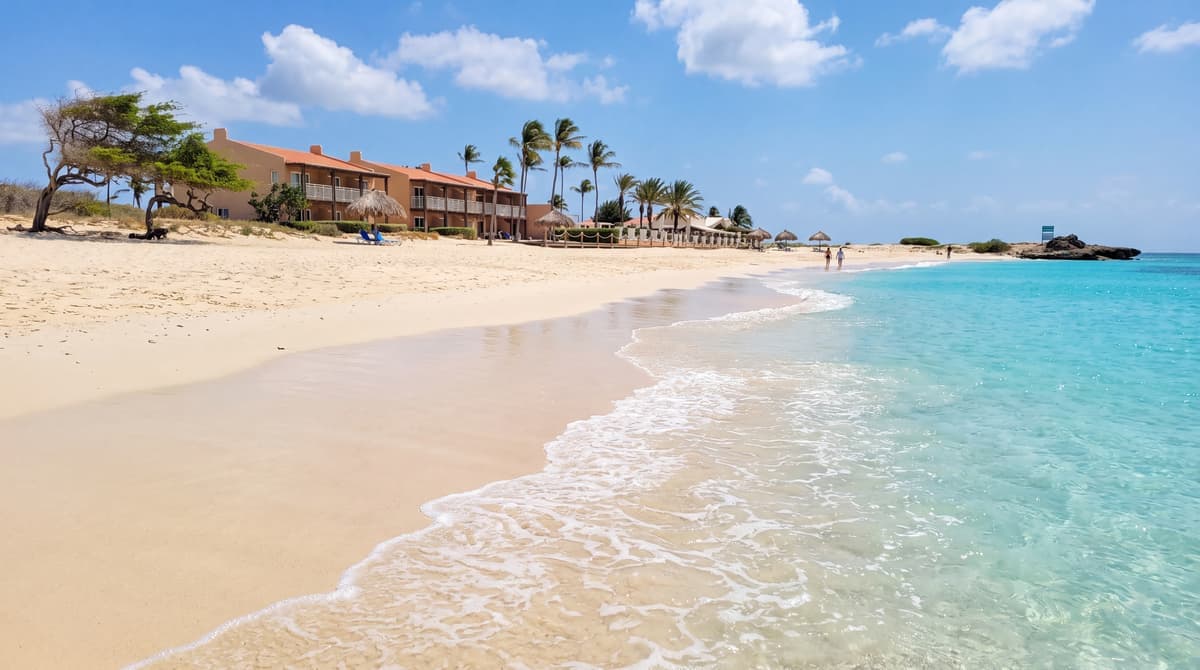
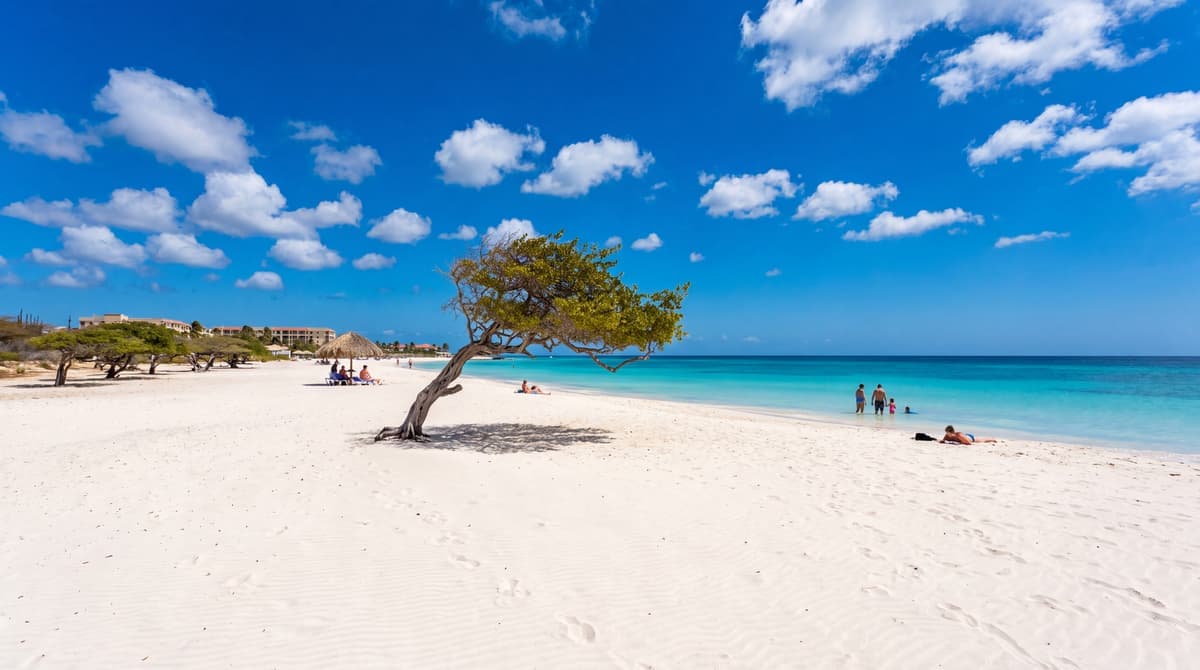
The beaches are meaningfully quieter. Eagle Beach in peak season is palapas and chairs in every direction. Eagle Beach in July has actual space, and the low-rise stretch to the south feels peaceful rather than packed. Snorkel boats are less crowded too, which generally means easier boarding and calmer water.
Sea turtles live and nest around Aruba; if you meet one, keep your distance, never touch or chase it, and keep beaches dark at night.
The Aruba International Regatta runs July 10 to 12 at Surfside Beach, giving summer visitors a genuine local event with multiple racing classes, live music, and a Regatta Village atmosphere that peak-season visitors never see.
Let us plan this trip for you
We live in Aruba and vet every spot ourselves, share your dates and we'll build the rest.
What to do on a summer Aruba trip
The activity calendar does not shrink in summer, but the smart move is to front-load the mornings before the midday sun is at its strongest.
Morning catamaran snorkel cruise. Wind and swell build through the afternoon, so a 9 AM departure gives you the calmest water over the Antilla shipwreck and around Boca Catalina. Summer boats run noticeably less crowded than February sailings. Browse current dates on our activities page.
Arikok National Park before 10 AM. The park interior heats up quickly in summer. Going early means the caves and the lookout ridge over the Natural Pool are genuinely enjoyable rather than punishing. A 4x4 safari is the easiest way to cover the park, and most operators offer morning departures with free cancellation. Check options on the activities page.
Atlantis Submarine for a midday break. If a passing squall darkens the sky or the heat peaks mid-afternoon, the submarine is the best activity to pivot toward. Ninety minutes at 130 feet below the surface, air-conditioned, with fish that are entirely indifferent to the weather above. Works for adults and kids four and up.
Horseback riding near sunset. The late afternoon light in summer is long and golden, and the northwest coast tends to calm down for evening. A guided beach ride along the shoreline is one of the better summer evening activities. Check availability on the activities page.
Night kayaking. Bioluminescent conditions can be particularly strong in the warmer summer months. A glass-bottom or transparent kayak tour after dark through the calm bays showcases the glowing plankton at its best.
Between activities, the beaches are the anchor. See the full western coast breakdown on our beaches guide and use the trip planner to match your dates with the best conditions.
How to book smart for a summer trip
Buy travel insurance. Even with Aruba's favorable geography, trip interruption coverage for weather events is worth purchasing for any Caribbean trip from June through November. Premiums are modest and the peace of mind is real. We cover the options in our vacation cost guide.
Book refundable hotels. Most of the major Palm Beach and Eagle Beach resorts offer free cancellation 48 to 72 hours out. Lock in current pricing early and keep your flexibility. Browse properties and rates on our hotels page before using the trip planner to finalize.
Book tours with free cancellation. Nearly every catamaran operator and 4x4 outfitter on Aruba offers it. Browse the full tour list on the activities page, and filter by free cancellation so you are not committed if conditions change.
Watch the date spread. Late June through mid-July is the sweet spot for summer value. August tends to run slightly higher because European summer travel lifts prices at some properties. September drops again and is arguably the best value month of the year. See our Aruba in September guide for the full case.
The bottom line
Aruba's track record on hurricanes is the strongest of any widely visited Caribbean island: no confirmed direct hit in over 170 years of modern records. The combination of low latitude, proximity to the Venezuelan mainland, and consistent trade winds creates conditions that Atlantic storms rarely penetrate. The US State Department agrees, rating Aruba at Level 1 year-round.
What that means in practice: summer Aruba looks like peak season with 30 to 40 percent lower prices, quieter beaches, and the same turquoise water and trade wind breeze. The travelers who take the summer trip, knowing the geography, tend to come back wondering why they spent years paying twice as much to share Eagle Beach with a hundred strangers.
If you are ready to look at summer dates, start with the trip planner and we will help you put the rest together.