You saw the headlines. Record amounts of sargassum. Brown seaweed swamping Caribbean beaches, rotting in the sun, clearing entire coastlines in Mexico, Barbados, and the Florida Keys. And you already booked Aruba. So the question lands with a small knot of dread: is the beach you picked out from a hundred photos going to be a smelly brown mess when you get there?
We live here and we walk these beaches every week, so we can give you the straight version rather than the panic version. The short answer is reassuring, but it is not a magic-island fairy tale, and we are going to be honest about the edges. Aruba's famous swimming beaches are among the most reliably clean in the entire Caribbean when it comes to sargassum. But the island is not sealed off from it, a few beaches genuinely do get it, and 2026 is a big year for the stuff. Here is exactly how it works.
First, what is actually happening in 2026
Sargassum is a brown floating seaweed that drifts across the open Atlantic in a vast mass scientists now call the Great Atlantic Sargassum Belt. Since 2011 it has bloomed bigger and bigger, driven by warmer water, ocean currents, and nutrient runoff, and it washes into the Caribbean in waves, usually heaviest from spring into late summer.
2026 is not a quiet year. The Optical Oceanography Lab at the University of South Florida, which runs the Sargassum Watch System and issues a monthly bulletin, measured the 2025 belt at a record of roughly 38 million metric tons, and its 2026 bulletins have tracked this year as the second-largest on record, behind only 2025. The one piece of good news in the latest bulletin (July 2026): the total amount started declining in July, and USF expects the slide to continue into November. Major beaching events have already hit the Lesser Antilles, parts of Mexico, and Florida's east coast. So the worry is not made up. If you were going to almost any eastern-facing Caribbean beach right now, we would tell you to check conditions carefully.
Aruba is a different case, and the reason is geography.
Browse 32 vetted Aruba experiences
Most confirm instantly with free cancellation up to 24h, and 4 of them are free.
Why Aruba's main beaches stay clean
Two facts about where Aruba sits do almost all of the work.
First, the island lies in the far southern Caribbean, roughly 18 miles off the coast of Venezuela, well to the south and west of the main sargassum pathway that funnels the seaweed through the eastern islands. The same southern position that keeps Aruba below the hurricane belt also keeps it off to the side of the worst of the sargassum flow. If you want the fuller version of that safe-haven geography, we lay it out in our Aruba hurricane season guide, and the logic is the same story from a different angle.
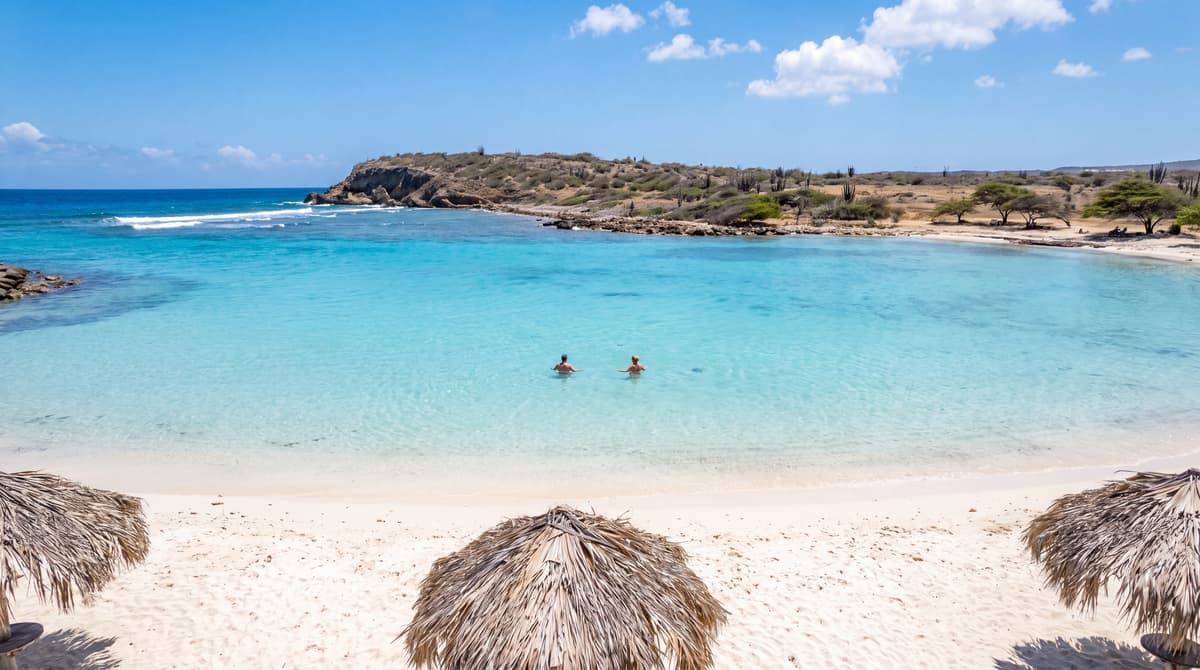
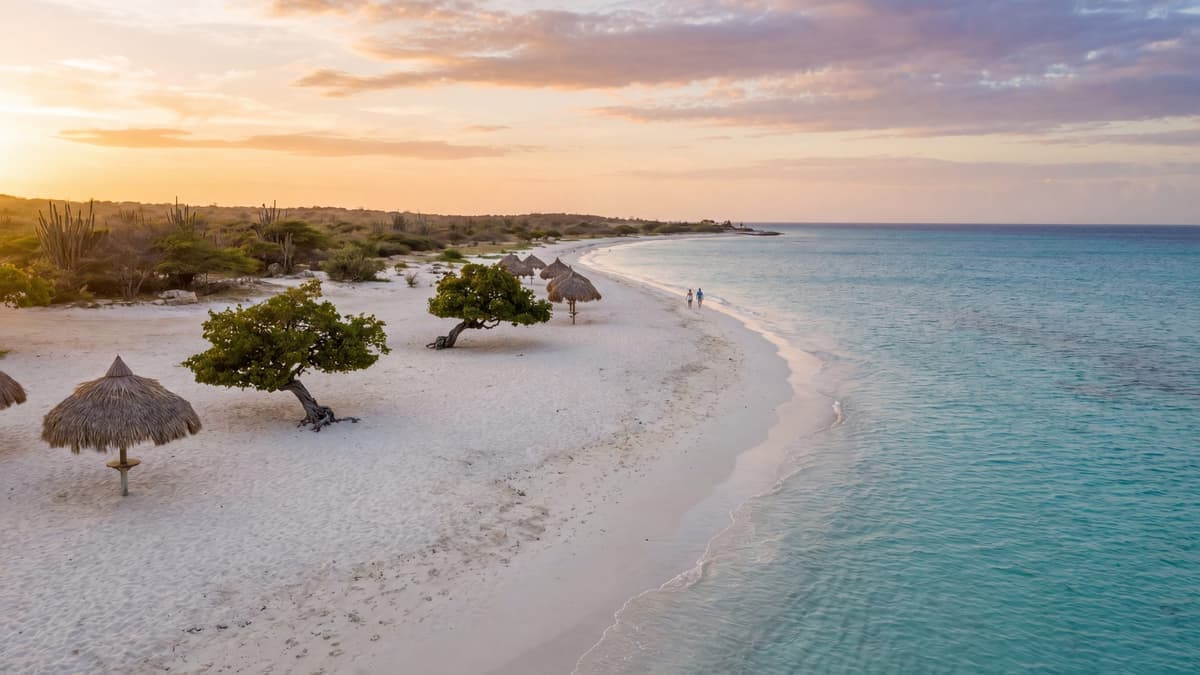
Second, and this is the part most people miss, it comes down to which way the wind blows. Aruba gets steady easterly trade winds essentially year-round. Those winds, and the currents that come with them, push floating seaweed toward the eastern, windward side of the island. Every beach you have seen in the brochures, Palm Beach, Eagle Beach, Manchebo, Druif, Arashi, sits on the western and southwestern leeward coast, the calm side, tucked in the wind shadow. The seaweed gets blown to the far side of the island, away from the sand you actually booked.
On top of the geography, the resorts and the local government rake and remove any stray seaweed that does drift onto the main tourist beaches, usually first thing in the morning, so even a modest amount rarely sits long enough to become a problem.
The beaches that do get seaweed (be honest with yourself)
Here is where we part ways with the tourism-board version. Aruba does get sargassum. It just lands where almost no one swims.
The windward east coast is the catcher's mitt. Boca Grandi and Boca Prins are consistently the most sargassum-affected spots on the island, and Andicuri and Dos Playa inside and near Arikok National Park see it too. None of these are swimming beaches to begin with. They are rough, wave-battered, current-heavy stretches that are the domain of kitesurfers, bodyboarders, and photographers, not families with floaties. Boca Grandi in particular is a world-class kitesurfing beach precisely because of the relentless wind and chop, and we would never send a swimmer there regardless of seaweed. If you want to see that side of the island honestly, our Boca Grandi beach page is upfront about what it is and is not.
So the trade-off is almost poetic: the exact same wind that dumps the sargassum on the east coast is what keeps it off the west-coast beaches where you will actually spend your days.
One more honest note tied to that windward coast: our Arikok National Park guide covers what that side of the island is and is not good for.
The beaches you actually booked
Let us be specific about the ones people ask us about most.
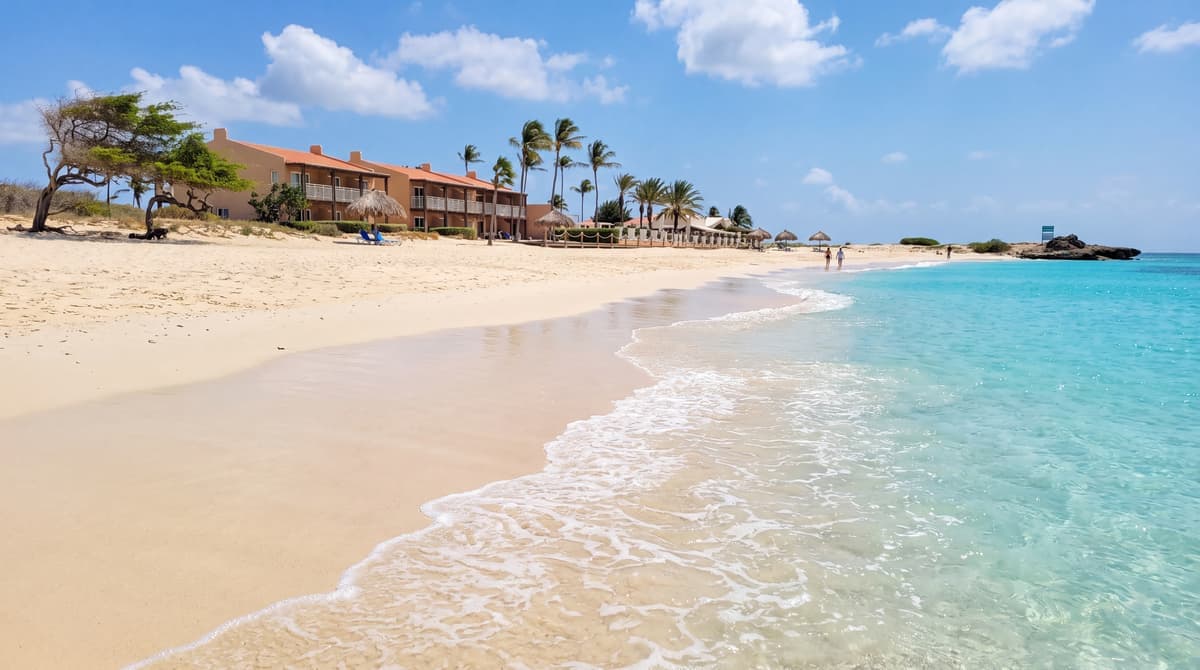
Eagle Beach and Palm Beach, the two headline beaches, are on the leeward coast and stay clean the overwhelming majority of the time. This is the pair most visitors are deciding between, and seaweed should not be the tiebreaker, both are reliably clear. Our honest comparison of the two is in Eagle Beach vs Palm Beach.
Manchebo and Druif, the quieter low-rise beaches just south of Eagle, sit in the same protected wind shadow and see the same clean water.
Baby Beach, the shallow, calm lagoon on the far southeast tip, is generally clean and family-friendly, with one caveat worth knowing: it sits close to the windward corner of the island near Boca Grandi, so it can occasionally catch a little more drift than the Palm Beach strip. On a normal day it is still one of the safest, calmest swims on the island.
For the full rundown of every beach and which one fits your trip, our beaches guide is the place to start.
The honest caveat we will not skip
We are not going to tell you that you will never see a single strand of seaweed in Aruba. That would be the kind of too-clean promise that eventually makes a reader feel lied to.
In a heavy sargassum year like 2026, when the belt is this large, currents can shift and small patches occasionally reach even the leeward beaches for a day or two before the crews clear them and the water flushes clean again. It is usually a thin line at the tide mark rather than the thick, reeking, ankle-deep rafts you see in the viral videos from other islands. Fresh sargassum in small amounts is harmless and does not smell; it is only large piles left to rot that give off the sulfur odor people complain about, and that is a rare sight on Aruba's main beaches precisely because they are cleaned and because the volumes here are small.
So the honest framing is this: Aruba is one of the best bets in the Caribbean for a sargassum-free beach holiday, not a guaranteed one. That is a much stronger position than most islands can honestly claim this year.
Want a local to plan the whole trip?
Our concierge builds your days around what you actually want, from $149. Real people who live in Aruba.
How to check conditions before and during your trip
A few free habits take the guesswork out of it:
- Read the monthly outlook. The University of South Florida sargassum bulletin is published free every month and forecasts where the belt is heading. It will not give you a single beach, but it tells you whether it is a light or heavy stretch.
- Look at recent photos, not old ones. Recent posts and beach webcams from the Palm Beach and Eagle Beach resorts show real current conditions. A photo from last week beats any forecast.
- Just ask your hotel. Email the property a few days out and ask what the beach in front of them looks like right now. They walk it every morning and will tell you straight.
- Have a Plan B beach. If your leeward beach ever has a rare off day, the wind shadow means another leeward beach a few minutes away is almost always fine.
Sargassum season month by month, coast by coast
First, the honest disclaimer: nobody can give you a reliable per-beach monthly forecast for Aruba, and USF itself warns that its bulletins cannot predict conditions at any specific beach. What the science does support is a clear seasonal curve for the wider Caribbean, and a clear split between Aruba's two coasts. Put those together and you get a genuinely useful pattern.
The Caribbean-wide curve (from USF's own bulletins):
- December to February: the annual low. The belt shrinks to its smallest, and beaching events across the region are at their rarest.
- March to May: the buildup. The bloom expands across the Caribbean through spring; April 2026 set record-high amounts for the month in nearly every region.
- June and July: the usual peak. This is when regional beaching events are heaviest; in 2026 the total began declining in July.
- August to November: the slow fade. Amounts fall month over month, with beachings still possible but easing; USF expects the 2026 decline to run into November.
What that means for each Aruba coast:
- The leeward west coast (Eagle, Palm, Manchebo, Druif, Arashi, Boca Catalina): shielded in every month of that curve. Even at the June and July peak, the realistic worst case here is the occasional thin line at the tide mark that gets raked off. Aruba's cleanup crews (the island's Public Works department, working with the hotel association) concentrate on exactly these beaches, and on the rare heavy day they consult the island's conservation groups before clearing the wilder stretches.
- The windward east coast (Boca Grandi, Boca Prins, and the Arikok stretch around Andicuri and Dos Playa): this coast follows the Caribbean curve. Boca Grandi and Boca Prins are documented as the island's most sargassum-affected spots, so expect the most seaweed there roughly April through September and the least November through February. Since these are wave-battered kitesurf and photography beaches rather than swimming beaches, the practical cost to your trip is close to zero.
- The north coast (around the Natural Bridge and Wariruri): patches have been documented drifting near this shoreline in heavy years, including 2025. Scenic stops, not swim spots, so again: a photo consideration, not a trip problem.
- Baby Beach and the southern tip: usually clean, but we will not oversell it. The San Nicolas corner sits closest to the windward flow, and during at least one severe island-wide influx the shoreline near Baby Beach was affected. In peak months (roughly May through August of a big year), it is worth a quick look at recent photos or a question to a local before making the long drive south just to snorkel.
That overlaps with Aruba's warmest, driest, high-demand stretch, which is why the question comes up so much right now. The practical upshot for Aruba specifically is still smaller than it is elsewhere: because the leeward beaches are shielded year-round, there is no month we would tell you to avoid over seaweed. If you are weighing months for other reasons, weather, crowds, price, our best time to visit Aruba guide and our Aruba in August low-season breakdown are the honest place to sort that out.
The bottom line
Yes, Aruba gets sargassum, on its wild eastern coast where almost no one swims. No, it does not meaningfully hit the leeward beaches you came for, even in a record year like 2026, thanks to the island's southern position and its steady offshore trade winds, backed up by daily beach cleaning. It is not a guarantee, and we will not pretend it is, but if avoiding seaweed is high on your worry list, Aruba is close to the safest call in the Caribbean.
With that fear off the table, the rest of the planning gets to be the fun part. Start with our Plan Your Trip hub to map the whole thing out, and when you are ready to line up your stay, flights, and a car, our booking hub puts the honest options in one place.