August is the month Aruba's reputation works against it. Peak Caribbean hurricane season is in full swing, the summer crowds from the resorts at home are scattered, and the island sits in a quiet stretch between the spring rush and the November shoulder. Most travelers look at those facts, see uncertainty, and book somewhere else. We think that is exactly the wrong read, and this guide is here to explain why.
August in Aruba means the warmest water of the year, a leeward west coast that behaves beautifully for families and snorkelers, low-season rates that are a fraction of what January costs, and one of the most remarkable natural events in the entire Caribbean calendar: sea turtles nesting and hatching on Eagle Beach while you sit beneath a fofoti tree. There is no hurricane problem to worry about, and we will explain that precisely. August rewards the traveler who looks past the headline and actually reads the fine print.
What August weather is actually like
Daytime highs in August run around 90 to 91°F, the warmest stretch of the Aruban year. Nights sit near 81°F, which means evenings are warm and pleasant rather than cool, and the sea on the leeward west coast reaches about 82°F, the warmest it gets all year. For anyone whose idea of a beach vacation involves genuinely warm water, August delivers that in full.
Rainfall is modest. August averages roughly 1.3 to 1.4 inches of rain spread across about 6 to 7 days with some precipitation. That works out to brief tropical showers, often moving through quickly, with plenty of sun in between. You are not looking at washed-out beach days; you are looking at a squall that arrives in the afternoon and passes before your towel dries.
The trade winds in August run at the stronger end of the annual range, typically 16 to 20 knots and occasionally above. On the leeward side of the island, where the main beaches and resorts sit, those winds are largely blocked, arriving as a steady cooling breeze rather than a blast. On the windward east coast, the same winds produce dramatic crashing surf and the conditions that make spots like Boca Grandi famous among wave riders. August is actually considered the prime month for serious kiteboarding and windsurfing experts, with consistent power and flat water at Hadicurari for those who know how to use it.
Sargassum seaweed is a real concern on many Caribbean islands from May through October. In Aruba, the leeward west coast sits largely outside the sargassum drift belt, and the great majority of any seaweed accumulation that does reach the island lands on the windward east and north shores. Eagle Beach, Palm Beach, and Baby Beach, the beaches where families spend their time, are generally clean. This is not a guarantee on any given day, but it is the structural pattern, and it holds most of August.
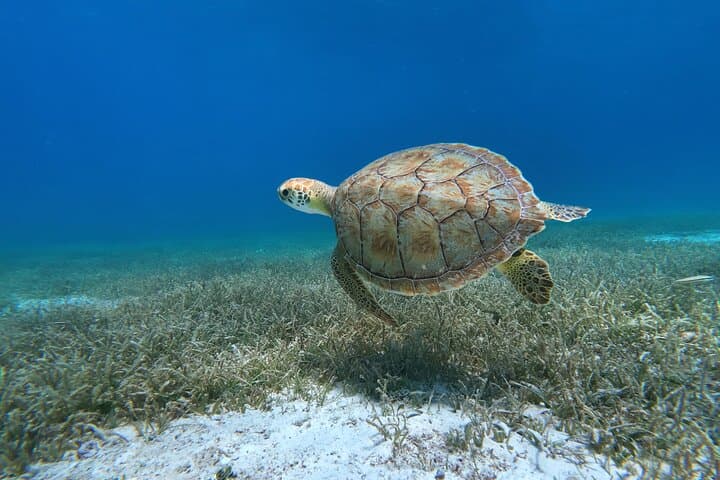
Private Turtle Snorkeling at Tres Trapi
1 hour · from $80 per person. Live prices, dates, and the honest details, one page.
The hurricane belt truth
Let us address this directly, because it is the single question that keeps more people away from August Aruba than any other, and it deserves a precise answer rather than vague reassurance.
Aruba sits at approximately 12 degrees north latitude, just 15 miles off the Venezuelan coast. That position places it at the southern extreme of the Caribbean, far below the tracks that Atlantic hurricanes typically follow. The atmospheric conditions that allow tropical storms to sustain themselves, warm ocean water combined with low wind shear at higher altitudes, rarely come together this far south the way they do further north in the basin. The result is a documented historical record: direct hurricane strikes on Aruba are extremely rare. The island has not recorded a direct hit from a major storm in decades.
This does not mean Aruba is a hurricane-proof destination or that every August is perfectly calm. Tropical systems do occasionally track through the southern Caribbean, and peripheral effects (elevated swell, some rain) can reach the island. What it does mean is that Aruba's risk profile in August is fundamentally different from, say, the Bahamas, Puerto Rico, or the Virgin Islands, where the same month carries genuine hurricane exposure. Travel insurance is always a sensible precaution, but the structural picture here is honest: Aruba in August is not the gamble that travelers from the north assume it is.
For current storm tracking and your own verification, the National Hurricane Center (nhc.noaa.gov) publishes real-time track forecasts that are easy to read.
Traveling with little ones
Land with the crib already sorted
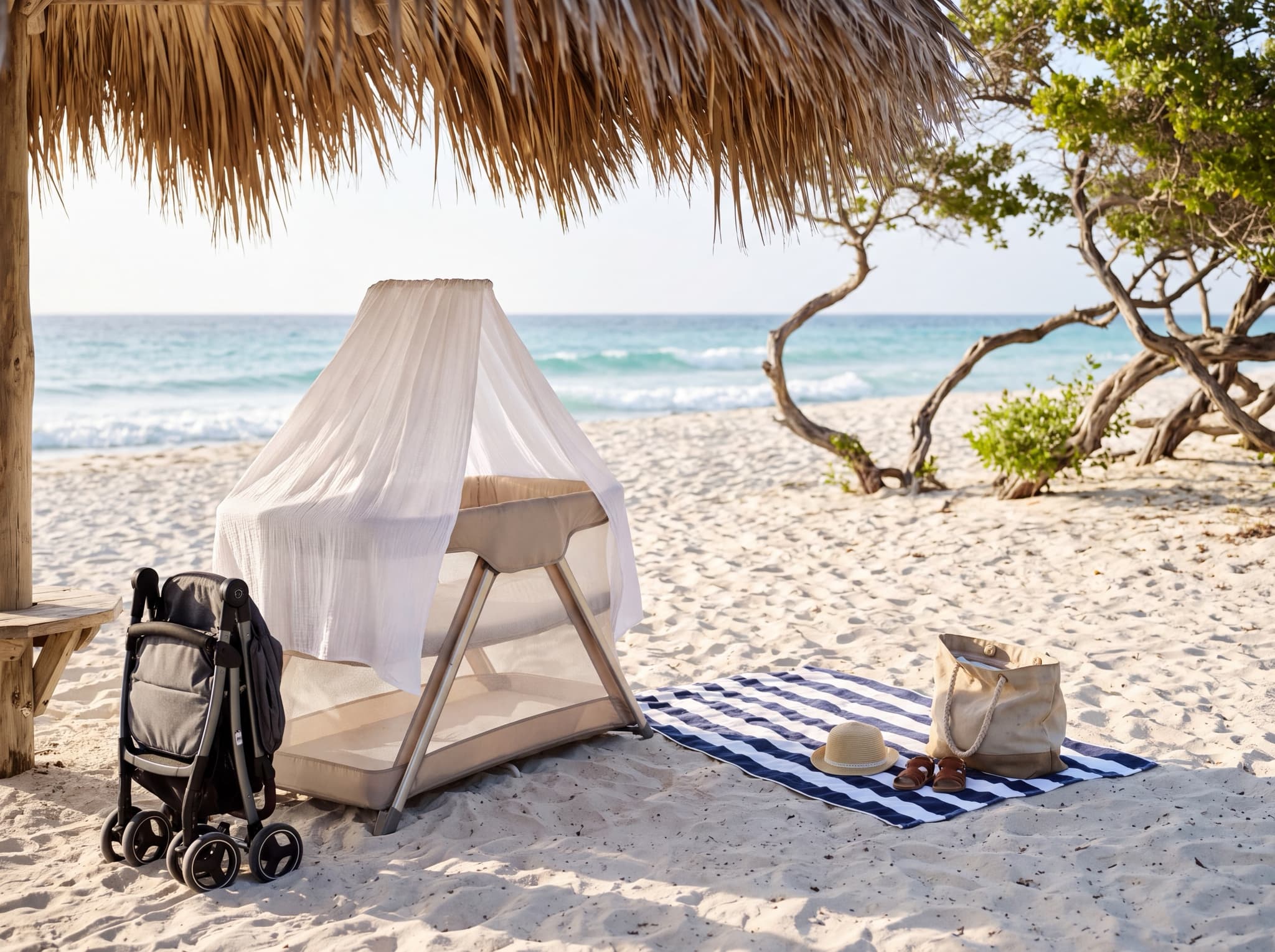
A full-size crib, stroller, and car seat rarely fit in the luggage. Local BabyQuip providers deliver the gear to your hotel or rental for your dates and collect it when you fly home, cleaned and insured per their standards. Pick what you need, see the price for your stay, and board with carry-ons instead of cargo.
- Cribs, pack-and-plays, and toddler beds
- Car seats sized to your child
- Strollers, wagons, and beach gear
Delivered by independent BabyQuip providers on the island. We may earn a commission at no extra cost to you.
The value story: low season pricing
Peak season in Aruba runs from mid-December through mid-April. August sits at the other end of that calendar entirely, squarely in the low season, and the price difference is real.
Mid-range hotels and resorts that command top-tier rates in January and February are substantially more affordable in August, typically 30 to 50 percent below peak-season prices for the same rooms. All-inclusive properties, which carry some of the steepest peak-season premiums, offer their best annual rates in this window. The same Eagle Beach low-rise that books solid at a hefty rate in February often has availability and value pricing in August that changes the math on the whole trip.
Flights follow a similar pattern. August airfare to Aruba from the US is consistently lower than the winter nonstops, and the seat availability is generally better. A family that could not afford the January trip without stress can often make August work comfortably within the same budget and get a comparable experience on the ground.
Full cost context lives in our Aruba vacation cost 2026 guide, which breaks down the numbers category by category. And if you are weighing August against the months on either side, our Aruba in July and Aruba in September guides cover both neighbors honestly.
Want a local to plan the whole trip?
Our concierge builds your days around what you actually want, from $149. Real people who live in Aruba.
Sea turtles: August is peak season
This is the natural calendar event that August visitors stumble into and immediately tell everyone about. If you are here in August, you are here during the heart of Aruba's sea turtle nesting and early hatching season, and that is something worth understanding before you land.
Fundashon Turtugaruba, the island's dedicated sea turtle conservation foundation established in 2003, monitors and protects four species on Aruba: Leatherback, Hawksbill, Green, and Loggerhead turtles. The nesting season runs from roughly March through September, with females coming ashore at night to lay eggs primarily on Eagle Beach, Boca Grandi, and beaches within Arikok National Park. With an incubation period of approximately 60 to 70 days, eggs laid through July and into August begin hatching from roughly late August through October, meaning August visitors can witness both late nesting and the start of hatching events.
The protocol matters. Turtugaruba volunteers patrol the nesting beaches at night, and some beachfront hotels maintain a turtle watch list where guests receive a notification when hatching is about to begin on Eagle Beach. If you want to witness a hatch, register with your hotel's front desk as soon as you check in and ask whether they are connected to the Turtugaruba alert system. The experience of watching dozens of hatchlings find the sea is one of those travel moments that does not need any marketing language. It is simply extraordinary.
The rules are straightforward and important: no white light on the beach at night (use the red-light filter on your phone), no flash photography, keep distance, and follow the guidance of any Turtugaruba volunteer present. The turtles are legally protected, and responsible viewing is the only kind that is permitted. For updates, current nest counts, and how to support the work, visit turtugaruba.org directly.
What to do in August
The natural calendar and the calm leeward water make August a strong month for several of Aruba's signature activities.
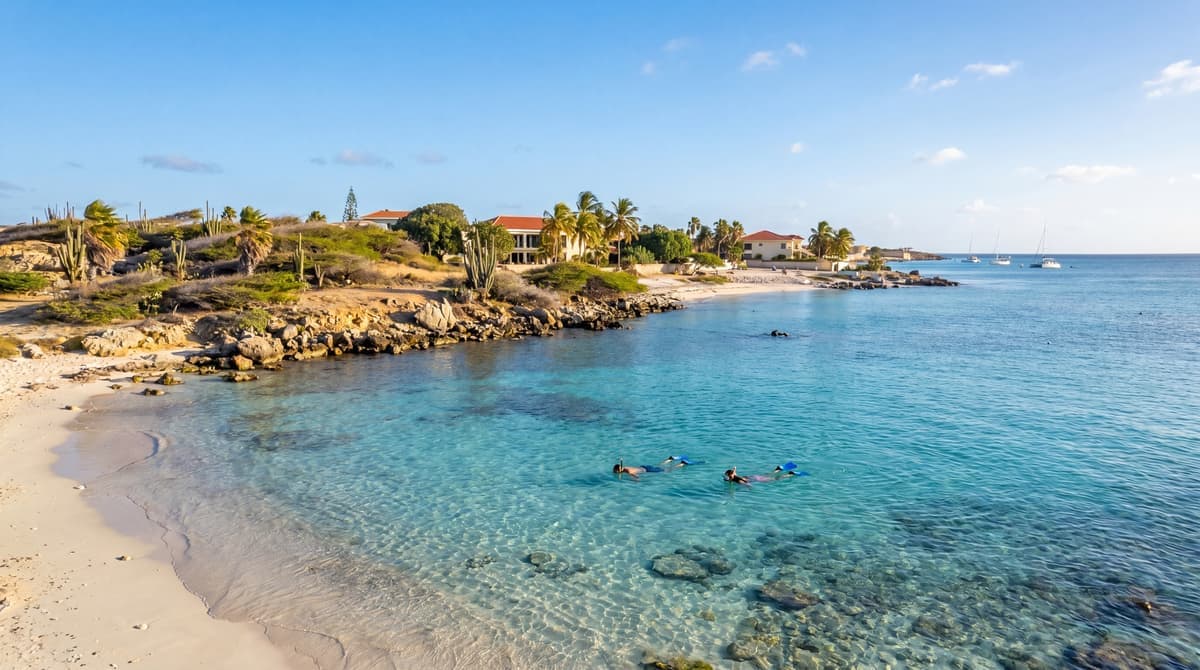
Snorkel the west coast. The warmest water of the year and calm leeward conditions combine to make August a genuinely good snorkeling month, particularly in the mornings before the afternoon breeze builds. The catamaran snorkel cruise over the Antilla shipwreck, one of the Caribbean's largest accessible wrecks, is the most-booked water day on the island for good reason. Warm, calm, clear water at 82°F makes the Antilla site comfortable for swimmers of every level, and children who have never snorkeled before tend to surprise themselves. You can book a catamaran snorkel cruise on Viator in advance. Morning departures are best; the water is at its smoothest and the visibility is sharpest before the wind picks up.
Get into the interior. August's heat is real, so the timing strategy matters: go early. An Arikok National Park 4x4 safari is best started before 9am, when the desert air is still manageable and the light on the north cliffs is beautiful. You can reserve the Arikok jeep safari on Viator before you go. The Natural Pool jeep tour follows the same logic: an early departure gives you the famous rock-ringed ocean pool on the windward coast before the afternoon sun takes over, and the rough lava formations around the pool are dramatic in morning light.
Watch the wind sports. Even if kiteboarding is not your goal, August at Hadicurari (Fisherman's Huts, just north of the Palm Beach high-rises) is a spectacle worth sitting with a cold drink in front of. The consistent summer trades pull in serious riders, and the flat blue water with dozens of kites overhead is the kind of scene that reminds you why people fall in love with this island. If you do want to learn, a kiteboarding lesson at Fisherman's Huts is possible year-round, though the stronger summer winds are better suited to riders with some prior experience.
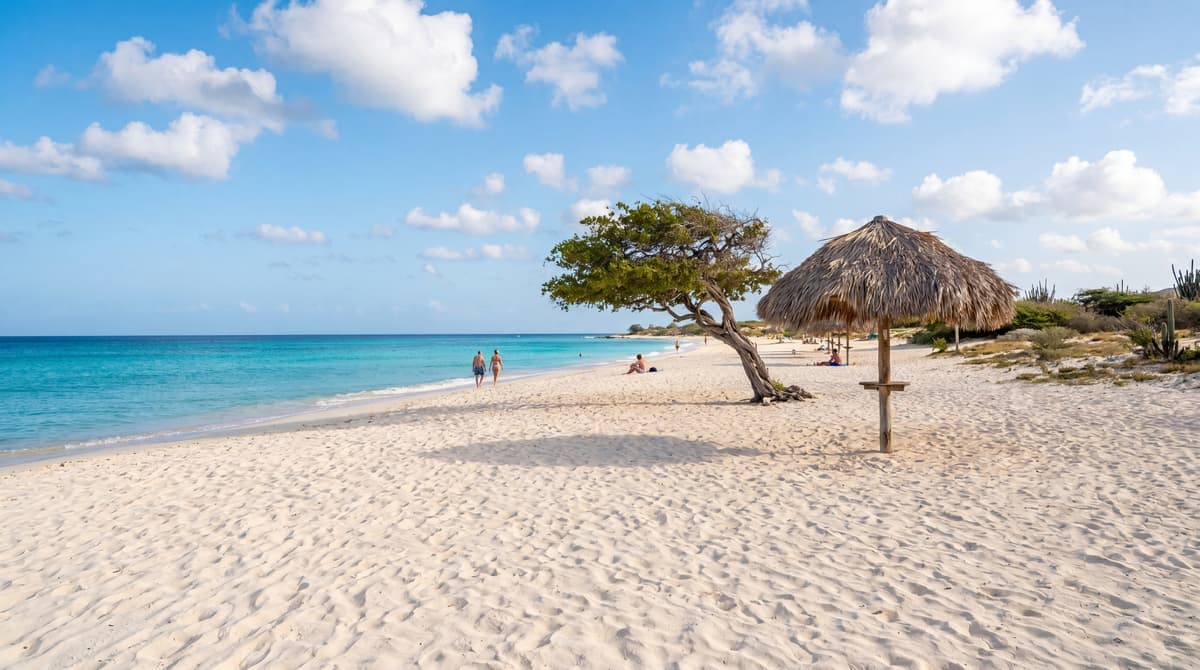
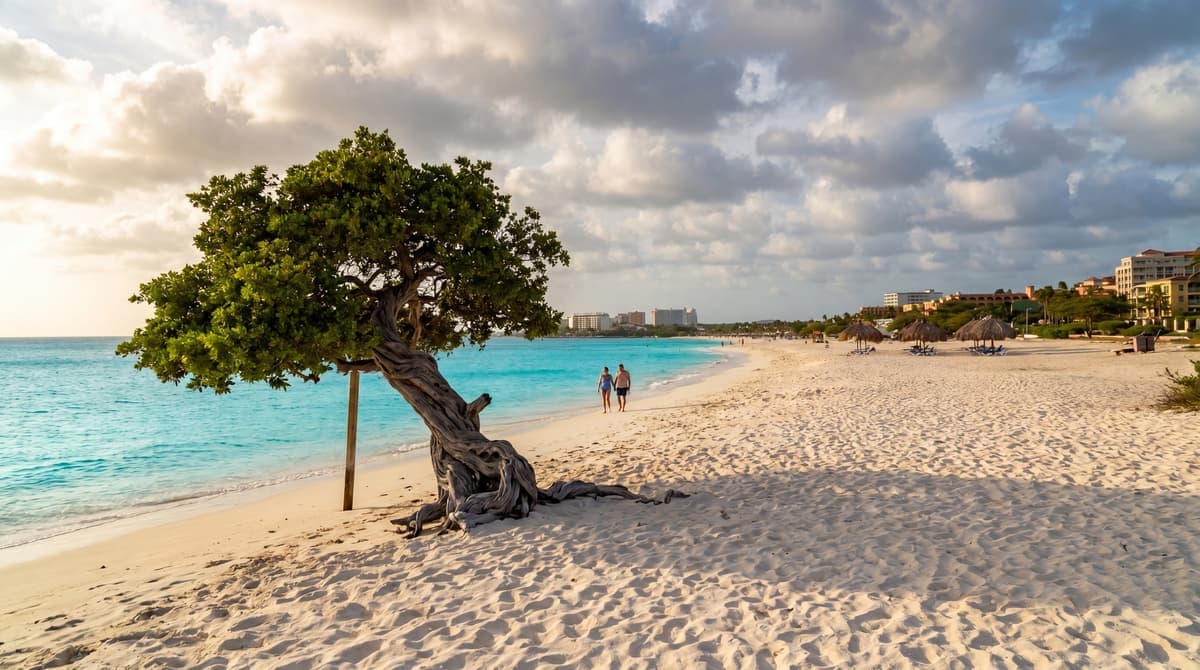
Work the beach circuit. Eagle Beach and Palm Beach are quieter in August than at any point in the winter season. A family that arrives in August can claim a palapa at a reasonable hour, spread out, and actually have the beach feel like a beach rather than an outdoor resort lobby. Our beaches guide covers every option, from the famous Eagle Beach fofoti corridor to Baby Beach's enclosed lagoon in the southeast, one of the calmest swimming spots on the island and an easy pairing with an afternoon at San Nicolas.
Check the film festival. The Playa Film Festival is scheduled for August 27 to 29, 2026, at Caribbean Cinemas in Oranjestad. It is a three-day event for film enthusiasts and a genuinely local cultural moment. As with any event that runs on a specific calendar, confirm the dates and programming directly with the organizers or visitaruba.com as August approaches, since events can shift.
Let us plan this trip for you
We live in Aruba and vet every spot ourselves, share your dates and we'll build the rest.
Beaches and snorkeling in August
The leeward (west and south) coasts are where Aruba's family beaches sit, and they are protected from the full force of the trade winds by the island's geography. In August, that geography is doing real work for you.
Eagle Beach, the wide stretch of fine white sand in the low-rise hotel zone, is the island's most famous and regularly earns top-ten Caribbean rankings. In August it is also occupied by nesting and recently hatched sea turtles, and the Turtugaruba volunteers who monitor them are happy to share information with curious visitors during their daytime patrol. Palm Beach, the lively high-rise strip to the north, stays busy year-round but is noticeably more relaxed in August without the winter resort crowd.
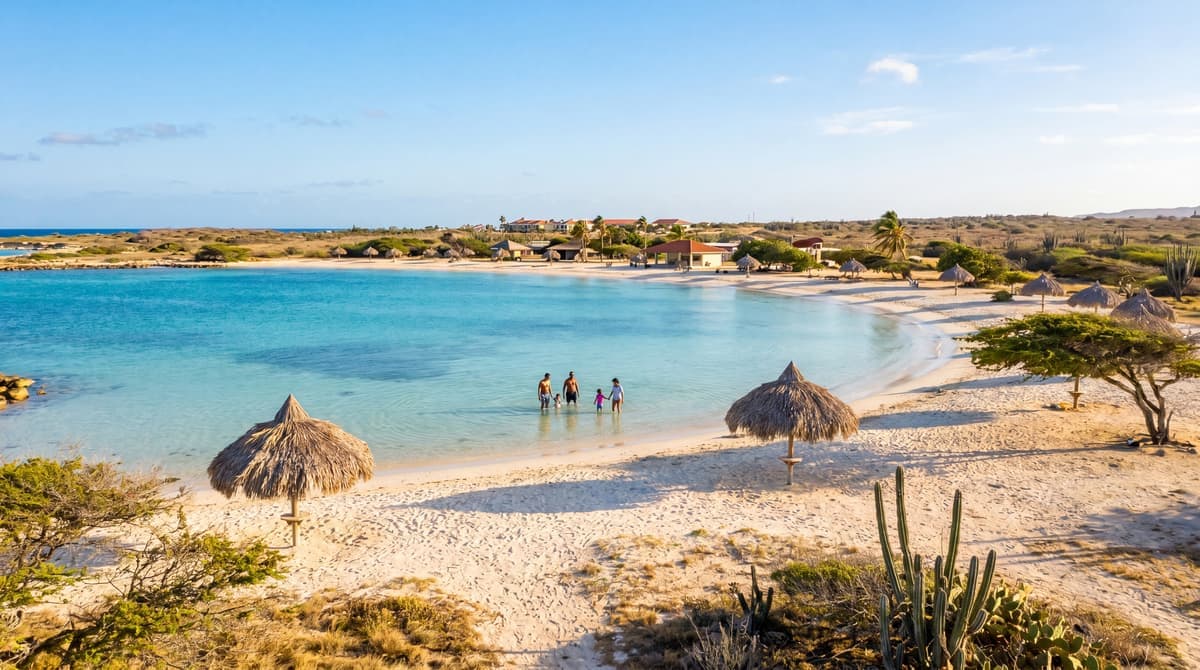
Baby Beach at the island's southeastern tip deserves special mention for August family travel. It is a protected half-moon bay enclosed by a reef that blocks ocean swell, leaving the interior water glassy and shallow. August's trade winds matter very little here; the reef absorbs them. Water temperatures at Baby Beach in August reach 82°F, and the snorkeling inside the bay, over a sandy bottom with occasional reef fish and coral patches, is accessible even for first-timers. The same reef that makes the interior calm creates stronger currents at the bay mouth, so stay inside the protected zone and read the conditions.
For a full rundown of all the options, from Arashi in the north to Boca Prins on the windward coast, our beaches guide is the right starting point before you pick your base.
The free 7-day itinerary
The exact 7 days we send friends
One email with our day-by-day Aruba plan: which beach on which day, where to eat, and the tours worth booking. No spam, unsubscribe anytime.
Packing for August in Aruba
August packing is simple, with a few heat-specific additions:
- Reef-safe SPF 50 or higher. The UV index sits near maximum this close to the equator, and the August sun at midday is genuinely aggressive. Reef-safe formulas protect the marine environment at the snorkel sites.
- A wide-brim hat. The trades in August are strong enough to test a hat with no chin strap, so either bring one with a strap or be prepared to chase it.
- A light rain shell or packable poncho, because August showers are real and brief. They pass quickly but they do arrive.
- Water shoes for the Antilla and Arikok entries, which involve rocky surfaces.
- A reusable water bottle. Aruba's tap water is desalinated, treated, and safe to drink. The island encourages refilling over buying plastic.
- Loose breathable clothing. Evenings at 81°F rarely call for a layer, but a light linen shirt for dinner is all you need beyond swimwear and sandals.
- A red-light headlamp or a phone with a red-light filter, if you plan to be near the nesting beaches at night. White light disorients nesting turtles and hatchlings.
Browse 33 vetted Aruba experiences
Most confirm instantly with free cancellation up to 24h, and 4 of them are free.
A sample family week in August
Here is how we would shape seven days in August, built around the turtle calendar and early-morning touring:
Day 1, arrival. Land, check in, beach walk, easy dinner, early bed. Never over-schedule a travel day.
Day 2. Eagle Beach morning under the fofoti trees. Register with the hotel desk for the Turtugaruba turtle watch alert. Pool through midday. Sunset from the Palm Beach boardwalk.
Day 3. Morning catamaran snorkel cruise over the Antilla shipwreck. Back by early afternoon, rest in the air conditioning through the peak heat, light dinner at a casual Oranjestad spot.
Day 4. Early 4x4 day: Arikok National Park and the Natural Pool before 11am. Baby Beach in the south for the calm afternoon swim. San Nicolas on the way back for a look at the murals and a late lunch.
Day 5. Morning at Hadicurari to watch the kite action. Afternoon free, beach or pool. If a turtle hatch alert has come through by now, this is the day to stay flexible in the evening.
Day 6. Whale-free beach day. Arashi Beach for the reef snorkeling up north, or a second morning at Eagle Beach. Sunset at California Lighthouse. If it is August 27 to 29, consider the Playa Film Festival in Oranjestad.
Day 7, departure. Allow 3 hours at the airport for US preclearance. The process is efficient but the line at peak departure times rewards getting there early. Walk out at home as a domestic passenger.
Who August suits best
August in Aruba is particularly well-matched to a few traveler types.
Families with school-age children hit a rare sweet spot in August. School summer vacation is still running, so the trip does not require pulling kids from class, but the peak-season Aruba crowds are gone. The island is quieter, the prices are lower, the beaches are more spacious, and the turtle season adds something genuinely educational and memorable that a December trip cannot offer. If you have a 10-year-old who watched a hatchling reach the water, that is a story that goes with them for a long time.
Value-focused travelers who want the full Aruba experience without the January price tag will find August gives them the beaches, the water, the food, and the activities at a fraction of the cost. The trade is that evenings are warm rather than the cool, breezy winter ideal, and the sun is more aggressive at midday. The payoff is real savings and less competition for everything.
Water sports enthusiasts at the intermediate-to-advanced level find the summer trade winds a genuine attraction rather than a drawback. The flat water at Hadicurari combined with consistent August wind is among the best kiteboarding conditions in the region.
Nature-focused travelers who specifically want the turtle season will find August offers both late nesting and early hatching, the broadest window of the two events running concurrently.
Find your hotel by month, beach & budget
Compare current Aruba rates across the major booking sites in one place, in USD. Most rooms are free to cancel.
Where to stay in August
The standard Aruba lodging logic applies, with one low-season note. In August, the availability picture is far more relaxed than in January or February. You do not need to book 3 to 4 months out to access good rooms. Sixty days ahead is usually plenty for most of August, though the Playa Film Festival weekend at the end of the month may create a small local demand spike in Oranjestad-area lodging.
Eagle Beach is the natural base for anyone whose priority is the turtle season: the nesting and hatching activity is concentrated along the low-rise hotel stretch, and Turtugaruba patrols run directly in front of these properties. Palm Beach is the livelier base with more walking-distance dining and the Hadicurari kite scene to the north. Both are good choices; the turtle watch tilts things slightly toward the Eagle Beach corridor in August specifically.
For a full neighborhood breakdown, including the low-rise versus high-rise comparison and which areas suit families versus couples, read our Aruba where to stay guide before you commit. And once you have settled on an area, our trip planner can help you match the right room to your dates and style.
Bottom line on August
August in Aruba is not the risky, empty, hurricane-threatened month the reputation suggests. It is the island at its warmest, quietest, and most affordable, with the natural calendar doing something in the nesting beaches at Eagle Beach that no other month in Aruba can match. If you are ready to book, the Aruba booking hub lets you compare hotels, flights, and cars for August in one place. The hurricane belt fact is precise: Aruba's southern latitude places it far outside the typical storm tracks, and direct hits are historically extremely rare, though travel insurance remains the sensible adult move. The leeward west coast beaches are generally clean of sargassum, the water is 82°F, the crowds are thin, and the prices are genuinely lower.
If that trade sounds right for your family or your budget, August is a month worth taking seriously. Tell us your dates and what you want out of the trip on the trip planner and we will help you land the right base, get on the Turtugaruba alert list, and make sure the week is built around the natural events rather than around them.
The turtles do not wait, and neither do the good rooms at Eagle Beach.