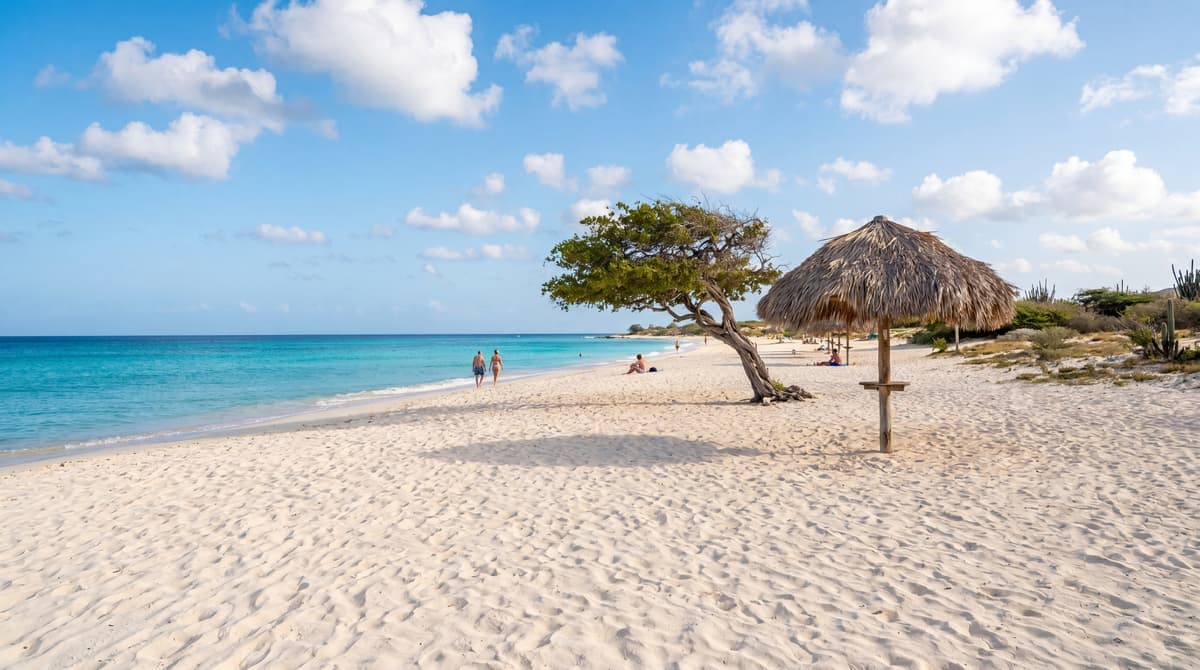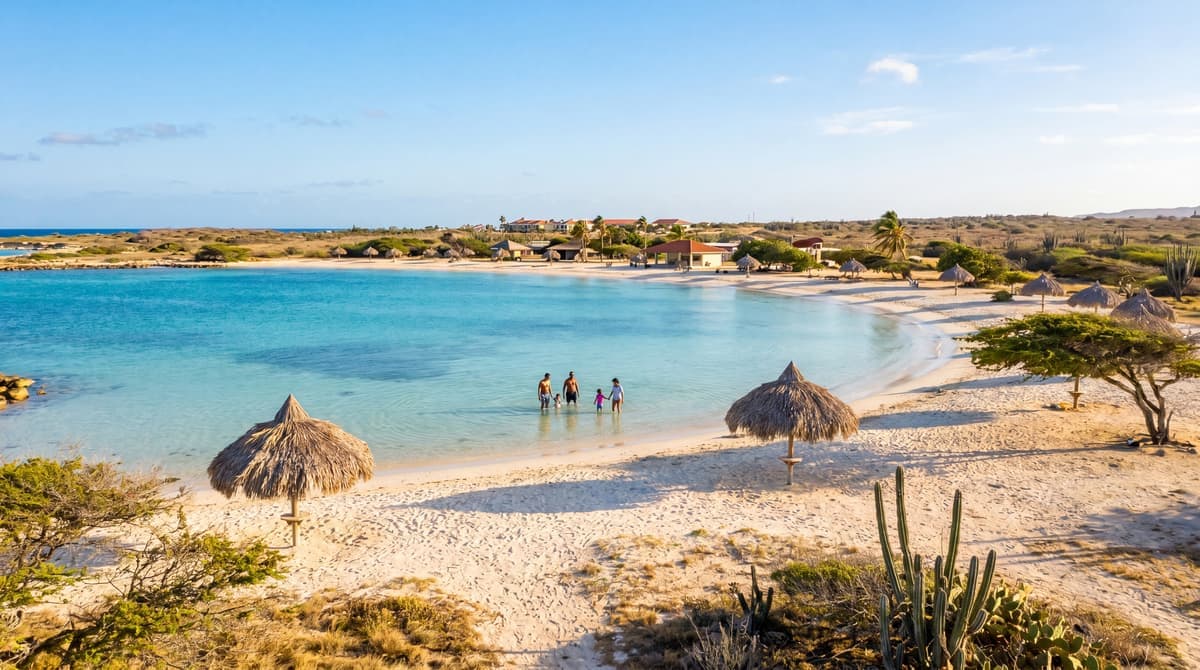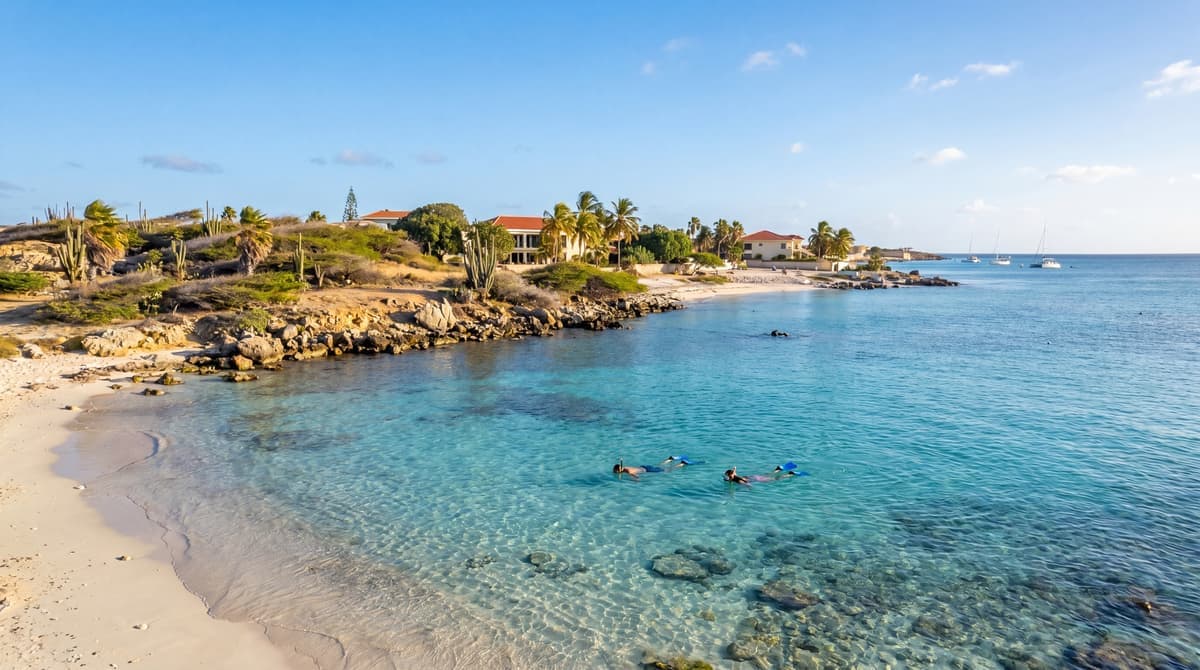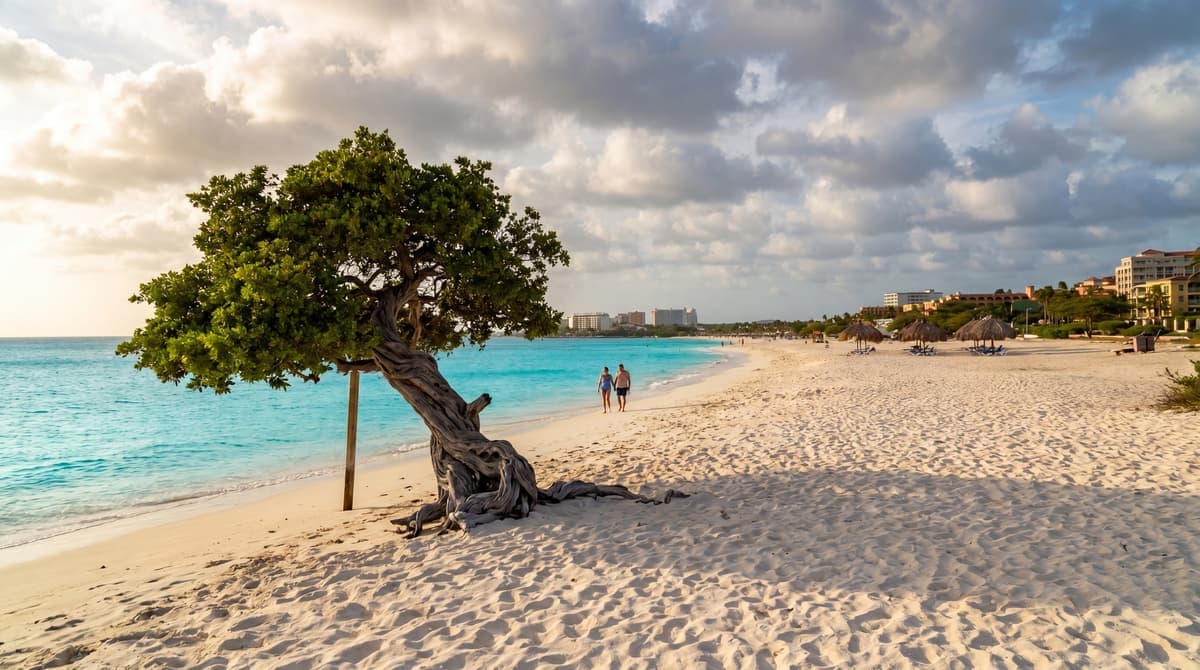
November is the month Aruba travel guides tend to be vague about, because it requires a little honesty. It is statistically the island's wettest month of the year. The trade winds soften. The hurricane season has not quite ended on paper, though Aruba sits in one of the safest corners of the Caribbean for exactly that reason. And yet every year, the travelers who figure out November come back talking about how good it was: near-empty beaches, genuinely friendly rates, the opening ceremony of the biggest cultural event on the island, and a Dutch holiday tradition that surprises almost everyone who stumbles into it.
We plan a lot of November trips, and the briefing is always the same. Go in with accurate expectations about the weather, time your week wisely, and you walk into a version of Aruba that December travelers pay 40 to 60 percent more for, with fewer crowds and two events that most visitors have never heard of. Here is the full picture.
The weather truth: Aruba's wettest month, in context
November is the wettest month on Aruba's calendar. That is a real fact, and we are not going to bury it. The island averages roughly 3.7 inches of rain in November, falling across about 10 to 11 days with some precipitation. No other month averages that much.
But context matters here, and the context is dramatic. An "average of 3.7 inches across 10 days" in Aruba does not mean 10 days of gray drizzle. Aruba receives only around 17 to 18 inches of rain in an entire year, which makes even its wettest month modest by the standards of almost any tropical destination. What 10 rainy days actually looks like on the ground: brief, intense showers, often in the morning or late afternoon, that pass in 20 to 30 minutes and leave the sky clear again. The sun comes back out before the puddles dry. A full week in November will typically give you 3 to 4 of those shower episodes, and several days of completely dry sunshine.
Daytime highs in November sit around 84 to 86°F. Nights settle near 77°F. The sea on the calm western side runs about 81 to 82°F, warm and welcoming from Eagle Beach all the way down to Baby Beach. The trade winds, Aruba's signature feature, soften in November compared to the summer peak. Expect breezes of roughly 10 to 18 knots rather than the 20-plus of the high-wind months. For most people that reads as a pleasant cooling breeze rather than anything demanding.
The bottom line on November weather: real, if modest, rain risk; a slightly softer wind; and the same warm sea and sunshine that Aruba delivers every month. Come with a light rain shell, build a little flexibility into your touring schedule, and you will be fine.
Renting a car? Compare every Aruba agency
One search across the island rental companies, free cancellation on most cars, no card to reserve.
The hurricane question, answered precisely
The Atlantic hurricane season runs officially through November 30, and some travelers notice that and hesitate. Here is the precise answer.
Aruba sits at roughly 12 degrees north latitude, just 15 miles off the coast of Venezuela. That location places the island firmly south of the main Atlantic hurricane belt. Hurricanes in the Caribbean typically form in the mid-Atlantic, track westward and northwestward through the Lesser Antilles and the Greater Antilles, and curve north well before reaching Aruba's latitude. The ABC islands, Aruba, Bonaire, and Curacao, are the part of the Caribbean with the most historically documented protection from hurricanes.
Direct hits on Aruba are extremely rare in the historical record. The last storm to even brush the island was Hurricane Felix in 2007, which caused minor damage. November is also the tail end of the season, when activity is already subsiding. None of this means a November trip carries zero meteorological risk anywhere in the region, but for Aruba specifically, the hurricane concern is genuinely low, lower than almost any other Caribbean island, and by late November the season is winding down regardless.
Book November in Aruba with confidence on the storm question.
The value story: last low-season month before the December spike
This is the clearest reason to pay attention to November, and we want to make it concrete.
Peak season in Aruba runs from mid-December through mid-April, and rates during that stretch typically run 40 to 60 percent above low-season pricing for mid-range properties, with all-inclusives running even higher at the peak. November is the last month that sits outside that window. Early and mid-November in particular deliver some of the most accessible rates on the calendar.
Then comes Thanksgiving week. Because Aruba draws a large share of US visitors, Thanksgiving sees a noticeable demand bump. Rates for that specific week climb above the early-November baseline, and the popular resorts do fill up, so if your dates land on Thanksgiving, treat it more like a mini-peak and book 6 to 8 weeks ahead. But before Thanksgiving, in the first two and a half weeks of November, you are solidly in low-season territory with easy availability and genuine savings.
After Thanksgiving, from approximately December 1 onward, the climb toward peak pricing is steep and rapid. The mid-December mark is when peak rates lock in across the board. A trip planned for the second week of November versus the second week of December is almost certainly the same weather quality, the same beaches, the same sea temperature, and a significantly lower bill. That is the November value argument in one sentence.
For the full category-by-category cost breakdown of an Aruba trip, our Aruba vacation cost 2026 guide has real numbers. And if you want to compare November to the month that comes right before it, our Aruba in October guide covers the early shoulder season; for the other direction, our Aruba in December guide shows exactly what the December premium looks like.
Find your hotel by month, beach & budget
Compare current Aruba rates across the major booking sites in one place, in USD. Most rooms are free to cancel.
Carnival opens: Kana Kibra on November 11
This is the event most November visitors do not know to look for.
Aruba's Carnival season officially opens every year on November 11, a date observed across the Dutch Caribbean. The opening ceremony is called Kana Kibra, which translates roughly as "breaking the cane," a symbolic ritual marking the start of the Carnival cycle. In 2025 and 2026 the ceremony was held at Centro di Bario Noord, beginning at 10am.
Kana Kibra is not yet the street parades or the costume spectacle that Carnival builds toward in January and February. Think of it as the season's formal beginning: music, community gathering, and the kind of local energy that tells you something bigger is being set in motion. Visitors are welcome, and attending is a window into the island's cultural calendar that most tourists, arriving weeks later, never get to see from the start.
The Carnival season then builds through music competitions and neighborhood events in December and January, climaxing in the Grand Parades before Lent. Exact dates for major Carnival events shift with Lent each year, so if you want to plan around specific events, check the official schedule on aruba.com (the Aruba Tourism Authority) once it is published for your season. What does not shift is November 11: that opening is a constant.
If your trip lands on or near November 11, add Kana Kibra to the plan. It costs nothing to attend and it is a genuinely Aruban moment.
Sinterklaas arrives: the Dutch tradition that surprises everyone
The second event that catches November visitors off guard is Sinterklaas, and it is one of the most charming things about being in Aruba in the mid-to-late part of the month.
Aruba is part of the Dutch Kingdom, and the Dutch gift-giving tradition of Sinterklaas is alive and celebrated on the island. Each year, Sinterklaas arrives by steamboat from Spain, dressed in bishop's robes and accompanied by his Pieten helpers. Children and families line the harbor for the arrival ceremony. The date always falls on a Saturday, at least three weeks before Sinterklaas' feast day on December 5, which means the arrival typically lands in the second half of November. The specific Saturday shifts year to year, so check local event listings when you arrive.
After the harbor arrival, Sinterklaas and his helpers appear at events across the island through December 5. The supermarkets stock chocolate letters and pepernoten. The whole atmosphere has a cultural warmth to it that visitors from non-Dutch backgrounds find genuinely surprising and delightful.
For a US or Canadian traveler in Aruba in late November, stumbling into a Sinterklaas harbor arrival is the kind of unexpected cultural experience that makes a trip memorable. It is free, it is festive, and it is about as far from the usual Caribbean beach itinerary as you can get without leaving the island.
Want a local to plan the whole trip?
Our concierge builds your days around what you actually want, from $149. Real people who live in Aruba.
What to do in November
Beyond the two events, November is a full-activity month on Aruba. The softer winds are actually a benefit for several of the island's headline experiences.
Get on the water. A catamaran sail and snorkel cruise over the Antilla shipwreck, the largest shipwreck in the Caribbean, is the classic Aruba day, and November's calmer sea conditions make the snorkel stops comfortable for anyone nervous about rougher water. You can book a catamaran snorkel cruise on Viator in a couple of taps. Morning departures are always best for the calmest conditions and the clearest water.
Explore the outback. The Arikok National Park 4x4 safari covers the wild eastern interior, the caves, the crashing windward coast, and the desert cactus country in temperatures that are genuinely comfortable in November's range. The signature version of this day is the Natural Pool jeep tour, ending with a swim in a rock-enclosed ocean pool you can only reach by 4x4 or a serious hike. You can reserve the 4x4 Natural Pool tour on Viator ahead of your trip. Less crowded than the January-to-April peak, and the loop road is dry enough in most of November to run well.
Learn to kite. November's wind window, roughly 10 to 18 knots, puts it in the learning-friendly range for kiteboarding. The flat-water spot at Fisherman's Huts, Hadicurari, just north of the Palm Beach strip, is where lessons run on Aruba. If you have wanted to try the sport, a kiteboarding session at Fisherman's Huts in November is a better learning environment than the summer months, when the wind runs hard and fast.
Work the beaches. November is one of the least-crowded months at Eagle Beach and Palm Beach. Bring the beaches guide and take the time to do the full circuit: north to Arashi, south to Baby Beach's calm lagoon, and the windward east coast's dramatic coast views in between. This is the month to explore without fighting for palapa space.
Eat well and book a table. November's lighter crowds mean the best restaurants in the dining guide are genuinely accessible without the weeks-ahead reservation scramble of peak season. The beachfront terrace tables that are impossible to land in January are available on a few days' notice in November.
The free 7-day itinerary
The exact 7 days we send friends
One email with our day-by-day Aruba plan: which beach on which day, where to eat, and the tours worth booking. No spam, unsubscribe anytime.
A sample November week
Here is how we would shape seven days in November, built around the calmer conditions and the event calendar:
Day 1, arrival. Eagle Beach walk, sunset, a quiet dinner. No over-scheduling on travel day.
Day 2. Morning catamaran snorkel cruise while the sea is calm. Pool through the midday heat. Sunset walk along the fofoti trees at Eagle Beach.
Day 3. Jeep day into Arikok National Park, then the Natural Pool. Back down the south coast to Baby Beach in the afternoon, dinner in San Nicolas.
Day 4. Beach day at Arashi in the north, then work south. Rent a car and make it a beach-hopping afternoon.
Day 5. If the Sinterklaas harbor arrival falls this week, build the day around it. If not, this is the kiteboarding lesson day at Fisherman's Huts.
Day 6. Oranjestad morning for the Kana Kibra ceremony if your trip falls on November 11, otherwise a slow day: markets, Wilhelmina Park, lunch in town, and a slow afternoon on Palm Beach.
Day 7, departure. Arrive at the airport about 3 hours early for US preclearance. The preclearance process is a genuine luxury when you land home and walk straight out as a domestic passenger.
For a deeper look at how to plan the arrival and flights, our getting to Aruba in 2026 guide covers every nonstop route and the booking tactics that work for shoulder-season travel.
Let us plan this trip for you
We live in Aruba and vet every spot ourselves, share your dates and we'll build the rest.
What to pack for November
November packing is the standard Aruba kit with one honest addition:
- Reef-safe SPF 50 or higher, because the UV index stays high even in the wetter months
- A hat, lighter in November's calmer winds but still useful on the catamaran or at the beach
- A light packable rain shell, the one honest November-specific item. A compact shell that fits in a day bag is all you need; you will pull it out for brief showers and put it away again
- Water shoes for the rocky snorkel entries and the Natural Pool hike
- A light layer for the evenings and over-air-conditioned restaurants
- A reusable water bottle, because Aruba's desalinated tap water is excellent and the sun is still serious
Leave anything remotely winter-adjacent in your car at the home airport. You will not need it.
Who November suits best
November is not the ideal month for everyone, and being honest about that saves people from the wrong fit.
November is ideal for: Travelers who prioritize value and are flexible about weather. Couples and groups without rigid beach-every-day mandates, who can treat a shower morning as an excuse to explore Oranjestad or the interior instead. Cultural travelers who want to see Aruba doing something specifically Aruban, Kana Kibra and Sinterklaas both qualify. Experienced Caribbean travelers who know the "rain" reputation is nearly always overstated and want the off-peak version of a great island.
November is less ideal for: Travelers whose entire trip is built around perfect beach weather every single day, who would find even one rainy morning genuinely frustrating. Families with young children who need predictability in the schedule. Anyone who needs to maximize beach time in every available hour.
The honest calibration: November offers about the same weather risk as a typical Caribbean trip in any shoulder month, but it is Aruba's shakiest window. Go in knowing that, plan a few indoor or touring fallbacks, and you almost certainly come home raving about the crowds you did not have to deal with.
Browse 33 vetted Aruba experiences
Most confirm instantly with free cancellation up to 24h, and 4 of them are free.
Where to stay in November
November's lighter crowds mean you have real choices at every price level, and availability is easy through the month except for Thanksgiving week. The Palm Beach high-rise strip puts you walkable to restaurants, nightlife, and the Fisherman's Huts kite scene. Eagle Beach is quieter, wider, and slightly more removed from the crowd, which in November already means plenty of space. The hotels hub is a good starting point for comparing neighborhoods and price tiers side by side.
For the full neighborhood breakdown, including the low-rise versus high-rise question and which areas suit couples versus families, our where to stay in Aruba guide covers it all. In November, the main planning rule is simple: lock Thanksgiving week early if that is your window, and book everything else at whatever pace is comfortable.
And if you are renting a car, which we recommend for any trip that wants to see more than the resort strip, compare rates on our car rental page at the same time you book the room. November availability is easy, but locking it in together saves the search later.
Bottom line on November
November is Aruba's wettest month, and we said that at the top and we will say it again here, because an honest guide earns more trust than a cheerful one. About 3.7 inches of rain across roughly 10 to 11 days, mostly as brief showers that pass quickly. Winds that ease to a comfortable 10 to 18 knots. Sea temperatures around 81 to 82°F. Daytime highs of 84 to 86°F. And an island that sits geographically outside the main hurricane belt, making the end of the formal season a much smaller concern than it sounds on paper.
In exchange for accepting those weather terms, you get early-to-mid November rates that are the last genuinely low-season prices on the calendar before December's 40 to 60 percent peak premium kicks in. You get beaches that are not crowded. You get Carnival's opening ceremony on November 11, a free, community event that marks the start of the island's biggest cultural season. And if your timing is right, you get Sinterklaas arriving by steamboat in the harbor, a Dutch Caribbean tradition that surprises almost every visitor who sees it.
November is not Aruba's headline month. But it is one of those months where the people who plan it right consistently come back having had exactly the trip they wanted, at a price that the January crowd would genuinely not believe.
When you are ready to plan it, tell us your dates on the trip planner and we will help you line up the right week, the right room, and the right mix of events and beach days.