October does not get the marketing budget that December gets. Nobody is shooting palm-tree Christmas ads here. There are no parade weekends to chase, no holiday premiums to swallow, and the travel magazines are already pivoting to winter escape stories. And that, more or less, is the whole argument for coming in October.
When we plan October trips to Aruba, the pattern is consistent: travelers arrive expecting to make a compromise, and leave wondering why they ever paid peak-season rates. The beaches are genuinely empty. The restaurants take walk-ins everywhere. The same rooms that cost top dollar in January go for 30 to 50 percent less, and the sea is, measurably, at its warmest of the entire year. There are trade-offs too, and we will cover them honestly. But the value story is real, and this guide is here to tell it straight.
What October weather is actually like
October sits at the start of Aruba's wetter stretch, which runs through December. That is the honest framing, and we want to get it out of the way early, because the numbers that follow tell a more nuanced story.
Daytime highs in October average around 90°F, with overnight lows near 79°F. The sea temperature on the leeward western coast peaks in October at roughly 85°F, the warmest it gets all year. So the warmth is real and generous.
Rainfall in October averages somewhere between 2.6 and 3 inches for the month, spread across roughly 7 to 9 days with some rain. The critical word is "some." In practice, October showers arrive as brief tropical squalls, heavy for ten or fifteen minutes, and then the sun is back before your towel has finished dripping. Washed-out beach days are rare. A full week of rain is essentially unheard of on this island. What you are actually buying with October is a slightly higher chance of an afternoon shower compared to the dead-dry winter months, not a rainforest experience.
The wind picture is genuinely favorable. Aruba's trade winds are one of its great pleasures, but they run hardest in summer, often 20 to 25 knots or more. By October the winds ease toward 12 to 16 knots, a noticeably gentler setting: enough breeze to keep the heat comfortable on the beach, but not enough to rearrange your sunscreen or claim your hat. If you have ever found Aruba's wind a bit aggressive in the summer months, October is a meaningful improvement.
The honest summary: October is warmer, wetter, calmer, and cheaper than any month from December through April. The trade-off is real but modest.
Find your hotel by month, beach & budget
Compare current Aruba rates across the major booking sites in one place, in USD. Most rooms are free to cancel.
The hurricane-belt question, answered precisely
Any honest guide to October in the southern Caribbean has to address this, because hurricane season runs through October 31 and people ask us about it constantly. Here is the precise answer.
Aruba sits at approximately 12 degrees north latitude, well south of where the main Atlantic hurricane tracks run. The island is outside the Atlantic hurricane belt. Most major storm systems that form off the African coast head northwest across the Atlantic and are already at higher latitudes by the time they reach the Caribbean, tracking well north of Aruba.
The historical record bears this out. In modern recorded history, Aruba has been directly hit by a hurricane only a handful of times. By one measure, a tropical cyclone passes within roughly 100 miles of the island on average about once every four years, and even then the passage is typically to the north with limited impact on Aruba itself. The island has gone decades at a time without a meaningful direct strike.
None of this means zero risk. October is the peak of hurricane season for the northern Caribbean, and no island in the Caribbean basin can be called completely immune. But the risk profile for Aruba in October is genuinely and substantially lower than for islands further north in the belt, and "lower risk" here means historically rare, not just slightly less likely. If you are avoiding Caribbean travel in October because of hurricane concern, Aruba is one of the best-supported exceptions to that rule.
The value story: what low season actually means
Low season in Aruba runs roughly from mid-April through mid-December, with September and October sitting at the deepest discount point of the year. In practical terms, mid-range hotels that charge premium rates from January through March are available in October for 30 to 50 percent less. All-inclusive properties show the same gap. Rental cars, which sell through completely in holiday weeks, are available and competitively priced. Flights from the US Northeast, which are expensive in peak winter, cost noticeably less in the fall.
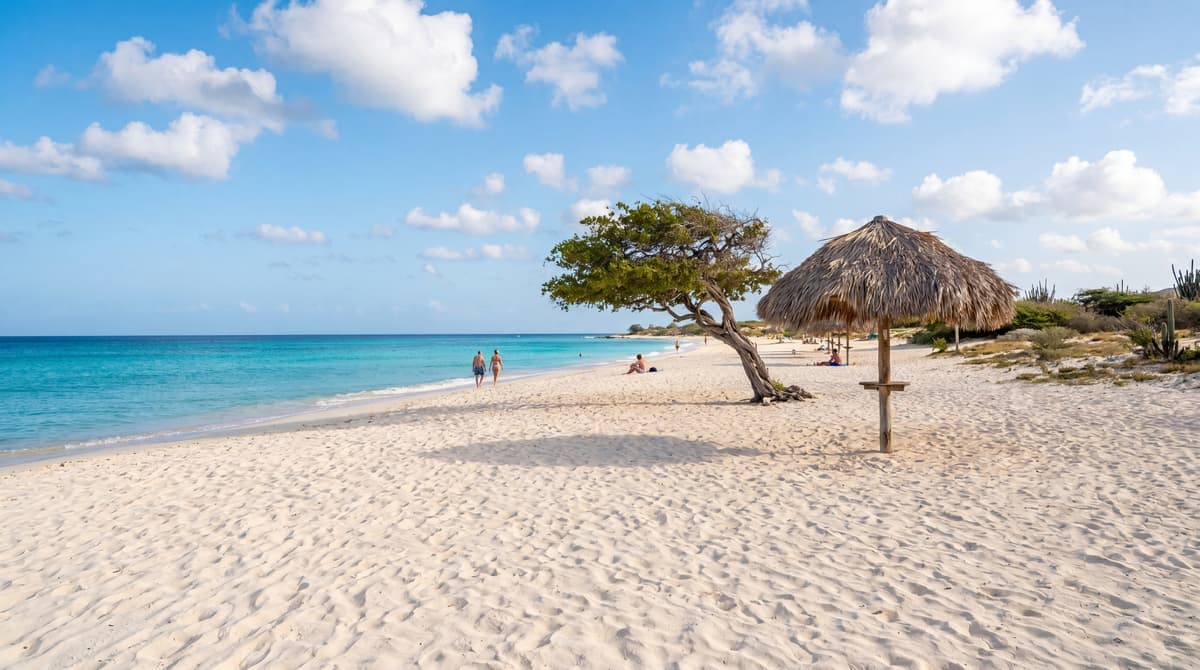
The crowd math follows directly. Aruba's hotels run very high occupancy all winter, and the most popular beaches fill up early. In October, the palapas at Eagle Beach are yours without a 7am sprint. Popular restaurants that require reservations weeks out in January take walk-ins. Tour operators have flexible booking windows. The island is the same island, just with room to breathe.
For travelers with any flexibility in their schedule, October represents the best pure value calculation on Aruba's calendar. The weather is not as reliably dry as February. The events calendar is quieter than December. But the combination of genuinely warm water, uncrowded beaches, and substantially lower prices is hard to match anywhere else in the year.
Our Aruba vacation cost guide has the full breakdown by category. If the high costs of peak season have kept you off the island, this is where to start.
Want a local to plan the whole trip?
Our concierge builds your days around what you actually want, from $149. Real people who live in Aruba.
San Nicolas culture: the city that never stops
October's quieter events calendar is real, but dismissing it misses what San Nicolas offers any month of the year. Aruba's second city has been undergoing a slow, genuine creative renaissance anchored in street art and community culture, and the entry point is easy.
The Meet San Nicolas monthly event runs on the first Thursday of every month, when the city opens its galleries, studios, and streets to a small festival of art, food, craft, and music. It is not a fabricated tourist event. It is a community gathering that visitors are welcome to join. If your October trip includes a Thursday, this is an easy and honest cultural night out, and it does not require a ticket.
Beyond the event calendar, the murals that line San Nicolas's streets are among the most impressive public art in the Caribbean, installed over several years through the Aruba Art Fair initiative (the annual fair itself runs in September, so you will not catch it in October, but the permanent work on the walls stays year-round). A self-guided walk through the district takes about ninety minutes and costs nothing. Pair it with lunch at one of the local spots near the main drag and you have a full half-day away from the resort corridor.
San Nicolas also puts you close to the southeast beaches, which we cover in the activities section below. It is a natural pairing for any October day trip.
What to do with an uncrowded island
October's low-crowd conditions change the calculus on tours and activities. The experiences that sell out in January and require booking weeks ahead are available with much shorter lead times.
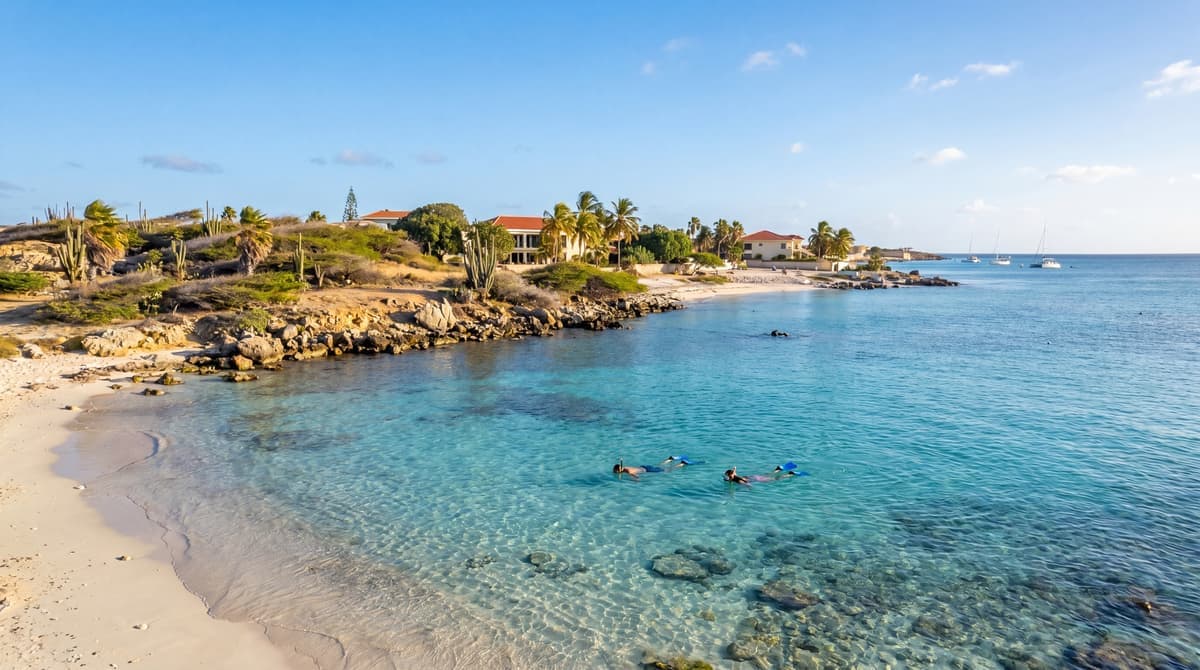
Get on the water. A catamaran sail and snorkel cruise over the Antilla shipwreck is the classic Aruba day out, and October's 85°F water makes the snorkel stops genuinely pleasant for everyone. The Antilla is one of the largest shipwrecks in the Caribbean, visible at the surface and spectacular in the shallows. You can book a catamaran cruise on Viator ahead of time. Morning departures get the calmest water, and in October the boats have room.
Go into the outback. An Arikok National Park 4x4 safari is the right way to see the wild eastern half of the island, and October's somewhat cooler trade winds make the open-air riding more comfortable than summer. The Natural Pool jeep tour is the marquee version: a swim in a rock-ringed ocean pool on the windward coast that can only be reached by 4x4 or a long hike. In peak season this fills fast. In October you can often book a day or two ahead, and you can check availability on Viator to lock it in.
Try a wind sport. October's gentler winds at Fisherman's Huts (Hadicurari) are actually well-suited for learning. The flat shallow water over sand and the steady, moderate breeze make it one of the better learning windows of the year for anyone curious about kiteboarding without wanting to be thrown around by summer-strength gusts.
Explore on your own wheels. October is the month to rent a car and drive the parts of the island that tour buses skip. The road around the lighthouse at California Point, the aloe and cactus country through the interior, the rough southeast coast past Baby Beach. None of this requires a guide, and with uncrowded roads and short wait times at the popular viewpoints, it works better in October than in any peak-season month. Our car rental page has current options.
Want a local to plan the whole trip?
Our concierge builds your days around what you actually want, from $149. Real people who live in Aruba.
Beaches in October
The beach picture in October is worth its own section, because the combination of warm water and low crowds is the clearest argument for this month that we can make.
The sea temperature of around 85°F is the warmest of the entire year. That is not a rounding artifact. October and the weeks on either side of it represent the annual peak of Caribbean sea warmth, and Aruba's leeward western beaches hold it well. Eagle Beach, Palm Beach, and the quieter northern and southern stretches are all swimming at their most inviting.
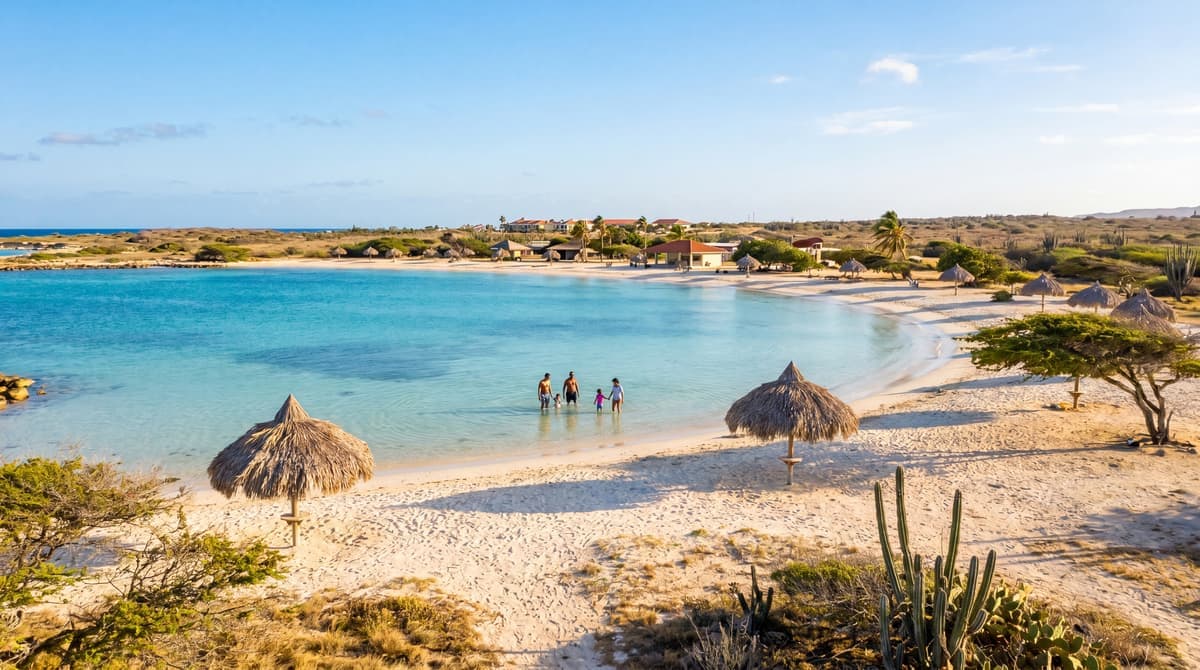
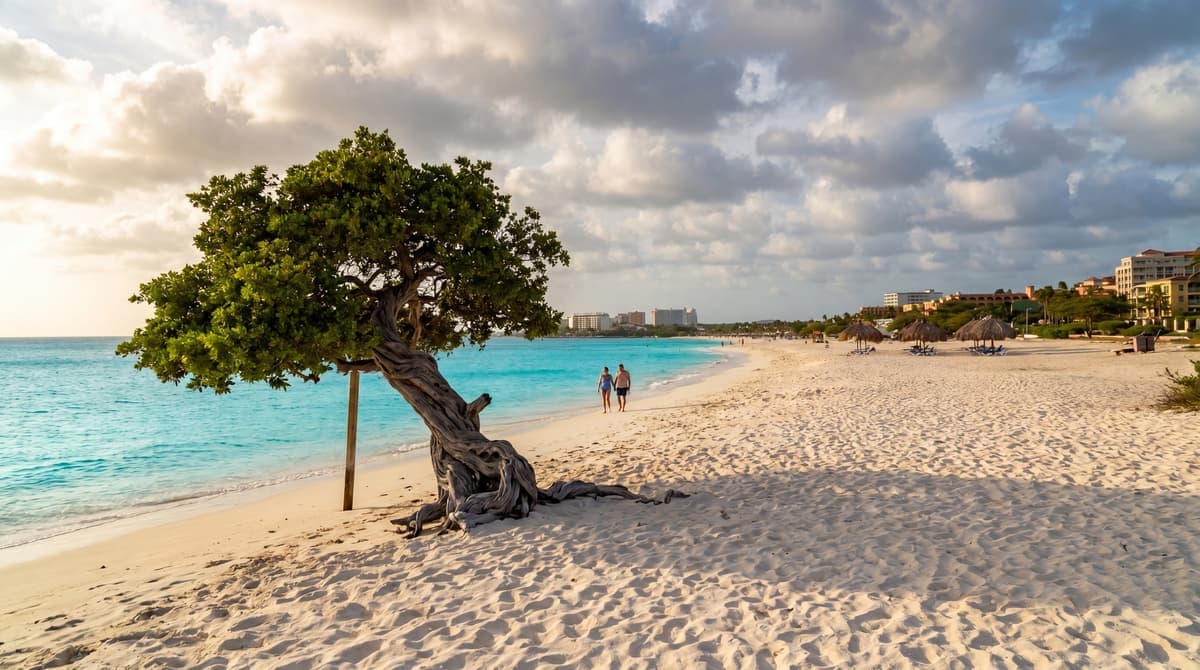
The crowds, meanwhile, are at their yearly low. Eagle Beach in October has open sand in every direction well past midmorning. The fofoti trees that everyone photographs in January are still there, and in October there is no queue to photograph them. Palm Beach is active but not packed. Baby Beach in the southeast, which can feel crowded when families arrive in school-holiday waves, is genuinely calm.
For the full map of where to swim and what to expect from each beach, our beaches guide covers the complete list. If you are planning to beach-hop across a week, October is the month when that plan works perfectly.
The free 7-day itinerary
The exact 7 days we send friends
One email with our day-by-day Aruba plan: which beach on which day, where to eat, and the tours worth booking. No spam, unsubscribe anytime.
Packing for October
October packing has one addition over the standard Aruba kit: something light and packable for the showers that may arrive in the afternoon.
- Reef-safe SPF 50 or higher, because the UV index stays high and 90°F sun is real sun
- A wide-brim hat, though October's kinder winds are less likely to claim it than summer's
- A lightweight packable rain jacket or a travel umbrella for afternoon squalls
- Water shoes for rocky snorkel entries at spots like Arashi and Boca Catalina
- A light layer for air-conditioned restaurants, which keep their settings indifferent to the season outside
- A reusable water bottle, because Aruba's desalinated tap water is excellent and free
You do not need anything for cold weather. October nights near 79°F are entirely comfortable in a t-shirt.
Let us plan this trip for you
We live in Aruba and vet every spot ourselves, share your dates and we'll build the rest.
A sample October week
Here is how we would shape seven October days on an uncrowded island:
Day 1, arrival. Beach walk, sunset from the Eagle Beach stretch, early dinner. Never over-schedule a travel day, and October evenings are worth slowing down for.
Day 2. Eagle Beach morning with the fofoti trees and open sand in every direction. Stay as long as you want, because no one is racing you for the spot.
Day 3. Morning catamaran and snorkel cruise over the Antilla while the water is calmest. The 85°F sea makes the snorkel an easy yes for anyone in the group.
Day 4. Jeep day. Arikok National Park early, the Natural Pool swim on the windward coast, Baby Beach in the south for the calm shallow afternoon. Combine it with a stop in San Nicolas for murals and a local lunch.
Day 5. Meet San Nicolas evening if the first Thursday of the month lands on your trip. Otherwise, an afternoon on the quieter northern beaches, a sunset drive to the California Lighthouse, and dinner without a reservation because October lets you do that.
Day 6. Kiteboarding lesson at Fisherman's Huts in the morning, or a self-guided drive through the interior. Palm Beach for the late afternoon. An outdoor dinner at sunset.
Day 7, departure. Aruba has US Customs and Border Protection preclearance, which means you clear immigration on the island and land back home as a domestic arrival. Leave yourself 2.5 to 3 hours at the airport. In October the lines run fast, but preclearance is its own process.
Who October suits best
Not every traveler, honestly. If your main objective is a packed events calendar, a big-party atmosphere, or the social buzz of a resort corridor running at full capacity, October is not that. The calendar is genuinely quieter and the island has a different pace.
But October is a strong fit for a specific kind of traveler, and probably a larger group than the travel industry admits. Couples who want an actually uncrowded beach and are willing to swap a December events calendar for 40 percent less on the room. Divers and snorkelers who want the warmest water of the year and the best visibility on morning trips. Anyone who has priced an Aruba week in January and winced. Remote workers who want to stay somewhere beautiful for a longer stretch without peak-season pricing. Travelers who want to see the real island without competing for it.
For a slightly wetter but still-busy shoulder look at the month on either side, our Aruba in September guide covers the months with the lowest prices of the year, and Aruba in November shows how the weather and crowd picture shift as the calendar turns toward the holiday buildup.
Browse 33 vetted Aruba experiences
Most confirm instantly with free cancellation up to 24h, and 4 of them are free.
Where to stay in October
October opens options that peak season forecloses. The big Palm Beach all-inclusives, which sell out months ahead in winter, have availability on shorter notice in October and run their lowest rates of the year. Eagle Beach's low-rise boutique properties, perennially the most in-demand rooms on the island, are actually bookable. The adults-only resorts along Eagle Beach that are reserved a season ahead in January show open dates in October with a week or two of lead time. Browse the full property list on the Aruba hotels page to find your fit before you commit.
In low season, location matters slightly less for logistics because the crowds that make distance a problem in peak months simply are not there. That said, if your priority is beach access, Eagle Beach remains the best sand on the island regardless of month. If walkability to restaurants and nightlife matters, Palm Beach puts more within easy reach.
For the full neighborhood-by-neighborhood picture, our where to stay in Aruba guide walks through every area including what each one does well and what it trades away. Read it before you book, because the October availability window rewards anyone who does a little upfront research.
Getting there in October
October airfares from the US are at their yearly low alongside the rest of the low season, and nonstop service to Aruba runs from around 16 US airports, concentrated in the Northeast and Southeast. The preclearance setup means you land back home as a domestic passenger, which on a tired Sunday afternoon return is a genuine quality-of-life upgrade.
For the full guide to every nonstop route, the airlines serving each one, and the tactics for finding the cheapest seats in any month, read our getting to Aruba guide.
Find your hotel by month, beach & budget
Compare current Aruba rates across the major booking sites in one place, in USD. Most rooms are free to cancel.
Bottom line on October
October is the honest traveler's month. The weather is warm, occasionally showery, and not as reliably dry as the peak-season months. The events calendar is quiet, and the Caribbean Sea Jazz Festival that many visitors have heard of no longer runs. The hurricane risk is real in the Atlantic region, and you should carry travel insurance, though Aruba's position outside the main hurricane belt makes a direct strike historically rare. None of that should be hidden, so we have not hidden it.
What is also true: hotel rates run 30 to 50 percent below their winter peaks, the sea is at its warmest of the entire year, the beaches are genuinely uncrowded, tour slots are available, and the island is a quieter, more spacious version of itself. For travelers who have wanted to go to Aruba and have been waiting for the right combination of affordability and warmth, October is a very good answer.
If October is your window, tell us your travel style and dates on the trip planner and we will help you put together the week, including the right neighborhood, the right tours, and the right read on the weather window you are actually booking into.