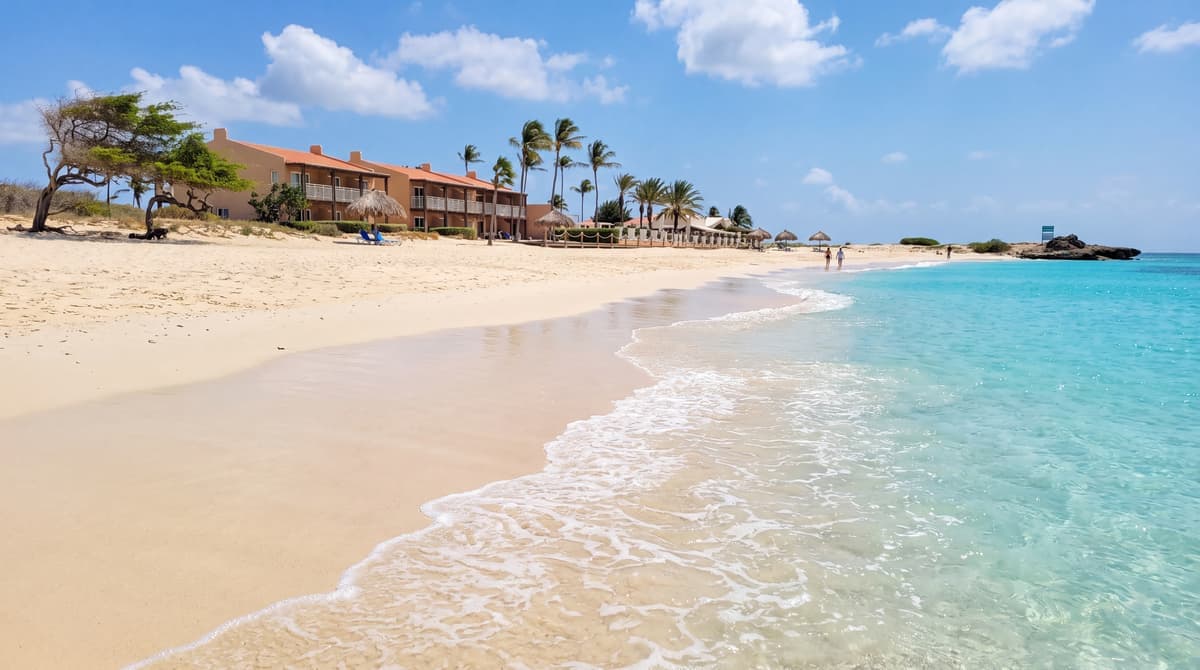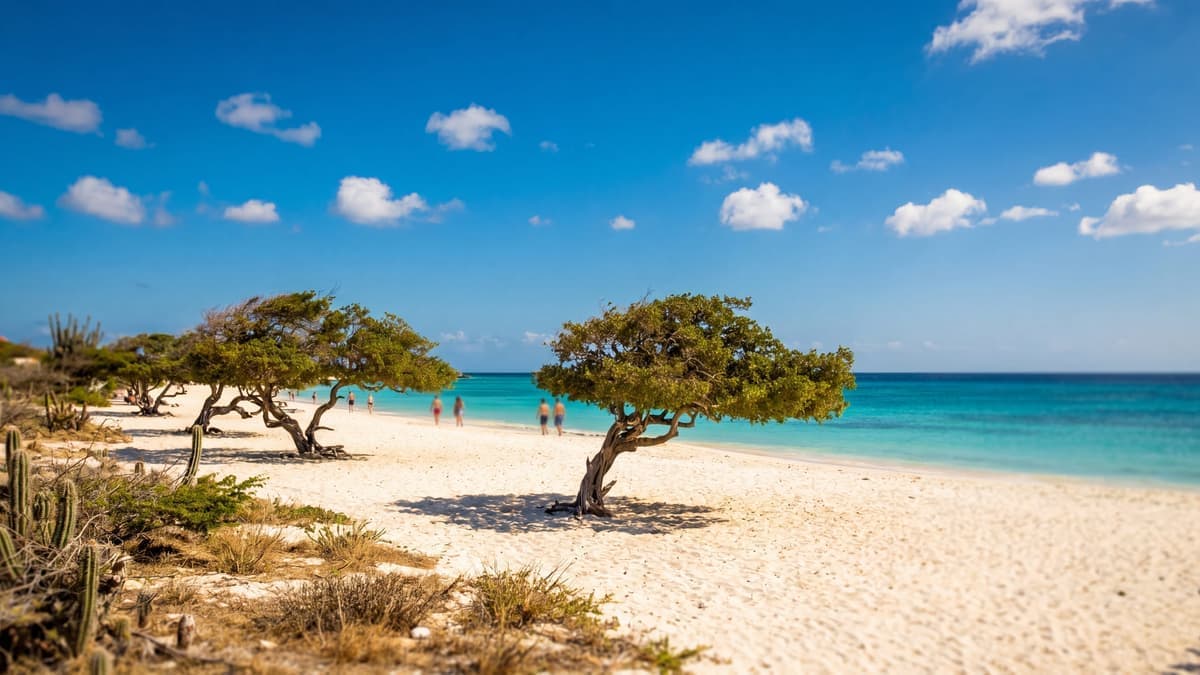
One of the most common questions we hear is when should I visit Aruba? The short answer: there is no bad time. Aruba sits below the hurricane belt with year-round sunshine, temperatures of 82-88°F, and only 18 inches of rain annually. But the long answer involves trade-offs between price, crowds, events, and subtle weather differences that can help you optimize your trip. Here is our complete month-by-month breakdown.
Quick answer: The best time to visit Aruba is May, June, or November for the best balance of great weather, thin crowds, and lower prices. January through March has the most reliably dry, calm weather but peak prices. September and October are the cheapest months with the emptiest beaches. Aruba sits below the hurricane belt, so any month is safe weather-wise.
One planning note before the month-by-month detail. If your dates are flexible, the shoulder and low seasons (roughly May, June, and September through November) often carry noticeably lower hotel rates for near-identical weather, and that gap is real money. Punch your dates into our hotel finder and watch the prices land for the weeks you are weighing.
Aruba Weather Overview
Before we dive into each month, here is what makes Aruba's climate unique.
Aruba is classified as a semi-arid tropical climate. It is the driest island in the Caribbean. The constant trade winds from the northeast blow at 15-25 mph, keeping the humidity tolerable even in summer. Cloud cover is minimal. The island receives about 300 days of sunshine per year.
The "rainy season" runs from October through January, but this term is misleading. Even during the wettest months, rain typically comes as brief afternoon showers that last 15-30 minutes before the sun returns. Extended rainy days are exceptionally rare. You will not have a rained-out vacation in Aruba regardless of when you visit.
Water temperature ranges from 78°F in February to 84°F in September. It is always warm enough for comfortable swimming.
Find your hotel by month, beach & budget
Compare current Aruba rates across the major booking sites in one place, in USD. Most rooms are free to cancel.
The Three Seasons of Aruba Tourism
Peak Season: Mid-December through Mid-April
The busiest and most expensive time to visit. American, European, and Canadian travelers flock to Aruba to escape winter. Hotels charge premium rates, popular restaurants require reservations, and beaches are at their most populated.
Average hotel prices (per night):
- Budget/guesthouses: $150-250
- Mid-range (Holiday Inn, Amsterdam Manor): $300-500
- Luxury (Hyatt, Bucuti, Ritz-Carlton): $500-900+
- All-inclusive (Riu, Divi): $450-700
Shoulder Season: Mid-April through June, November through Mid-December
The sweet spot for many travelers. Prices drop 20-35% from peak rates, crowds thin out noticeably, and the weather remains excellent. This is when we personally recommend visiting if you have schedule flexibility.
Average hotel prices (per night):
- Budget/guesthouses: $100-180
- Mid-range: $200-350
- Luxury: $350-600
- All-inclusive: $300-500
Compare live hotel rates for your exact dates on our booking hub.
Low Season: July through October
The best deals on the island. Prices drop 30-50% from peak rates. The trade winds can be slightly lighter in September and October, making it feel hotter, and brief rain showers are slightly more frequent. But the island is fully operational, the beaches are blissfully empty, and the value is outstanding.
Average hotel prices (per night):
- Budget/guesthouses: $80-150
- Mid-range: $150-280
- Luxury: $280-500
- All-inclusive: $250-400
Month-by-Month Breakdown
January
Weather: 82°F average, 15 mph trade winds, 1-2 brief showers per month. Perfection. Crowds: Peak season at full capacity. Beaches are busy by 9 AM. Reservations essential at top restaurants. Prices: Highest of the year. Book 4-6 months in advance. Events: New Year's celebrations carry into the first week. Aruba's Carnival season kicks off in early January with parades, jump-ups, and music events that run through early March. The Torch Parade (Fakkel Optocht) is a local highlight. Our take: January is prime time and you will have perfect weather, but you will pay for it and share the island with peak crowds. If you must visit in January, book everything well in advance. For the full month, see our complete Aruba in January guide.
February
Weather: 82°F average, similar to January. Slightly drier than most months. The driest month of the year. Crowds: Still peak season. Very busy. Prices: Premium pricing continues. Events: Carnival is in full swing. The Grand Carnival Parade in Oranjestad (usually late February or early March) is the biggest event of the year, with elaborate floats, costumes, and music. It is an incredible spectacle and worth planning your trip around if you enjoy cultural celebrations. The Children's Carnival Parade is equally festive. Our take: If you visit during Carnival, you get peak weather plus the island's most vibrant cultural event. The energy is electric. Just know that hotel prices reflect the demand. For the full month, see our complete Aruba in February guide.
March
Weather: 83°F average. Still minimal rain. Trade winds remain steady. Crowds: First half is peak season. Crowds begin thinning slightly in the second half as spring break winds down. Prices: Premium through mid-March, then begin softening slightly. Events: Carnival culminates in early March with the Lighting Parade and the Burning of King Momo, symbolizing the end of the festivities. The island settles into a quieter rhythm afterward. Our take: Late March is a sleeper pick. Spring break crowds are departing, prices start to dip, and the weather is still flawless. If you can travel the last two weeks of March, you get near-peak conditions at slightly better value. For the full month, see our complete Aruba in March guide.
April
Weather: 84°F average. Rain remains minimal. Winds steady at 15-20 mph. Crowds: Early April is still busy (Easter week is peak). After Easter, the island noticeably quiets down. Prices: Easter week commands peak pricing. Post-Easter prices drop 15-25%. Events: Easter celebrations, King's Day (April 27) is a national holiday celebrating the Dutch King's birthday with orange-themed parties, music, and festivities throughout the island. Our take: Post-Easter April is one of our favorite times to visit. The seasonal transition means lower prices with zero compromise on weather. King's Day is a fun bonus if your trip overlaps. For the full month, see our complete Aruba in April guide.
May
Weather: 85°F average. Slightly warmer. Very little rain. Trade winds consistent. Crowds: Noticeably lighter. Beach chairs and palapas are available without rushing. Prices: Shoulder season rates kick in. Expect 20-30% savings versus peak. Events: The island is quieter event-wise. The Aruba Soul Beach Music Festival in late May draws some visitors. Our take: May is an excellent month to visit. The weather is perfect, the crowds have thinned dramatically, and prices are reasonable. You get the Aruba experience without the peak-season hustle. For the full month, see our complete Aruba in May guide.
June
Weather: 86°F average. The warmest month begins. Brief showers are slightly more possible. Trade winds still comfortable. Crowds: Light to moderate. This is one of the least crowded months. Prices: Shoulder season pricing, sometimes dipping into low season territory for late June bookings. Events: The Aruba Hi-Winds kiteboarding and windsurfing competition draws athletes from around the world. Even if you do not kitesurf, watching the competition at Fisherman's Huts is entertaining, and if it inspires you, you can book a kiteboarding lesson at the same beach. Our take: June is the last month before summer travel picks up slightly. It is warm but the winds keep it comfortable. Excellent value with manageable crowds. For the full month, see our complete Aruba in June guide.
July
Weather: 87°F average. Warmest month alongside August. Brief rain showers possible but uncommon. Trade winds may ease slightly. Crowds: A slight uptick from families on summer vacation, but nothing like peak season. Prices: Low season rates. This is where the real deals are. Events: Relatively quiet. Some independence day celebrations for Dutch Caribbean heritage. Our take: July is a great family month. The beaches are calm, the water is warm, and the prices are as good as they get. Pack extra sunscreen and stay hydrated because the combination of heat and sun is intense. For the full month, see our complete Aruba in July guide.
August
Weather: 87°F average. Similar to July. Occasional brief showers. Crowds: Moderate with summer travelers, still well below peak season. Prices: Low season pricing continues. Events: Relatively quiet. Our take: Similar to July. August works well for families on a summer schedule. The heat can be aggressive in the middle of the day, so plan water activities for morning and late afternoon. For the full month, see our complete Aruba in August guide.
September
Weather: 87°F average. This is when the wind can dip to its lowest, making some days feel genuinely hot. Brief showers slightly more frequent. This is technically the beginning of Aruba's "rainy season" but that is a very relative term. Crowds: The quietest month of the year. The island feels like it belongs to the locals and a handful of in-the-know visitors. Prices: The lowest prices of the year. You can find stunning resort deals at 40-50% off peak rates. Events: The island is quiet. Some restaurants close for annual renovation or staff vacations. Our take: September is the insider's month. If you can handle slightly more heat and the very small chance of a rain shower, you will have the island practically to yourself at the lowest prices of the year. A few restaurants may be closed for seasonal breaks, so check ahead. For the full month, see our complete Aruba in September guide.
October
Weather: 86°F average. The highest chance of rain (still minimal by Caribbean standards). Trade winds begin picking up again. The occasional brief storm front passes through. Crowds: Very light. Second quietest month. Prices: Still low season. Excellent deals available. Events: Relatively quiet. Our take: October is similar to September in value. The return of stronger trade winds makes the heat more bearable. Rain remains unlikely to affect your trip meaningfully. For the full month, see our complete Aruba in October guide.
November
Weather: 84°F average. Rain chances remain slightly elevated for the first half. Trade winds fully return. Temperatures begin moderating. Crowds: Light in early November, picking up in the second half as the holiday travel season approaches. Prices: Early November has low season pricing. Late November transitions to shoulder/peak pricing, especially around Thanksgiving week. Events: The island begins gearing up for the holiday season. Some early holiday decorations appear. Our take: Early November is another sleeper pick. You get near-peak weather with low-season pricing. Avoid Thanksgiving week if you want the best value. For the full month, see our complete Aruba in November guide.
December
Weather: 83°F average. Trade winds steady. Brief showers possible but decreasing. Beautiful, comfortable weather. Crowds: First half is manageable. Everything from December 20 onward is peak season at its most intense. Holiday week (Christmas through New Year) is the busiest, most expensive time on the island. Prices: Early December has shoulder pricing. December 20 onward is premium with many properties requiring minimum stays. Events: Holiday celebrations throughout the island. The Dande tradition brings musicians door to door on New Year's Eve. Fireworks over the beach at midnight on January 1 are spectacular. Our take: Early December (first two weeks) is excellent. The holiday buzz is starting, the weather is perfect, and prices have not yet hit their peak. Avoid the last ten days unless you specifically want the holiday resort experience and are willing to pay for it. For the full month, see our complete Aruba in December guide.
When to Visit Based on Your Priorities
Best weather: Any month works, but January through March offer the most consistently dry, comfortable conditions.
Best prices: September and October for rock-bottom deals. May, June, and early November for good value with reliable weather.
Best for avoiding crowds: September and October. Weekdays in shoulder season also work.
Best for events: Late February through early March for Carnival. April 27 for King's Day. Late May for Soul Beach Music Festival.
Best for families: July and August for summer schedules with low-season pricing. March and April during school breaks.
Best overall (our pick): Late April through June and November. You get the perfect balance of great weather, manageable crowds, and reasonable pricing. This is when we suggest first-time visitors come if they have schedule flexibility.
Water Temperature by Month
If water activities are a priority, you will be pleased to know that Aruba's ocean temperature is warm year-round. Here is what to expect.
January-March: 78-80°F. Comfortable for swimming, snorkeling, and diving. Most visitors find this perfectly warm, though it is the coolest the water gets.
April-June: 80-82°F. Slightly warmer and very pleasant. Visibility for snorkeling tends to be excellent during these months.
July-September: 82-84°F. The warmest water temperatures of the year. Like swimming in a warm bath. Ideal for extended snorkeling sessions at Boca Catalina and Mangel Halto.
October-December: 80-82°F. Slowly cooling from the summer peak but still very warm by any standard. December water temperatures are still warmer than summer water in most U.S. beach destinations.
For the best snorkeling and diving conditions, the shoulder months (April through June) tend to offer the optimal combination of warm water, calm seas, and excellent visibility. Our beach guide has specific snorkeling recommendations, and Boca Catalina and Mangel Halto are the two shore-snorkeling spots we send everyone to first.
Flight Prices by Season
Airfare follows the same seasonal pattern as hotels but with some nuances worth knowing.
Cheapest flights: September and October, when both demand and prices hit their lowest. Round-trip flights from major East Coast cities can drop to $250-350 during these months. Midwest and West Coast departures see proportional savings.
Most expensive flights: Late December through early January and President's Day weekend in February. Round-trip fares from the East Coast can exceed $600-800.
Best flight hack: Fly mid-week (Tuesday through Thursday) and you can save 15-25% versus weekend flights regardless of season. Setting fare alerts on Google Flights or Hopper 3-4 months before your target dates will catch the best deals. To understand the full picture of what a trip costs at each season, read our Aruba vacation cost breakdown.
Airlines with the best Aruba deals: JetBlue and Southwest frequently run sales to Aruba, particularly for flights from Fort Lauderdale, New York, and other East Coast hubs. Spirit offers the lowest base fares but adds up quickly with baggage and seat selection fees.
Let us plan this trip for you
We live in Aruba and vet every spot ourselves, share your dates and we'll build the rest.
Booking Timeline
Peak season (Dec-Apr): Book flights and hotels 4-6 months ahead. Reserve top restaurants 2-4 weeks before arrival.
Shoulder season (May-Jun, Nov): Book 2-3 months ahead. Restaurant reservations 1-2 weeks ahead are usually sufficient.
Low season (Jul-Oct): You can often find last-minute deals 2-4 weeks ahead, but booking 1-2 months ahead gives you the widest selection.
What to Pack by Season
While Aruba's weather is consistent, subtle seasonal differences affect packing.
Peak season (Dec-Apr): The trade winds are at their strongest. Pack a light windbreaker for evening beach walks and boat excursions. A light sweater is useful for air-conditioned restaurants. The drier air means slightly less sunscreen sweating, but you still need SPF 50+.
Summer months (Jun-Sep): Pack extra sunscreen. The heat is more intense. Bring moisture-wicking clothing and stay hydrated. A compact umbrella is not a bad idea for the occasional brief shower, though it will likely stay in your bag. Light, breathable fabrics are essential.
Year-round essentials: Reef-safe sunscreen, water shoes for rocky beach entries, a hat, polarized sunglasses, and a waterproof phone case. Our Aruba packing list has the complete checklist.
Ready to Pick Your Dates?
No matter which month you land on, the next step is the same: lock in flights and a hotel early for your season, then build your days around the beaches, restaurants, and tours that fit your style. Our getting to Aruba guide covers flight routes and booking strategy in detail, and the 7-day itinerary works in any season.
If you would rather see the week laid out day by day, plan the week yourself on the free planner and it builds the rest around your month's weather, events, and prices.