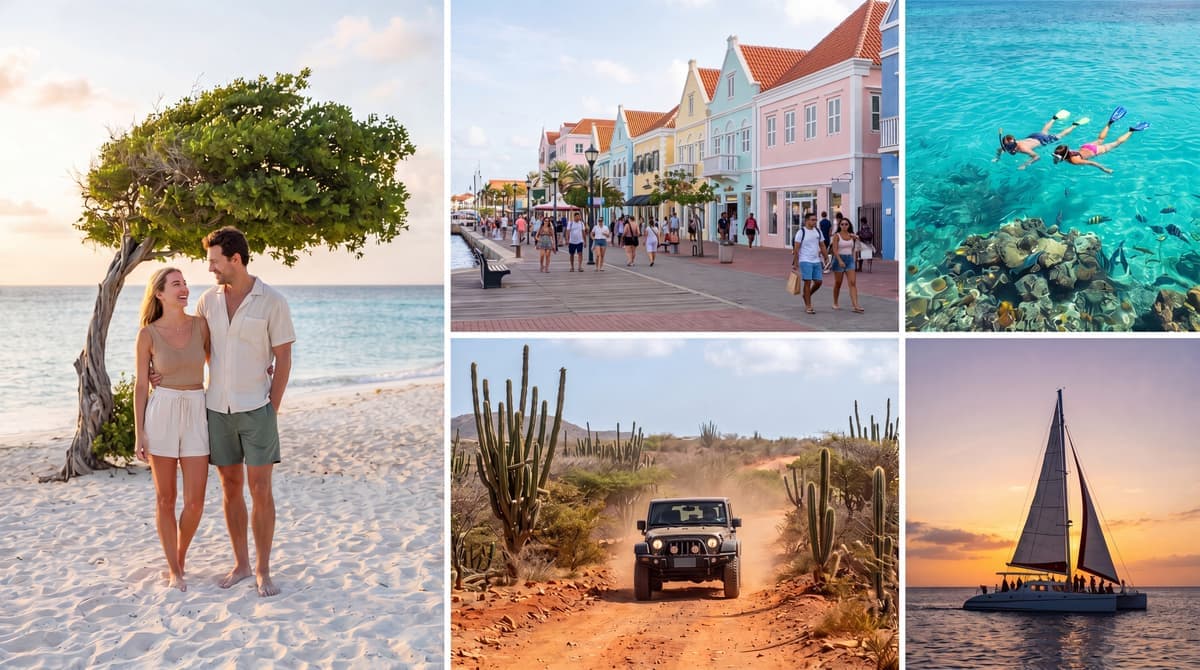
The flagship itinerary
7 days in Aruba, the way we'd do it
By our local team Updated June 2026 Real 2026 prices
Seven days is the sweet spot. Three days covers the highlights at a sprint, five is comfortable, but a full week lets you mix the famous beaches with the windward coast, the south side, and at least one slow day where your biggest decision is which palapa to claim. This is not a list of everything Aruba has. It is the order we would actually do it in, with real 2026 prices and the booking deadlines that matter.
The ideal 7-day Aruba itinerary, at a glance
A week in Aruba works best as relaxed beach days on the calm west coast, one catamaran snorkel day, one rugged Arikok National Park and Natural Pool day, a south-side culture day in San Nicolas and Baby Beach, and a flexible day, ending with a slow Oranjestad morning before you fly. Here is the exact order we would do it in.
- Day 1:Land, drop bags, sunset on Eagle Beach
- Day 2:Palm Beach morning, the calm-side snorkel coves
- Day 3:Catamaran sail and the Antilla shipwreck
- Day 4:Arikok National Park and the Natural Pool
- Day 5:San Nicolas murals, Baby Beach, Zeerovers
- Day 6:The flexible day: flamingos, deep snorkel, or nothing
- Day 7:Slow morning in Oranjestad, then the goodbye dinner
Where you sleep
Palm Beach puts restaurants, water sports and nightlife at your door. Eagle Beach is quieter, wider, and home to the famous fofoti trees. For a first visit, either is right.
Where to stay, zone by zoneWheels or no wheels
You do not need a car all week. Rent for 2 or 3 days in the middle for the national park and the south side, and use taxis (fixed government rates, no Uber) or your feet the rest.
The honest car-rental callOne piece of paperwork first: every visitor needs Aruba's online ED card, filed within a week of arrival, $20 per person age 8 and up. Use the official site only.
Traveling with kids? We have a gentler, day-by-day 7-day Aruba itinerary with kids, built around calm beaches, short drives, and the activities little ones actually remember.
Arrival
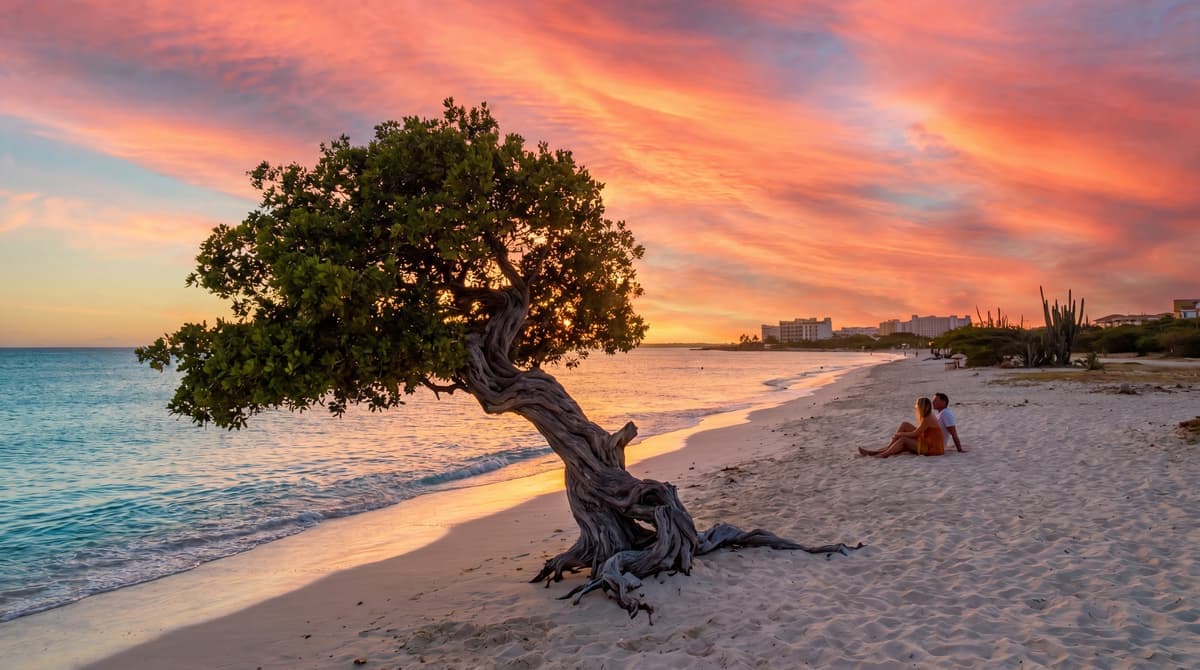
Land, drop bags, sunset on Eagle Beach
Do not overplan arrival day. The best use of a half day is the island’s most famous sand.
Most US flights land at Queen Beatrix in the early afternoon. By the time you clear the quick arrival flow and drop your bags, you have a half day, and the best use of it is Eagle Beach: wide, white, and somehow still uncrowded for a beach this famous.
Find the wind-bent fofoti trees for the photo you have already seen online, then swim while the light goes gold. Sunset lands between 6 and 7 pm year-round this close to the equator, so even a late arrival usually makes it. If you want the trip captured properly, this is the golden hour to book a professional photoshoot. Keep dinner casual and close to your hotel tonight.
Ease in
Palm Beach morning, the calm-side snorkel coves
A slow Palm Beach start, then the quiet snorkel spots most first-timers miss.
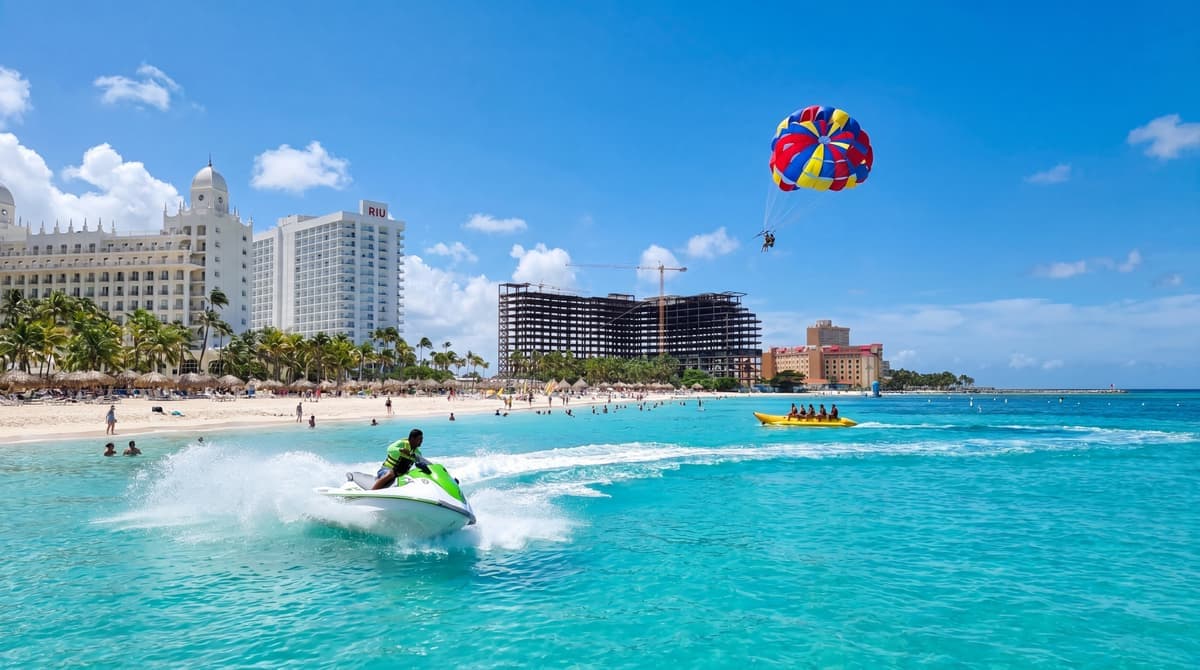
Walk Palm Beach early, before the loungers fill. Pick your speed: parasailing and jet skis from the beach operators, or a free morning floating in water so calm it barely qualifies as ocean.
In the afternoon, head 10 minutes north to Boca Catalina and Tres Trapi, where three stone steps lead off the rocks into water full of parrotfish and, often, sea turtles. Bring or rent gear first, there are no facilities up there, which is exactly why it stays good. End at Bugaloe on the pier for a feet-over-the-water sunset.
The big one
Catamaran sail and the Antilla shipwreck
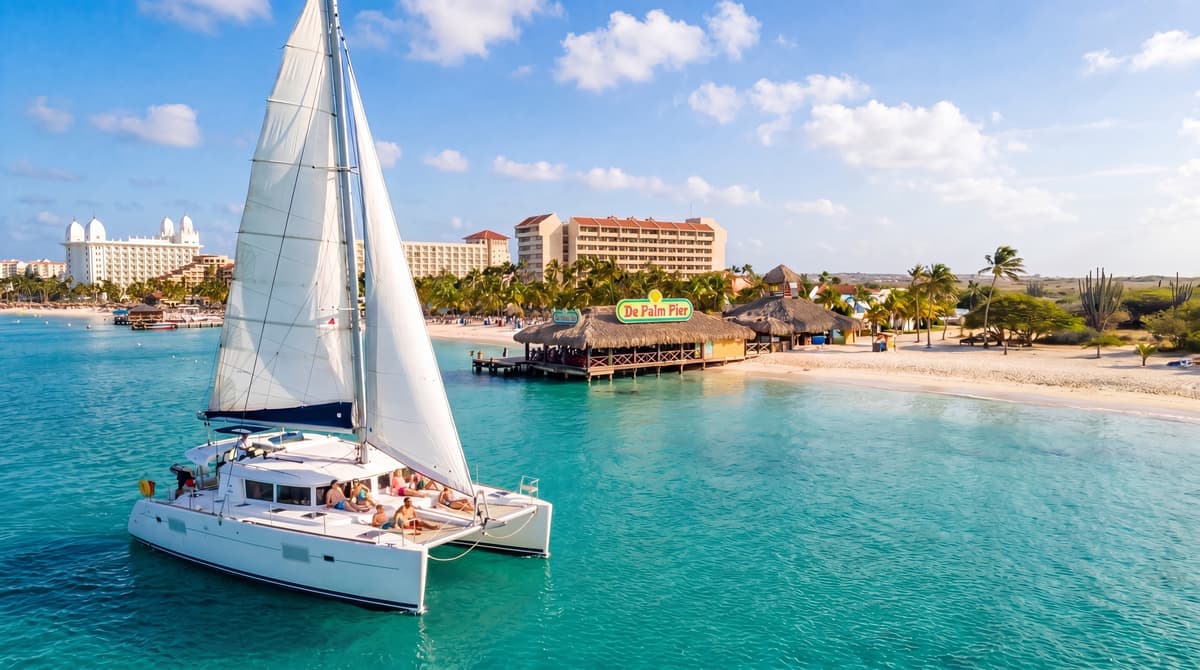
The day everyone remembers: a morning sail, snorkel stops, and an open bar home.
A catamaran sail-and-snorkel cruise up the west coast runs around $95 per person for the classic morning trip, usually with two or three snorkel stops, lunch, and an open bar on the sail home.
The headline stop is the Antilla, a 400-foot WWII German freighter lying shallow enough that snorkelers see plenty from the surface. Morning beats afternoon: calmer water, better visibility, fewer boats. You will be back by mid-afternoon for a slow pool-and-nap, then tonight’s big dinner reservation. Flying Fishbone seats you literally in the water at sunset.
The rugged day
Arikok National Park and the Natural Pool
Cactus desert, ancient caves, and a swim ringed by volcanic boulders.
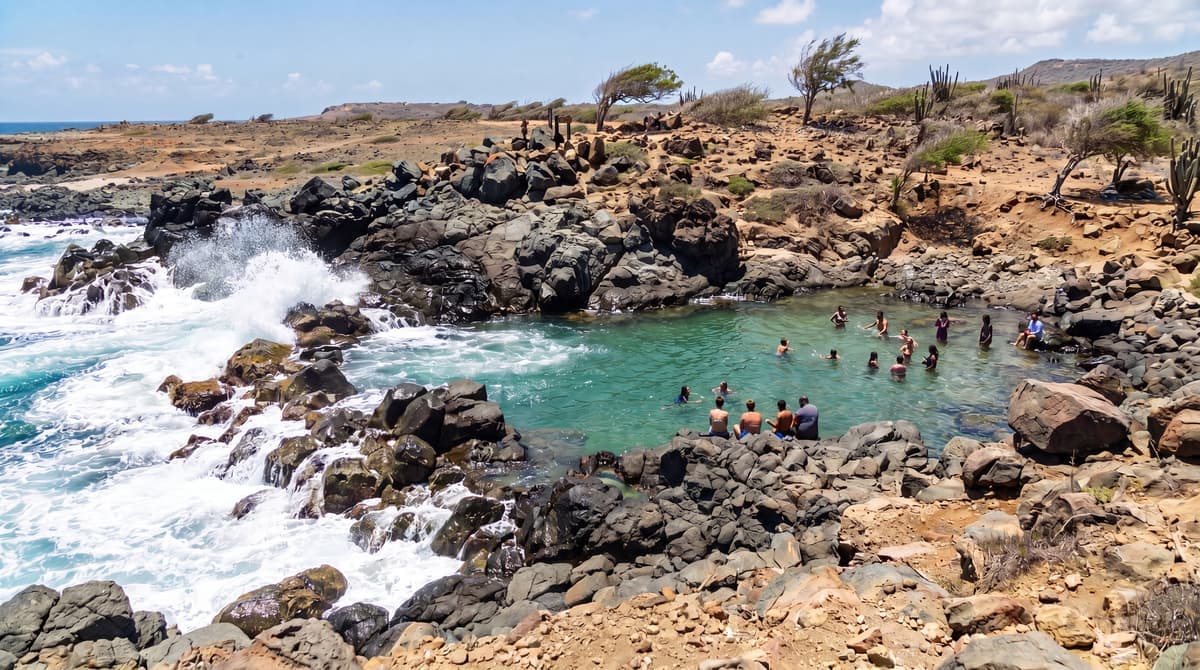
Nearly 20 percent of Aruba is Arikok National Park: cactus desert, limestone cliffs, caves with ancient Caquetio drawings, and a windward coast that looks nothing like the postcard side. Entrance is $22 for adults, free under 17.
The star is Conchi, the Natural Pool, with waves exploding on the rocks outside its rim. Regular cars cannot reach it, so take a guided jeep safari (about $89 to $108 per person in 2026, the pricier ones include lunch and park entry). Two honest warnings: the pool closes when the sea is rough and no operator can promise swimming on your day (December to May has the best odds), and it is genuinely bumpy and dusty, so wear closed shoes and bring double the water you think you need.
The south
San Nicolas murals, Baby Beach, Zeerovers
Drive the 30 minutes south most visitors never bother with. It is worth it.
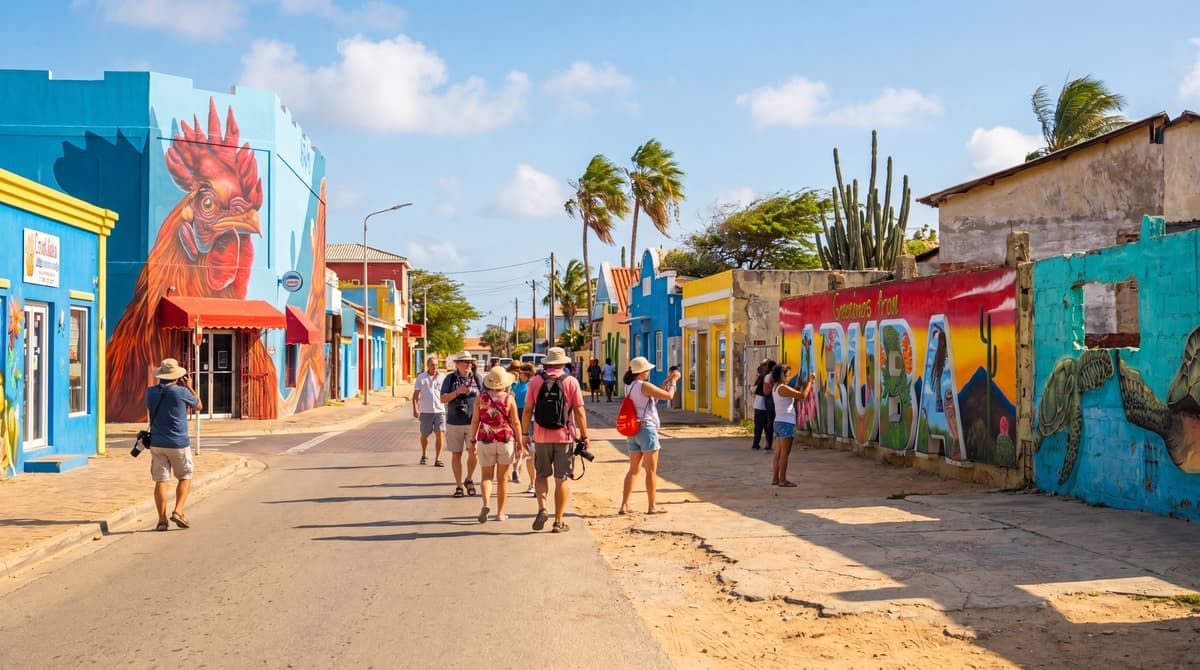
Start in San Nicolas, Aruba’s second city and unofficial art gallery, where dozens of huge murals have turned the old refinery town into the most photogenic streets on the island. An hour of wandering is enough, two if you stop for coffee.
Then Baby Beach, a half-moon lagoon so shallow and calm it feels engineered for nervous swimmers, with easy, bright snorkeling at its mouth. The non-negotiable on the way home is Zeerovers in Savaneta: a dockside fish shack where the day’s catch comes out of the fryer in paper baskets, about $12 to $15 a plate. Cash only, closed Mondays and Tuesdays.
Your call
The flexible day: flamingos, deep snorkel, or nothing
By now you know what the trip is missing. Three good ways to fill the gap.
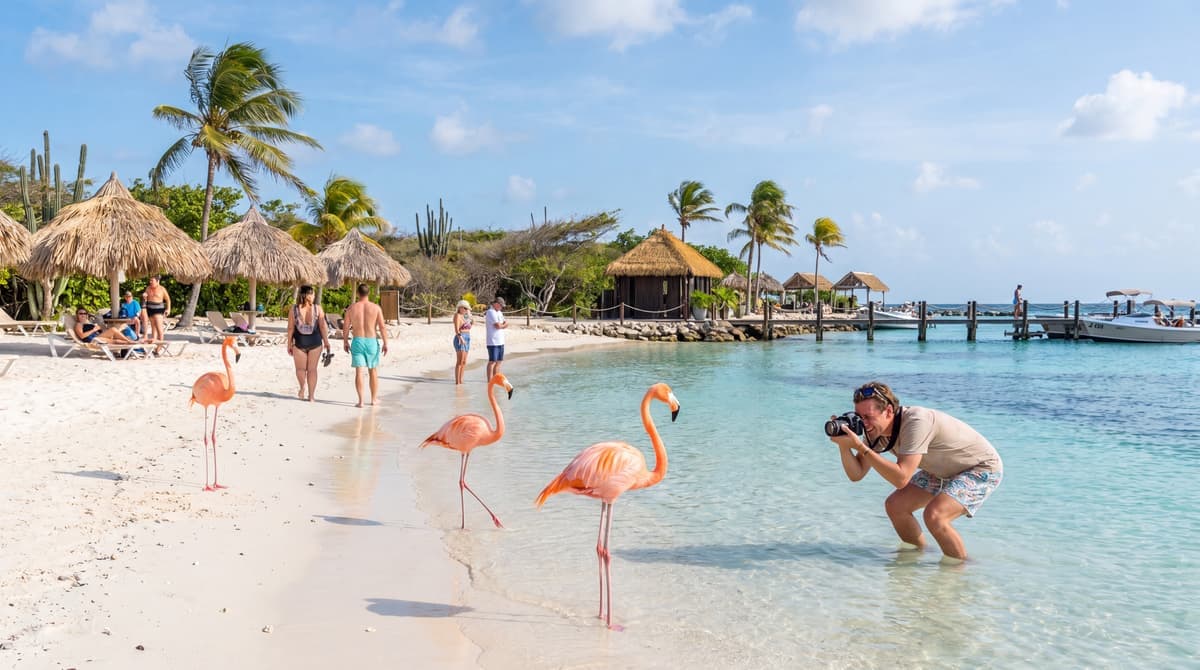
The flamingo day: Renaissance Island’s famous Flamingo Beach day pass is the hardest booking on the island, passes drop every Saturday at 9 am Aruba time for the following week and sell out fast. The serious snorkel day: take your gear to Mangel Halto’s mangrove channels, the best shore reef on the island, and pair it with Arashi up north.
Or the do-nothing day: drop the car, claim a palapa on wide Manchebo Beach, and read a book. Nobody has ever regretted this. If it is a Tuesday, the Bon Bini Festival runs in the evening at Fort Zoutman downtown.
Farewell
Slow morning in Oranjestad, then the goodbye dinner
Fly out late if you can, and make the last meal count.
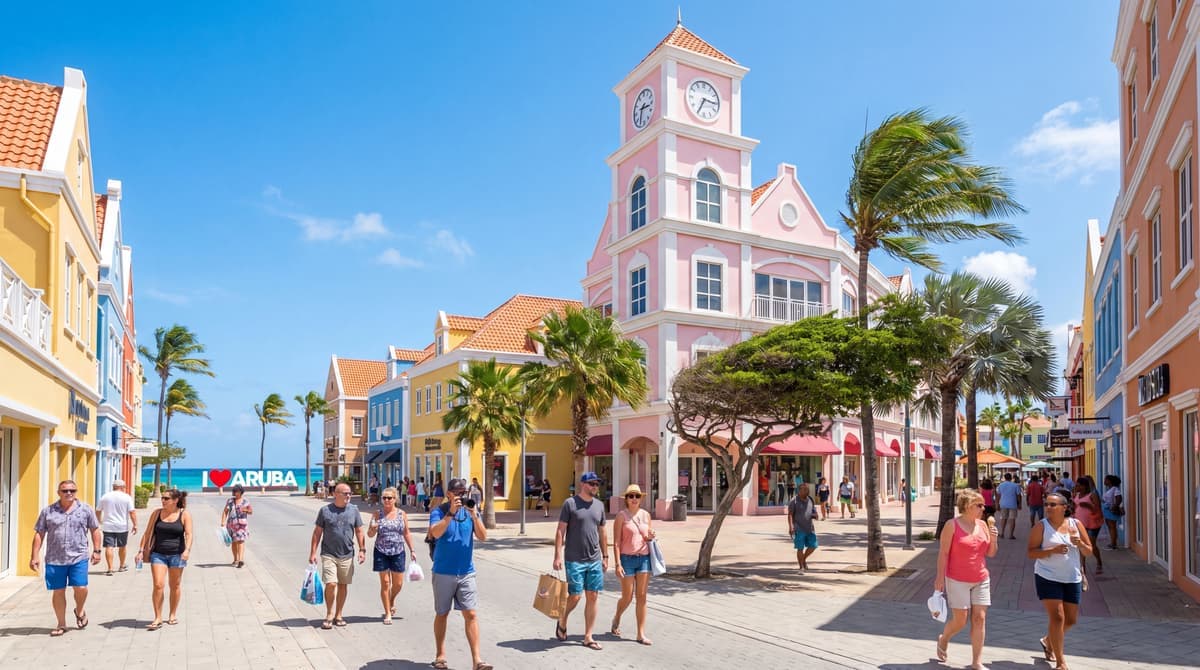
Most US-bound flights leave in the early afternoon, and the airport’s US preclearance means you clear American immigration before boarding, so arrive a solid three hours early. With a morning to spare, walk Oranjestad’s pastel Dutch colonial streets and the harbor for a last good coffee.
If last night was not already the blowout, Papiamento, in a 175-year-old cunucu farmhouse in Noord, is the kind of farewell meal that gets a trip talked about for years.
No guesswork
What this week actually costs
Per person for 7 nights, two adults sharing a room, excluding flights. Numbers come from live hotel and tour listings checked July 2026 and the verified tour prices on this site. The full interactive calculator is on our vacation cost page.
| Category | Budget | Mid-range | Splurge |
|---|---|---|---|
| Accommodationper night, room total | $80 to $150 | $200 to $380 | $450 to $750 |
| Food and drinkper person, per day | $35 to $50 | $60 to $85 | $110 to $160 |
| Transportcar rental or taxis, total stay | $120 to $1702 rental days + taxis | $180 to $2553 rental days + taxis | Taxis / transfersno self-drive needed |
| Activitiesper person, for the week | $150 to $2801-2 paid tours | $350 to $550catamaran + jeep + extras | $700 to $1,050daily activities |
| 7-day totalper person, excl. flights | $900 to $1,600 | $1,800 to $2,900 | $4,200 to $6,500 |
Based on live hotel listings (TripAdvisor / Booking.com), verified Viator tour prices, and local benchmarks. Prices checked July 2026. Excludes flights. Accommodation figures assume two adults sharing one room. Season and booking timing affect the real number.
Book these before you fly
- The catamaran snorkel cruise (Day 3).
- The Natural Pool jeep tour (Day 4) if you travel in the December to April high season, it sells out 2 to 3 weeks ahead.
- Any big-deal dinner reservation, like Flying Fishbone, which books out weeks ahead.
Straight answers
How many days do you need in Aruba?
Five to seven days is the sweet spot for a first visit. Three days covers only the beach highlights at a sprint, five is comfortable for the west-coast beaches plus one adventure day, and seven lets you add Arikok National Park and the Natural Pool, the San Nicolas and Baby Beach south side, and one slow unplanned day.
Is 5 days enough for Aruba?
Yes, five days is enough for a strong first trip: the calm west-coast beaches, a catamaran snorkel day, and one Arikok National Park or Natural Pool day, with time left to relax. A sixth and seventh day let you add the south side (San Nicolas, Baby Beach, Zeerovers) and a fully unplanned beach day without rushing.
Is 7 days too long for Aruba?
No. Seven days lets you cover the west coast beaches, a catamaran snorkel day, Arikok National Park and the Natural Pool, the San Nicolas and Baby Beach south side, and still keep one fully unplanned beach day. Three days covers only the highlights at a sprint.
Do you need a car for a week in Aruba?
Not for the whole week. We recommend renting for 2 or 3 days in the middle of the trip for Arikok National Park and the south side. Taxis run on fixed government rates, $41 from the airport to Palm Beach for up to four people, and there is no Uber or Lyft.
What should you book in advance for an Aruba trip?
Three things: a catamaran snorkel cruise, a Natural Pool jeep or UTV tour if you travel in the December to April high season (they sell out 2 to 3 weeks ahead), and any big dinner reservation like Flying Fishbone, which books out weeks ahead.
How much does a week in Aruba cost per person?
Excluding flights, a sensible mid-range week with a 3-day car rental, a catamaran day, a jeep tour, and a mix of local and upscale dinners lands roughly between $1,800 and $2,800 per person with shared hotel costs. Budget and luxury trips fall well outside that range in both directions.
Can you swim at the Natural Pool every day?
No. Conchi closes for swimming whenever the sea is rough enough to send waves over its rock rim, and no tour operator can guarantee conditions on a specific day. December through May offers the best odds.
Complete your trip
A week on the island runs smoother with these sorted before you fly.
Want this week shaped around your dates?
Tell us who's coming and when, and we'll rearrange the week the way we'd do it for a friend, in English or Dutch.
Plan my Aruba week