If you have ever watched a kiteboarder skim across the water at speed and quietly assumed you are not that person, Aruba has something to say about it. The flat lagoon at Fisherman's Huts (Hadicurari Beach) is one of the most beginner-friendly kitesurfing spots on earth, because the wind here is not just strong, it is predictable. It blows from the same direction, at roughly the same speed, day after day. That consistency is what makes learning possible.
We have watched hundreds of first-timers take their first lesson at this beach, and the success rate when instruction is solid is genuinely surprising. You do not need prior board sports experience. You do not need to be particularly athletic. You need a couple of hours and the willingness to get dragged through warm water by a kite before your feet find the board.
Here is everything you need to know before you book.
Why Aruba's Wind Is Unlike Anywhere Else
Aruba sits in the path of the North Atlantic trade winds, which blow from the east and northeast at roughly 15 to 25 knots year-round. Unlike most wind-sports destinations where conditions shift significantly by season, Aruba's trades are remarkably stable. The wind arrives in the morning and builds through the afternoon, almost always from the same direction. Professional instructors here can read the conditions at 8am and tell you with confidence what the afternoon will bring.
The summer months from June through September are the windiest window. Trade winds strengthen and hold their peak force through the heat of the day, making this the best time for a first lesson. Winter months from December through April are also strong, just less consistently so, and the beach is noticeably more crowded with both tourists and riders.
The water at Fisherman's Huts runs 80 to 84 degrees Fahrenheit through summer. No wetsuit, no cold shock, no shivering after a fall. You fall in, you float, the water is comfortable, and you get back on the board.
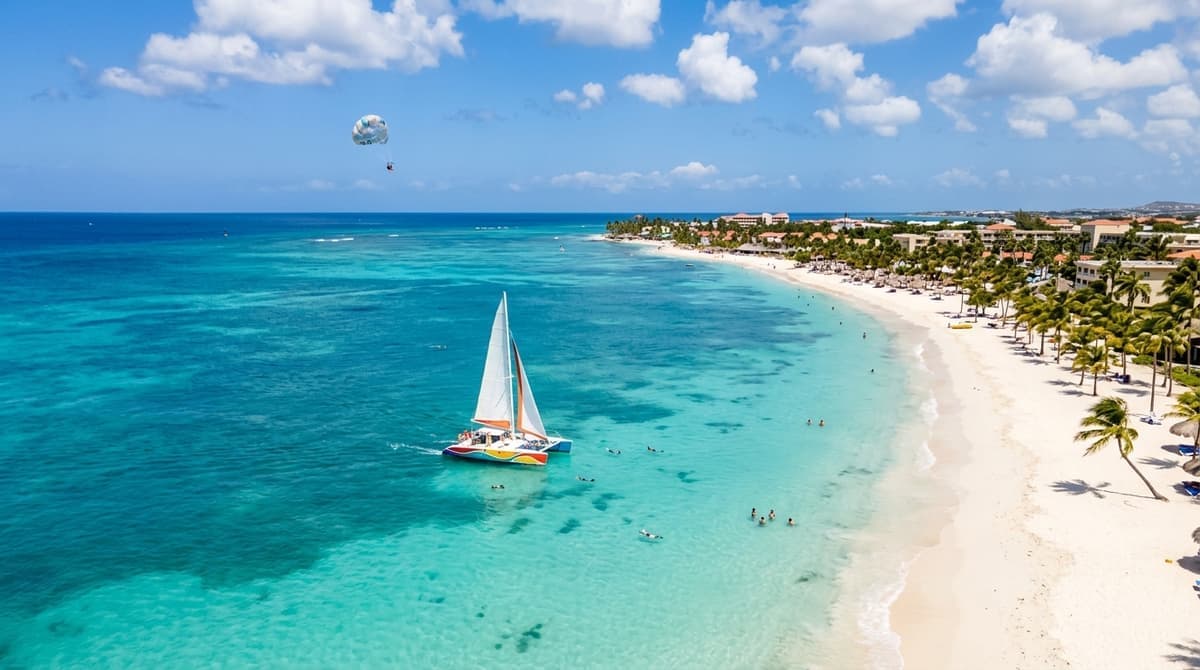
Parasail over Palm Beach, booked direct with the crew
$70 per person, open times from the crew’s own calendar, and a $20 per person deposit that confirms your booking.
The Two Spots: Hadicurari for Beginners, Boca Grandi for Experts
Kitesurfing in Aruba happens at two beaches, and they are very different in character.
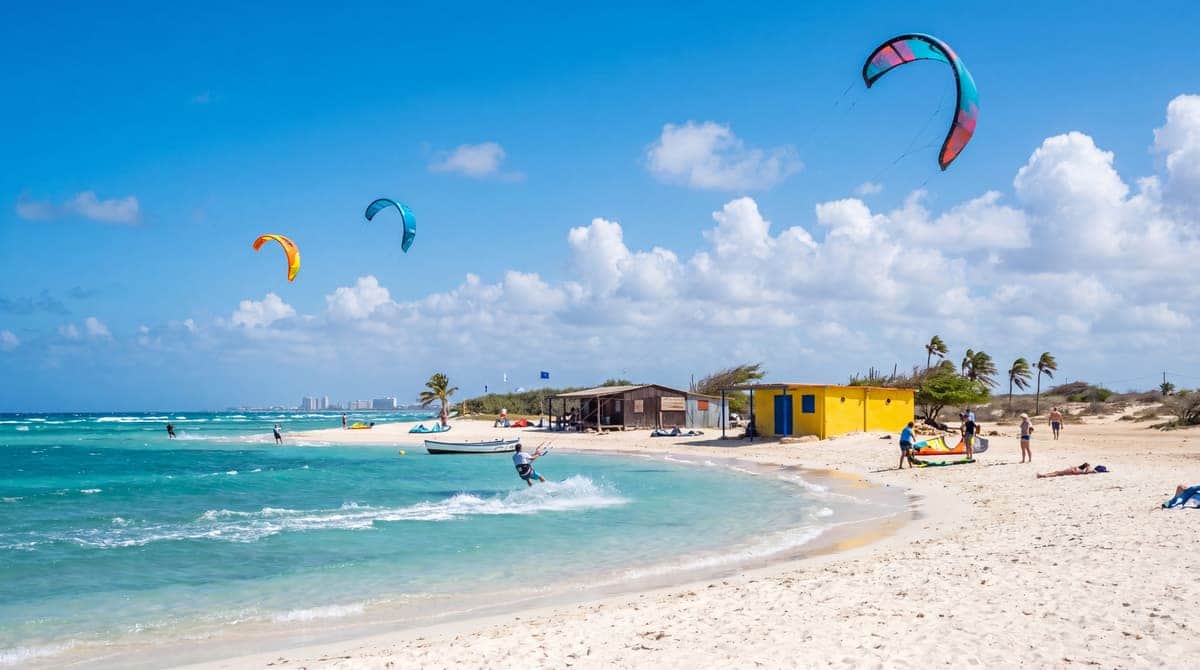
Hadicurari Beach (Fisherman's Huts) sits on the northwest coast just north of Palm Beach. The shallow lagoon extends offshore over flat, manageable water, which is precisely what learning requires. Beginners practice kite control on the sand, get pulled through the lagoon in a harness, and then gradually work toward standing on a board. The old fishermen's huts that gave the beach its nickname are still there on the sand, and on a summer afternoon the sky above the water is full of colorful kites at every level of skill. See the full beach details on our Hadicurari Beach guide.
Boca Grandi is on the island's southeast coast, facing the open Atlantic. Strong, gusty winds and proper ocean waves make it a serious spot for experienced riders who want wave-riding conditions and a real challenge. We do not recommend it for beginners, and operators will say the same. Earn Hadicurari first.
What to Expect in a Beginner Lesson
A standard beginner lesson runs two to three hours and moves through three stages.
The first stage happens on the beach. Your instructor sets up the kite, explains how the power system works, and lets you fly it on a practice bar while standing on dry sand. This takes 30 to 45 minutes and matters more than it looks. A kiteboarder with automatic kite control can concentrate on the board. Someone still fighting the kite never gets to the board.
The second stage is body-dragging: you enter the water holding the control bar while the kite pulls you through the surface. No board yet. This is about feeling how much power the kite generates and learning to control your direction in the water. Most beginners find this part genuinely engaging, even before any board riding happens.
The third stage, standing on the board and actually riding, may or may not happen in your first session. Honest instructors tell you this upfront. Some beginners get up briefly by the end of a two-hour lesson. Others need a second session. Do not treat riding as the success metric for day one. Clean kite control and confident body-dragging are the real milestones, and they set the foundation for everything that follows.
Look for instructors who hold IKO (International Kiteboarding Organization) or ISA (International Surfing Association) certification, which means they have been trained in structured teaching methodology and proper safety protocols.
Kitesurfing vs Windsurfing: What Is the Difference?
Both sports happen at Hadicurari, and visitors sometimes arrive unsure which to try. They are genuinely different sports with different gear and a different learning curve.
Windsurfing uses a large sail attached directly to the board via a mast and boom. The rider stands on the board and controls power by angling the sail relative to the wind. It is physically demanding from day one, requires good upper-body strength and balance, and has a methodical, gradual learning curve.
Kitesurfing separates the rider from the power source: a large inflatable kite flies on long lines connected to a harness around your waist, and you stand on a small twin-tip board that follows wherever the kite takes you. Once the kite control becomes automatic, many riders progress faster than with windsurfing.
The annual Hi-Winds competition, one of the largest wind-sports events in the Caribbean, features both disciplines at an elite level. It runs each May at Fisherman's Huts and draws competitors from across the region. Even outside the event window, watching the professionals here on a summer afternoon is one of the better free shows on the island.
For most beginners without prior experience of either sport, kitesurfing tends to deliver an exciting sensation sooner. Being pulled through warm turquoise water by a power kite is compelling even before you get on a board.
Booking Your Lesson
Vela Sports Aruba runs certified kitesurfing lessons directly from Fisherman's Huts, with beginner sessions starting at $218 per person for a two- to three-hour session. The school sits right on the flat-water lagoon, which is the ideal learning setup. Summer slots fill fast, so booking ahead is worth doing. Check dates and availability on Viator. Cancellation is free if your plans change.
For a complete look at water sports, tours, and activities across the island, our activities guide has all the options.
Let us plan this trip for you
We live in Aruba and vet every spot ourselves, share your dates and we'll build the rest.
What to Wear and Bring
The list is short. Aruba's warm water handles most of the logistics.
- A rash guard or UV-protective swim top. You will be in the water for most of the lesson, and reef-safe SPF 50 on exposed skin is non-negotiable. The UV index is high year-round and the water amplifies it.
- Water shoes or old sneakers for the beach entry. Hadicurari has rocky patches at the water line.
- A change of clothes and a towel. You will be completely soaked.
- No wetsuit needed. The water is warm enough that staying in for three hours is genuinely comfortable.
For the full packing picture, our Aruba packing list covers every category.
After Your Session
Hadicurari is not a lounging beach. The wind is too strong for a comfortable afternoon under a palapa, and there are no restaurants on this stretch. After your lesson, Palm Beach is about a ten-minute walk or a five-minute drive south and has no shortage of spots for lunch and cold drinks. Both will taste considerably better than usual.
If you want to watch more experienced riders before your session, arrive in the early afternoon when the trades are at their strongest and the professionals come out. On a summer day, the sky above Fisherman's Huts can hold dozens of kites at once. It is worth arriving early and watching for a while before your lesson.
The beaches guide covers the full northwest coast, including Arashi Beach just north of Hadicurari for a calmer swim after your session. For everything else to do on the island, our things to do in Aruba guide has the full menu by category.
Is One Lesson Enough?
One lesson gets you through kite control and body-dragging, and gives many beginners a first taste of riding. It is satisfying even if you never book a second session. If you reach that first board ride, most people immediately want to come back.
For a dedicated wind-sports trip, three to four lessons over consecutive days is the window where most beginners achieve independent riding. If that is the goal, book your first lesson early in your stay so there is room to follow up without rushing the last day.
Tell us your travel dates on the trip planner and we will help build a week that fits a lesson or two into the right spots.