Most visitors to Aruba spend every hour of daylight above the surface. They snorkel the reef, sail at sunset, walk the beach at dusk. And then they fly home without knowing there is a 400-foot WWII German freighter sitting in 60 feet of crystal-clear water just off the northwest shore.
Aruba is one of the Caribbean's best-kept secrets for scuba divers. The water is warm year-round, visibility frequently exceeds 80 feet, the island sits below the main hurricane belt so conditions hold through every month, and the dive sites range from genuinely beginner-friendly wrecks to technical dives that keep experienced divers occupied for days. None of it requires you to be certified before you arrive.
This is our honest local guide to diving here, from the historic wreck that anchors the whole experience to the pair of sunken aircraft that most guidebooks never mention.
The Antilla: the wreck that anchors everything
The SS Antilla is widely regarded as the largest accessible wreck dive in the Caribbean. The German cargo freighter stretches approximately 400 feet (around 122 meters) in length, and almost all of it sits within recreational dive limits, from roughly 15 feet at the shallowest sections to 60 feet at the deepest near the keel and propeller end.
The history is as compelling as the dive. Germany invaded the Netherlands on May 10, 1940. On that same day, Dutch officials in Aruba ordered the Antilla's crew to surrender the ship. Her captain refused to lower the gangway. Dutch marines rowed out in the early hours, boarded the vessel, and found the crew already in the process of scuttling her: seacocks open, fires burning in the engine room. The ship sank where she lay, and has stayed there ever since.
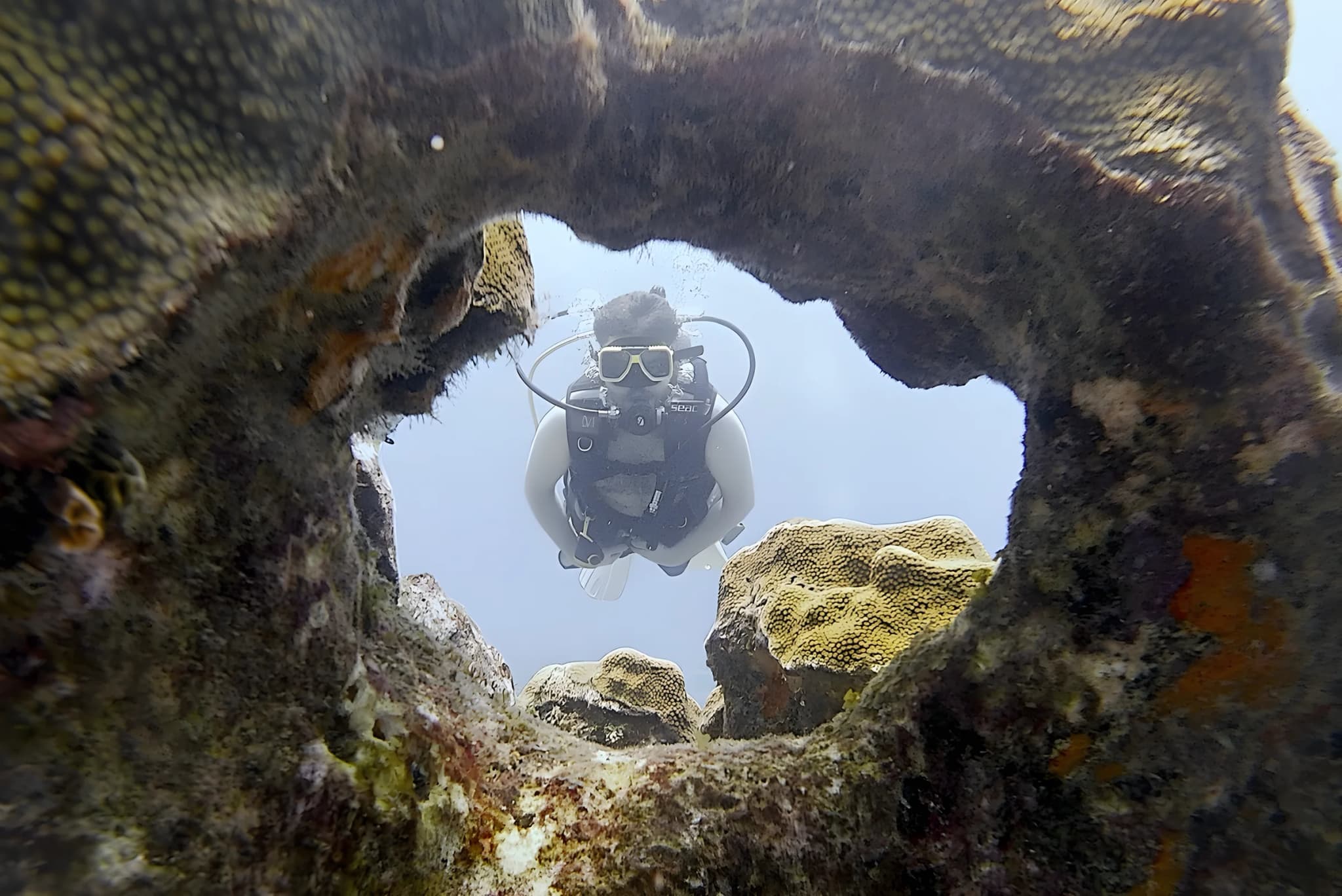
She now lies on her port side off Malmok Beach, on Aruba's northwest coast. She split into two sections by the 1950s from storm damage, which means a complete exploration fills two separate dives and is never quite finished. The cargo holds are penetrable, and schools of silversides stream through them in spinning columns when light hits the interior. The hull is blanketed in purple tube sponges, orange cup corals, brain coral, and gorgonian fans. Moray eels and stingrays settle into the corroded cabin recesses. Yellowtail snappers and barracuda work the open water alongside the hull.
One honest caveat: the northwest-facing location means the surface above the Antilla can have chop when the trade winds are blowing hard. Morning departures almost always leave in the calmest window. Book the earliest slot the operator offers.
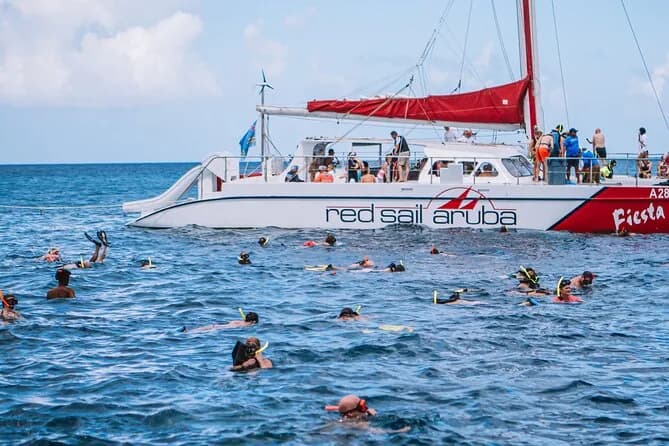
Snorkeling the Antilla Shipwreck
3 Hours · from $79 per person. Live prices, dates, and the honest details, one page.
The Pedernales: a WWII wreck even beginners can reach
The Pedernales oil tanker was torpedoed during a coordinated U-boat attack in Aruba's waters in February 1942 that struck multiple tankers in a single night. The bow and stern sections, still seaworthy despite the damage, were later salvaged, towed to the United States, welded onto new mid-sections, and returned to service. The destroyed center section was left in Aruba's shallows.
What remains sits in 25 to 40 feet of water, which puts it firmly in beginner territory. The wreck has spread across a coral formation, and the cabin sections, interior pipework, and wash basins are all still visible. Grouper and moray eels have claimed the cabin recesses as home. It is not as dramatic as the Antilla in scale, but the accessible depth and the WWII context make it one of the better introductory wreck dives in the region. Snorkelers can see the shallowest sections from the surface.
The Jane Sea: for advanced divers
The Jane Sea is a 250-foot concrete freighter deliberately scuttled as an artificial reef in 1988. She rests nearly upright on the seafloor at roughly 90 to 98 feet, which already pushes the upper boundary of a standard Open Water certification. The stronger currents on this side of the island are the real consideration, and local operators consistently rate this as an advanced or experienced dive. If you have your Advanced Open Water certification and are comfortable in current, the Jane Sea rewards the extra qualification with enormous tube sponges, curious barracuda, occasional eagle rays, and a sense of scale the shallower wrecks cannot quite match.
Two sunken aircraft (a detail most guides skip)
Off the northwest coast, near the Sonesta and Renaissance resort area, two aircraft were deliberately sunk to create artificial reefs. The first is a YS-11 turboprop, a Japanese-built passenger plane formerly operated by Air Aruba, sunk in 2004. It rests on its landing gear at approximately 40 feet, the fuselage intact and open at both doors for swim-through access. Morays, angelfish, stingrays, and batfish have moved in. The depth and current-free conditions make this accessible to Open Water certified divers.
The second aircraft rests deeper, around 78 feet, and arrived in two sections after storm damage. More coral overgrowth, more depth, a different feel. Operators who work this area sometimes run both aircraft on the same trip. Ask specifically for both when booking.
Do you need to be certified?
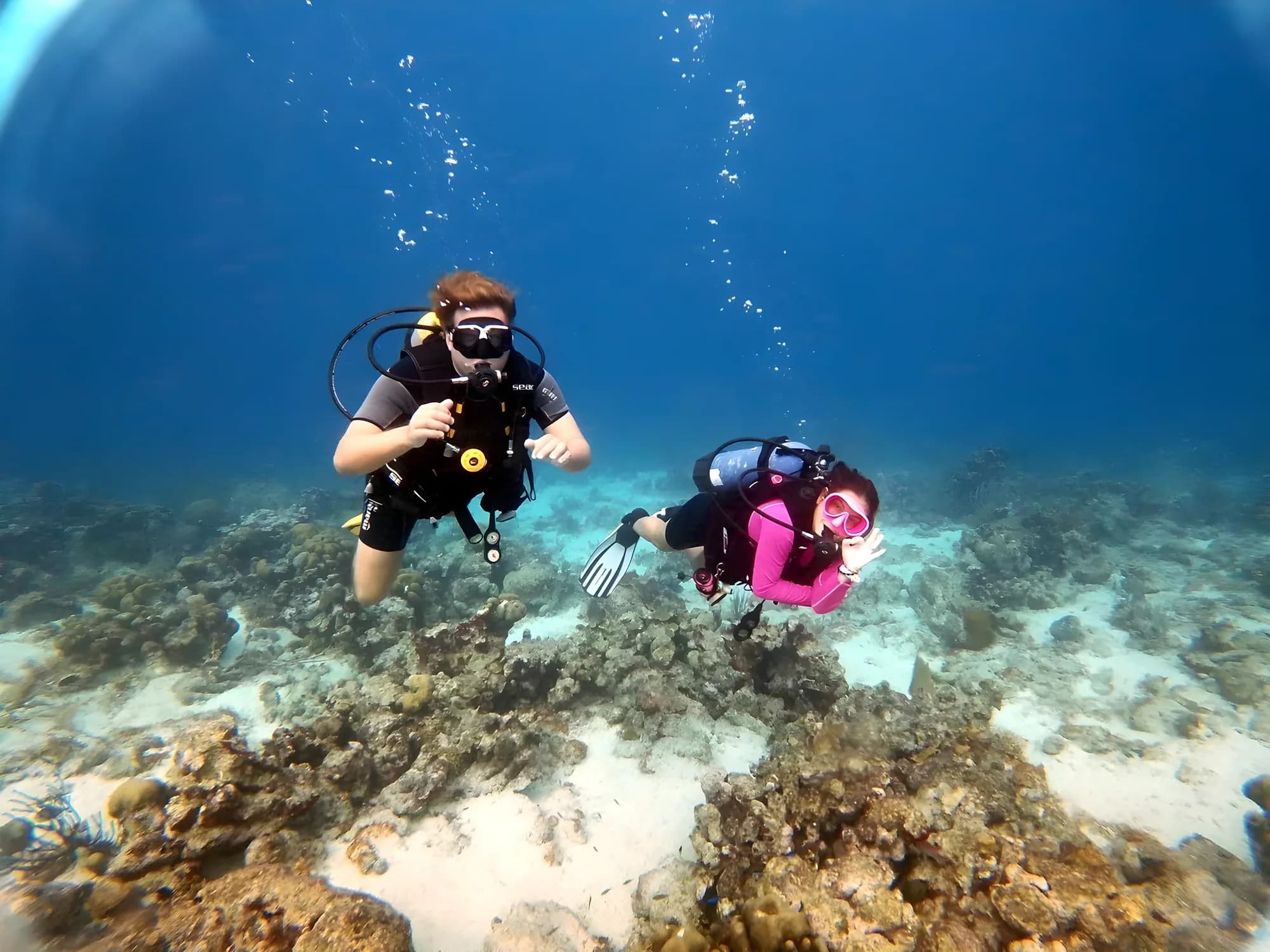
No, not for your first dive. All of the established operators in Aruba offer Discover Scuba programs (also called intro dives or resort dives) designed for people who have never been certified. These are one-tank supervised dives in water between 12 and 40 feet, with a certified instructor beside you the entire time. You will spend 30 to 45 minutes learning basic skills in shallow water before heading to the reef or a shallow section of the Antilla. No prior experience is required. The minimum age is typically 10 years old. Pricing runs $107 to $115 all equipment included.
Check current availability for Discover Scuba programs on Viator.
If you are already certified at Open Water level, the Antilla and Pedernales are both well within range, as are the aircraft wrecks. Advanced Open Water opens up the Jane Sea and any sites with stronger currents. Full PADI Open Water certification courses are available in Aruba if you want to leave qualified, typically $510 to $615 depending on the operator and whether you complete the eLearning portion before arrival.
Browse 32 vetted Aruba experiences
Most confirm instantly with free cancellation up to 24h, and 4 of them are free.
Conditions in the water
Water temperature in Aruba runs between 80 and 85 degrees Fahrenheit year-round, slightly cooler in winter and warmest in late summer. Most divers skip the wetsuit entirely in July and August. A thin 3mm suit is comfortable in the winter months. Visibility averages 50 to 80 feet on a normal day, with occasional days reaching 100 feet in ideal conditions.
Aruba sits below the Atlantic hurricane belt, so there is no seasonal closure and no swell season that shuts the dive sites down. Conditions hold through every month. The calmest water is generally from April through June, before the trade winds intensify through summer, but operators run trips year-round and cancellations are uncommon. Whichever month you visit, the diving is available.
What a dive trip costs
A two-tank morning boat dive for certified divers runs $105 to $145, depending on the operator and whether equipment rental is included. Bring your own gear and you land at the lower end. Add fins, mask, BCD, regulator, and tank rental and the price settles around $140 to $145. Discover Scuba programs for non-certified divers run $107 to $115 all equipment included.
One of those two-tank mornings is bookable direct on this site, with a crew that runs the south east coast Monday to Saturday: the prices, the certification rules, the free pickup and the deposit are all on the two-tank boat dive page, and our guide to the two-tank morning walks through how the day runs.
The standard format is an early morning departure, two dives with a surface interval, and a return by early afternoon. Most operators also offer single-tank afternoon dives for certified divers who want a shorter excursion.
Check dates and prices for certified dive trips on Viator, or see the full lineup on our activities page.
A few things to sort before you go
Bring your C-card. Operators check certification before certified dives, physical or digital. The PADI app stores it on your phone.
Book the morning departure. Conditions are almost always calmer before the trade winds build. The Antilla especially benefits from an early start.
Ask about group size. Several of the best operators here deliberately cap trips at four to six divers per instructor, which means more attention and far less noise on the wreck. Worth asking before you confirm.
Equalization. This is the single biggest reason new divers cut a dive short. Practice the Valsalva maneuver before you enter the water, equalize early and often on descent, and tell your instructor immediately if something feels wrong. Do not push through ear discomfort.
Book ahead in peak season. From mid-December through April, popular dive operators fill up days in advance. Treat your dive booking the same way you would a dinner reservation at the nicest restaurant on the island.
For the full picture on planning your Aruba trip around the diving, including which area to stay in and how to fill the days between underwater, our planning hub is the starting point. If you want the itinerary built for you, the concierge service can put together a week that puts you in the water every morning and on the beach every afternoon.