It is the question that sits quietly under a lot of Aruba trip planning, especially if you are bringing kids or you are not a strong swimmer. You have seen the photos of that impossibly calm turquoise water, and then you stumble on a forum thread about a rip current and your stomach drops. So here is the honest answer from people who live here and swim these beaches all year: yes, the beaches nearly every visitor actually uses are calm, shallow, and safe. But Aruba is not calm everywhere, there are no lifeguards, and a handful of real hazards are worth understanding before you get in. Ten minutes of reading now is what keeps a beach day easy.
The one fact that explains everything
Aruba has two coasts that behave like two different oceans, and understanding the split answers most of the safety question on its own.
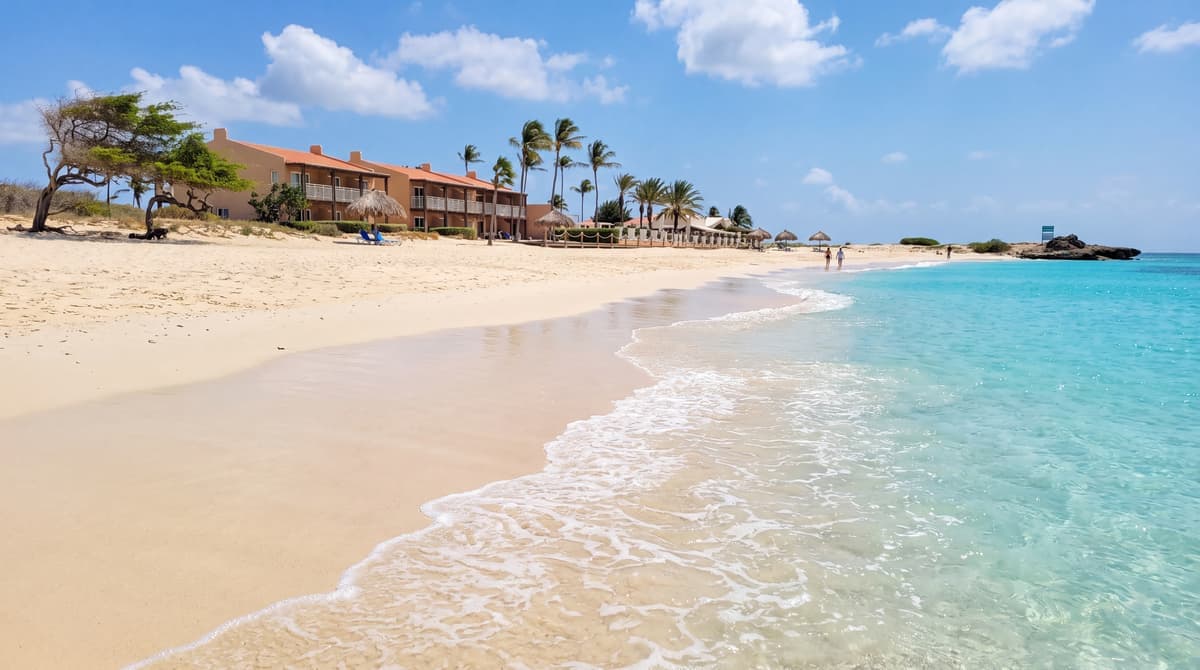
The west and southwest coast, the leeward side, sits in the shelter of the island and out of the path of the constant trade winds. This is where every resort, every famous beach, and almost every visitor ends up: Palm Beach, Eagle Beach, Manchebo, Druif, Baby Beach, Mangel Halto. The water here is calm, warm, and shallow a long way out, with only gentle waves on most days. Strong rip currents are uncommon.
The north and east coast, the windward side, faces the open Atlantic head on. The waves are big, the currents are strong, undertow is real, and the shoreline is often rock rather than sand. It is genuinely beautiful and absolutely worth seeing. It is not a place to swim. The saving grace is that the two sides are only a short drive apart, so you are never far from safe water.
Browse 32 vetted Aruba experiences
Most confirm instantly with free cancellation up to 24h, and 4 of them are free.
Where the swimming is easy
These are the leeward beaches we send everyone to, each with one honest caveat.
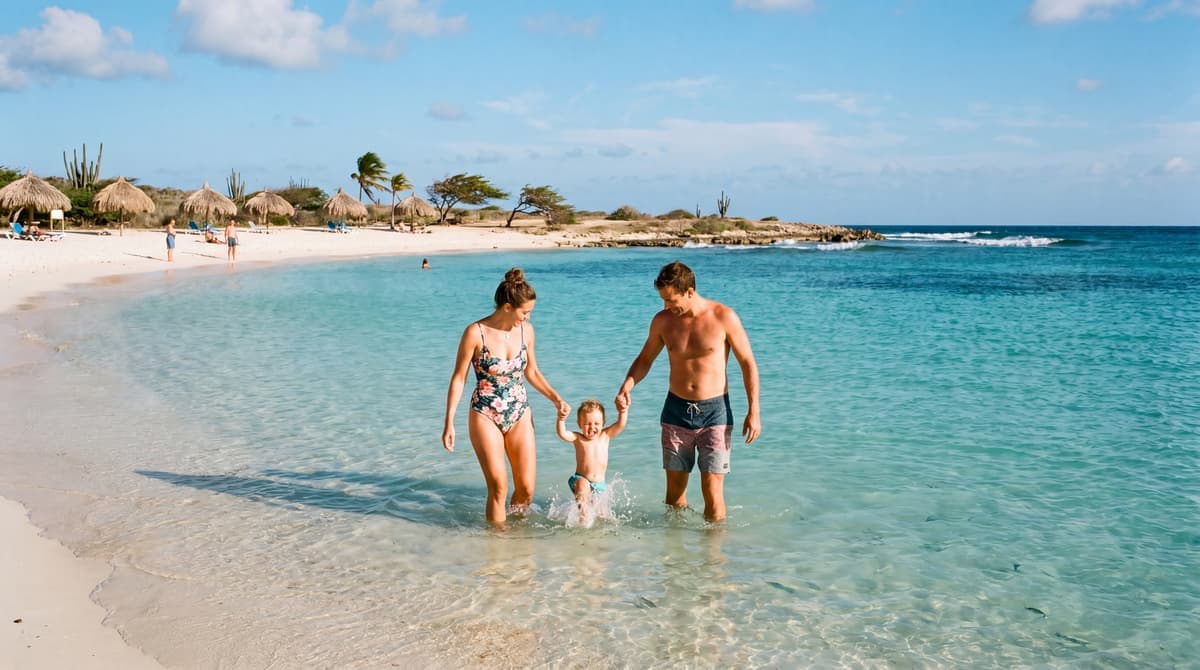
- Baby Beach, at the island's southern tip, is a shallow, reef-ringed lagoon and the calmest, most protected swimming water in Aruba. It is the first place we point families with small children. The honest caveat: the water deepens and the current picks up near the gap in the reef where the lagoon opens to the sea, so keep young kids well inside the ring and away from the opening. Our Baby Beach guide has the details.
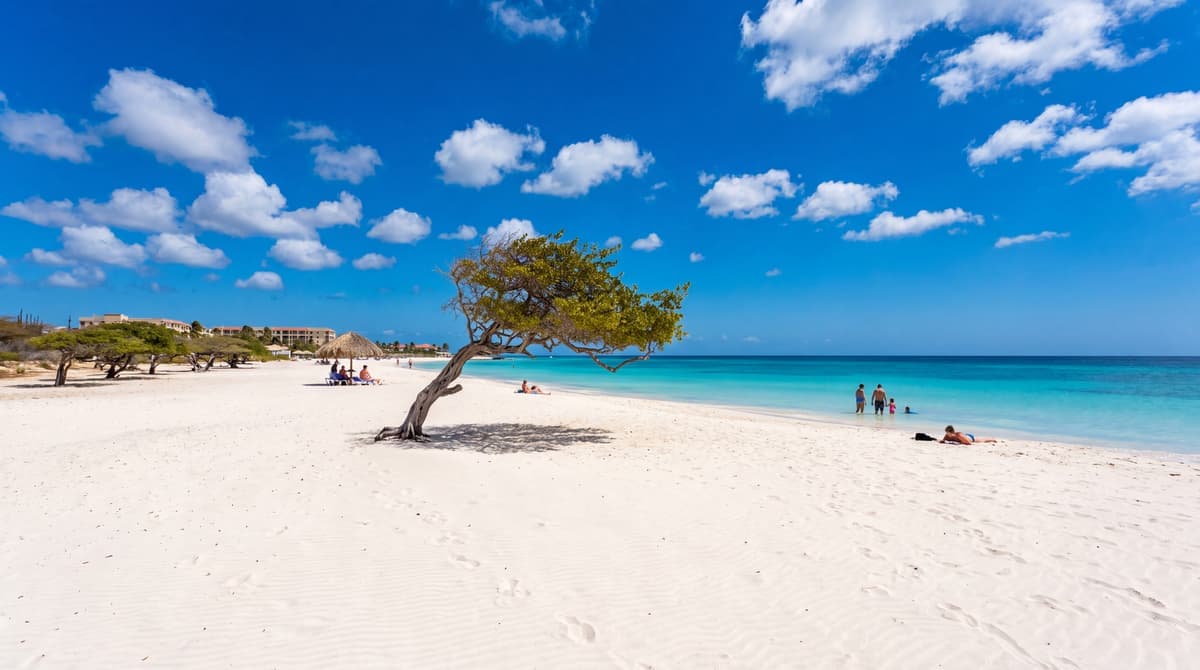
- Eagle Beach and Palm Beach, the two headline resort beaches, are protected by the island's shape and stay calm and swimmable almost every day of the year. The caveat on Palm Beach: it has piers, and rip currents are strongest right next to those structures, so give them a wide berth (more on that below). See our Eagle Beach and Palm Beach guides.
- Mangel Halto is a calm, shallow, mangrove-fringed spot with turquoise inlets that make natural splash pools, quieter than the resort beaches and lovely for gentle swimming and snorkeling. The caveat: the entry is over rock and reef in places, so water shoes save your feet. Our Mangel Halto guide covers the entry points.
- Manchebo and Druif sit on the same low-rise stretch as Eagle Beach and are calm most days. The caveat on Manchebo: it juts a little more into the open water, so the trade winds and the shore break hit it more directly than the sheltered stretches, and the sand can blow. See the Manchebo guide.
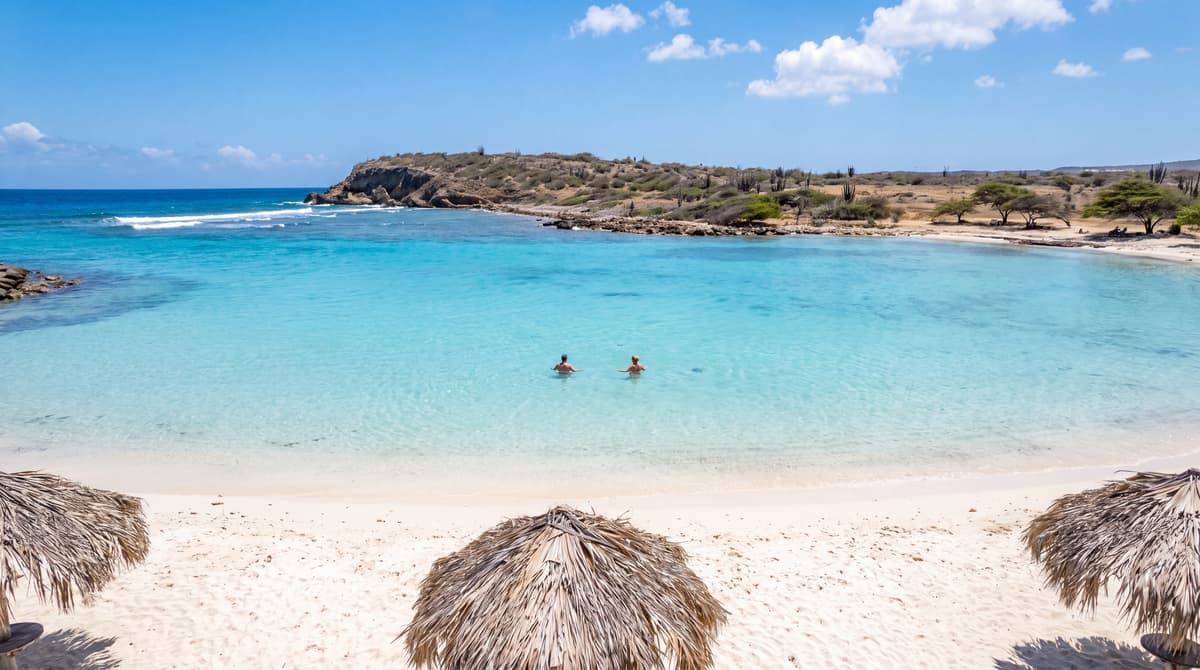
- Boca Catalina and Arashi, up near the northwest tip, are small, calm, clear coves that are among the best shore-snorkeling spots on the island. The caveat: they are rocky-bottomed rather than soft sand, so they suit swimmers and snorkelers more than toddlers. We cover them in our shore snorkeling guide.
Traveling with little ones
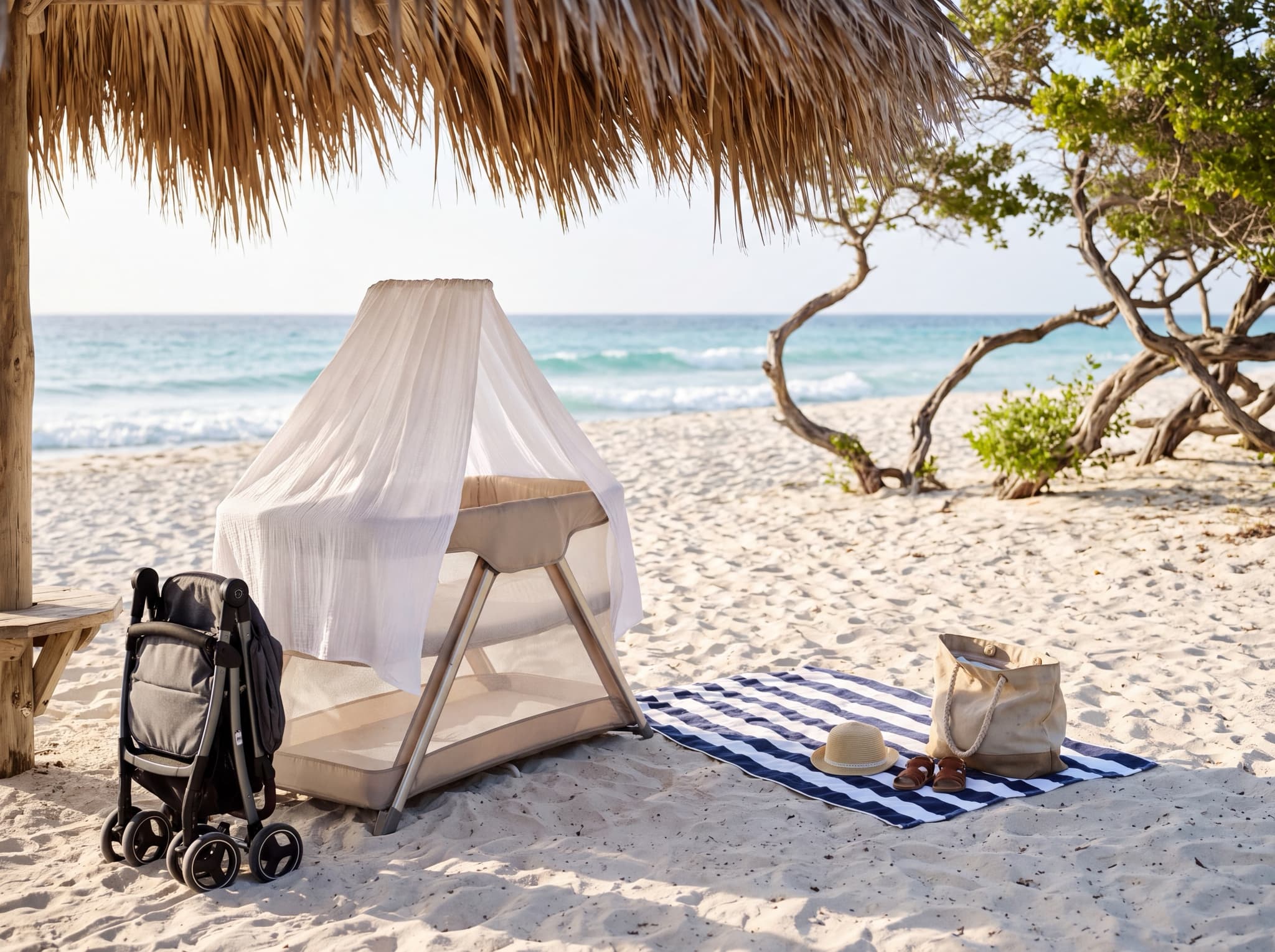
Land with the crib already sorted
A full-size crib, stroller, and car seat rarely fit in the luggage. Local BabyQuip providers deliver the gear to your hotel or rental for your dates and collect it when you fly home, cleaned and insured per their standards. Pick what you need, see the price for your stay, and board with carry-ons instead of cargo.
- Cribs, pack-and-plays, and toddler beds
- Car seats sized to your child
- Strollers, wagons, and beach gear
Delivered by independent BabyQuip providers on the island. We may earn a commission at no extra cost to you.
Where not to swim, no matter how it looks
The windward coast produces the postcard-dramatic scenery, and it also produces the conditions that hurt people. Treat these as look-but-do-not-enter:
- Andicuri, Dos Playa, Boca Grandi, Wariruri, Black Stone Beach, Boca Keto, and most of the coastline inside Arikok National Park. These face the open Atlantic with powerful surf, strong currents, and undertow. Boca Grandi in the southeast is a well-known kitesurfing spot precisely because of that relentless wind and chop, not a swimming beach. The rocks and the currents are the real danger here, not anything in the water.
- The Natural Pool (Conchi), the rock-rimmed pool in Arikok, is protected in calm conditions and one of the island's signature spots, but waves break over the rim when the sea is up and the wet rock around it is slippery. Go with a guide, follow their read on the day, and never get in when the water is rough. Our honest take on the Natural Pool walks through it.
If you drive out to see the wild coast, and you should, treat it as a viewpoint. Take the photo from the rocks, keep kids back from the edge, and save the swimming for the leeward side an easy drive away.
There are no lifeguards, so you are the lifeguard
This is the single most important thing to internalize, because it changes how you behave in the water. Aruba's beaches do not have lifeguard towers the way a typical US public beach does. You swim at your own risk, and the calm water can quietly lull you into forgetting it.
What that means in practice: never swim alone, keep children within arm's reach in the water rather than watching from a chair, and check the conditions before you get in rather than after. On a calm leeward beach on a normal day this is easy and the risk is genuinely low. It only turns dangerous when someone treats a wind-up day, an unfamiliar beach, or a few too many drinks as if a lifeguard were there to catch the mistake.
Rip currents, and the one move that saves you
Rip currents are the hazard worth taking seriously even on the calm side, and they are strongest right next to piers, jetties, and rocky points, which is why you keep your distance from the piers on Palm Beach. A rip is a narrow channel of water pulling away from shore. It does not pull you under, it pulls you out, and people get into trouble because they panic and try to swim straight back against it until they are exhausted.
The move that saves you is simple and worth teaching your kids before the trip: do not fight the current. Stay calm, keep your head above water, and swim parallel to the beach, sideways, until you are out of the narrow pull, which is usually only a short distance. Then angle back toward shore. If you cannot swim out of it, float, wave one arm, and call for help. Fighting a rip head on is what turns a scare into an emergency.
Let us plan this trip for you
We live in Aruba and vet every spot ourselves, share your dates and we'll build the rest.
What about sharks, jellyfish, and the rest
Sharks. For beach swimmers, this is simply not a real worry. Sharks live in the deeper water well offshore and do not come into the shallow, busy leeward beaches where people swim, and there is no history of shark attacks on swimmers at Aruba's tourist beaches. The rare serious incidents reported in these waters have involved people already in distress far out at sea, not beachgoers. Swim without giving it a second thought.
Jellyfish and Portuguese man o' war. Occasionally the wind pushes them in, most often after a stretch of strong trade winds. The Portuguese man o' war, a bluish, balloon-like float, delivers a genuinely painful sting, and it stings even when it is beached and looks dead, so never touch one on the sand and keep curious kids away from them. On a normal day you will not see any. If a stinger gets you, rinse with seawater rather than fresh water and get help from your hotel or a pharmacy.
Sea urchins. On the rocky and reef-bottomed spots like Boca Catalina and Mangel Halto, spiny sea urchins tuck into the rocks. They are easy to avoid if you look, and a cheap pair of water shoes removes the risk entirely. Our travel tips cover the small gear that makes a difference.
The short version for families
If you are traveling with young children, point yourself at Baby Beach first, then Palm Beach and the calm end of Eagle Beach. All three give you shallow, gentle water where a toddler can splash safely within arm's reach. Bring water shoes for the rocky-entry spots, keep everyone off the windward coast, and remember there is no lifeguard, so an adult stays in the water within reach whenever a child is swimming.
The honest verdict
Is it safe to swim in Aruba? On the leeward beaches nearly every visitor uses, yes, comfortably so, and the warm, calm, shallow water is a big part of why the island is such an easy Caribbean trip. The safety comes down to a few habits rather than luck: stay on the sheltered west and southwest coast for swimming, treat the wild north and east coast as scenery only, keep away from the piers, respect that there is no lifeguard, and teach everyone the swim-sideways move for a rip current. Do that and the water is one of the best things about the island.
When you are ready to build the rest of the trip around the right beaches, our beaches guide maps every one of them honestly, and the planning hub puts the whole week together.