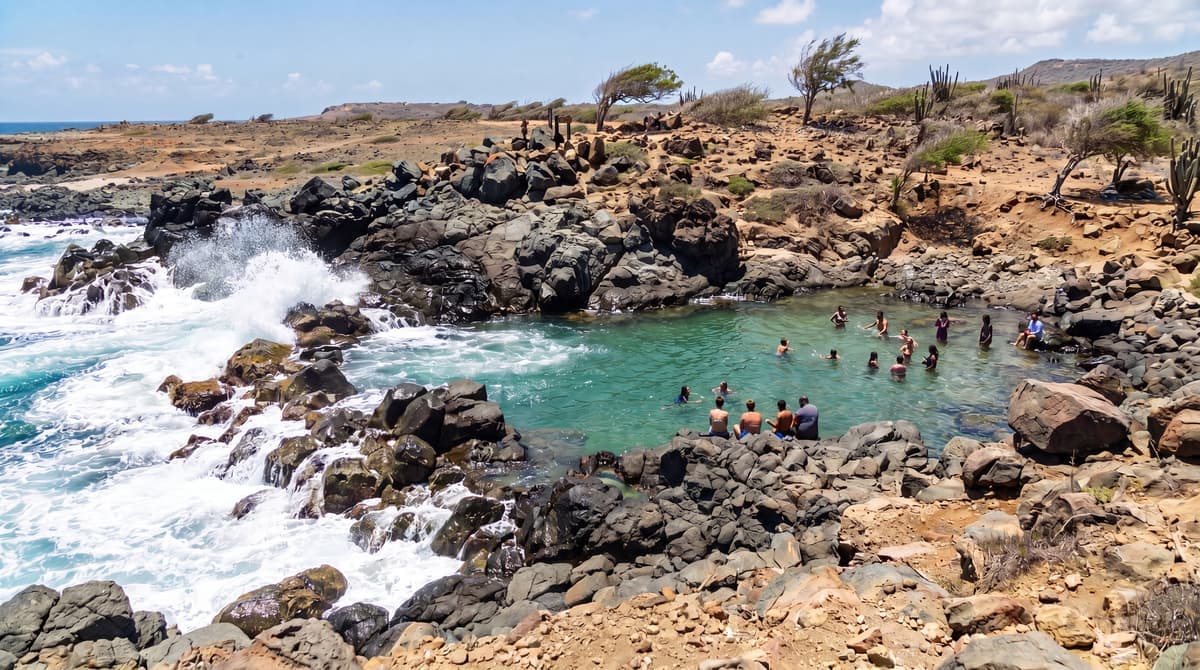
The Natural Pool, called Conchi by locals, shows up on every Aruba bucket list: a sheltered swimming hole carved into the wild east coast, ringed by volcanic rock, with waves exploding over the rim while you float in calm water inside. The photos are spectacular. The questions we get about it are always the same two: is it actually worth it, and what is the cheapest way to get there?
Here is the short version, and then we will earn it with detail. Yes, the Natural Pool is worth it, with two conditions: the sea has to cooperate, because the pool closes for swimming in rough conditions, and you have to pick the right way in, because there are four ways to reach it and they range from $22 and sore legs to several hundred dollars per vehicle. Get those two things right and it is one of the best half-days on the island. Get them wrong and you have paid a lot to look at waves from a cliff.
What the Natural Pool actually is
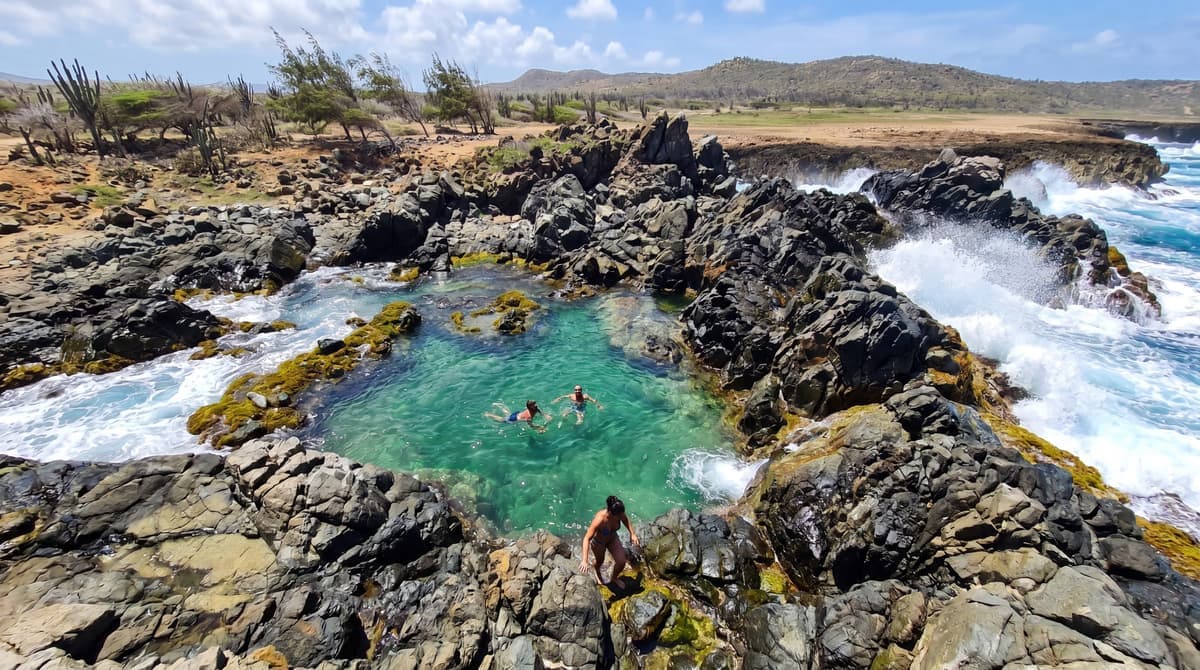
Conchi sits inside Arikok National Park, the protected parkland that covers a huge slice of Aruba's rugged eastern side. The east coast is the opposite of the calm resort beaches: windward, wave-battered, and raw. The pool is a natural basin in the volcanic rock right at the waterline, deep enough to swim in, protected from the open sea by its rocky rim. On a good day the surf crashes over the rim in bursts while the water inside stays swimmable, which is exactly the drama everyone comes for. Bring a mask, because there are fish in the pool, and most tours include snorkel gear.
What makes Conchi a logistics puzzle is the location. There is no paved road. Regular rental cars cannot reach it, full stop, and the park does not bend on this. Access is by 4x4 jeep, on horseback, or on foot. That constraint is the whole reason the tour industry around the pool exists, and the reason this guide exists.
The way we would actually do it: skip the convoy question entirely. A local guide we work with directly walks a small group in from Santa Cruz at sunrise, you swim Conchi before the first jeeps arrive, and the whole morning is 3 hours at $60 per person with snorkel gear and snacks included. The sunrise Natural Pool hike, booked direct.
Natural Pool and Indian Cave Jeep Safari
4.5 Hours · from $99 per person. Live prices, dates, and the honest details, one page.
The honest verdict: worth it, with conditions
We will not pretend to be neutral here, the Natural Pool is one of our favorite places on the island. But here is the honest framing.
It is worth it if the seas allow swimming, you go with an access method that suits your body and budget, and you treat the journey as half the experience. The bouncing jeep ride through the park, the cactus-and-coast scenery, and the arrival at the rim are a package deal with the swim.
Think twice if swimming is the only part you care about and you are visiting in the rougher months, because closures are real. The pool closes for swimming whenever waves wash over the volcanic rim, and that call gets made on the day, by rangers and operators, not by your itinerary. Your best odds of a swimmable pool are December through May. In the rougher stretches of the year, tours still run and the coast is still spectacular, but you may watch the pool rather than float in it. If a swim is the entire point for you, build your visit early in the trip so you can retry later in the week if conditions are bad.
Also know what you are signing up for physically: the last stretch is about 100 steps down the cliff to the pool, and back up again afterward. Most reasonably mobile people handle it fine. It is not a stroller or mobility-aid destination.
The four ways in
1. The 4x4 jeep tour (the default, and the best for most people)
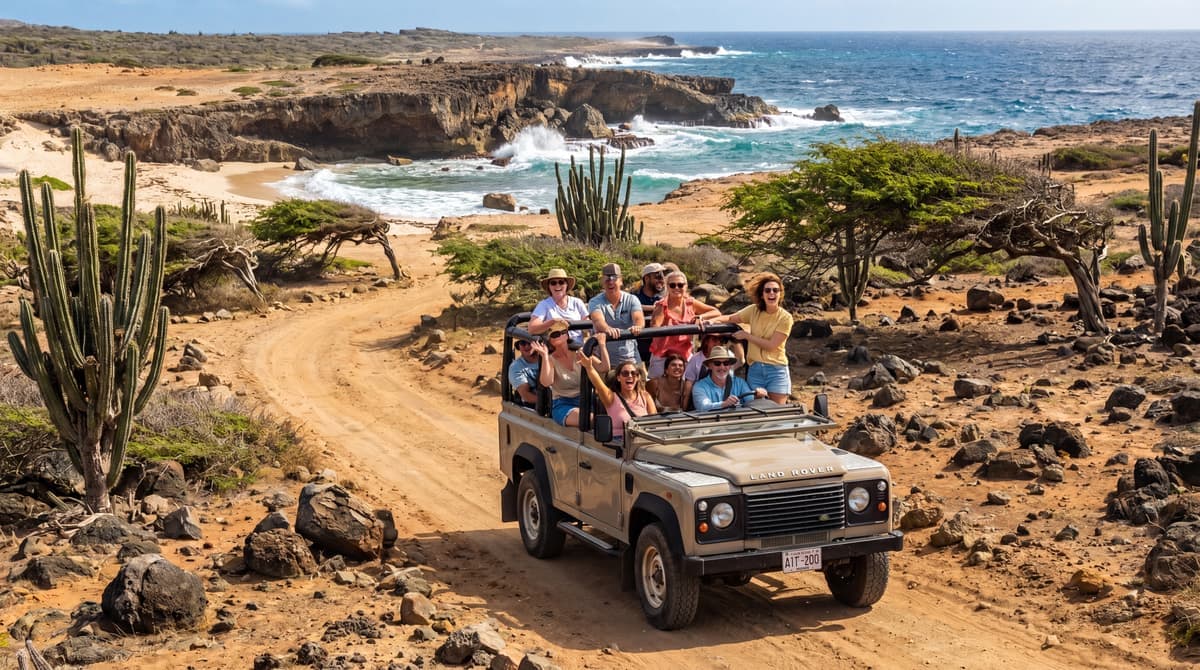
The classic way in: a guided open-air 4x4 safari that drives the park's rough tracks and delivers you to the top of those 100 steps. Some operators collect you from a list of hotels and some ask you to meet at their office, so check the listing. Guides know the conditions, deal with the park gate, and usually bundle other stops. This is what we recommend for most first-timers, and you can check dates and prices on our Natural Pool jeep tour page.
The two shared jeep safaris we list, with the numbers read off each operator's own listing:
- The shared Arikok jeep safari: a half day from the Gold Mine Ranch, from $85 per person, with the Arikok entrance ticket, snorkel gear and bottled water included. Checked August 11, 2026. See dates and prices.
- ABC Tours: morning safari of about 4.5 hours with a hot lunch; the afternoon departure runs without the lunch. We list it from $99 per person. Snorkel gear is included, the Arikok entrance fee is not: it is $25 per person charged at check-in. Checked September 12, 2026. See dates and prices.
Morning tours are the move. You get calmer conditions more often, you beat the worst heat, and the lunch-included options land at a natural time.
Here is the shape of a typical morning: pickup at your hotel, an open-air drive into the park with a stop or two at viewpoints along the way, the descent to the pool, a generous block of swim and snorkel time inside the rim, the climb back up the 100 steps, and the bumpy, grinning ride home, with lunch included on the tours that advertise it. The morning options run about 4 to 4.5 hours door to door and the afternoon versions about 3 hours, so even the long version leaves half your day for the beach.
2. The UTV tour (you drive, with a twist most blogs get wrong)
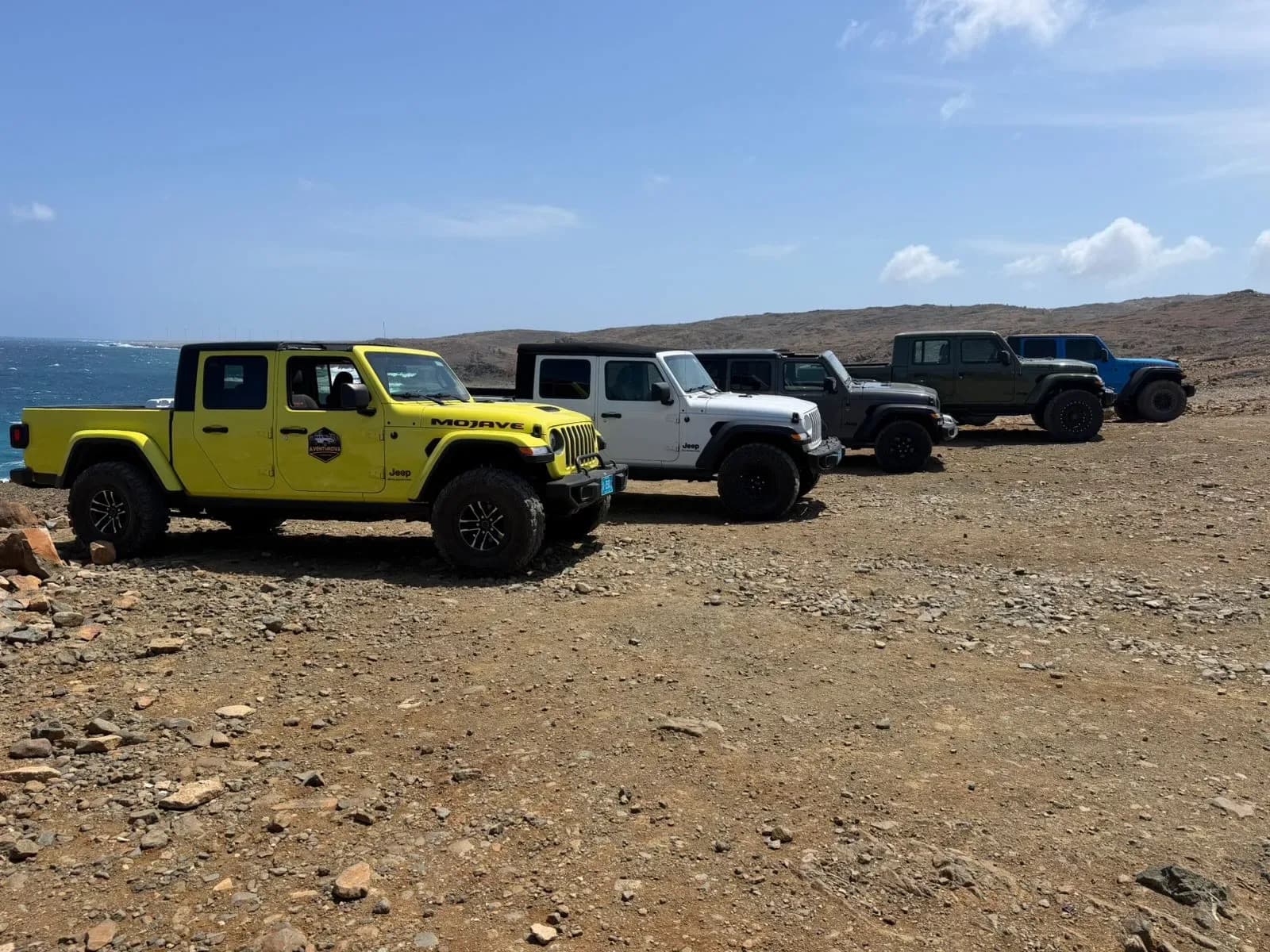
Driving your own UTV through Aruba's outback is a genuinely great day, and UTV-plus-Natural-Pool combos are heavily marketed. Here is the detail that surprises people: UTVs are not permitted inside the park proper. On these combo tours you drive the UTV to the park entrance, then transfer into a tour jeep for the pool itself. You still get the self-drive adventure, the north coast dirt tracks, stops like the Bushiribana gold mill ruins and Alto Vista Chapel, and the pool, just not a UTV at the pool.
The other reality check is pricing, which is per vehicle, not per person, and it reads very differently once you know that. We break the numbers down in the next section.
3. Horseback
Rancho Loco runs horseback rides to the Natural Pool from around $162.50 per person via Viator, with hotel pickup and no riding experience required. It is the most memorable way in if riding appeals to you at all: quiet, scenic, and slow in the best way. See dates and prices on our horseback riding page.
4. The hike (the $22 option)
You can walk in, and the only money it requires is the park entrance fee. Three route options:
- Daimari trailhead: about 2.4 miles round trip, roughly 1 hour. The shortest and the one we suggest for most hikers.
- Visitor Center route: about 4.8 miles, roughly 2.5 hours.
- Full Conchi trail: about 6.5 miles, roughly 3 hours.
All routes end with the same approximately 100 steps down to the water. Aruba's east side is exposed, sun-blasted, and windy, so this is an early-morning activity with serious water, sun protection, and real shoes. There are no facilities at the pool, the only restrooms are at the San Fuego visitor center, so plan accordingly. Done right, the hike is a brilliant budget adventure. Done at noon in flip-flops, it is a rescue story.
Browse 33 vetted Aruba experiences
Most confirm instantly with free cancellation up to 24h, and 4 of them are free.
Park fees, hours, and the fine print
Whatever route you choose, Arikok's basics apply:
- Entrance fee: $22 for adults 18 and over, with children under 17 free, and discounted entry for ABC-island residents with ID. Some tours include the fee and some do not: the shared Arikok jeep safari we list includes the park ticket, while the ABC Natural Pool safari charges $25 per person at check-in. Check your inclusions so you do not budget it twice.
- Where to pay: tickets are sold only at the two park entrances, not online. San Fuego is the main gate, with the visitor center and restrooms; Vader Piet is the smaller second gate.
- Hours: San Fuego is open daily 8:00 am to 3:30 pm, Vader Piet 8:30 am to 3:00 pm. Note those afternoon closing times, the park is a morning-and-midday destination, not a sunset one.
If you are doing the park independently, build the day around those gates. The San Fuego visitor center is the smart first stop for trail conditions and a ranger's read on whether the pool is swimmable that day, and its restrooms are the last ones you will see. Hikers should be through the gate at opening, both for the cooler air and to leave plenty of margin before the entrances close in mid-afternoon.
UTV and ATV prices: the per-vehicle reality
Here is where we save you from the most common pricing surprise on the island. UTV tours are priced per vehicle, and a comparison of six operators puts 2026 prices at:
- 2-seater: $225 to $340 for morning departures, $225 to $310 afternoons
- 3-seater: $350 to $470 mornings, $320 to $440 afternoons
- 4-seater: $460 to $560 mornings, $430 to $530 afternoons
- 5-seater: $530 to $610 mornings, $500 to $580 afternoons
So a couple sharing a 2-seater on a premium tour is paying roughly $113 to $170 per person, while a family of four in a 4-seater gets the per-head cost down nicely. As a concrete example, ABC Tours' Natural Pool UTV and cliff jump tour, a 5 to 6 hour day with the jeep transfer into the park, snorkel gear, and lunch on the morning departure, runs $340 for a 2-seater in the morning and $310 in the afternoon. Around Aruba Tours offers an approximately 4-hour UTV tour from $121.80 per person, with a 2-seater at $243.60 total and departures at 9:00 am and 2:30 pm. Single-rider ATVs start around $145 and dual ATVs around $185 per vehicle, and Viator's off-road category starts from roughly $72 per person at the low end. Compare current options on our activities page.
The practical fine print: drivers must be 18 or older with a valid license, passengers must be at least 4 years old with feet reaching the floorboards, and these tours are not for pregnant travelers or anyone with back or neck issues. Expect a damage insurance charge at check-in with some operators, ABC charges $20 per vehicle, and refundable deposits of $500 to $1000 are common. And it is dusty out there, genuinely dusty, especially in the January-to-August dry months; operators hand out bandanas for a reason.
Let us plan this trip for you
We live in Aruba and vet every spot ourselves, share your dates and we'll build the rest.
The free 7-day itinerary
The exact 7 days we send friends
One email with our day-by-day Aruba plan: which beach on which day, where to eat, and the tours worth booking. No spam, unsubscribe anytime.
What else you see along the way
Part of what makes the Natural Pool day worth the money is everything around it. Jeep and UTV routes typically string together the island's wild side: the dirt tracks of the north coast, the Bushiribana gold mill ruins, the hilltop Alto Vista Chapel, the California Lighthouse, the stacked boulders of the Ayo rock formations, and the wave-hammered coves at Andicuri and Wariruri. Itineraries vary by operator and by morning versus afternoon departure, so read the tour description for the exact stop list before booking. And if the pool itself ends up closed for swimming on your day, these stops are what keep the tour from feeling like a loss, because the east coast is dramatic in any conditions.
Who should think twice
An honest suitability check, because not every traveler should book this:
- Limited mobility: the roughly 100 steps down to the pool, and back up, are non-negotiable, and the jeep tracks are genuinely rough.
- Pregnant travelers and anyone with back or neck issues: operators exclude both from UTV and bumpy 4x4 tours, and they mean it.
- Very young kids: UTV passengers must be at least 4 years old with feet reaching the floorboards, and the jeep operators set their own child pricing minimums, and the ABC Natural Pool safari takes children age 2 to 12. Check the rules for your exact tour.
- Drivers without a license: UTV and ATV drivers must be 18 or older with a valid license, no exceptions.
If any of these rule out the ride, the hike from Daimari or a gentler day elsewhere may still work. Consider a calm beach day at Eagle Beach or browse our things to do in Aruba list for no shortage of alternatives.
Find your hotel by month, beach & budget
Compare current Aruba rates across the major booking sites in one place, in USD. Most rooms are free to cancel.
What to bring
- Swimsuit worn under your clothes, there are no changing rooms at the pool
- Water shoes or secure sandals for the rocky entry and the 100 steps
- Reef-safe sunscreen, applied before you arrive
- Sunglasses and a bandana or buff for dust on jeep and UTV tours
- More water than you think, especially for the hike
- A small dry bag for your phone, the spray over the rim is part of the show
- Closed-toe shoes if you are driving a UTV or ATV
Most tours include snorkel gear, so check before packing your own.
Two conditions shape the packing more than anything: dust and sun. The dry months from January through August turn the park tracks to powder, and an open vehicle means you wear a share of it, hence the bandana. There is almost no shade on the east side, so sun protection is not optional at any time of year. Leave the good camera in a sealed bag, bring a towel for the ride home, and expect to want a shower before dinner. Our full packing list covers the rest of the trip.
Booking lead times: do not wing it in high season
In the December-through-April high season, the good Natural Pool tours genuinely sell out, and you should book 2 to 3 weeks ahead, especially for morning departures and family-size UTVs. In low season, 3 to 5 days ahead is usually enough. Booking through Viator typically gets you free cancellation, which is exactly what you want for an activity that depends on sea conditions: lock the spot early, keep the flexibility.
This is also where the morning-versus-afternoon choice matters. Mornings cost a bit more with some operators and they are worth it: better odds at a swimmable pool, cooler driving, and lunch included on several tours.
Swim Conchi before the first jeeps arrive
A local guide walks a small group in at sunrise: 3 hours, $60 per person, snorkel gear and snacks included, booked direct.
The verdict, one more time
Is the Natural Pool worth it? Yes, if the seas allow and you choose your access wisely. For most travelers that means a morning jeep tour, and the two we list run from $85 and $99 per person with snorkel gear handled, for groups and thrill-seekers it means a UTV combo where the per-vehicle math rewards filling every seat, for romantics it means horseback from around $162.50, and for the fit and frugal it means a sunrise hike from Daimari for the cost of the $22 park entrance. Aim for December through May for the best swimming odds, go in the morning, book 2 to 3 weeks out in high season, and put it early in your week so rough seas get a second chance. Many visitors pair the jeep day with an afternoon stop at Baby Beach on the calm southeast shore, which is only a short drive further south.
Ready to lock it in? See dates and prices for the Natural Pool jeep safari or the horseback ride, and if you want help fitting Conchi into the right day of your week, tell us your dates on the trip planner. However you get there, take the morning departure, pack for dust and sun, and give the island a second shot at calm seas if the first day does not cooperate. The pool earns the hype when the conditions show up.