Will you be underdressed for dinner? Do you need long pants and closed shoes for the casino? Is a swimsuit fine for lunch, or do you have to cover up first? These are the quiet questions almost every first-time visitor packs alongside the sunscreen, and the honest answer is a relief: Aruba is one of the easiest islands in the Caribbean to dress for. We live here, and we watch travelers arrive every week overpacked with formal clothes they never wear and underpacked on the two or three things that genuinely matter in this climate. Here is the local read on what to actually wear, setting by setting, plus the handful of rules that are not just etiquette but island law.
Start With the Climate, Because It Decides Everything
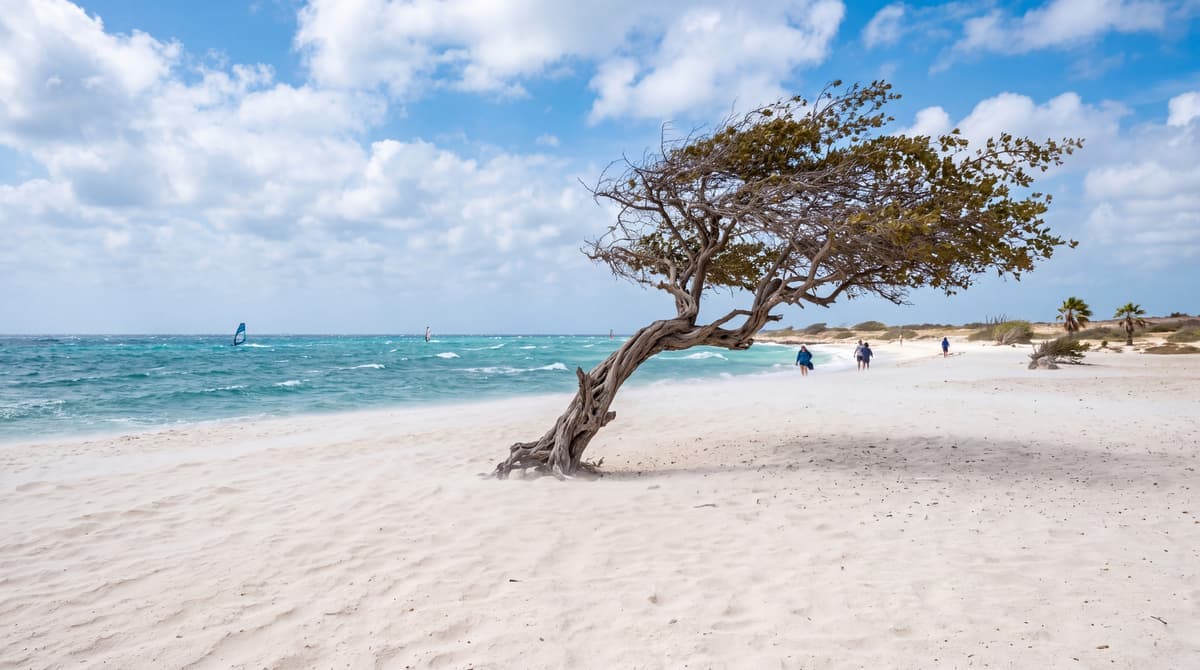
Aruba's weather is almost boringly consistent, and for packing that is good news. Daytime highs run from the mid-80s Fahrenheit in the coolest winter months up into the low 90s in summer, and the island rarely drops below 74F or climbs past 93F all year. Humidity sits around 70 to 78 percent, which sounds heavy until you feel the other half of the equation: the trade winds. They blow more or less constantly, usually somewhere between 15 and 25 miles per hour, and they do real work, pulling the mugginess off your skin and making a hot afternoon feel far more comfortable than the number suggests.
That steady breeze is also why the one thing people forget is a light layer. Aruba's own tourism board tells visitors to pack a sweater or shawl for nights that turn cool and breezy, and it is right. After sunset, and inside the aggressively air-conditioned restaurants and casinos, a thin cardigan, a linen overshirt, or a wrap earns its place in the bag. You will not need a real jacket, but you will be glad of something with sleeves. If you want the full month-by-month picture before you pack, our best time to visit guide breaks the year down, and our honest take on the trade winds explains exactly how windy it gets and when it eases off.
Want a local to plan the whole trip?
Our concierge builds your days around what you actually want, from $149. Real people who live in Aruba.
The Sun Is the Strictest Dress Code on the Island
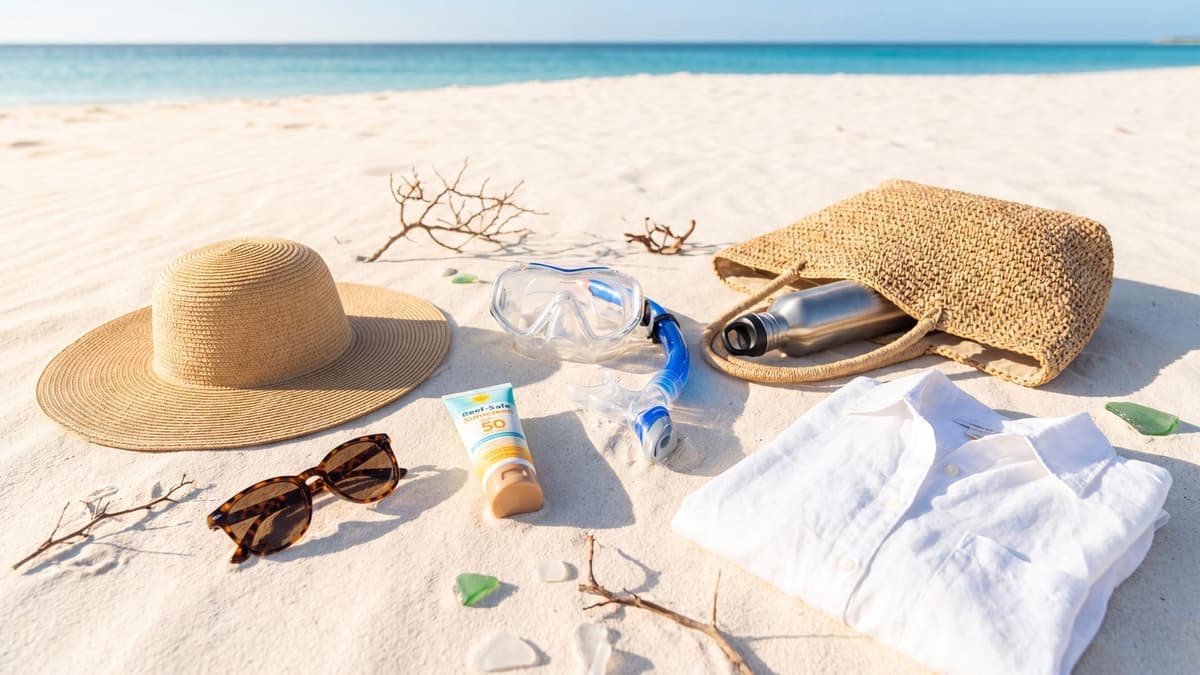
Here is the rule that outranks every other one in this article: dress for the sun. Aruba sits at roughly 12 degrees north of the equator, and the midday UV index here routinely climbs into the very high to extreme range, an 11 or higher on the scale, for hours in the middle of the day. That is strong enough to burn exposed skin quickly, so sun-protective clothing is not fussy, it is practical. A wide-brimmed hat, a long-sleeve rash guard or UPF shirt for snorkeling, and a cover-up for the walk back to the room will save you more than any amount of aloe afterward. One local detail earned the hard way: because of that constant wind, a hat without a chin strap or a snug fit will end up in the sea.
Sunscreen comes with a legal catch that surprises a lot of visitors. Since July 1, 2020, Aruba has banned sunscreens containing oxybenzone, an ingredient linked to coral reef damage, so the bottle you grab at home may not be allowed onto the island. The simple fix is to pack a mineral, reef-safe sunscreen with zinc oxide or titanium dioxide as the active ingredient. It is kinder to the reefs you came to snorkel and it keeps you on the right side of the rules.
Traveling with little ones
Land with the crib already sorted
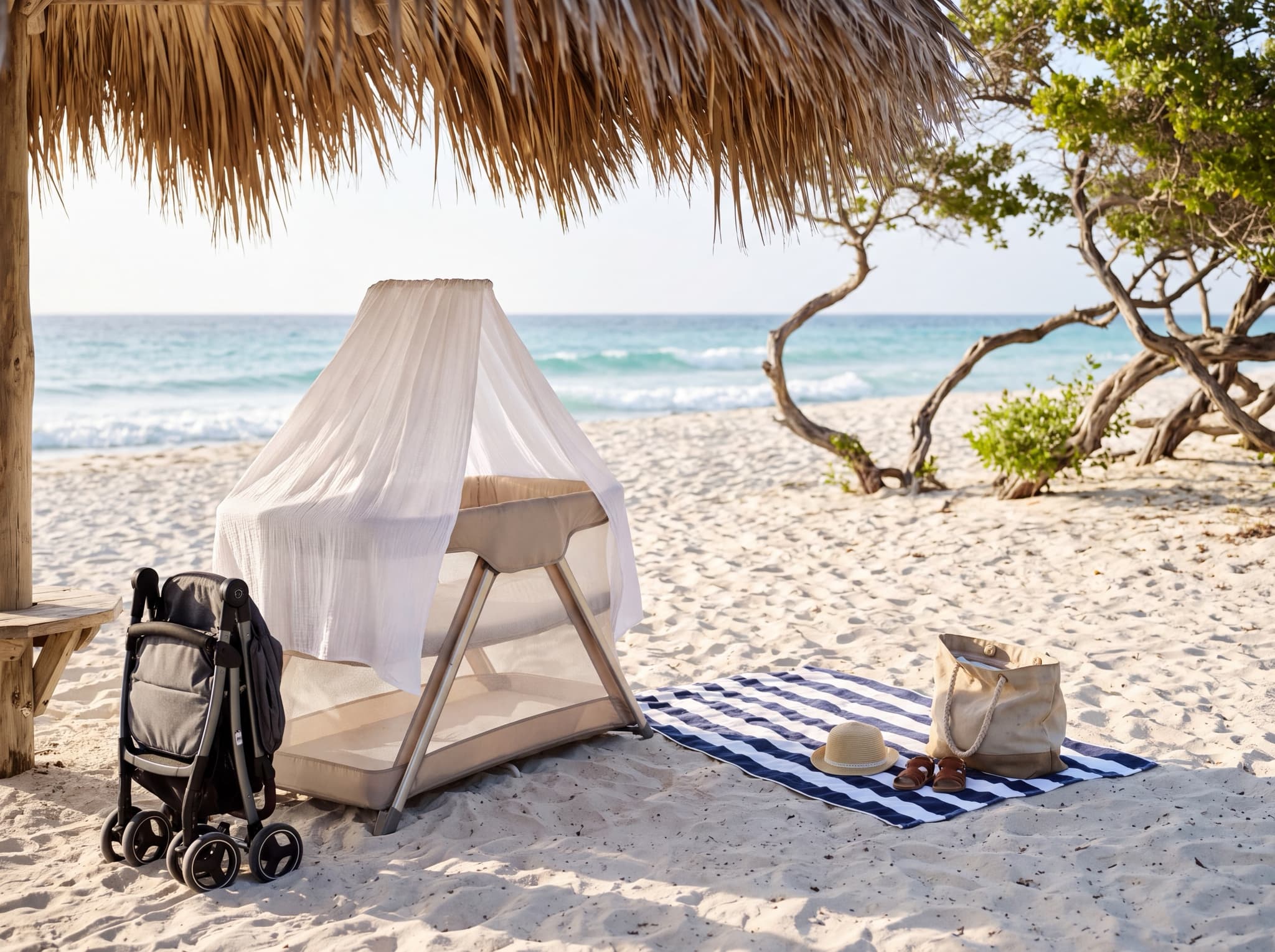
A full-size crib, stroller, and car seat rarely fit in the luggage. Local BabyQuip providers deliver the gear to your hotel or rental for your dates and collect it when you fly home, cleaned and insured per their standards. Pick what you need, see the price for your stay, and board with carry-ons instead of cargo.
- Cribs, pack-and-plays, and toddler beds
- Car seats sized to your child
- Strollers, wagons, and beach gear
Delivered by independent BabyQuip providers on the island. We may earn a commission at no extra cost to you.
Beach and Pool: Keep It Simple, But Cover Up When You Leave
On the sand and by the pool, wear whatever swimwear you love. Bikinis, one-pieces, board shorts, trunks: it is all completely normal, and nobody is judging. Add a cover-up or a light dress, that hat, and a pair of flip-flops and you have the entire beach-day uniform.
Two honest things to know. First, Aruba has an official code of conduct that asks visitors to wear proper attire in public spaces like supermarkets, gas stations, and hotel lobbies, so throw the cover-up on before you leave the beach for lunch or a shop. It is a small courtesy the island actually asks for in writing. Topless and nude sunbathing are not permitted on public beaches either, with the quiet exception of the designated areas on the private Renaissance and De Palm islands. Second, footwear matters more than you would guess at a few spots. The postcard beaches like Eagle and Palm are soft, barefoot sand, but some of the best snorkeling entries are rocky. At Mangel Halto and Tres Trapi in particular, a pair of water shoes turns a wince-inducing scramble over stone and reef into an easy walk in. Our beaches guide flags which spots are barefoot-soft and which reward a bit of foot protection.
Dinner: You Are Almost Certainly Overthinking It
This is the worry we hear most, and it is the easiest to put down. Aruba dining is genuinely casual, top to bottom. There is no restaurant on the island that requires a jacket and tie, and shorts for men are widely accepted even at the nicer places. Even the island's most upscale rooms ask for nothing dressier than elegantly casual, which in practice means a sundress or a collared shirt with long pants or clean shorts. What they quietly ask you not to do is turn up in a wet swimsuit, a tank top, or bare feet.
So pack one outfit each that you would feel good wearing to a nice dinner back home, and leave the formalwear behind. A breezy dress or a linen shirt does the job at any table on the island, beachfront shack or white-tablecloth alike. The one honest caveat: a small handful of the very top fine-dining spots can be a touch more particular, and their policies shift over time, so if you are planning a real splurge dinner for an anniversary or a proposal, a quick call to confirm the current dress expectation takes thirty seconds and removes all doubt. For where those meals actually are, our Aruba food guide and the full dining directory sort them by occasion. And keep that light layer handy, because the dining rooms run cold.
Casinos and Nights Out
Good news for anyone picturing a Monaco dress code: there is not one. No Aruba casino enforces a jacket-and-tie rule, and resort casual is the accepted standard across the floors at the big hotels. A collared shirt with long pants or nice shorts, a casual dress or a top and bottom for everyone else, and you are dressed for any table or slot machine on the island. The only thing generally frowned on is walking straight off the beach in a dripping swimsuit or bare feet, which is the same courtesy the code of conduct asks for anywhere indoors.
Nightlife runs a shade dressier but stays relaxed. The bars and clubs, especially around Palm Beach, pick up after 11 PM and lean smart casual rather than fancy. Closed shoes are a good idea on a real night out, and once again, one light layer covers the walk home in the wind. Our casinos guide and nightlife guide cover where to go once you know you are dressed for it.
Browse 33 vetted Aruba experiences
Most confirm instantly with free cancellation up to 24h, and 4 of them are free.
Two Days You Might Actually Want a Costume
Almost every day in Aruba is a no-costume day, but two are worth knowing about if your trip lands on them. King's Day, the Dutch national holiday on April 27 (moved to the 26th when the 27th falls on a Sunday), turns the whole island orange in tribute to the Dutch royal House of Orange, and joining in with an orange shirt is half the fun. Carnival season, which builds through January and February to its grand parades, is a riot of vivid color, feathers, sequins, and rhinestones rather than any single dress code; you watch in whatever you like, but a bright shirt never feels out of place. If your dates overlap either, our Carnival guide and our April guide tell you what to expect.
Packing It Down by Traveler
A few quick reads for the way you actually travel. Couples and honeymooners need less than they think: one nicer outfit each for sunset dinners, and the rest breezy beachwear. Families should prioritize quick-dry everything, a rash guard per kid, and water shoes for the rocky snorkel coves. Cruise day-trippers with only a few hours ashore should wear a swimsuit under light clothes, bring a cover-up and reef-safe sunscreen, and pack closed-toe shoes if they have booked a jeep or UTV run, since a lot of the island's activities are far easier on your feet that way.
The Bottom Line
The short version: Aruba asks very little of your suitcase. Pack light, breathable clothes for the heat, one layer for the wind and the air conditioning, one nicer outfit for dinner, and a reef-safe mineral sunscreen because the strong-ingredient bottles are banned here. Cover up over your swimsuit when you leave the beach, protect yourself from a sun that is stronger than it feels, and you are dressed for everything this island will hand you. For the complete item-by-item checklist, our Aruba packing list has the rest, and our free trip planner will shape the days around it.