There is a moment at Mangel Halto when the lagoon floor drops away and the coral wall appears below you, stacked in elkhorn, brain coral, and sea fans, and you understand why people who have snorkeled all over the Caribbean still put this spot at the top of their list. We have watched visitors arrive expecting a casual paddle and get stopped at the reef cut by a current that would have dragged them sideways. This guide explains both the reward and the reality.
Mangel Halto, whose name translates loosely to "high mangrove" in Papiamento, sits on Aruba's south coast near Pos Chiquito in the Savaneta district. It was designated part of Marine Park Aruba's protected zone in 2019. The beach is roughly 600 meters long, backed by a dense network of mangroves that frame the scene unlike anything you will find on the island's tourist-heavy west coast.
Where It Is and How to Get There
Mangel Halto is approximately 10 to 15 minutes by car southeast of Oranjestad, following Route 1 toward Sint Nicolaas (the main south-coast road, about 10 km). Watch for signs near Marina Pirata Restaurant and turn toward the water. GPS coordinates: 12.4638 N, 69.9690 W. Plug those in or search "Mangel Halto Beach Aruba" on Google Maps.
Parking is free, available along the access road and on both sides of the Mangel Halto Bar. On weekends, the lot fills earlier than you would expect. Arriving by 8:30 AM on a Saturday gives you a much smoother experience than pulling in at 10:00. An Arubus route (Bus 5, Oranjestad to Savaneta) can drop you nearby, with a short walk to the shore. If you need a rental car to get here on your own schedule, our Aruba car rental guide covers the best pickup options and what to budget.
The whole boat, private, for up to 10 guests
$900 for a private 3-hour charter with captain and crew: three departures daily, snorkel stops included.
Understanding the Three Water Entry Points
This is the part most guides skip, and it matters. There are three distinct ways into the water at Mangel Halto, and the right one depends on your experience level.
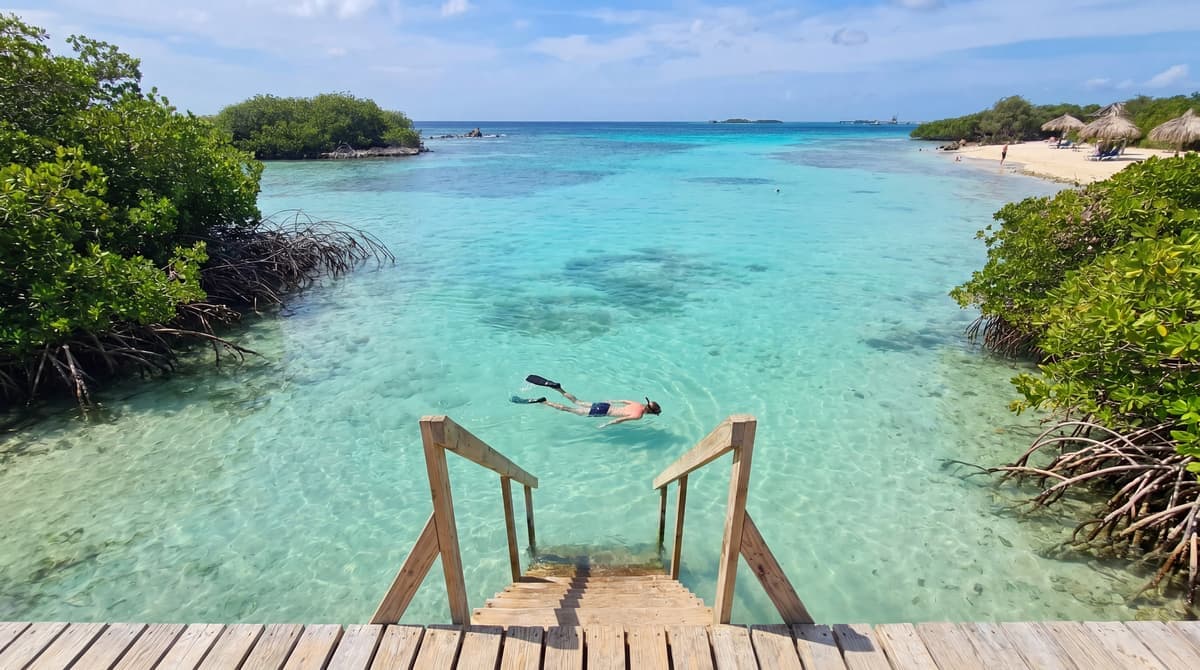
- Entry 1, the wooden platform: A dock with a ladder in the corner of the bay. From here, the reef is roughly a 300-meter swim. Good footing for getting in, longer swim to the good stuff.
- Entry 2, the mangrove cut: A sandy-bottomed passage through the mangroves with adequate depth. Roughly 200 meters to the reef from here. This is the most commonly recommended route for intermediate snorkelers.
- Entry 3, the shallow mangrove edge: Closest to the reef at about 150 meters out, but the bottom is rocky and requires footwear. Best for confident swimmers comfortable navigating shallow rock.
Inside the lagoon the water runs from about 2 feet to 6 feet deep over sandy patches and scattered coral heads. This inner zone is calm, visually interesting, and appropriate for less experienced snorkelers. The outer reef and the reef cuts are a different situation entirely.
What You Will Actually See
Inside the bay, the mix is parrotfish, yellowtail snapper, French angelfish, blue tang (sometimes in shoals numbering in the hundreds), doctorfish tang, butterflyfish, and grunts. The seafloor combines sand, seagrass, and patchy coral. It is a genuine reef ecosystem, not just empty water.
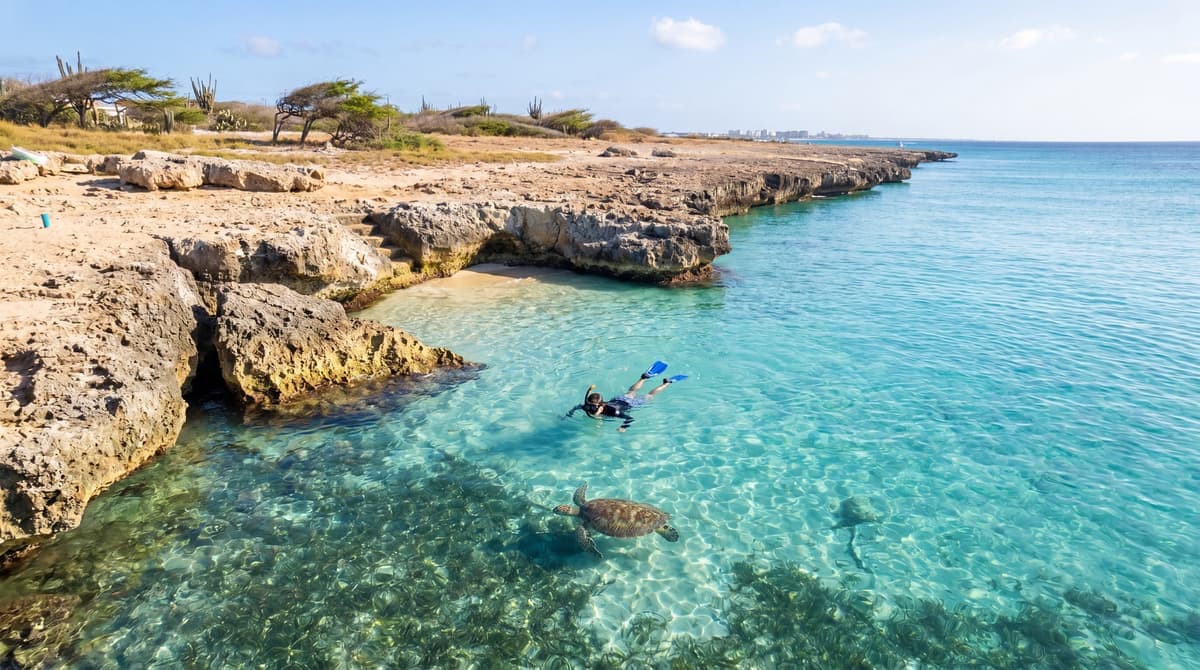
Cross through one of the two reef cuts and the density changes dramatically. The reef wall outside features healthy hard corals including elkhorn (Acropora palmata) and blade fire coral, plus gorgonian sea fans, sponges, and deep brain corals. Moray eels shelter in crevices. Barracuda cruise the edge. Octopuses are present and active, though primarily at night. Sea turtles have been documented here as well, though Tres Trapi to the north is more consistently cited as the turtle spot.
At around 18 feet (6 meters) in the channel the water deepens noticeably. Beyond the reef, the ocean floor drops to over 100 feet. There is also a tugboat wreck (locally called the Kappel) at roughly 12 meters depth inside the bay itself, accessible to divers and confident freedivers.
Browse 33 vetted Aruba experiences
Most confirm instantly with free cancellation up to 24h, and 4 of them are free.
The Honest Caveat: This Spot Is Not for Everyone, Every Day
The two reef cuts are separated by shallow ridges and generate strong, left-to-right currents that can prevent even fit swimmers from reaching the outside reef on a rough day. Boat traffic moves through the marked buoy channel and requires constant awareness. When wind picks up, waves elevate, and visibility inside the bay decreases. The site is exposed enough that weather makes a real difference.
If you are a beginner or a casual snorkeler, the inside lagoon offers a genuinely good experience. Do not attempt the outside reef unless conditions are flat and calm, and you have open-water swimming confidence. Several experienced travelers have reported being turned back from the reef cut by current. Plan for it rather than be surprised by it.
The free 7-day itinerary
The exact 7 days we send friends
One email with our day-by-day Aruba plan: which beach on which day, where to eat, and the tours worth booking. No spam, unsubscribe anytime.
The Best Time to Go
Early morning, before 9:00 AM, is the consistent recommendation from everyone who visits regularly. Water is calmest. Visibility is typically at its best. The south coast's wind exposure means conditions can shift through the afternoon. The Mangel Halto Bar (facing the mangrove area) is a functional local spot for post-snorkel refreshments and confirms this is not a ghost-town beach, but a lived-in local destination. For more spots to eat along the south coast, browse our Aruba dining guide.
Weekday mornings are significantly quieter than weekend mornings. The protected marine reserve status means the reef is in better condition here than at many busier Aruban spots, and keeping it that way requires staying in your fins, not standing on coral.
Let us plan this trip for you
We live in Aruba and vet every spot ourselves, share your dates and we'll build the rest.
On-Site Facilities
Public palapas with picnic tables are available on a first-come basis and provide real shade. Portable toilets are on-site. There is trash infrastructure. The Mangel Halto Bar operates nearby. Bring your own snorkel gear. Bring water. Reef-safe sunscreen is required for the health of the coral.
For a fully guided experience, Viator-listed snorkel and kayak tours operate at Mangel Halto and handle the logistics of gear, transport, and knowing which conditions are safe on a given day. Browse current options at /activities. The kayak-to-reef route is a popular format that solves the swim-distance problem for beginners who want to see the outside coral without fighting the current.
Combining Mangel Halto with the South Coast
Mangel Halto pairs well with a stop at Spanish Lagoon (Spaans Lagoen) nature reserve just to the north, one of Aruba's important mangrove and bird habitats. The south coast drive itself is quieter and more local-feeling than the Palm Beach strip. If you are spending a day out here, check our beaches guide for what else is along this stretch, and compare south-coast car rental rates at /book.
Find your hotel by month, beach & budget
Compare current Aruba rates across the major booking sites in one place, in USD. Most rooms are free to cancel.
Our Verdict
Mangel Halto is the best pure-quality shore-snorkel reef on the island when conditions cooperate. The elkhorn coral outside the cut is the healthiest we know of accessible from shore in Aruba. The honest constraint is that "when conditions cooperate" is load-bearing. Come early, assess the cuts before committing, stay inside if the current is running, and do not stand on the reef. Follow those rules and this spot will be one of the best things you do in Aruba.