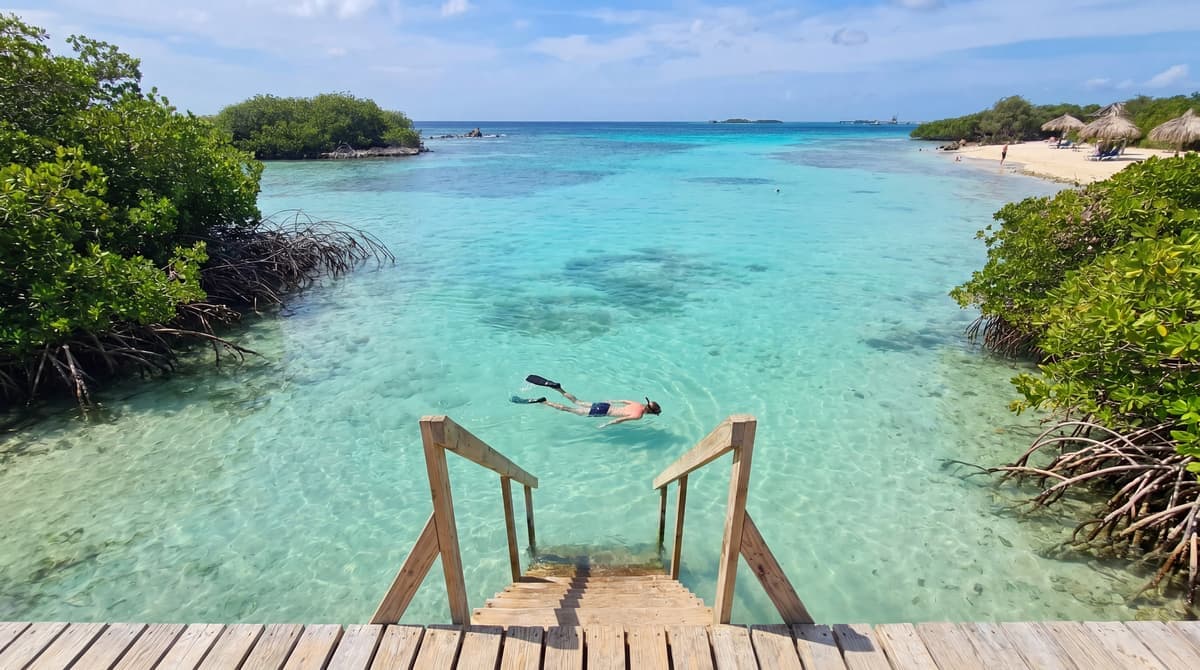
Most visitors picture sparkling water and a sea turtle gliding past them. What they don't picture is climbing down a set of rock steps in flip-flops while a tour boat idles thirty feet away. We snorkel here. We've watched a hundred visitors make the same preventable mistakes. This guide is written so you don't.
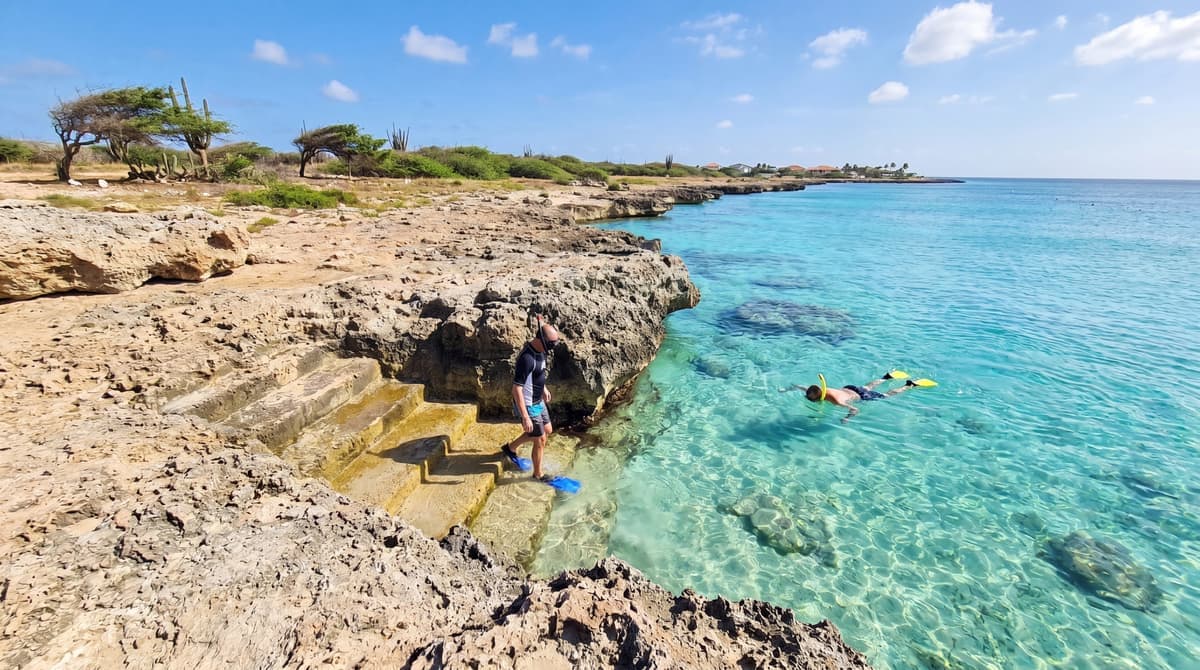
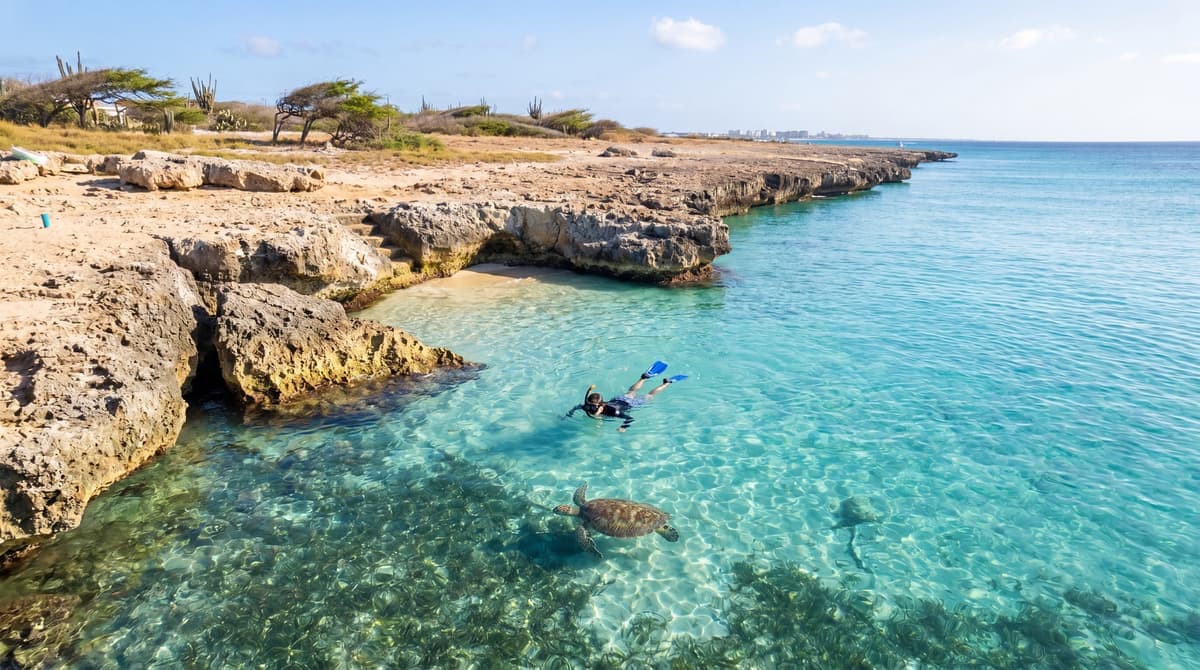
Tres Trapi, whose name means "three steps" in Papiamento, is a small rocky cove cut into the limestone coast between Malmok Beach and Boca Catalina on Aruba's northwest shore. It is not a beach in the postcard sense. It is a working snorkel spot, and it is one of the most reliable places on the island to see wild sea turtles without paying for a boat tour.
What "Tres Trapi" Actually Means for Your Entry
The name is the warning. Access to the water runs through a short staircase of steps carved directly into the coral rock. The steps are uneven and can be slippery, especially if you arrive after a tour group has been splashing through. Water shoes or rubber-soled fins are not optional here, they are the difference between an easy entry and a scraped shin.
At the base of the steps there is a small sandy pocket where you can pull on your mask and fins before pushing off. The bottom starts sandy and shallow, roughly waist-deep for the first twenty to thirty meters. Do not stop here expecting to see much. Keep going.
Want Tres Trapi from the water instead? The private charter we book direct anchors here on every trip, with Boca Catalina and the Antilla wreck in the same three hours. Your own boat, up to 10 guests, $900. The private boat charter.
The whole boat, private, for up to 10 guests
$900 for a private 3-hour charter with captain and crew: three departures daily, snorkel stops included.
Where to Park and How to Find the Spot
Tres Trapi sits at approximately L.G. Smith Boulevard 105, Noord. Drive north out of Palm Beach along the coastal boulevard past Malmok Beach. The cove is on your right before you reach Boca Catalina. Look for a free dirt parking area directly beside the water. There are additional parallel spots on the opposite side of the road. The single thatch-roofed umbrella near the steps is usually visible from the road.
From Palm Beach hotels the drive takes roughly five to ten minutes. From Oranjestad, allow fifteen to twenty minutes. Arubus stops at both Malmok Beach and Boca Catalina if you are traveling without a car. Renting one gives you the flexibility to arrive before the tour boats, which matters more than you might think. Our Aruba car rental guide covers what to book and where to pick up.
What You Will Actually See Underwater
The first zone, the sandy shelf from shore to about 30 meters out, is thin on marine life. Push through it. Once the sandy floor gives way to seagrass beds in roughly 10 to 13 feet of water, the spot opens up. This is where green sea turtles and hawksbill sea turtles come to feed. Both species have been documented here consistently. The seagrass patches appear as dark areas on the seafloor. Watch for slow, large shapes hovering just above them.
Beyond the turtles, expect bar jack, blue tang, angelfish, sergeant majors, Bermuda chub, and trunkfish weaving through the rocks. Cushion sea stars, some up to 40 cm across and colored orange, red, or yellow, rest on the sandy floor in numbers that surprise most visitors. Do not remove them or lift them from the water. They are protected and take years to recover from handling.
In deeper water beyond the seagrass, around 20 feet or more, turtles occasionally cruise through. When the water is calm and clear, morning visibility is good enough to spot them from the surface without diving.
Browse 33 vetted Aruba experiences
Most confirm instantly with free cancellation up to 24h, and 4 of them are free.
The Best Time to Be in the Water
Arrive between 8:00 and 10:30 AM. The trade winds are calm, the water clarity is at its best, and the guided tour groups have not yet descended. By mid-morning on a busy day, the cove sees multiple tour operators dropping snorkelers in the same small area. The turtles do not necessarily leave, but the experience changes.
Weekdays are noticeably quieter than weekends. Sea turtles are present year-round in Aruban waters. If you want to time your trip around nesting season, the island's turtles (including leatherbacks and loggerheads in addition to greens and hawksbills) nest primarily between March and September, though snorkel sightings are not tied to that window. For more on that, see our sea turtle nesting season guide.
The free 7-day itinerary
The exact 7 days we send friends
One email with our day-by-day Aruba plan: which beach on which day, where to eat, and the tours worth booking. No spam, unsubscribe anytime.
How Not to Hurt the Reef or Yourself
Fins are strongly recommended. Without them, maintaining position in even a light current is tiring and makes it harder to hover still when a turtle surfaces nearby. Avoid touching coral, sea stars, or any marine life. The reef rock around the steps is sharp and covered in algae. If you feel yourself losing balance during entry, go slowly and grip the carved handholds rather than bracing on the surrounding coral.
There are no facilities at this spot: no restrooms, no showers, no food vendors, no gear rentals. Bring your own snorkel equipment, at least a liter of water per person, and reef-safe sunscreen. The nearest restaurants and rental options are back toward Palm Beach, five to ten minutes by car.
One honest caveat: turtle sightings are common but not guaranteed on any given visit. These are wild animals feeding on their own schedule. We have talked to visitors who saw three turtles in thirty minutes and visitors who snorkeled for an hour and saw none. The morning window and the seagrass zone are your best variables to control.
Let us plan this trip for you
We live in Aruba and vet every spot ourselves, share your dates and we'll build the rest.
Nearby Spots Worth Combining
Tres Trapi pairs naturally with Boca Catalina (a ten-minute walk up the coast, sandy entry, excellent for beginners) and Malmok Beach just to the south. Arashi Beach is another fifteen minutes north and has a wider sandy shore. If you want a guided experience with a local expert, Viator-listed turtle snorkel tours in the area depart from Malmok and cover multiple sites, including Tres Trapi. Browse options at /activities.
For the bigger picture of Aruba's northwest snorkel corridor, see our beaches guide and our wider shore snorkeling guide.
Our Verdict
Tres Trapi is the most reliable free-access spot on the island for seeing sea turtles in the wild. The entry is genuinely rocky, the facilities are zero, and it gets crowded by mid-morning. Get there early, bring your own gear and water, and point yourself toward the seagrass. The rest tends to take care of itself.