Here is the short version. Jamaica wins on price and lush scenery, with published traveler-spend averages around $143 a day against Aruba's roughly $369, and it delivers a resort experience that Aruba simply does not try to match. Aruba wins on weather certainty, calm swimmable water, and the freedom to explore the whole island on your own without thinking twice. If your dream week is an all-inclusive with waterfalls and reggae in the background, book Jamaica. If your dream week is a rental car, a different beach every day, and dinner wherever you feel like walking, book Aruba.
We live and plan trips on Aruba, so you know where we stand. But these two islands get compared constantly, and the comparison only helps you if it is honest. Jamaica genuinely beats Aruba in several categories, and we will say so plainly. Here is the full breakdown.
Aruba vs Jamaica at a glance
| Jamaica | Aruba | |
|---|---|---|
| Flight from NYC | About 4 hr 17 min nonstop to Montego Bay | About 5 hr nonstop |
| Published daily cost | Around $143 per person (mid-range average) | Around $369 per person (mid-range average) |
| Hurricane risk | Inside the hurricane belt | Outside the belt, no hurricane landfall on record in 168 years |
| US travel advisory | Level 2 (January 17, 2026) | Level 1 (reissued August 19, 2024) |
| Signature beach | Seven Mile Beach, Negril | Eagle Beach |
| Vibe | All-inclusive resorts, reggae, lush green interior | Independent exploring, dining out, desert island with calm seas |
The numbers tell part of the story. The rest is about what kind of trip you actually want.
Renting a car? Compare every Aruba agency
One search across the island rental companies, free cancellation on most cars, no card to reserve.
Getting there
This one is close to a tie, which surprises people.
From New York, the nonstop to Montego Bay runs about 4 hours 17 minutes, with around five nonstops a day across JetBlue, Delta, and American. The nonstop to Aruba runs about 5 hours on American, JetBlue, Delta, and United. A 43-minute difference is not going to decide your vacation.
Fares are similar too. We have seen 2026 roundtrip deals from New York to Montego Bay from $297, with typical fares running roughly $316 to $725 depending on season. Aruba deals from New York have landed at $339 to $353 in 2026, with typical fares around $339 to $601. From Miami, Aruba is about 3 hours 20 minutes with multiple daily flights, and deal fares have run $288 to $352.
One meaningful difference on the way home: Aruba's airport has US preclearance, so you clear US customs before you board and walk off the plane as a domestic arrival. Jamaica does not offer that, so budget for a customs line when you land back in the States.
Entry paperwork is light in both places. For Aruba you need a passport plus the online ED card and a sustainability fee of about $20 per person, which we cover in our trip planner resources.
What it costs
Jamaica is cheaper. Not marginally cheaper, structurally cheaper, and we are not going to pretend otherwise.
Published traveler-spend averages put Jamaica around $143 per person per day, with budget travelers reporting around $57 a day and luxury travelers around $358. Aruba's published averages run about $369 a day mid-range, roughly $157 budget, and around $780 at the luxury end. Montego Bay hotels average around $238 a night, which buys you noticeably more resort in Jamaica than the same money buys on Palm Beach.
Now the honest caveat, in both directions. Jamaica's low average is pulled down partly by budget local guesthouses and street food that most American resort travelers never touch. If you are comparing a mid-range all-inclusive in Montego Bay to a mid-range resort on Aruba, the gap narrows considerably. It does not close, but it narrows. And Aruba's number drops 30 to 40 percent in the September to November value season, when the same rooms go for a third less. Our Aruba vacation cost guide breaks down real 2026 numbers category by category.
The structural reason for the gap is the trip model. Jamaica's economy of scale is the all-inclusive: one price, everything bundled, fierce competition between huge resorts keeping packages cheap. Aruba's model is a la carte, and a la carte on a small prosperous Dutch Caribbean island adds up. If maximum resort value per dollar is your top priority, Jamaica wins this category outright.
Want a local to plan the whole trip?
Our concierge builds your days around what you actually want, from $149. Real people who live in Aruba.
Weather and the hurricane reality
This is where the comparison swings hard the other way.
Aruba sits outside the main Atlantic hurricane belt, about 12 degrees north of the equator. No hurricane center has been recorded over Aruba in 168 years of NOAA records; the nearest passed about 15 miles off in 1886. Rainfall runs about 15 to 18 inches a year, temperatures hold at 81 to 88°F year-round, and the trade winds keep it comfortable. You can book Aruba for any week of the year, including peak hurricane season, with near-total confidence the weather will cooperate. Our best time to visit Aruba guide goes month by month.
Jamaica is inside the hurricane belt, with rainy seasons running May to June and September to November and island-wide rainfall averaging around 82 inches a year (the north coast resort areas see less, roughly 43 to 70 inches). That rain is also why Jamaica looks the way it does: green mountains, real waterfalls, jungle rivers. Aruba is a desert island with cacti and divi divi trees, dramatic in its own way but never lush.
And the risk is not theoretical. Hurricane Melissa hit western Jamaica in October 2025, and the January 2026 US travel advisory still notes that recovery is ongoing in affected areas. Most weeks of most years Jamaica is sunny and gorgeous, and resorts are well practiced at storm protocols. But if you are booking nonrefundable travel for August through October, Aruba removes a real risk that Jamaica carries.
So pick your trade: Jamaica's rain buys you waterfalls and green mountains. Aruba's dryness buys you certainty.
The beaches
Both islands have a world-class headliner.
Jamaica's Seven Mile Beach in Negril is long, calm, patrolled, and backed by a legendary sunset. Doctor's Cave in Montego Bay is the classic in-town swim. The sand is golden, the water warm, and on the north and west coasts conditions are generally gentle.
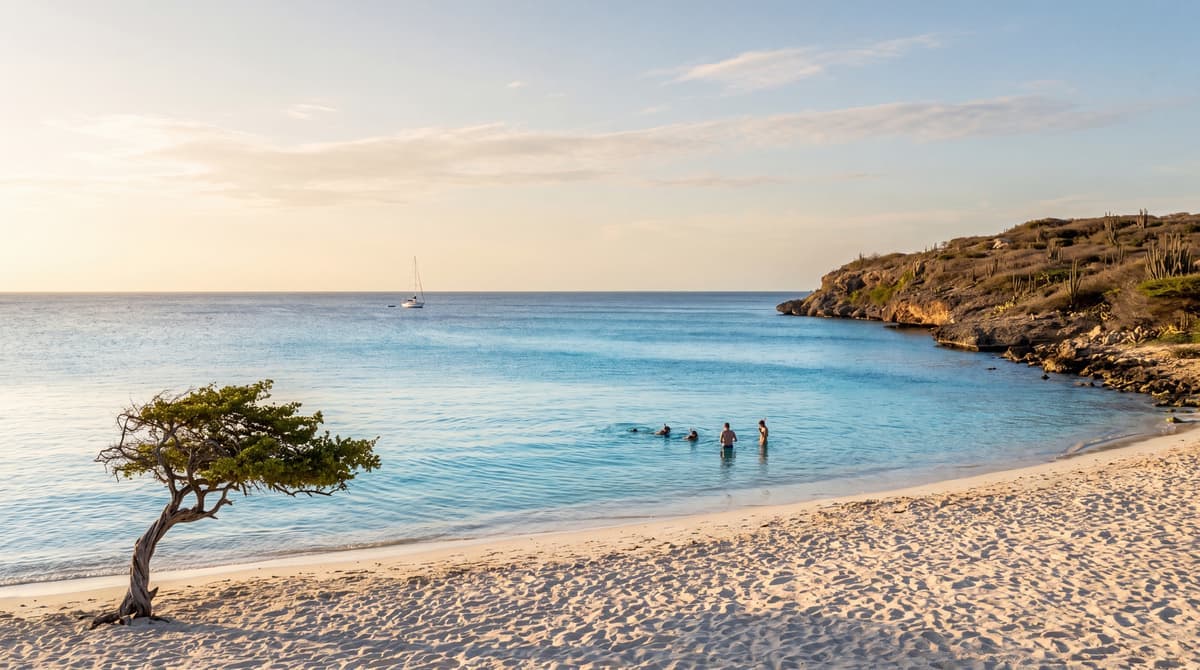
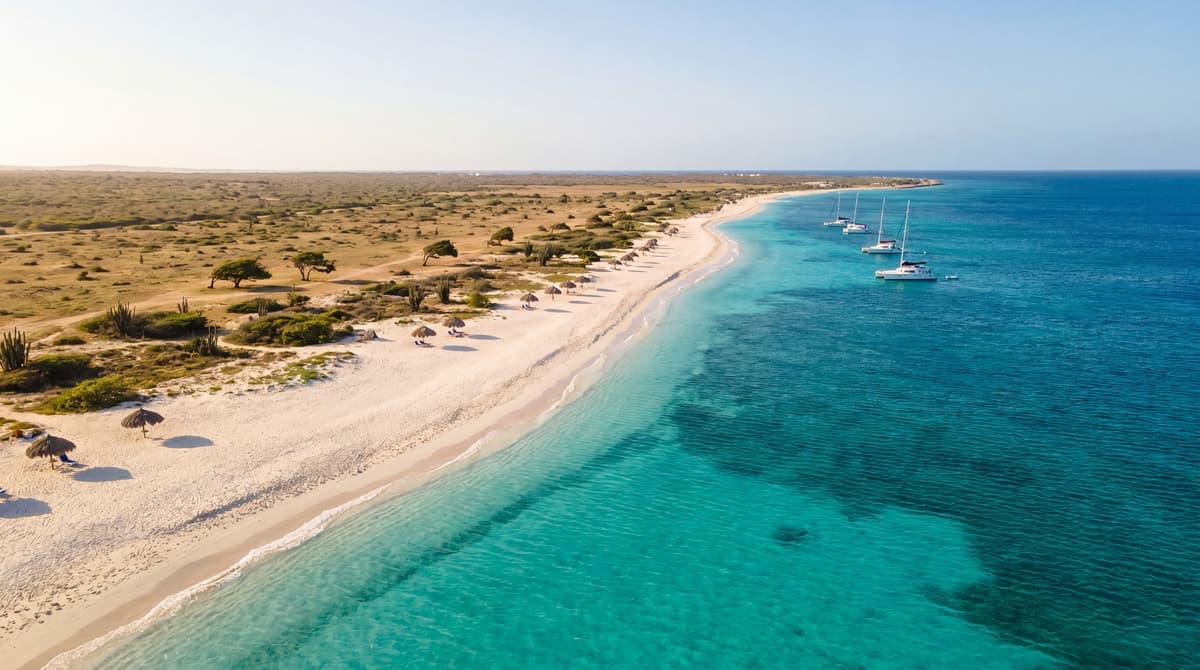
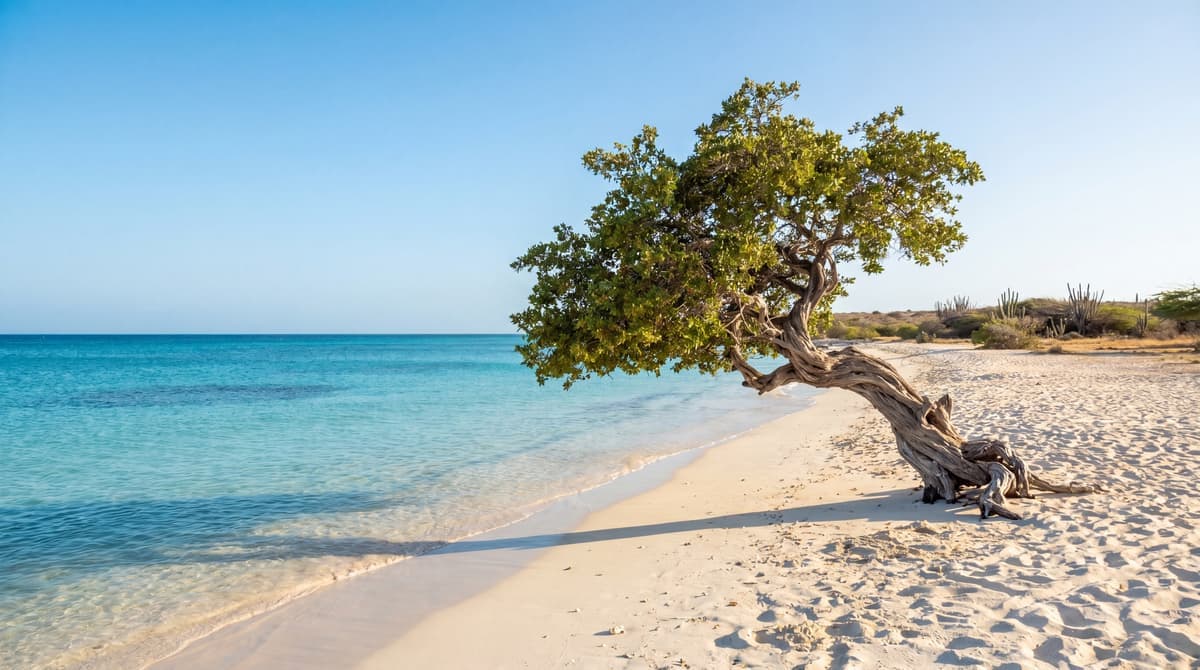
Aruba's Eagle Beach was ranked the number 3 beach in the Caribbean in TripAdvisor's 2026 Travelers' Choice awards, and the whole leeward west coast, Eagle, Palm, Arashi, Baby Beach, is reliably calm, clear, and swimmable essentially every day of the year. The consistency is the point: the trade winds blow, but the west coast stays protected, so a swim or a snorkel is never in doubt. Browse the full coastline in our beaches guide.
We would call beach quality roughly even at the top end, with Aruba ahead on day-after-day reliability and Jamaica ahead on dramatic backdrops. Neither island will disappoint you on sand.
Let us plan this trip for you
We live in Aruba and vet every spot ourselves, share your dates and we'll build the rest.
Things to do and the vibe
This is the deepest difference between the two trips, deeper than price or weather.
Jamaica's tourism is built around the all-inclusive compound. Sandals alone runs seven resorts on the island, alongside Secrets, Hyatt Zilara, Iberostar, and the RIU properties that reopened in late 2025. The model works: you land, transfer to the resort, and everything from swim-up bars to nightly entertainment is handled. Excursions, Dunn's River Falls, river rafting, the Luminous Lagoon, Blue Mountains coffee tours, are typically booked through the resort and done with a guide or driver. Add reggae and dancehall culture, jerk cooked over pimento wood, and heavy cruise traffic through Falmouth and Ocho Rios, and you get an island with enormous personality experienced mostly through organized doors.
Aruba flips that model. The island is small, safe, and built for self-navigation: rent a car, drive Arikok National Park, find your own snorkel spot at Boca Catalina, eat fresh-off-the-boat fish in Savaneta, hit a casino in Palm Beach, and never once need a resort wristband. Independent restaurants, not buffets, are the food scene. Our activities page and 7-day Aruba itinerary show how much you can self-drive in a week.
Neither model is wrong. But be honest with yourself about which traveler you are, because picking the wrong island for your style is the most common regret we hear. People who want to wander feel penned in by the Jamaica compound model. People who want everything handled find Aruba's a la carte week more work and more money than they expected.
Where to stay
The lodging decision works differently on each island, and it quietly shapes the whole budget.
In Jamaica, you are mostly choosing a resort and a coast. Montego Bay is the arrival hub, with the airport minutes from the hotel strip, Doctor's Cave Beach in town, and the island's biggest concentration of all-inclusives; hotels there average around $238 a night, and the packages built on top of that base are where Jamaica's value really shows. Negril, further west, trades convenience for Seven Mile Beach and the famous cliffside sunset bars, with a slower, barefoot feel. Ocho Rios sits on the cruise side of the island, close to Dunn's River Falls and the big excursion circuit. In every case, the smart Jamaica move is to pick the resort carefully, because you will live inside it: read recent reviews on the specific room categories, the included restaurants, and the beach in front, since those define your week far more than the town name does.
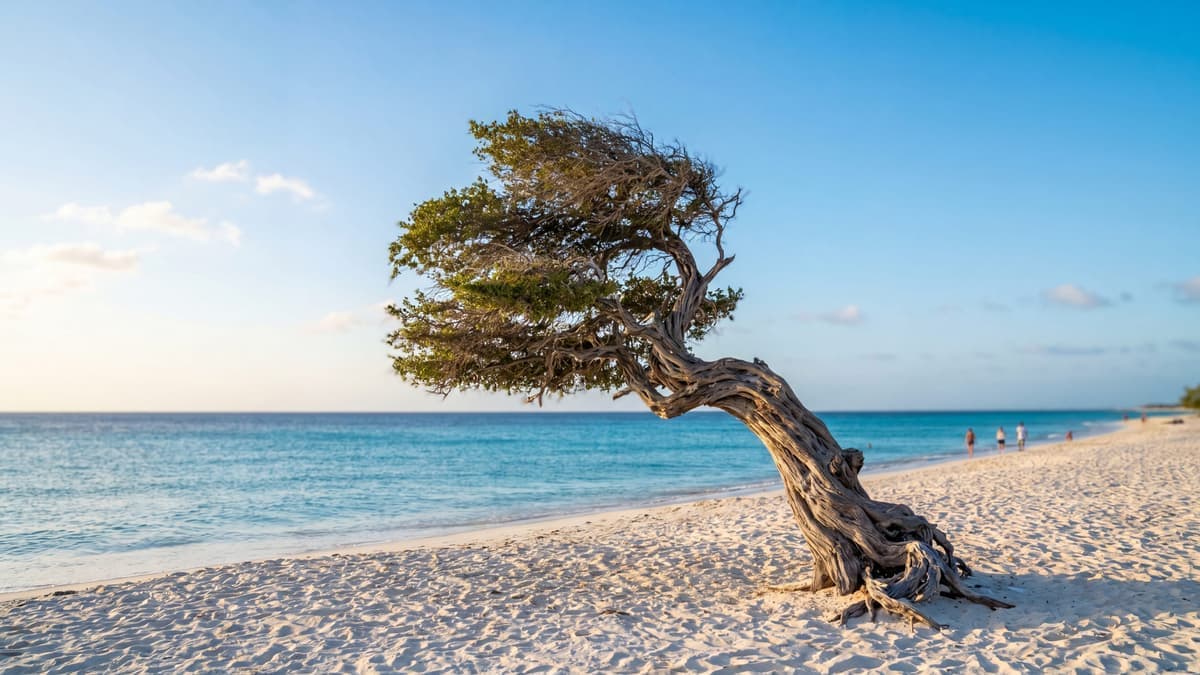
On Aruba, you are choosing a neighborhood, not a compound. Palm Beach is the high-rise strip, walkable to dozens of restaurants, casinos, and the pier operators, the right base for travelers who want everything on foot. Eagle Beach is the low-rise zone, quieter, with the widest sand on the island and the famous fofoti trees. Vacation rentals in Noord, a short drive inland, come with kitchens that cut the dining bill substantially. And the whole market drops 30 to 40 percent in the September to November value season, the same rooms for a third less, which is the single best lever for closing the price gap with Jamaica.
Browse 33 vetted Aruba experiences
Most confirm instantly with free cancellation up to 24h, and 4 of them are free.
The free 7-day itinerary
The exact 7 days we send friends
One email with our day-by-day Aruba plan: which beach on which day, where to eat, and the tours worth booking. No spam, unsubscribe anytime.
The food
Jamaica has one of the great food cultures of the Caribbean, full stop. Jerk chicken and pork cooked slow over pimento wood, beef patties, Scotch bonnet heat, fresh seafood escovitch, rum from distilleries with centuries of history, and Blue Mountain coffee that earns its reputation. The catch for resort travelers is access: the best jerk is at smoke-shrouded roadside pits and local cookshops, not the resort buffet, and reaching them means leaving the compound with a driver or on an arranged tour. Plenty of visitors eat a week of competent international buffet food on an island with world-class cooking a few miles away. If you go, build at least one real food excursion into the plan.
Aruba's food story is the opposite shape: no single legendary cuisine, but an island built around eating out, every night, somewhere different. Fresh-off-the-boat fish at the waterside shacks in Savaneta, Dutch and Caribbean comfort food, serious steakhouses, beachfront fine dining in Oranjestad and Palm Beach, and everything reachable in a 15-minute drive from any hotel. Our dining guide covers the range. Jamaica wins on culinary heritage; Aruba wins on how easily you can actually eat your way through it.
When to go
Timing changes this comparison more than people expect.
Jamaica's dry, glorious season is winter through spring, which is also peak pricing. The rainy seasons run May to June and September to November, and the heart of hurricane season overlaps that fall window, the same months that carry the storm risk we covered above. A January Jamaica trip and a September Jamaica trip are meaningfully different bets.
Aruba barely has seasons, just prices. The weather is the same forecast nearly all year, so the calendar question is purely financial: December through April is peak, and September through November is the value window with rates 30 to 40 percent lower. Notice the asymmetry, because it matters: Aruba's cheapest months are exactly the months when Jamaica is wettest and most storm-exposed. A fall traveler gets Aruba at its best price and Jamaica at its highest risk, which tilts the value comparison far more than the headline daily averages suggest.
Find your hotel by month, beach & budget
Compare current Aruba rates across the major booking sites in one place, in USD. Most rooms are free to cancel.
Getting around
One more practical difference worth naming. In Jamaica, most visitors move by resort transfer and arranged excursion drivers, and that is the sensible default: distances are long, roads wind through the mountains, and the advisory picture rewards organized logistics. Renting a car and self-driving is possible but it is not the mainstream tourist pattern.
On Aruba, the rental car is the trip. The island is small enough to cross in under an hour, navigation is simple, parking is easy and mostly free, and a different beach every morning is the standard rhythm. If the idea of driving yourself to a deserted cove with snorkel gear in the trunk sounds like vacation, that single image probably settles your choice.
Safety, stated plainly
We will give you the facts and let you weigh them.
Jamaica carries a US State Department Level 2 advisory (Exercise Increased Caution), issued January 17, 2026. That is actually good news in context: it was downgraded from Level 3 after Jamaica's 2025 murder count fell below 700, the country's lowest figure in four decades. Real, dramatic progress. The advisory still cites crime, limited medical infrastructure, and ongoing hurricane recovery, and some specific zones, Spanish Town among them, remain at Level 4 do-not-travel. The practical reality for tourists: resort zones on the north coast see far less crime exposure than inland areas, and the overwhelming majority of the millions of annual visitors have zero trouble. But the advisory shape pushes you toward exactly the compound-and-excursion model the resorts are built on.
Aruba carries a Level 1 advisory (Exercise Normal Precautions), the lowest tier the State Department issues, reissued August 19, 2024. Wandering the island independently, at night, with your family, is the normal way to visit. We wrote up the full picture in is Aruba safe.
The fair summary: Jamaica is much safer than its old reputation and trending the right way, and resort travelers are well protected. Aruba is one of the most worry-free destinations in the hemisphere, and that freedom is built into the trip itself.
Renting a car? Compare every Aruba agency
One search across the island rental companies, free cancellation on most cars, no card to reserve.
What a week actually looks like
Sometimes the clearest way to compare two islands is to sketch the same Tuesday on each.
A Jamaica Tuesday, done well: breakfast at the resort buffet, morning on the resort beach or at the swim-up bar, an afternoon excursion you booked through the concierge, maybe Dunn's River Falls or a river tubing trip, with a driver handling the road. Back for a shower, dinner at one of the resort's reservation restaurants, a show or the bar after, and a nightcap with reggae drifting from the stage. It is a genuinely great day, and you made about two decisions all of it.
An Aruba Tuesday, done well: coffee on the balcony, then the rental car to Arashi Beach or Boca Catalina with snorkel gear before the boats arrive. Lunch wherever you ended up, maybe fresh fish in Savaneta on the island's quiet south side. Afternoon back at Eagle Beach with a book, sunset from the sand, then a 10-minute drive to a restaurant you picked an hour earlier, and a casino stop after if the mood strikes. You made twenty small decisions and every one of them was easy.
Neither day is better. They are different products: Jamaica sells you a resort with an island attached, Aruba sells you an island with hotels on it. Travelers who know which sentence sounds like vacation have already made their choice, and the price gap is really the cost difference between those two products, not a quality ranking.
One last practical note that follows from this: on Jamaica, your hotel choice is close to irreversible, since the resort is the trip. On Aruba, a mediocre hotel barely dents the week, because you are out the door after breakfast anyway. Anxious overplanners, take note of which island forgives mistakes.
The verdict
Pick Jamaica if: you want the most resort for your money, you love lush green mountains and waterfalls, your ideal trip is an all-inclusive where everything is handled, reggae and jerk culture call to you, and you are comfortable doing your exploring through organized excursions. At published averages around $143 a day against Aruba's $369, the value case is real, and the island's energy is unlike anywhere else in the Caribbean.
Pick Aruba if: you want to explore freely without a second thought, you value calm swimmable water every single day, you are booking in hurricane season and want weather certainty, you would rather eat at independent restaurants than a resort buffet, and a Level 1 advisory plus US preclearance on the way home sounds like the right amount of friction (which is to say, none).
Both are great trips. They are just different trips, and the price gap buys a genuinely different style of week, not a worse one. If you are still weighing options, our Aruba vs Punta Cana and Aruba vs Bahamas comparisons cover the other islands people shortlist alongside these two. And if Aruba is winning, tell us your dates on the trip planner and we will build the week around how you actually like to travel.