Here is the short version. Aruba wins on weather certainty, calm swimmable water, easy US access, and the simple freedom of driving yourself around a small flat island outside the hurricane belt. Barbados wins on lush green scenery, a deep British-Bajan culture with rum and cricket and a world-famous Friday fish fry, and a genuine Atlantic surf coast that Aruba does not have. If your dream week is a rental car, a different calm beach every morning, and near-total confidence the sun will show up, book Aruba. If your dream week is rolling green hills, a night at a local fish fry, and a mix of glassy west-coast swimming and wild east-coast waves, Barbados is calling.
We live and plan trips on Aruba, so you know where we stand. But these two premium islands get shortlisted against each other constantly, and the comparison only helps if it is honest. Barbados genuinely beats Aruba in several categories, and we will say so plainly. Here is the full breakdown.
Aruba vs Barbados at a glance
| Aruba | Barbados | |
|---|---|---|
| Location | Southern Caribbean, off Venezuela, outside the hurricane belt | Easternmost Caribbean, southern edge of the hurricane belt |
| Hurricane risk | No direct hit in more than a century | Lower than the northern Caribbean, but real (Beryl passed close in 2024) |
| Rainfall | Arid, under 20 inches a year | Lush, around 60 inches a year |
| US nonstops | Dense network from many US hubs | Fewer US nonstops, stronger UK and Canada links |
| Driving | Right side, English signs, flat | Left side, British style, hilly |
| Culture | Dutch Caribbean, Papiamento | British-Bajan, rum and cricket |
| Best for | Calm reliable beach days, self-driving | Green scenery, surf, British-Caribbean culture |
The table gets you most of the way. The rest is about what kind of week you actually want.
Renting a car? Compare every Aruba agency
One search across the island rental companies, free cancellation on most cars, no card to reserve.
Getting there
Aruba is the easier island to reach nonstop from the United States, and it is not especially close.
Queen Beatrix International Airport (AUA) has one of the densest US nonstop networks in the Caribbean: Miami runs roughly two and a half to three and a half hours, and New York, Atlanta, Charlotte, Chicago, and Dallas all fly direct, with American, Delta, United, JetBlue, Southwest, and Spirit in the mix, and Frontier recently added Atlanta service too. Barbados (Grantley Adams, BGI) has fewer US nonstops, mostly from Miami, New York, Charlotte, and Atlanta, at around four hours from Miami, and it leans more heavily on strong links to the UK and Canada. If you are flying from a mid-size US city, Aruba is more likely to give you a one-flight day.
One meaningful difference on the way home: Aruba's airport has US preclearance, so you clear US customs before you board and walk off the plane as a domestic arrival. Barbados does not offer that, so budget for a customs line when you land back in the States. Honest caveat for Aruba: preclearance means you should arrive at AUA earlier for departure, because you are doing US immigration on the island before you fly.
For Aruba you also need a passport plus the online ED card, which we cover in our trip planner resources.
Weather and the hurricane reality
This is the category where late-summer travelers feel the difference most, and it swings toward Aruba.
Aruba sits about 12 degrees north of the equator, outside the main Atlantic hurricane belt, and has not taken a direct hurricane hit in more than a century. Rainfall runs under 20 inches a year, the trade winds blow steadily, and temperatures hold in the low to mid 80s Fahrenheit essentially year-round. You can book Aruba for any week, including the peak of hurricane season, with near-total confidence the weather will cooperate. Our Aruba hurricane season guide and best time to visit Aruba guide go into the detail.
Barbados sits on the southern edge of the hurricane belt. That is far safer than the northern Caribbean, but it is not the near-immunity Aruba enjoys, and it is not theoretical. Hurricane Beryl, the earliest Category 5 Atlantic hurricane on record, passed about 90 miles south of Barbados as a major hurricane on July 1, 2024, generating large swells that battered the south and west coasts and causing an estimated 193 million Barbados dollars in damage, most of it to the fishing fleet and coastal assets. Most weeks of most years Barbados is sunny and gorgeous, and its wetter climate is exactly why it is so green. But if you are booking nonrefundable travel for August through October, Aruba removes a real risk that Barbados carries.
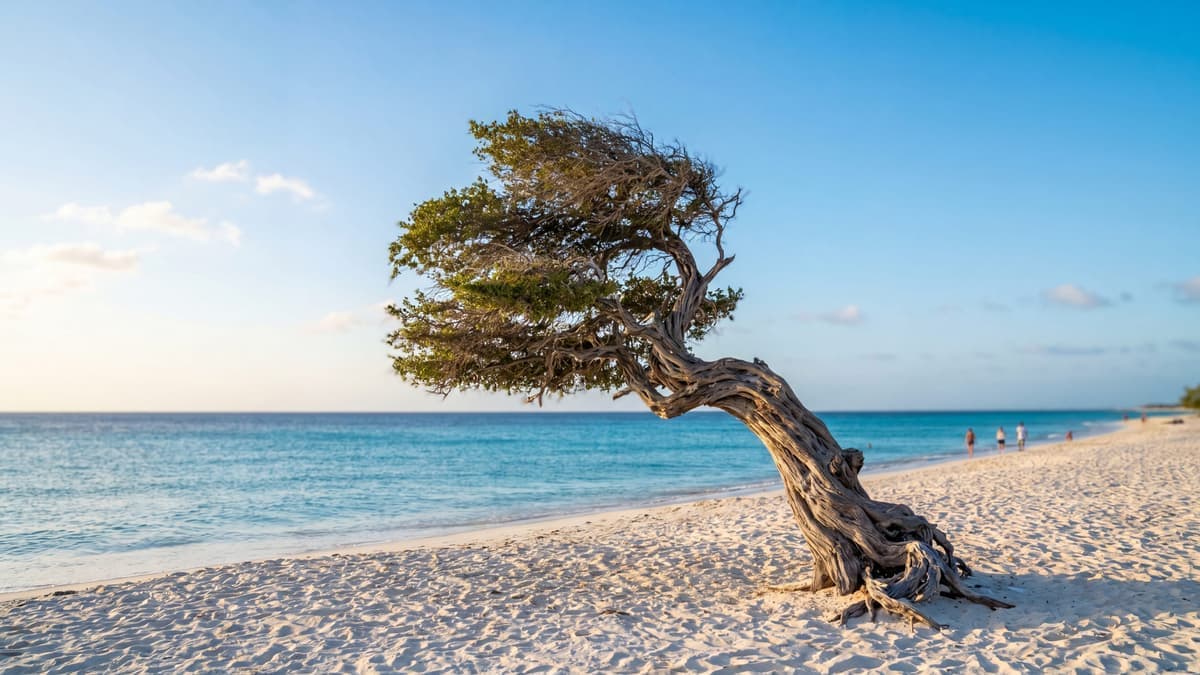
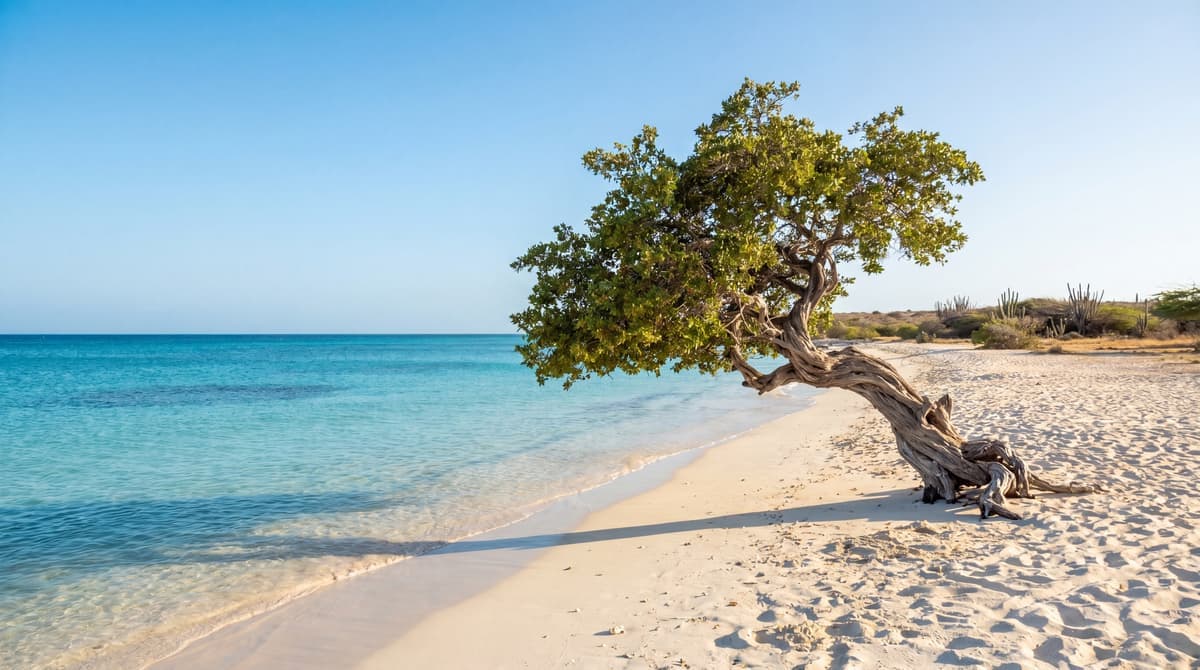
So pick your trade: Barbados's rain buys you rolling green hills and gardens. Aruba's dryness buys you certainty. Our arid island grows cacti and divi divi trees, dramatic in its own way but never lush.
The beaches
Both islands deliver, but they are built differently.
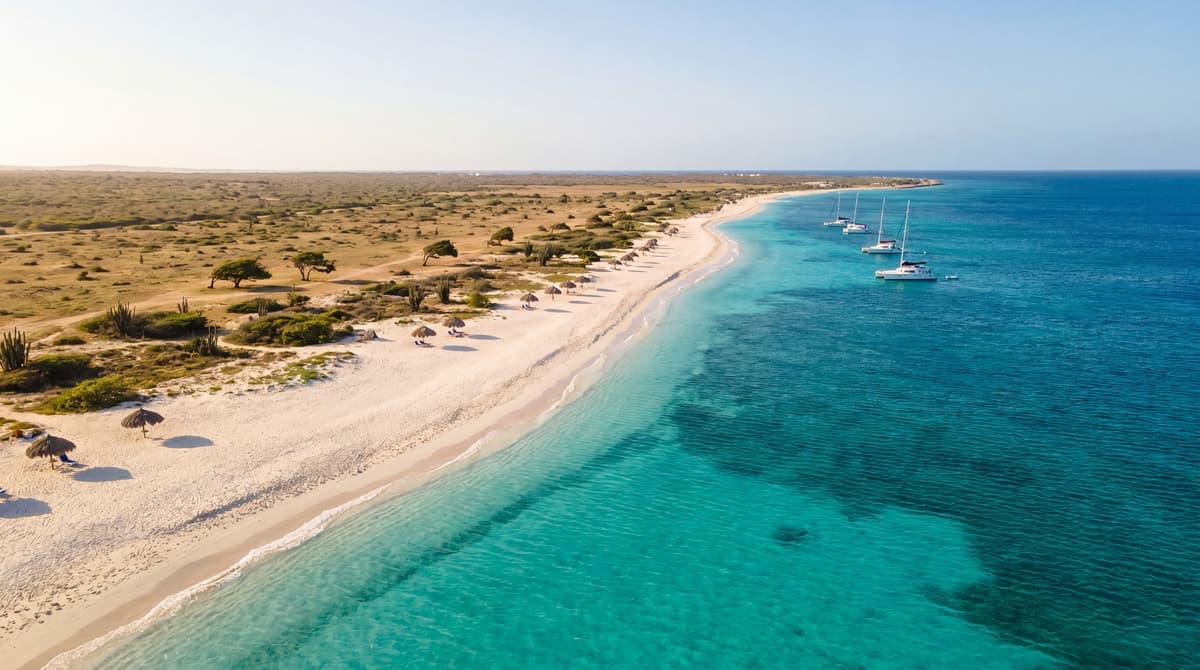
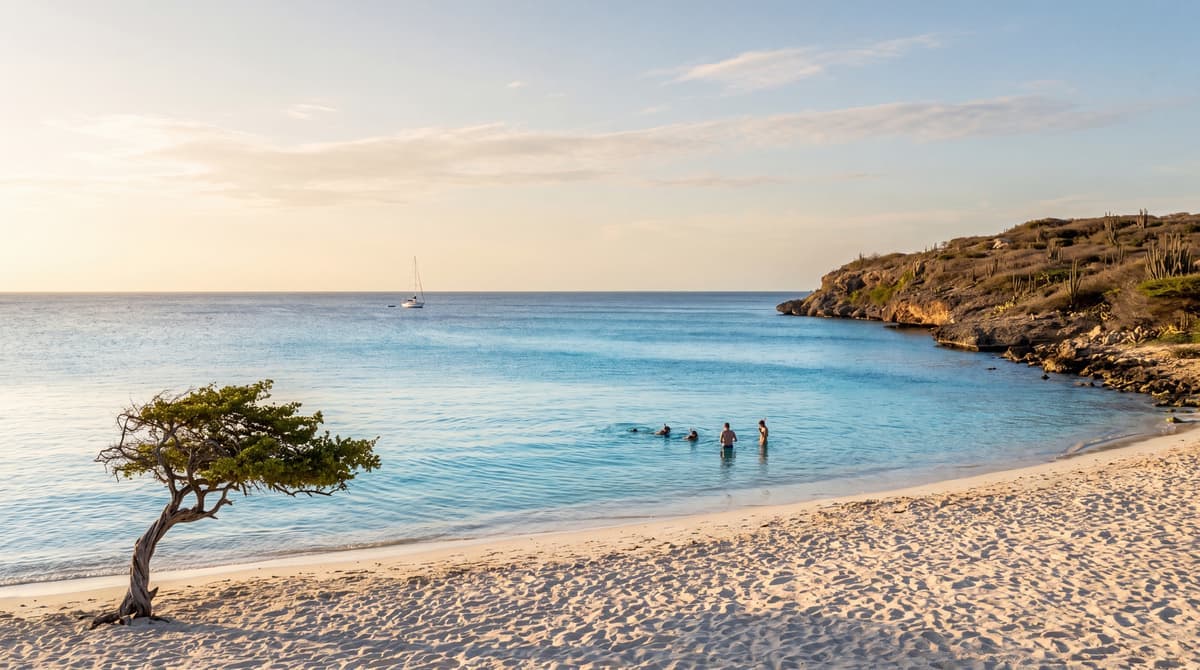
Aruba's leeward west coast, Eagle Beach, Palm Beach, Arashi, and Baby Beach, is reliably calm, clear, and swimmable essentially every day of the year. The trade winds blow, but the west coast stays protected, so a swim or a snorkel is never in doubt. That day-after-day consistency is the whole point of an Aruba beach week. Browse the full coastline in our beaches guide.
Barbados gives you two coasts with two personalities. The west, the so-called Platinum Coast, is calm and clear for swimming, much like Aruba's leeward side. The rugged east coast at Bathsheba faces the open Atlantic with powerful surf, huge boulders, and dramatic scenery, a genuine surf destination and one of the most photographed shorelines in the Caribbean, but not a place to swim. So Barbados hands you variety Aruba cannot match, at the cost of having to know which coast is safe on any given day. Honest caveat for Aruba: we have calm swimming and we have wild north-coast viewpoints, but we do not have a real swimmable surf culture the way the Barbados east coast does.
We would call the top-end beach quality roughly even, with Aruba ahead on all-day swimmable reliability and Barbados ahead on coastal variety and drama.
Things to do and the vibe
This is the deepest difference between the two trips.
Aruba is a Dutch Caribbean island: compact, safe, and built for self-navigation. Rent a car, drive Arikok National Park, find your own snorkel spot at Boca Catalina, eat fresh-off-the-boat fish in Savaneta, wander the pastel streets of Oranjestad, and hit a Palm Beach casino at night. The language is Papiamento with Dutch, and English and Spanish are everywhere. Our activities page shows how much you can self-drive in a week.
Barbados is British-Bajan to its core, shaped by more than three centuries of British influence layered over West African heritage. This is the birthplace of rum, home to distilleries with centuries of history, an island where cricket is close to a religion and afternoon culture still carries a British accent. It is greener, hillier, and larger-feeling than Aruba, with lush gardens, historic plantation houses, and a capital, Bridgetown, that is a UNESCO World Heritage site. If cultural depth and a strong sense of place matter to you, Barbados has a heritage Aruba's easy-breezy resort strip does not try to match.
Neither vibe is wrong. But be honest about which traveler you are. People who want to wander and self-drive love Aruba's simplicity. People who want history, rum, and rolling countryside can find Aruba a little too neat and too dry.
The food
Aruba's food story is about eating out, every night, somewhere different: fresh fish at the waterside shacks in Savaneta, Dutch and Caribbean comfort food, serious steakhouses, and beachfront fine dining in Oranjestad and Palm Beach, all reachable in a 15-minute drive from any hotel. Our dining guide covers the range.
Barbados has one of the great food identities in the Caribbean. Flying fish and cou-cou is the national dish, the rum is world-famous, and the Friday night fish fry at Oistins is a genuine institution where locals and visitors eat grilled fish side by side to live music. Bajan cuisine has real heritage and heat. Barbados wins on culinary identity and that one unmissable weekly event; Aruba wins on how effortlessly you can eat somewhere different every night without a plan.
Browse 32 vetted Aruba experiences
Most confirm instantly with free cancellation up to 24h, and 4 of them are free.
Money and getting around
Both islands are premium, and neither is a budget Caribbean pick. Expect high-season resort rates and restaurant prices on both. Aruba's single best value lever is timing: rates drop meaningfully in the September to November value season, the same rooms for noticeably less, which is also the window when Barbados is at its wettest and most storm-exposed. Our Aruba vacation cost guide breaks down real 2026 numbers.
On money, the two are similar in practice. Aruba uses the florin but US dollars are accepted everywhere; Barbados uses the Barbados dollar, pegged to the US dollar at two to one since 1975, and US dollars are widely accepted there too. You will not struggle with cash on either island.
Getting around is where they diverge sharply. Aruba is flat, small enough to cross in under an hour, drives on the right with English signs, and parking is easy and mostly free, so the rental car is the trip. Barbados drives on the left in the British tradition, is hillier with winding roads, and self-driving has a steeper learning curve for US visitors, which is why more Barbados travelers lean on taxis and tours. If driving yourself to a quiet cove sounds like freedom rather than stress, that single image tilts toward Aruba.
When to go
Timing changes this comparison more than people expect.
Aruba barely has seasons, just prices. The forecast is nearly the same all year, so the calendar question is purely financial: December through April is peak, and September through November is the value window with the lowest rates.
Barbados has a dry season from roughly December to May, which is also its peak pricing, and a wetter season from June to November that overlaps hurricane season. A January Barbados trip and a September Barbados trip are meaningfully different bets, both on weather and on risk. Notice the asymmetry: Aruba's cheapest months are exactly the months when Barbados is wettest and most storm-exposed, which tilts the value comparison more than the headline prices suggest.
The verdict
Pick Barbados if: you want lush green scenery and rolling hills, you are drawn to a deep British-Caribbean culture with rum, cricket, and a Friday night fish fry, you want a real Atlantic surf coast alongside calm swimming beaches, and a wetter, greener island with a strong sense of history sounds like your kind of week. It is one of the most characterful islands in the Caribbean.
Pick Aruba if: you want calm swimmable water every single day, you are booking in hurricane season and want weather certainty, you would rather self-drive a small flat island than navigate hilly left-side roads, you love the idea of a different beach every morning and dinner wherever you feel like walking, and easy US nonstops plus preclearance on the way home sound like the right amount of friction, which is to say none.
Both are great trips. They are just different trips, and the choice is really about calm-and-certain versus green-and-characterful, not better versus worse. If you are still weighing options, our Aruba vs Curacao, Aruba vs Punta Cana, and Aruba vs Bahamas comparisons cover the other islands people shortlist alongside these two. And if Aruba is winning, tell us your dates on the trip planner and we will build the week around how you actually like to travel.