June gets underestimated, and we understand why. You see the phrase Atlantic hurricane season begins June 1 and immediately question whether a June Aruba trip is asking for trouble. It is not, and if you spend thirty seconds looking at a map, the reason becomes obvious. Most travelers never look at the map, so they either pay peak-season prices in February or skip a month that would have been exactly what they were hoping for.
We plan Aruba trips year-round and send guests in every month. June is one of our favorites to recommend for couples and families who want the island at its most relaxed: the same beaches, the same weather, none of the December crowds. Here is the full picture of what June looks like on the ground.
What the weather actually looks like in June
Aruba in June is warm, breezy, and mostly dry. Daytime highs run around 86 to 88 degrees Fahrenheit, with nights cooling to the low 80s. The trade winds, which blow reliably from the east at roughly 15 to 20 miles per hour year-round, keep the air comfortable even when the sun is strong. Step off a shaded terrace and you feel the breeze immediately. It is one of the reasons Aruba rarely feels oppressively hot, even in midsummer.
Rainfall in June is minimal. The island averages only about 17 to 19 inches of rain for the entire year, making it one of the driest islands in the Caribbean. June typically brings brief passing showers, usually overnight or in the early morning, that do nothing to interrupt a day at the beach. The sky resets quickly here. A cloud that looks threatening on the horizon often blows through in 15 minutes and leaves the sand barely damp.
Sea temperature in June sits around 83 to 84 degrees Fahrenheit, warm enough for long snorkel sessions and comfortable even for children. The water on the western leeward coast, where every beach worth visiting is located, stays calm and clear throughout the month.
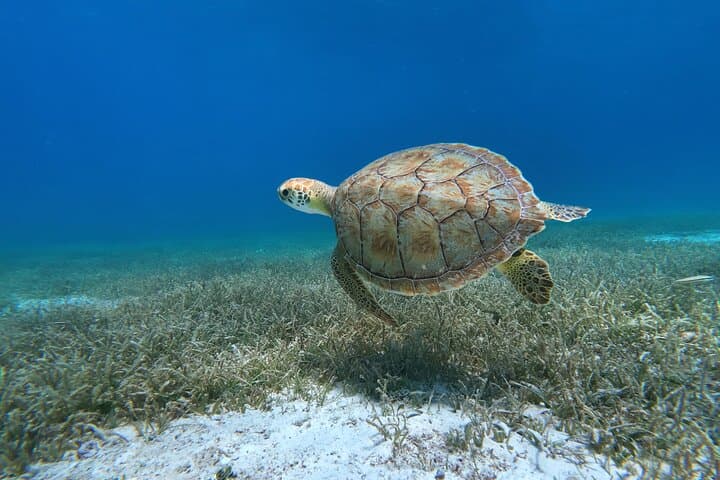
Private Turtle Snorkeling at Tres Trapi
1 hour · from $80 per person. Live prices, dates, and the honest details, one page.
The hurricane question, answered
This is what most June travelers want to know, so let us address it directly. Aruba sits at roughly 12 degrees north latitude, about 15 miles off the coast of Venezuela. The Atlantic hurricane belt runs primarily between 15 and 20 degrees north. Aruba is physically south of the zone where most storms develop and track.
In recorded history, no major hurricane has made a direct hit on Aruba. The storm that comes up most often in this context is Felix in 2007, which passed south of the island and caused only minor effects. The Dutch ABC islands (Aruba, Bonaire, Curacao) sit in a different meteorological lane from the islands that regularly get hit, such as Puerto Rico, the Dominican Republic, or the Leeward Islands.
That is not a guarantee of perfect weather, and we would never offer one. But comparing Aruba's hurricane risk to other Caribbean islands in June is comparing two very different situations. Storms that regularly affect the northern Caribbean almost never reach this latitude. If hurricane anxiety is what is keeping you away in summer, it should not be. Our full is Aruba safe guide goes deeper on the data.
Sea turtle nesting season is already underway
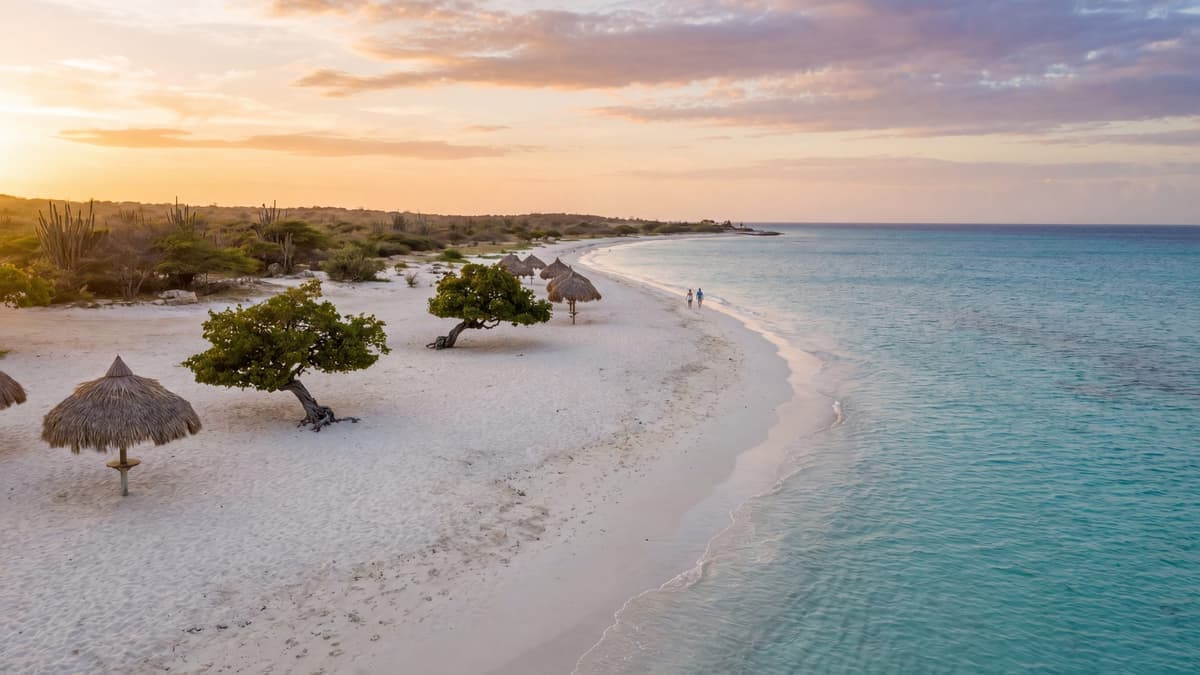
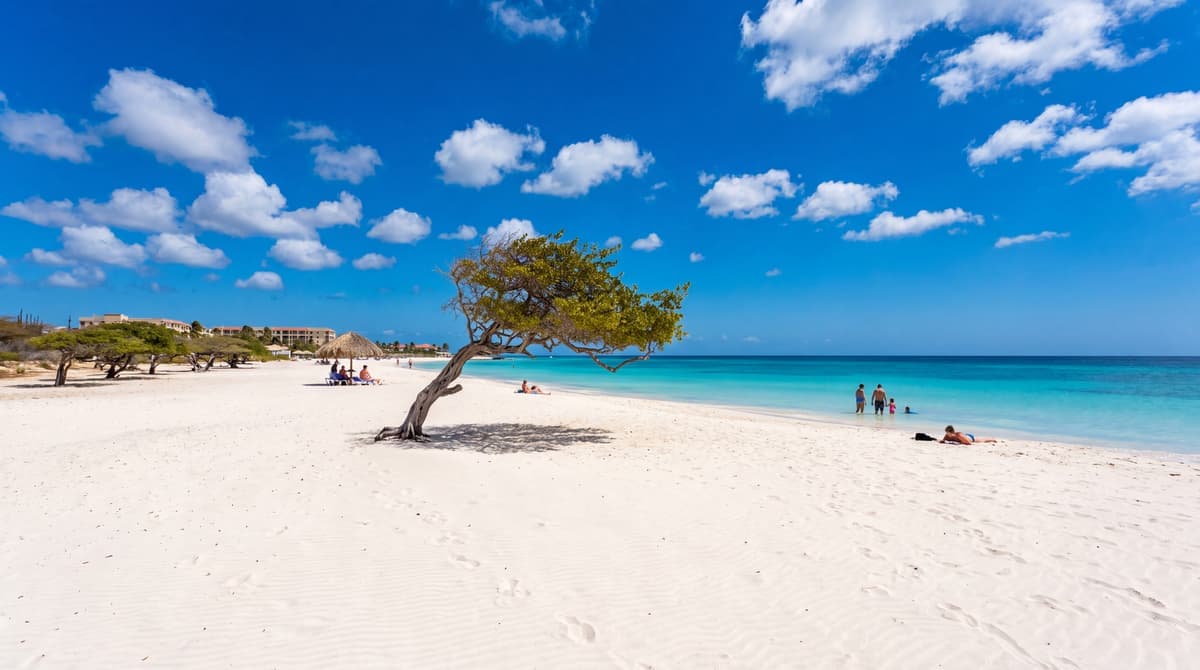
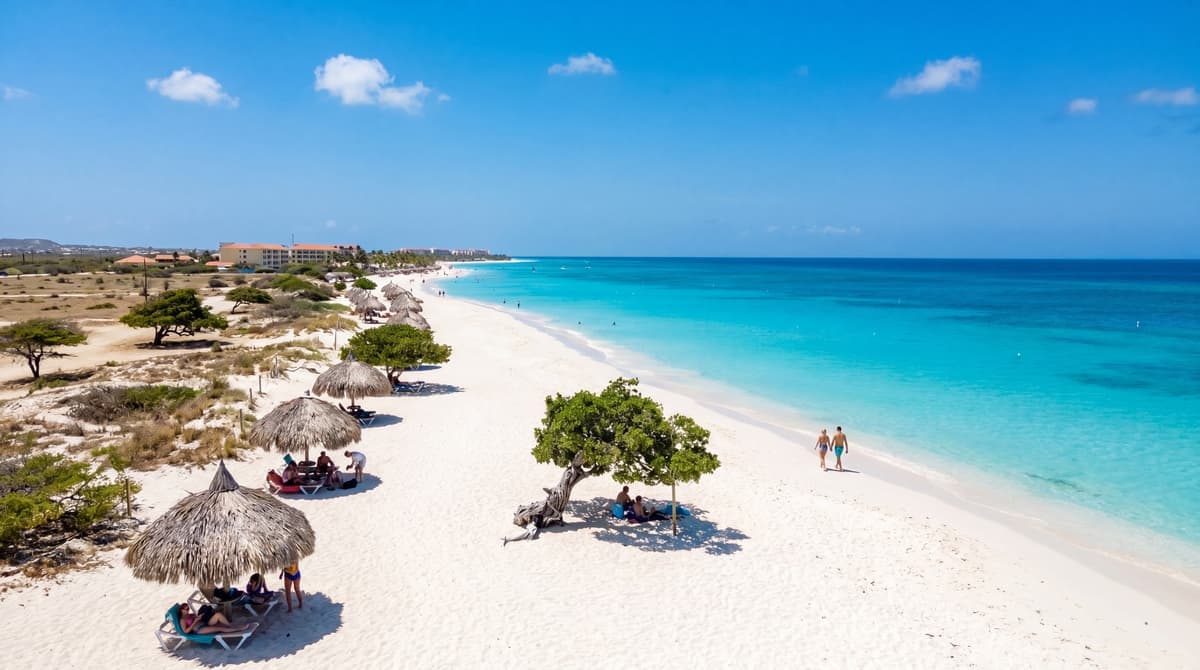
Here is the June bonus that most travelers do not know about. Aruba's sea turtle nesting season runs from roughly March through November. Leatherback turtles arrive first, with hawksbill, green, and loggerhead turtles following. Eagle Beach, on the southwestern coast, hosts the majority of the island's nests and consistently ranks among the best beaches in the world.
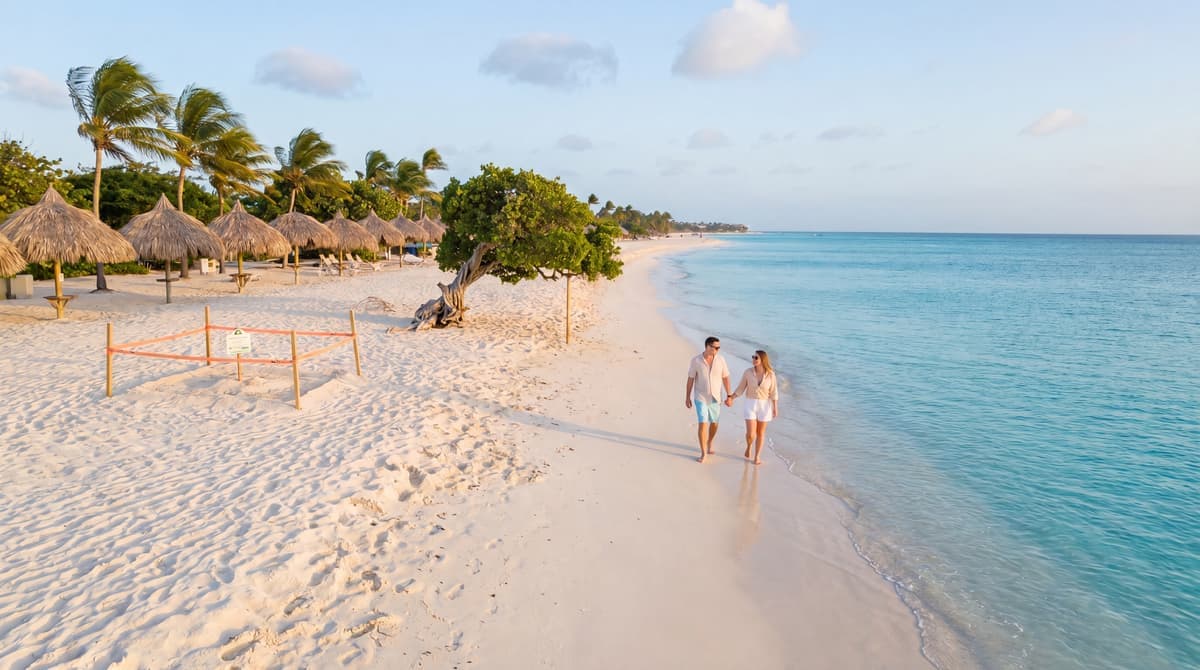
By June, nests laid in March are hatching. Hatchlings emerge after roughly 60 to 70 days of incubation, typically under cover of darkness, and make their way to the water. The conservation group TurtugAruba monitors nests on Eagle Beach and marks them with stakes and tape. You will see the markers when you walk the beach.
To see turtles, a few rules matter. Stay back from any marked area, never use a flashlight or phone torch near the nests, and keep your distance. Artificial light disorients hatchlings and can send them in the wrong direction. Early morning walks along Eagle Beach give you the best window, though sightings are never guaranteed.
Watching hatchlings reach the water is one of those rare experiences that travelers cannot stop talking about afterward. We cover the full nesting season and etiquette in our Aruba sea turtle nesting guide. If you prefer to see turtles underwater rather than on sand, the snorkeling sites at Tres Trapi and Boca Catalina offer reliable in-water encounters as well. Our snorkeling with turtles guide has the entry points and timing.
Want a local to plan the whole trip?
Our concierge builds your days around what you actually want, from $149. Real people who live in Aruba.
What to do in June
The island in June is fully operational: every tour, restaurant, and beach is exactly as you would find it in peak season, just shared with far fewer people.
Morning catamaran snorkel cruise. Wind builds through the afternoon, so a morning departure gives you calmer water and better visibility over the Antilla shipwreck and Boca Catalina reef. June boats run noticeably less crowded than January ones. Most are bookable through Viator with free cancellation.
Kiteboarding at Fisherman's Huts. June is prime wind season. Aruba's flat-water lagoon at Hadicurari (Fisherman's Huts) is one of the best kiteboarding locations in the world, and the strengthening summer trade winds are exactly what the sport requires. The Hi-Winds festival, one of the largest wind-sports events in the Caribbean, typically runs in late May or early June (the 2026 edition ran May 13 to 18 at Hadicurari). Even outside the festival window, the beach has lessons and rentals available.
Arikok National Park before 10am. The park interior heats up fast by midday, so an early start matters. Drive to the Natural Pool (Conchi) for the volcanic rock formation where Atlantic waves crash into a sheltered pool, or walk the cave trail to see the ancient Arawak drawings. A 4x4 or a guided jeep tour is needed to reach the Natural Pool. See our activities page for options.
Bon Bini Festival on Tuesday nights. Every Tuesday evening, Fort Zoutman in Oranjestad hosts a free cultural showcase with local music, dancing, and food. It runs year-round and June crowds are comfortable. This is an easy, genuinely local evening rather than a resort package.
Shore snorkeling at Tres Trapi and Boca Catalina. June warm, clear water makes this an ideal month for independent snorkeling. Tres Trapi, between Palm Beach and Oranjestad, is a consistent spot for sea turtle encounters. Boca Catalina offers better coral and fish variety. Both are shore-entry and free.
The full dining scene without reservations. June is nearly the only month when you can walk into one of the better restaurants without booking ahead. Barefoot on Surfside Beach, Flying Fishbone in Savaneta, and Gasparito in Noord all have tables available in June that would require weeks of advance booking in February. See our dining guide for the full list.
The value argument for June
Hotel rates in June run roughly 25 to 30 percent below the December through April peak for the same rooms. A Palm Beach resort that lists near $450 a night in February often comes in around $300 to $340 in June. Eagle Beach properties follow the same pattern. Rental cars are cheaper and easier to find, and booking your Aruba car rental in advance locks in the lowest June rates. Airfare from the US is at its yearly low, particularly on routes from New York and Boston.
The trade-off is minor: midday sun is more intense than in December, and a brief evening shower may show up once or twice during the week. Neither meaningfully affects a well-planned trip. For a full cost breakdown, see our Aruba vacation cost guide.
One note for New York-area travelers: JetBlue is ending its Newark to Aruba nonstop in July 2026. June travelers from Newark should book early or check alternatives via JFK. The full nonstop map is in our flights to Aruba guide.
Let us plan this trip for you
We live in Aruba and vet every spot ourselves, share your dates and we'll build the rest.
The free 7-day itinerary
The exact 7 days we send friends
One email with our day-by-day Aruba plan: which beach on which day, where to eat, and the tours worth booking. No spam, unsubscribe anytime.
Where to stay
Palm Beach is the high-rise hotel strip with the most amenities within walking distance, and it sees the steepest June discounts because it has the most inventory to fill. Eagle Beach is quieter, wider, home to the fofoti trees and the turtle-nesting stretch of shore, and typically a touch less expensive than Palm in the shoulder months.
For families and groups who want more space and a kitchen, vacation rentals in Noord typically run $130 to $200 a night in June and put you 10 minutes from both beach zones. For the full neighborhood breakdown, see our where to stay in Aruba guide. Compare live prices for your exact dates on our hotels page or on our trip planner.
Getting here in June
June airfare is at or near its yearly low from most US gateways. Nonstops run from New York (JFK), Boston, Miami, Charlotte, Philadelphia, Atlanta, Washington, Houston, and Dallas, among other cities. The flight from the East Coast is about 4 to 4.5 hours.
Before you fly, complete the online ED Card at edcardaruba.aw (the official government site; file it inside the last week before you fly, and it collects Aruba's separate $20 sustainability fee). Aruba's airport has US Customs preclearance, so you clear US immigration in Aruba before boarding your return flight and walk out as a domestic passenger when you land. Full route and airport details in our flights guide.
Browse 33 vetted Aruba experiences
Most confirm instantly with free cancellation up to 24h, and 4 of them are free.
What to pack for a June trip
The list is lean. The constant breeze handles temperature regulation, so heavy layers are unnecessary.
- Reef-safe SPF 50 or higher, two bottles, reapplied every two hours
- A UV rash guard, especially for extended time in the water
- Water shoes for rocky beach entries (Tres Trapi, Boca Catalina, and the Natural Pool all benefit)
- A packable lightweight rain shell for the rare brief shower
- A wide-brim hat with a chin strap (the trade winds will take any other kind)
- A reusable water bottle (Aruba tap water is desalinated and excellent)
Our full Aruba packing list covers the rest.
Bottom line on June
The weather is warm and breezy, the hurricane risk is near zero at this latitude, turtle nesting adds an experience unavailable in peak season, and the island costs meaningfully less for the same hotels and activities. The only thing June does not have that February has is a crowd, which for most travelers is a benefit rather than a drawback.
If you are planning a June trip, tell us your dates on the trip planner and we will help line up the tours, beaches, and restaurants that fit your style.