Most Aruba visitors spend at least a few days on Palm Beach, and that is the right call. The two-mile crescent of white sand on the island's western shore concentrates the resort hotels, beach bars, water sports vendors, and sunset crowds that give an Aruba trip its energy. We have spent a lot of time on this beach and watched plenty of visitors overpay, pick the wrong section, or miss the best parts entirely.
Here is everything you need to know before you arrive.
What Palm Beach is actually like
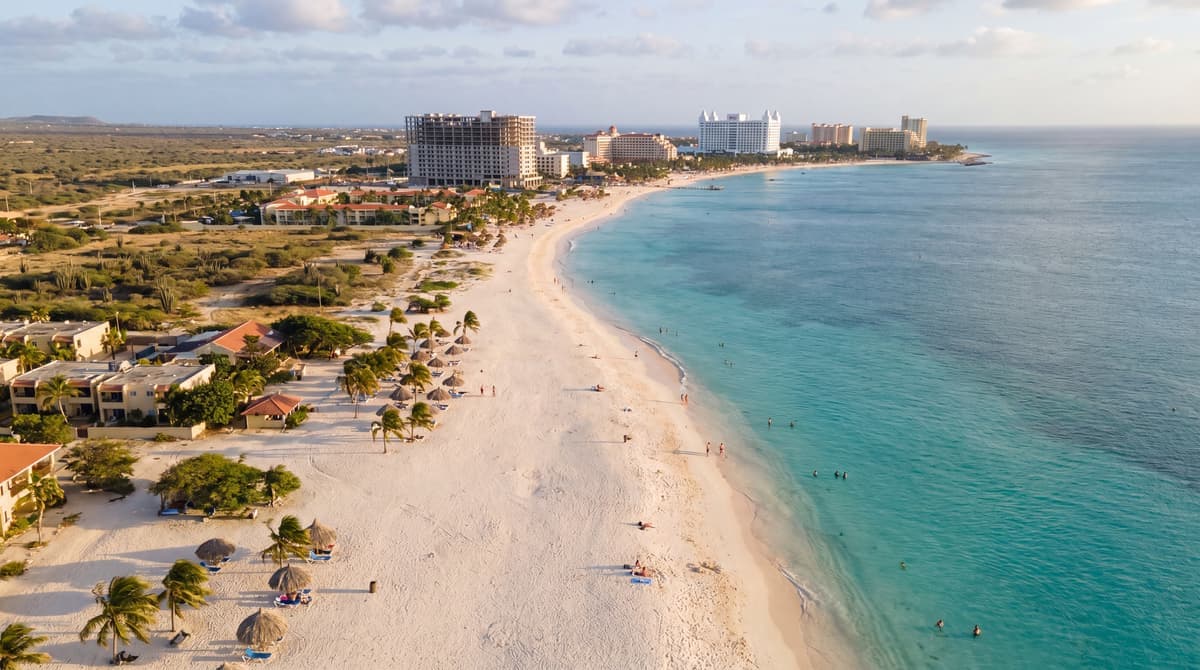
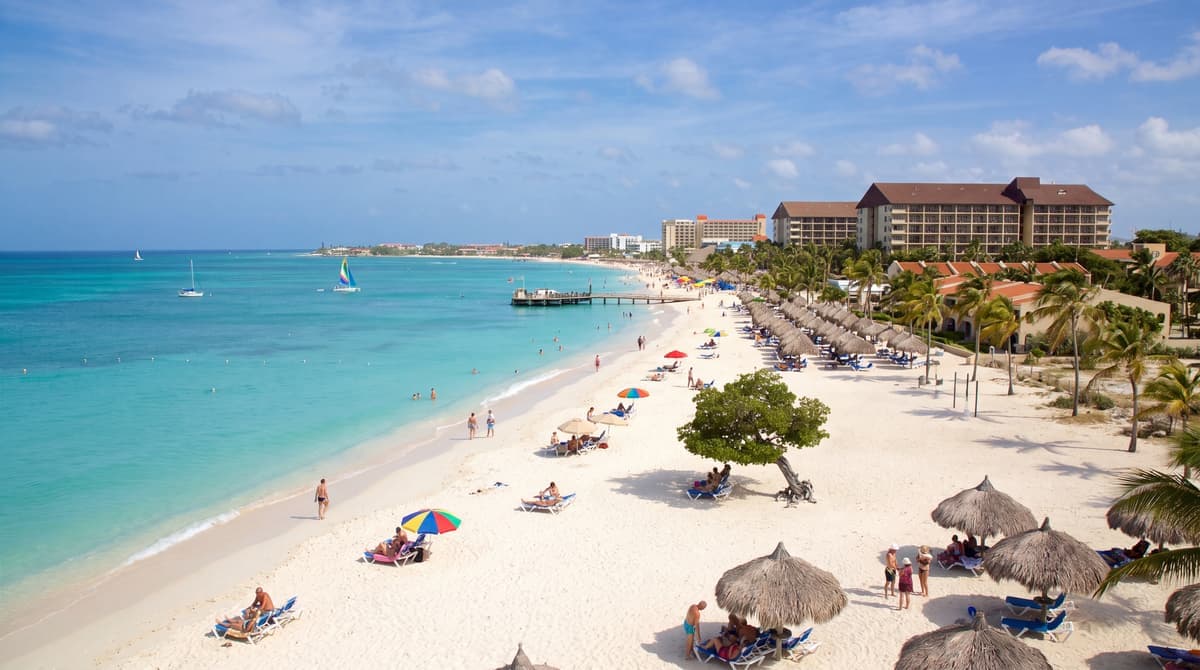
Palm Beach runs roughly two miles along the island's northwestern coast, from the Marriott at the south end of the strip to the quieter low-rise neighborhood near Hadicurari in the north. The sand is white and fine, the water is clear, and the trade winds blow consistently at around 15 to 20 mph, which is enough to keep a 90-degree day genuinely comfortable.
The western Caribbean exposure is one of Palm Beach's structural advantages. The water is calm almost year-round, protected from swell by the island itself. You can wade out 40 feet and still be waist-deep in bathwater-warm sea. That shallow, calm profile makes it excellent for families and anyone doing water sports.
The honest caveat: Palm Beach is the most commercial stretch on the island. There are beach vendors, jet ski lanes running parallel to the shore, and during peak season (mid-December through April) the area in front of the big high-rise hotels can feel dense at midday. If you want the quieter version of Aruba, Eagle Beach is a five-minute drive south and a noticeably different world. If you want facilities, energy, and everything within walking distance, Palm Beach is hard to beat.
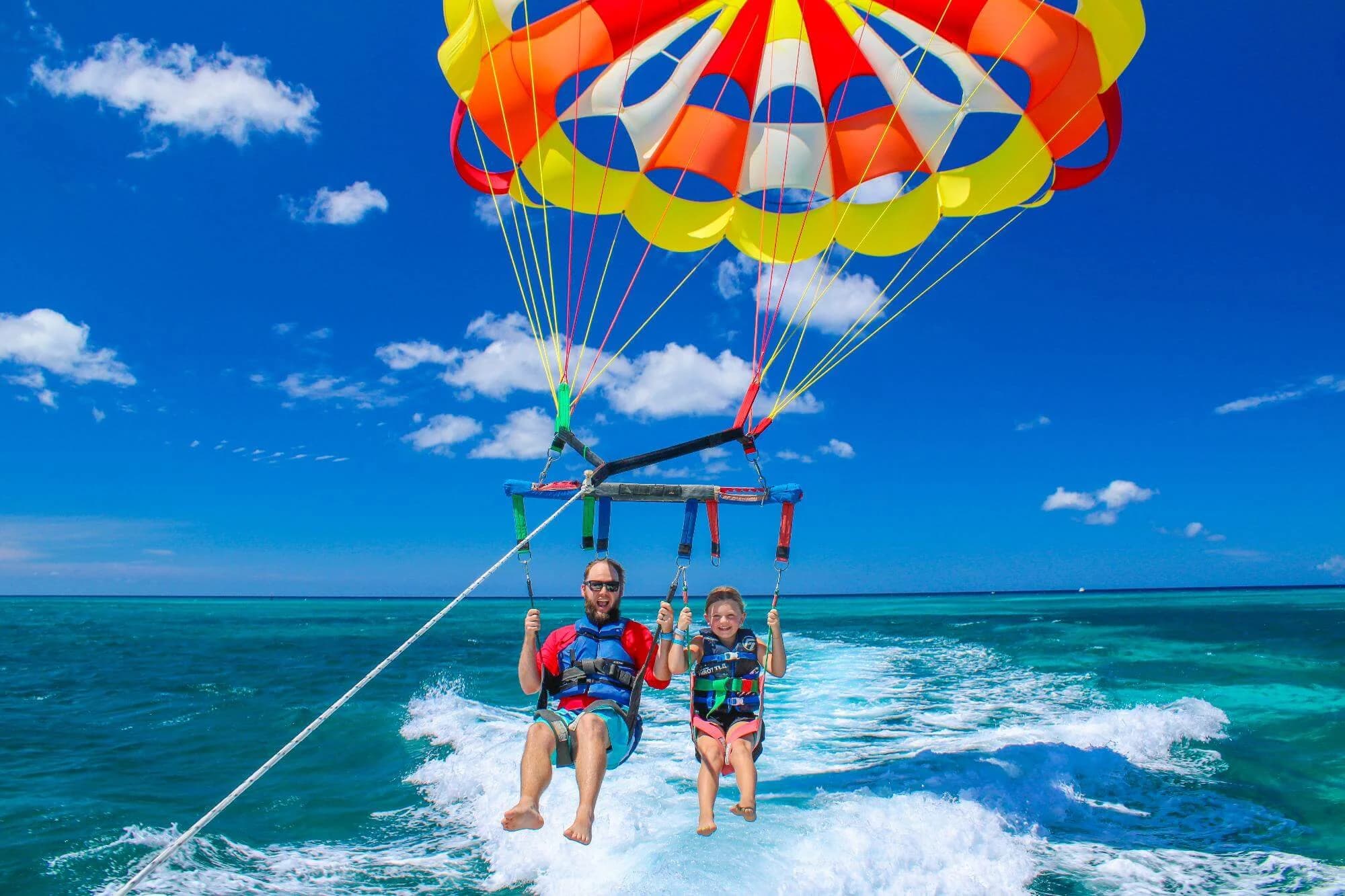
Our direct line for the classic Palm Beach thrill: we book parasailing straight with the crew that has flown this beach since 1985, $70 per person against their own calendar, with a $20 per person deposit that comes out of that $70 and confirms your booking. Parasailing, booked direct.
Parasail over Palm Beach, booked direct with the crew
$70 per person, open times from the crew’s own calendar, and a $20 per person deposit that confirms your booking.
Where to position yourself on the beach
The section in front of the major high-rise hotels (Marriott, Ritz-Carlton, Hyatt, Hilton, Holiday Inn) has the most amenities and the most foot traffic. This is where you want to be if you are doing water sports or heading to Bugaloe Pier for sunset drinks.
The northern section, near Hadicurari and the kite-surfing zone, is noticeably quieter. The sand quality is identical, there are fewer vendors, and you can sit undisturbed for long stretches. The trade-off is the walk back if you are staying in the main resort core.
The southern end, past the Marriott toward Surfside, transitions into a calmer stretch with less jet ski traffic. Worth the ten-minute walk from the resort core if you want more room.
Water sports on Palm Beach
This is where Palm Beach earns its reputation. The calm, shallow water along the strip supports every water activity the island offers, and most can be booked within a few steps of your towel.
Jet skis run in a designated lane parallel to the shore. Rentals start from around $70 per person for a 30-minute ride, and morning sessions before 10am give you the calmest water and the least chop from boat traffic. Reserve jet skis and water activities in advance on Viator to lock in a slot, especially during high season when on-beach vendors can be inconsistent on pricing and availability.
Parasailing runs throughout the day from the beach. Most operators use the launch area near the high-rise hotels. The views from the air over the full arc of the strip and the island's western coast are genuinely impressive.
Stand-up paddleboarding works well in the morning calm, less so once the trade wind picks up around midday and the surface gets choppy. Ask your hotel or a beach vendor which rental companies set up on their stretch.
The most-booked experience that departs from Palm Beach is the catamaran snorkel cruise north to Antilla (the largest shipwreck in the Caribbean) and the calm reef at Boca Catalina. Most include an open bar and lunch, and are rated among the top experiences on the island. Morning departures around 9am give the best snorkeling visibility and smoother sailing than the afternoon window. Check dates and prices on Viator.
Beach bars and evening drinks
Bugaloe Beach Bar and Grill is the most recognizable spot on Palm Beach, sitting at the end of the De Palm pier with views down the length of the strip. It runs breakfast through late evening, pours decent cocktails, and draws a real crowd at sunset. If you want a rail seat at the pier for golden hour, arrive no later than 5:30pm. The caveat: it is the busiest bar on the island on cruise-ship days, so the midday rush can make service slow. See the full Bugaloe review and hours.
Moomba Beach Bar sits directly on the sand and runs a more relaxed, mixed-local crowd than Bugaloe. Happy hour deals, regular DJ nights, and frozen drinks that are worth stopping for. Less tourist-pier, more neighborhood-regular.
Fat Tuesday is the stop for frozen daiquiris. Dozens of flavor combinations, a beachfront position, and prices that are reasonable by Palm Beach standards. Not a place to linger all afternoon, but a reliable drink-between-activities spot.
Where to eat near Palm Beach
The Playa Linda boardwalk, at the north end of the strip, has a cluster of small spots that punch above their weight.
Eduardo's Beach Shack does breakfast and lunch: fresh smoothies, grain bowls, and light plates. The crowds build fast by 9am, so arriving before heading to the water is the move. The caveat: outdoor seating fills quickly and the queue moves at its own pace.
Scott's Brats on the same boardwalk serves grilled German-style sausages with sides, and it is consistently the best value for a quick lunch in this zip code without resorting to the resort buffet.
Linda's Dutch Pancakes, steps away, does substantial sweet and savory pancakes that read as a real Dutch-Caribbean breakfast rather than a tourist version. There is almost always a wait on weekend mornings, and the space is compact. Worth it if you are not in a rush.
For sit-down dinner, the best restaurants are a short taxi ride north into the Noord neighborhood: see the full dining guide for the complete list organized by area and cuisine. Most Palm Beach hotel restaurants are convenient but not the best food on the island.
Hotels on Palm Beach
The strip is anchored by large resort-style hotels, all of which have their own beach operation with chairs, umbrellas, and watersports rentals. Every major Palm Beach resort has a casino. The Marriott, Ritz-Carlton, Hyatt Regency, and Hilton cover the main stretch; the Holiday Inn sits slightly to the north and tends to run a little cheaper.
If you want the full resort package, everything within walking distance, and a casino in the same building, Palm Beach delivers. If you want a quieter stay at a lower price, the low-rise hotels and vacation rentals in the Noord and Eagle Beach neighborhoods offer a different rhythm for less money per night. Compare all options on our hotels page or bundle your room with flights and a rental car on the booking hub.
Our where to stay in Aruba guide covers the full Palm Beach vs Eagle Beach trade-off. The luxury hotels roundup breaks down the specific properties, and the all-inclusive resorts guide covers which meal-plan options are genuinely worth the premium.
Want a local to plan the whole trip?
Our concierge builds your days around what you actually want, from $149. Real people who live in Aruba.
Palm Beach vs Eagle Beach
This is the comparison most first-timers ask about. The short version: Palm Beach has more happening, Eagle Beach has more space. They are five minutes apart by car.
Palm Beach is the better base if you want water sports at your front door, a beach bar for sundowners, dinner on foot, and a casino available without getting in a taxi. Eagle Beach is the better choice if you want a wider, less crowded beach and a quieter atmosphere.
A lot of people combine both on a single trip, staying on Palm Beach and spending a few afternoons on Eagle Beach when they want space. That works well. For the detailed side-by-side comparison, see the Eagle Beach vs Palm Beach guide.
Practical notes
Getting there: Most Palm Beach hotels are a 15 to 20-minute taxi ride from the airport. Government-set fixed fares apply, and the rate from the airport to the Palm Beach strip runs approximately $27 to $35 depending on which end you are headed to. The Aruba taxi rates guide has the current figures. Rental cars make the island more flexible; compare rates on our car rental page and see our car rental guide for the best booking approach.
Parking: Street parking along LG Smith Boulevard fills quickly during high season. The Palm Beach Plaza mall has a paid lot nearby. Arriving before 9am almost always means a free spot close to the sand.
Currency and payment: US dollars are accepted everywhere on Palm Beach. Cards are fine at restaurants, bars, tour operators, and shops. Carry small US bills for tips, beach vendors, and taxis. See the Aruba money and tipping guide for the full breakdown including the service charge that most visitors miss on their restaurant bill.
Water: Aruba's tap water is clean, safe to drink, and comes from a seawater desalination plant. Fill a reusable bottle at the hotel and bring it to the beach. You do not need to buy bottled water.
The bottom line
Palm Beach is the most convenient and the most energetic base on the island, and those two things are the same reason. If you want water sports at your front door, a beach bar at sunset, dinner within walking distance, and a casino available without getting in a taxi, this is the strip that delivers. The trade-off is that you are sharing the beach with a lot of other people who made the same calculation.
Go early for the calm water and empty sand. Do your water sports before 11am when the chop builds. Walk north if you need more space. Have dinner in Noord. And at least one afternoon, drive south to Eagle Beach, Zeerovers, or Baby Beach to see a different version of the island. The full Aruba activities list and trip planner are the next step.