The short answer depends on one question: how much trip are you planning? Hawaii is the bigger, richer destination, six major islands, volcanoes, Pearl Harbor, whales in winter, an entire indigenous culture, and it deserves 10 or more days to justify the roughly 11-hour flight from New York and the brutal eastbound jet lag coming home. Aruba is the easy button: about 5 hours from the East Coast, zero time-zone damage, reliably calm swimmable water, and an island you can genuinely cover in 4 to 5 days. For a once-in-years bucket-list trip, Hawaii. For the warm-weather week you will actually take this year and repeat next year, Aruba.
We are an Aruba team, so discount us accordingly, but this comparison is mostly geography and math, and the math is not subtle. Here is the full picture for an East Coast traveler.
Aruba vs Hawaii at a glance
| Hawaii | Aruba | |
|---|---|---|
| Flight from NYC | About 11 hr nonstop to Honolulu | About 5 hr nonstop |
| Published daily cost | Around $393 per person, flights average around $671 roundtrip | Around $369 per person, 2026 deal fares from $339 |
| Hurricane risk | Low, most Pacific systems track south of the islands | Outside the Atlantic belt, no hurricane landfall on record in 168 years |
| Time change from ET | 5 to 6 hours behind, hard eastbound jet lag | None that matters (Atlantic time) |
| Signature beach | Waikiki (famous), Lanikai (calm) | Eagle Beach |
| Vibe | Six islands, volcanoes, surf culture, 10+ day trips | One compact island, calm seas, 4 to 5 days covers it |
Browse 33 vetted Aruba experiences
Most confirm instantly with free cancellation up to 24h, and 4 of them are free.
Getting there, which is most of the story
Let us start with the number that frames everything else. New York to Honolulu nonstop is about 11 hours, with roughly 11 direct flights a week spread across Delta, Hawaiian, JetBlue, United, and Alaska. There is no Miami nonstop at all. Roundtrip fares run about $382 to $815, averaging around $671, and typical fares sit in the $400 to $800+ range.
New York to Aruba is about 5 hours nonstop on American, JetBlue, Delta, and United, with 2026 deal fares of $339 to $353 and typical fares around $339 to $601. From Miami it is about 3 hours 20 minutes.
But the flight time understates the real difference, because of the clock. Hawaii is 5 to 6 hours behind Eastern time. Flying west you gain hours and adjust fairly easily. Flying home east, you lose them all back, and eastbound jet lag is the hard direction: many travelers report needing several days to feel normal again, which is rough when you land Sunday night and work Monday. Aruba is on Atlantic time, so there is no jet lag in either direction. You land, you nap on Eagle Beach, you are on schedule.
There is one Hawaii advantage here worth stating plainly: no passport. Hawaii is domestic travel, and since May 2025 a Real ID is all a US citizen needs. Aruba requires a passport, the online ED card, and a roughly $20 per person sustainability fee. For families with expired passports, Hawaii's paperwork advantage is real.
What it costs
Day to day, the islands are closer than you might guess. Published traveler-spend averages run around $393 per person per day for Hawaii against around $369 for Aruba, with Hawaii's budget tier around $149 a day and its luxury tier around $1,096. A published one-week Hawaii figure runs about $2,751 per person. On comparable living costs, one index (Expatistan) puts Honolulu around 38 percent more expensive than Aruba, which matches the restaurant-bill sticker shock most visitors report from Waikiki.
Where the budgets really diverge is everything around the daily spend. Hawaii flights average around $671 roundtrip from New York and frequently more, against Aruba deals in the mid $300s. Hawaii rewards island hopping, which adds interisland flights. And because the trip is long and far, you tend to book more days, bigger hotels, and a rental car on each island you visit. A proper Hawaii trip for two from the East Coast routinely lands well north of what the same couple spends on a week in Aruba. Our Aruba vacation cost guide breaks down what the Aruba version actually costs in 2026.
None of this makes Hawaii poor value. You are buying vastly more destination. It just means the fair comparison is total trip cost, not daily rate, and on total cost Aruba wins for a one-week trip.
Want a local to plan the whole trip?
Our concierge builds your days around what you actually want, from $149. Real people who live in Aruba.
Weather and storm risk
Both destinations are good news here, which is rare in our comparison series.
Hawaii's tropical storm risk is genuinely low, since most Pacific systems track south of the islands. The bigger weather story is microclimates: Honolulu sees only about 17 inches of rain a year, but windward coasts are far wetter, and conditions can change completely in a 30-minute drive. Coastal temperatures run roughly 70 to 85°F with cooler nights than Aruba, and winter brings big surf to north shores.
Aruba is outside the Atlantic hurricane belt entirely, with no hurricane landfall on record in 168 years of NOAA data, around 15 to 18 inches of rain a year, and steady 81 to 88°F warmth with constant trade winds. The practical difference is uniformity: in Aruba there is one forecast and it is almost always the same good one. Our best time to visit Aruba guide covers the small seasonal differences that do exist.
Call this category a tie on risk, with Hawaii offering more weather variety and Aruba offering more weather certainty.
The beaches and the water
Here is an honest distinction that surprises first-time Hawaii visitors: Hawaii's beaches are more dramatic, but less reliably swimmable.
Waikiki is iconic but variable, with surf, rip currents, and lifeguarded zones for good reason. Lanikai on Oahu's windward side is reef-protected and genuinely calm. Hapuna on the Big Island is gorgeous with a seasonal shorebreak. North shore beaches in winter are for watching professionals, not swimming. The variety is spectacular, golden sand, black sand, green sand, sea cliffs, but you plan your swimming around conditions, and families with small kids need to pick spots carefully.
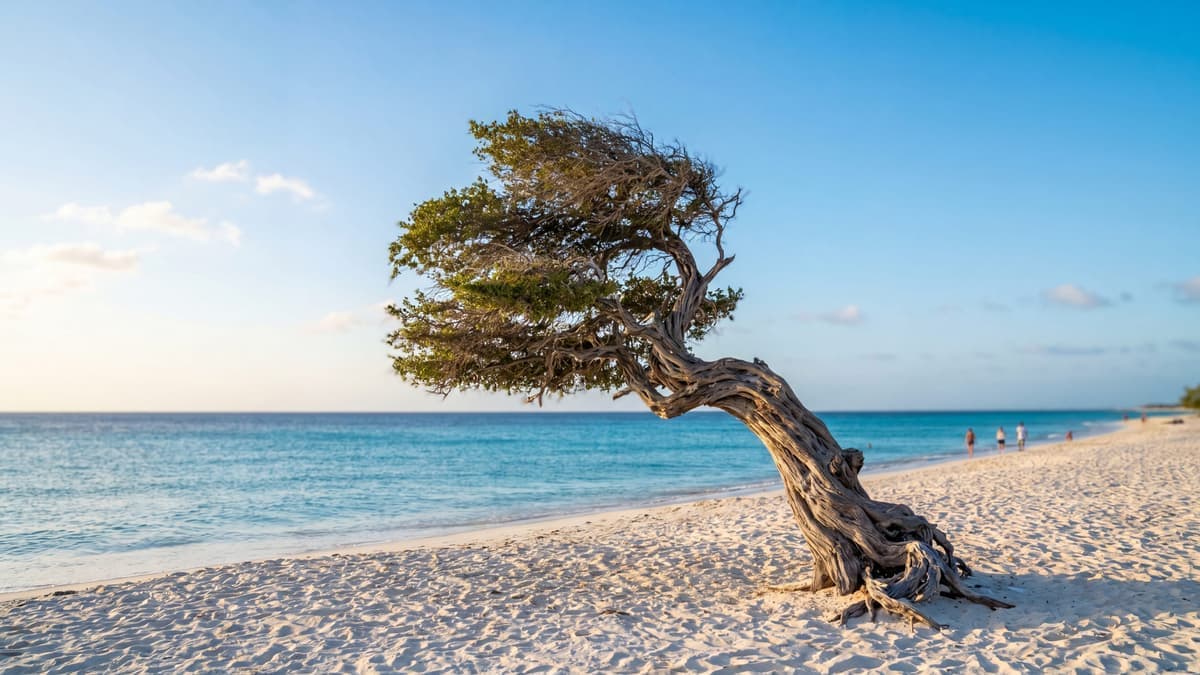
Aruba's leeward west coast is the opposite proposition: Eagle Beach (number 3 in TripAdvisor's 2026 Travelers' Choice Caribbean rankings), Palm Beach, Arashi, Baby Beach, all calm, clear, and swimmable essentially every day of the year. Less drama, total reliability. Toddlers, nervous swimmers, and snorkelers get the same gentle water in February as in September. The full rundown is in our beaches guide.
If you want to stand on a sea cliff and watch 30-foot winter surf, Hawaii. If you want to float in calm turquoise water every single day of your trip, Aruba.
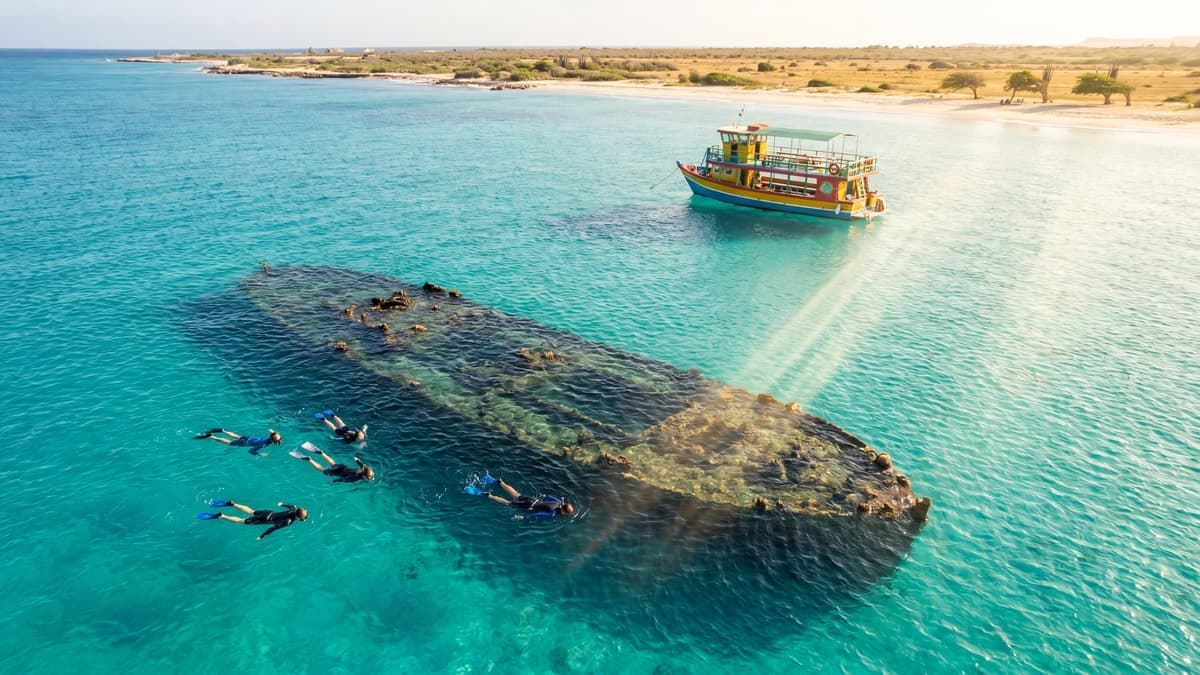
The snorkeling comparison follows the same pattern. Hawaii's reef life is richer, with green sea turtles, reef fish found nowhere else on earth, and famous bays that reward an early arrival before the crowds and the wind. But the good spots are specific places you drive to, and conditions decide whether a given morning works. On Aruba, the snorkeling is more modest in species count and far more available: the Antilla shipwreck, one of the largest wrecks in the Caribbean, sits in calm water on the leeward coast, Boca Catalina and Arashi are swim-from-shore easy, and the same gentle conditions hold essentially every day. Serious underwater travelers will prefer Hawaii's reefs. Casual snorkelers, and especially kids in the water for the first time, get more actual time on the fish in Aruba.
Let us plan this trip for you
We live in Aruba and vet every spot ourselves, share your dates and we'll build the rest.
Things to do and the vibe
Hawaii wins this category, and it is not close, so let us give it its due.
Six major islands. Hawaii Volcanoes National Park with active lava fields, and Haleakala sunrise above the clouds on Maui. Pearl Harbor. Road to Hana. Napali Coast. Surf culture where surfing was invented, luau, and a living indigenous Hawaiian culture that gives the islands a depth no Caribbean resort island matches. Humpback whales fill the channels from January to March. You could take five separate Hawaii trips and never repeat yourself. That is exactly why Hawaii rewards 10 or more days: flying 11 hours for less feels wasteful, and the destination keeps filling whatever time you give it.
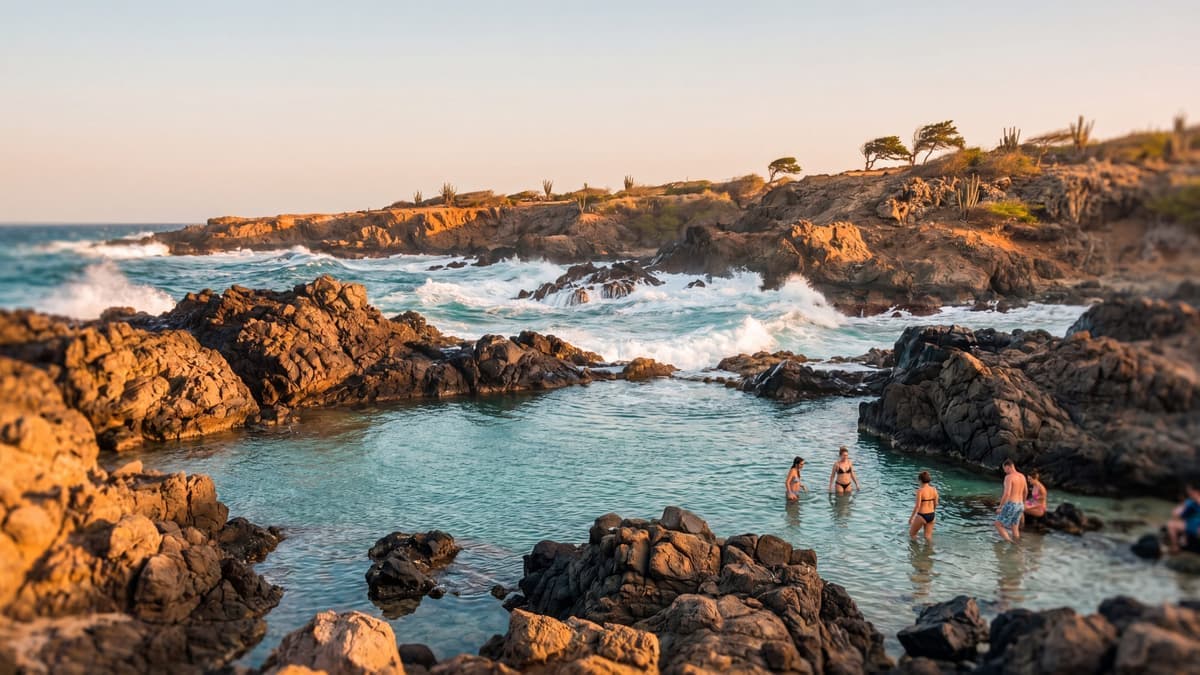
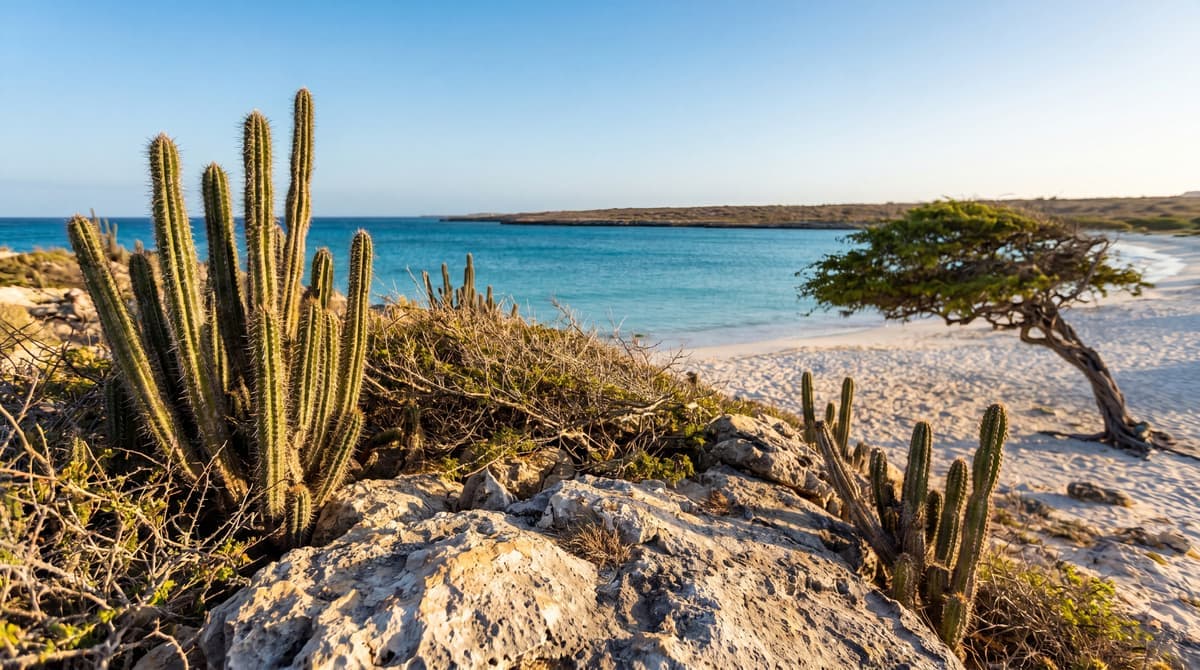
Aruba is a compact desert island, and we mean that as both its limit and its charm. The hits, Eagle and Palm Beach, the Antilla shipwreck snorkel, a 4x4 day through Arikok National Park to the Natural Pool, San Nicolas street art, Baby Beach, sunset sails, casino nights, fit comfortably in 4 to 5 days, which is exactly why a one-week trip feels complete instead of rushed. Our 7-day itinerary shows the full week with breathing room, and our activities page covers the bookable tours. Aruba is not a bucket-list epic. It is the trip you can take this year without burning all your vacation days, and take again next year.
The vacation-day math
Let us make the time cost concrete, because this is the calculation that actually decides most East Coast trips.
A Hawaii week from New York spends roughly a full day flying out (11 hours in the air plus airport time), arrives with your body clock 5 to 6 hours off, and then spends the first day or two of the return adjusting to Eastern time again, with the eastbound direction famously the harder one. Take seven days off work and the destination realistically gets four to five of them at full strength. That is precisely why every Hawaii veteran gives the same advice: do not go for a week, go for ten days minimum, ideally two weeks. The trip is wonderful at that length and frustrating below it.
An Aruba week from New York runs the opposite way. A morning departure has you through customs and on Eagle Beach by mid afternoon of day one, with zero clock adjustment. The last day flies home through US preclearance and lands you domestic, no customs line, functional for work the next morning. Seven days off buys roughly six and a half days of actual vacation. If your job, kids' school calendar, or budget caps you at a week, that arithmetic alone makes the choice.
Find your hotel by month, beach & budget
Compare current Aruba rates across the major booking sites in one place, in USD. Most rooms are free to cancel.
The free 7-day itinerary
The exact 7 days we send friends
One email with our day-by-day Aruba plan: which beach on which day, where to eat, and the tours worth booking. No spam, unsubscribe anytime.
Where to stay
Hawaii lodging is really a two-layer decision: which island first, then which coast of it. Oahu means Waikiki convenience, Pearl Harbor access, and the biggest hotel inventory; Maui, Kauai, and the Big Island mean quieter bases but add interisland flights, and the standard advice is a rental car on every island you visit, since the famous sights, Haleakala, the Road to Hana, the volcano park, are drives, not walks. Splitting a trip across two islands is the classic itinerary, and it adds cost and logistics that belong in your budget from the start.
Aruba lodging is a one-layer decision. Palm Beach for the walkable high-rise strip with casinos and restaurants, Eagle Beach for the quieter low-rise zone on the island's best sand, or a vacation rental in Noord with a kitchen for the budget play. One island, one base, one rental car (optional, though we recommend it), and rates that fall 30 to 40 percent in the September to November value season. The planning effort is a fraction of the Hawaii version, which is part of why repeat visitors keep repeating.
When to go
Hawaii has real seasons worth planning around. Winter, roughly January to March, brings the humpback whales to the channels and giant surf to the north shores, spectacular to watch and unswimmable for most. Summer brings calmer water and family crowds. Windward coasts stay wetter all year, leeward coasts drier, and microclimates mean you pack for four kinds of weather on one trip.
Aruba's calendar is nearly flat: 81 to 88°F, trade winds, and around 15 to 18 inches of rain a year, every month. The decision is purely financial, peak pricing December through April and the 30 to 40 percent value window September through November, with hurricane risk effectively absent year-round. Our best time to visit Aruba guide covers the fine print. The honest framing: Hawaii rewards planning the right season; Aruba removes the question.
Browse 33 vetted Aruba experiences
Most confirm instantly with free cancellation up to 24h, and 4 of them are free.
Traveling with kids
For families, the two trips diverge sharply. The Hawaii flight is a long haul with children, the time change wrecks small kids' sleep schedules in both directions, and ocean days need adult judgment about surf and currents, which is why the lifeguarded beaches matter and why parents of toddlers gravitate to the few reliably calm spots like Lanikai. The reward is enormous, volcanoes, snorkeling bays, whale season, the kind of trip kids remember forever, but it is a trip you manage.
Aruba is close to effortless with kids. Five hours nonstop, no time change, and the entire west coast is the calm end of the pool: Baby Beach in the southeast is shallow enough for the smallest swimmers, and Eagle and Palm Beach stay gentle every day. Add drinkable tap water, US dollars, English everywhere, and dinner within walking distance, and it is the lowest-friction international family beach trip we know of. For school-vacation families choosing between the two, the question is usually just how old the kids are: Hawaii lands better once they can handle the flight and remember the volcano.
Safety and practicalities
Both destinations are about as worry-free as travel gets. Hawaii is the United States, with US healthcare, US phones, and no advisories to think about. Aruba carries a US State Department Level 1 advisory (Exercise Normal Precautions, reissued August 19, 2024), the lowest tier issued, with US dollars accepted everywhere, English spoken everywhere, drinkable tap water, and US preclearance at the airport so you skip customs lines on the way home. We cover the details in is Aruba safe. Safety should not drive this particular decision in either direction.
Want a local to plan the whole trip?
Our concierge builds your days around what you actually want, from $149. Real people who live in Aruba.
Flying from Miami or the Southeast
Everything above assumed a New York departure, but the math gets even more lopsided further south. There is no Miami to Honolulu nonstop at all, so Southeast travelers connect through a West Coast or Texas hub and turn an 11-hour journey into a 13-to-15-hour one each way. Meanwhile Miami to Aruba is about 3 hours 20 minutes nonstop with multiple daily flights, and deal fares have run $288 to $352 roundtrip. From Florida, Aruba is closer than many domestic destinations, while Hawaii is close to the longest trip a US traveler can take without crossing an ocean twice. Atlanta, Charlotte, and the rest of the Southeast sit in similar shape: short hops to the Caribbean, full-day journeys to the Pacific.
This is worth saying because the Hawaii-or-Caribbean question gets debated as if the answer were universal. It is not. From Seattle or Los Angeles, Hawaii is the easy nonstop and the Caribbean is the long haul, and the entire calculus of this article flips. For East Coast and Southeast readers, which is who we wrote this for, geography has already cast a strong vote, and the honest summary is that Hawaii has to be a destination trip on purpose, while Aruba can be a long weekend if it has to be.
A final budgeting footnote for the spreadsheet builders: when you compare quotes, compare the whole trip, flights, lodging, cars, interisland hops, activities, and the vacation days burned in transit, not the nightly rate. Hawaii frequently looks competitive on hotel price and then pulls ahead on every other line. Aruba's line items are fewer and smaller, which is much of why it wins the one-week, East-Coast use case so decisively. The full Aruba ledger is in our Aruba vacation cost guide.
The verdict
Pick Hawaii if: this is a bucket-list trip and you can give it 10 or more days, you want volcanoes, dramatic hikes, surf culture, Pearl Harbor, and winter whales alongside your beach time, the absence of passport requirements matters to your group, and you can absorb the 11-hour flights and several days of eastbound jet lag as part of the price. Hawaii is simply more destination than Aruba, and given enough time it repays every hour of travel.
Pick Aruba if: you have a week or less, you are flying from the East Coast and refuse to spend two vacation days in transit and recovery, you want guaranteed calm swimmable water rather than conditions-dependent beaches, you want the lower total trip cost, and you like the idea of a beach week that is easy enough to repeat every year. Half the travel time, no jet lag, one reliable forecast.
Different tools for different jobs, and plenty of travelers should do both, Hawaii for the milestone trip, Aruba for the annual reset. If you are also weighing Caribbean options against each other, start with our Aruba vs Punta Cana and Aruba vs Bahamas comparisons. And if the easy beach week is calling, tell us your dates on the trip planner and we will have it built before Hawaii's jet lag would have worn off.