Here is the short version. Puerto Rico wins on variety, culture, and cost, and if you are a US citizen you do not even need a passport to get there. Aruba wins on weather certainty, calm swimmable water every single day, and the kind of low-friction safety that lets you wander without a second thought. If your dream week includes a rainforest hike, a glowing bay, and a night out in a 500-year-old walled city, book Puerto Rico. If your dream week is one perfect beach after another with zero risk of rain ruining it, book Aruba.
We live and plan trips on Aruba, so you know where we stand. But this comparison only helps you if we are honest about where Puerto Rico actually beats us, and it does, in several real ways. Here is the full breakdown.
Aruba vs Puerto Rico at a glance
| Puerto Rico | Aruba | |
|---|---|---|
| Flight from NYC | About 4 hours nonstop to San Juan | About 4 hours 45 minutes nonstop |
| Published daily cost | Around $243 per person (mid-range average) | Around $369 per person (mid-range average) |
| Hurricane risk | Inside the hurricane belt, hit hard by Maria in 2017 and Fiona in 2022 | Outside the belt, no hurricane landfall on record in 168 years of NOAA data |
| US entry/passport | US territory, no passport needed for US citizens, domestic flight | Passport plus the online ED card and a $20 sustainability fee |
| Signature beach | Flamenco Beach, Culebra | Eagle Beach |
| Vibe | Rainforest, colonial history, big-island variety, bigger nightlife | Desert island, independent exploring, calm water, dining out every night |
The numbers only tell part of it. The rest comes down to what kind of trip you actually want.
Our pick
Renting a car? Compare every Aruba agency
One search across the island rental companies, free cancellation on most cars, no card to reserve.
Getting there
This is one of the biggest practical differences between the two islands, and it has nothing to do with the beach.
Puerto Rico is a US territory, so flying there from anywhere in the United States is a domestic flight. No passport, no customs form, no ED card. US citizens show the same ID they would use for any other domestic flight, and that is the whole process. From New York, the nonstop to San Juan runs about 4 hours. From Miami, it is closer to 2 hours 45 minutes, with American and Frontier running multiple flights a day.
Aruba requires more paperwork. You need a valid passport, the free online ED card completed within 7 days of arrival at edcardaruba.aw, and a mandatory $20 sustainability fee per traveler aged 8 and up, waived if you are returning within a year of your last visit. From New York, the nonstop to Aruba runs about 4 hours 45 minutes on American, JetBlue, Delta, or United. One genuine Aruba advantage on the way home: Queen Beatrix Airport has a full US Customs and Border Protection preclearance facility, one of the only ones in the Caribbean, so you clear US immigration and customs before you board and land back in the States as a domestic arrival with no further lines. San Juan does not need that step since you never left US soil, so that advantage mostly cancels out.
Net result: Puerto Rico is slightly faster to reach and has zero entry paperwork for US citizens. Aruba asks for a passport and about $20, plus a short online form. Neither is a real barrier, but if you have ever lost a passport two weeks before a trip, you will understand why this column matters more than it sounds.
What it costs
Puerto Rico is meaningfully cheaper on paper, and the range is wide enough that budget travelers can genuinely stretch further there.
Published mid-range traveler-spend averages put Puerto Rico around $243 per person per day, with budget travelers reporting closer to $110 and luxury travelers around $506. Aruba's published averages run about $369 a day mid-range, roughly $157 at the budget end, and around $781 at the luxury end.
The honest caveat runs in both directions. Puerto Rico's lower average is partly pulled down by the island's genuinely cheap guesthouses, street food (chinchorros, kioskos, food trucks), and public transportation options that most Aruba-style resort travelers never touch. If you are comparing a comparable mid-range beach hotel in San Juan to a mid-range hotel on Aruba, the gap narrows. And Vieques and Culebra, Puerto Rico's two most photographed side-trip islands, are not actually the budget option. Their boutique inns and limited inventory can run as pricey as anything on Palm Beach, once you add the ferry or puddle-jumper flight to get there. Aruba's rates, meanwhile, drop noticeably in the September through November value season, closing some of the gap. Our Aruba vacation cost guide breaks down real 2026 numbers category by category.
The structural reason for the gap is scale. Puerto Rico is a full US state-sized economy with wide competition between hotels, guesthouses, and food trucks, so prices spread across a huge range. Aruba is a small, prosperous island with limited land and limited room inventory, and a la carte living on a small Dutch Caribbean island adds up. If stretching your dollar matters most, Puerto Rico wins this category outright.
Weather and the hurricane reality
This is the category Puerto Rico cannot spin its way out of.
Aruba sits outside the main Atlantic hurricane belt, about 12 degrees north of the equator. No hurricane center has been recorded over Aruba in 168 years of NOAA records. Rainfall runs about 15 to 18 inches a year, temperatures hold at 81 to 88°F year-round, and the trade winds keep it comfortable. You can book Aruba for any week of the year, including the heart of hurricane season, with near-total confidence the weather will cooperate. Our best time to visit Aruba guide goes month by month.
Puerto Rico sits squarely inside the Atlantic hurricane belt, with the official season running June 1 through November 30 and peak activity from mid-August through late October. The risk is not theoretical. Hurricane Maria made landfall as a Category 4 storm in September 2017, caused roughly $90 billion in damage, destroyed about 166,000 residential buildings, and knocked out the island's entire power grid for months. Hurricane Fiona followed in September 2022, a weaker Category 1 to 2 storm that still dumped up to 30 inches of rain in places and triggered another island-wide blackout, with over 100,000 customers still without power two weeks later. Puerto Rico's electrical grid, strained since Maria, has been repeatedly criticized for its fragility in the years since.
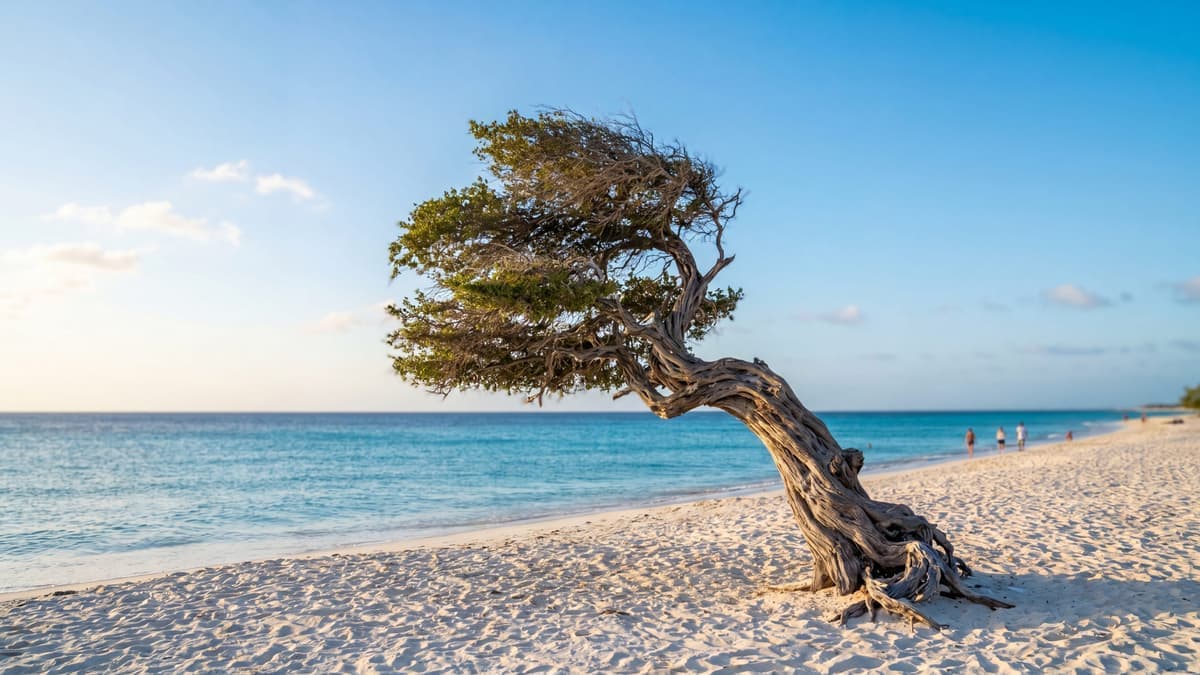
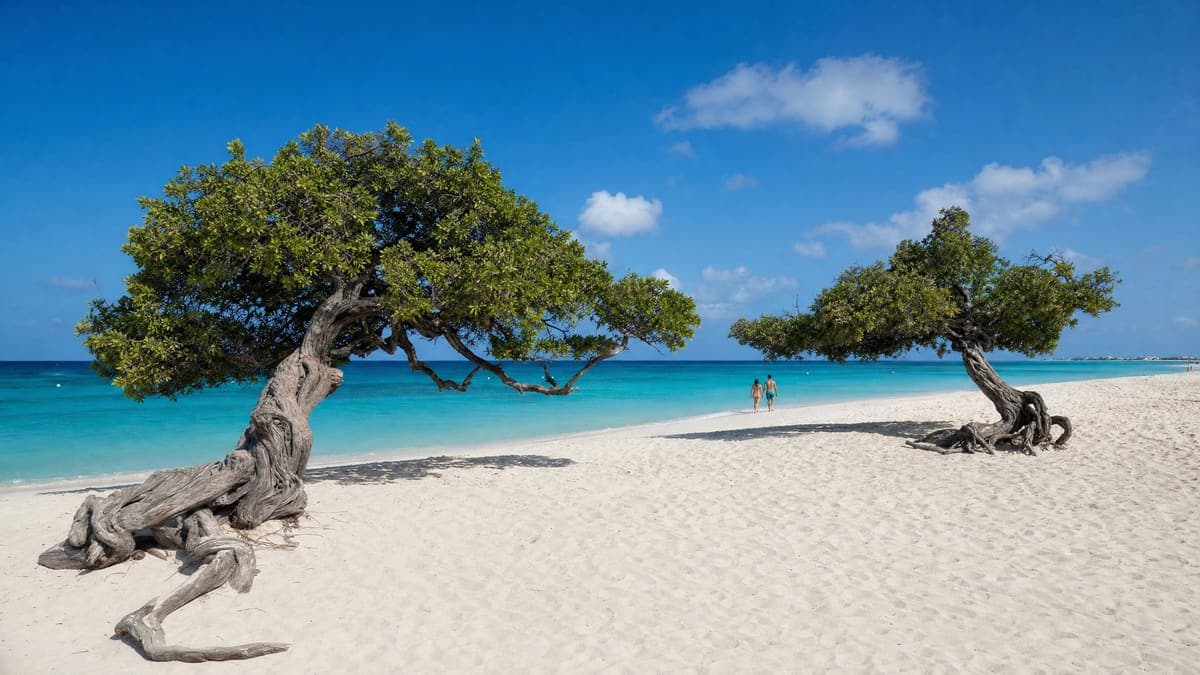
That rain is also exactly why Puerto Rico looks the way it does: a genuine tropical rainforest, rivers, waterfalls, and lush green mountains that Aruba simply cannot grow. Aruba is a desert island, all cacti and divi-divi trees, dramatic in its own stark way but never green.
So the trade is plain. Puerto Rico's rain and storm exposure buy you a rainforest. Aruba's dryness buys you certainty. If you are booking nonrefundable travel for August through October specifically, Aruba removes a real risk that Puerto Rico carries every year.
The beaches
Both islands have a genuine headliner, and both headliners have real hardware to back them up.
Eagle Beach was named the best beach in the Caribbean and the fourth best beach in the world in TripAdvisor's 2026 Travelers' Choice awards, and the whole leeward west coast, Eagle, Palm, Arashi, Baby Beach, stays calm, clear, and swimmable essentially every day of the year. The consistency is the entire point: the trade winds blow, but the west coast is protected, so a swim or a snorkel is never in doubt. Browse the full coastline in our beaches guide, starting with Eagle Beach itself.
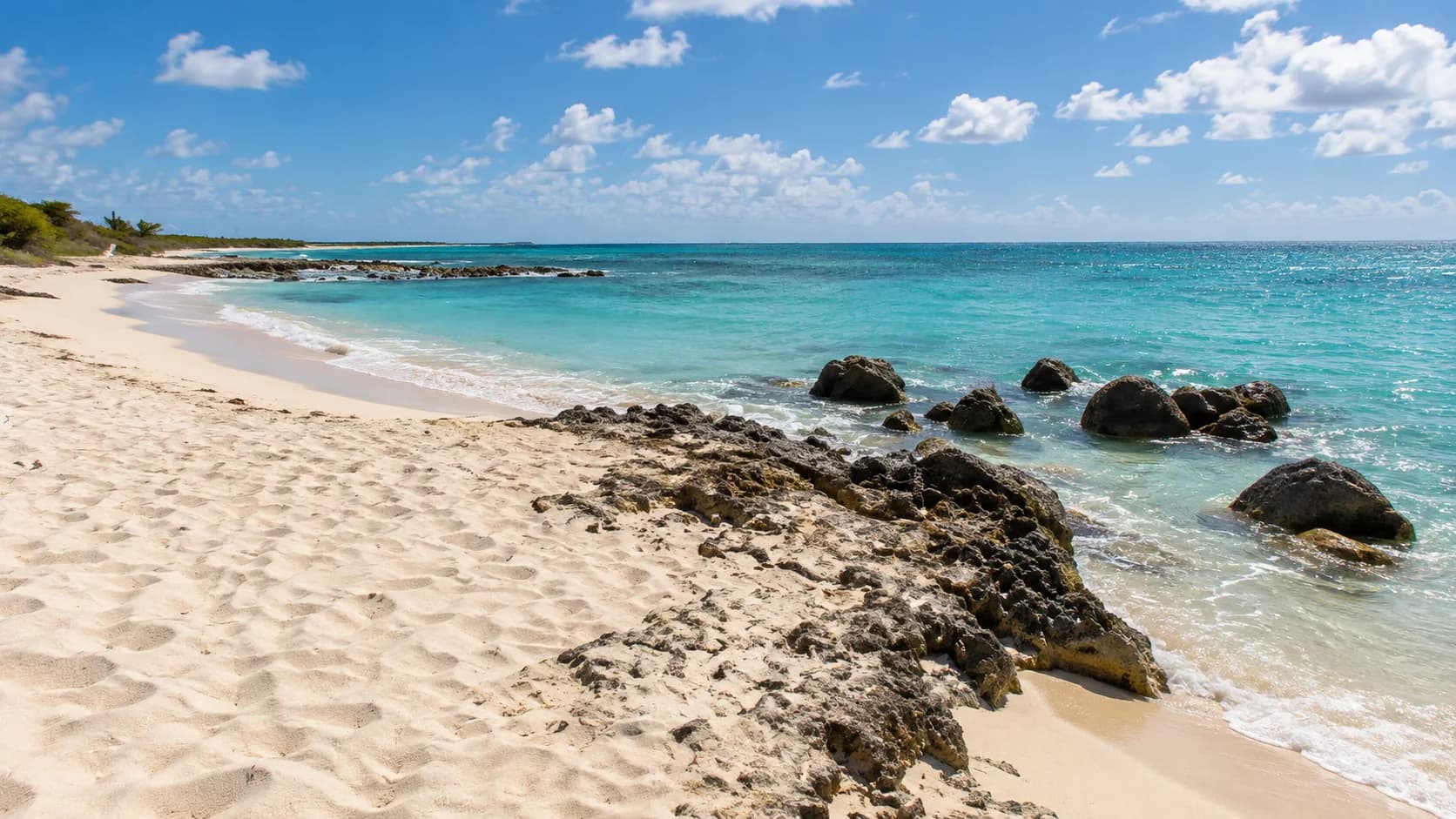
Flamenco Beach, on the small island of Culebra off Puerto Rico's east coast, landed the 41st spot on The World's 50 Best Beaches list for 2026, the 10th-best beach in all of North America, thanks to a crescent-shaped bay that keeps the water calm and clear. Puerto Rico's other headline water feature is Mosquito Bay on Vieques, recognized by Guinness World Records as the brightest bioluminescent bay on Earth, glowing from dinoflagellates disturbed by every paddle stroke. Swimming is banned there to protect the organisms; you experience it by kayak or electric boat tour only.
Here is the honest caveat on each side. Reaching Flamenco Beach or Mosquito Bay means a ferry or a short puddle-jumper flight from the Puerto Rican mainland to Culebra or Vieques, so it is not a beach you casually drive to before breakfast. San Juan's own in-city beaches, Condado and Isla Verde, are convenient but more of a solid city beach than a world-ranked one. Aruba's trade-off is the opposite: every beach on the west coast is a 10 to 30 minute drive from anywhere you are staying, no ferry required, but you get one flavor of beach, calm and turquoise, rather than Puerto Rico's range from glowing bay to horseshoe bay to Spanish colonial seawall.
We would call the top-end quality roughly even, with Aruba ahead on day-after-day reliability and easy access, and Puerto Rico ahead on sheer range if you are willing to add a ferry to your itinerary.
Things to do and the vibe
This is the deepest difference between the two trips, deeper than price or weather.
Puerto Rico is simply a bigger, more varied destination, about 50 times the land area of Aruba. Old San Juan is a genuinely world-class historic quarter: cobblestone streets, pastel colonial buildings, and Castillo San Felipe del Morro, a UNESCO World Heritage fortress built by the Spanish between 1539 and 1790, with walls up to 20 feet thick that once repelled Sir Francis Drake. El Yunque National Forest, the only tropical rainforest in the entire US National Forest System, covers more than 28,000 acres about 25 miles from San Juan, with waterfalls, hiking trails, and over 240 species of plants and animals. Casa Bacardí in Cataño, the world's largest rum distillery, produces over 100,000 liters of rum a day and runs public tours. Add the bioluminescent bays, the beaches of Vieques and Culebra, and a genuinely large nightlife and food scene, and Puerto Rico offers more things to do than almost any other Caribbean destination this size.
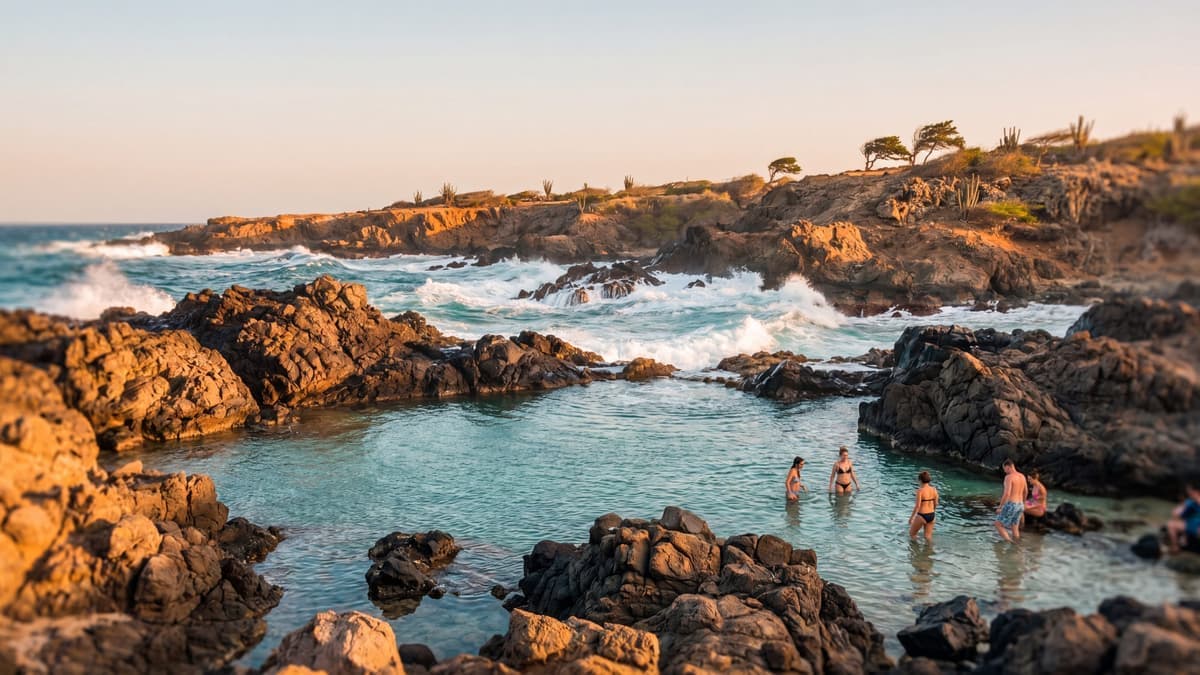
Aruba flips that model entirely. The island is small, safe, and built for self-navigation: rent a car, drive Arikok National Park, find your own snorkel spot, swim through the Natural Pool, eat fresh-off-the-boat fish in Savaneta, and never once need a tour bus. Our activities page and 7-day Aruba itinerary show how much you can self-drive in a single week, because almost everything on the island sits within a 30-minute radius.
Neither approach is wrong, but be honest with yourself about which traveler you are. If you want depth and discovery, more forest, more history, more islands to hop to, Puerto Rico rewards the effort. If you want to see almost everything on your list without ever planning a multi-stop day, Aruba's compactness is the whole appeal. People who crave variety find Aruba too small after a few days. People who want everything within easy reach find Puerto Rico's scale a little exhausting to plan around.
Where to stay
Puerto Rico's lodging decision is really a decision about which part of a large island, or which smaller island, you want to base yourself on. San Juan itself splits into neighborhoods: Condado is the resort strip with international hotel brands and a walkable beach, Isla Verde sits closer to the airport with a similar high-rise feel, and Old San Juan trades beach access for history, boutique hotels, and cobblestone charm. Venture out to Vieques or Culebra and the inventory shrinks fast, mostly small inns and guesthouses, genuinely beautiful but rustic, and reachable only by ferry or small aircraft.
Aruba's decision is simpler because the whole island is a 30-minute drive end to end. Palm Beach is the high-rise strip, walkable to dozens of restaurants, casinos, and watersports operators. Eagle Beach is the quieter low-rise zone with the widest sand on the island. Vacation rentals inland in Noord come with kitchens that cut the dining bill substantially. The whole market drops noticeably in the September to November value season, which is one of the better levers for narrowing the price gap with Puerto Rico.
The food
Puerto Rico has one of the deepest food cultures in the Caribbean. Mofongo, lechón roasted whole along the famous "pork highway" of Guavate, fresh seafood, rice and beans built on sofrito, and rum with centuries of history behind it, Casa Bacardí alone produces around 85 percent of Bacardí's global rum output. The piña colada itself was invented at the Caribe Hilton in San Juan in 1954 by bartender Ramón "Monchito" Marrero, and it was declared Puerto Rico's official drink in 1978. Food trucks and kioskos along the coast make eating well cheap and easy, and San Juan's restaurant scene holds its own against any big US city.
Aruba's food story is shaped differently: no single legendary national cuisine, but an island genuinely built around eating out every single night, somewhere different. Fresh-off-the-boat fish at the waterside shacks in Savaneta, Dutch and Caribbean comfort food, serious steakhouses, and beachfront dining, all reachable in a 15-minute drive from any hotel. Our dining guide covers the range. Puerto Rico wins on culinary heritage and street-food value; Aruba wins on the ease of eating somewhere new every night without a reservation scramble.
Our pick
Find your hotel by month, beach & budget
Compare current Aruba rates across the major booking sites in one place, in USD. Most rooms are free to cancel.
When to go
Timing changes this comparison more than people expect.
Puerto Rico's dry season runs roughly December through April, which doubles as its most crowded and expensive stretch, especially around spring break and the holidays. The hurricane season runs June through November, peaking mid-August through late October, the same window that produced both Maria and Fiona. May and the early part of June, plus November after the season winds down, can be a reasonable value window with lower storm exposure than the deep summer and fall months.
Aruba barely has seasons, just prices. The forecast is essentially the same all year, so the calendar question is purely financial: December through April is peak, and September through November is the value window with meaningfully lower rates for nearly identical weather. Notice the asymmetry: Aruba's cheapest months land right in Puerto Rico's highest-risk months, which tilts the real value comparison further than the headline daily-spend numbers suggest.
Safety, stated plainly
We will give you the facts and let you weigh them.
Because Puerto Rico is US territory, the State Department does not issue it a foreign-country travel advisory at all, the advisory system only covers destinations outside the United States. What you will find instead is the same kind of big-city awareness you would carry into any major US metro area: San Juan has specific neighborhoods, La Perla inside Old San Juan's walls is the one most guides name directly, that most visitors simply never have a reason to walk through. Old San Juan's main streets, Condado, and Isla Verde are heavily touristed and are the areas nearly everyone actually stays in and walks through during the day and evening.
Aruba carries a Level 1 advisory, exercise normal precautions, the lowest tier the State Department issues, reissued August 19, 2024. Wandering the island independently, at night, with your family, is simply the normal way to visit. We wrote up the full picture in is Aruba safe.
The fair summary: Aruba's safety profile is unusually clean and consistent island-wide. Puerto Rico's tourist zones are generally safe with ordinary city-level precautions, and the island does not carry the formal foreign-advisory baggage that other Caribbean destinations do, because it simply is not a foreign destination.
What a week actually looks like on each
Sometimes the clearest way to compare two islands is to sketch the same Wednesday on each.
A Puerto Rico Wednesday, done well: breakfast at a café in Condado, a morning walking the walls of Old San Juan and touring El Morro, lunch at a kiosko, then a drive out to El Yunque for an afternoon hike to a waterfall. Back to San Juan for a shower, dinner somewhere with real mofongo, and a night out that genuinely runs late, San Juan's nightlife has a reputation to live up to. It is a full, varied day, and it required a rental car or a driver and some planning to pull off.
An Aruba Wednesday, done well: coffee on the balcony, then a short drive to a quiet snorkel beach before the crowds arrive. Lunch wherever you ended up, maybe fresh fish on the island's quiet south side. Afternoon back at Eagle Beach with a book, sunset from the sand, then a 10-minute drive to dinner somewhere you picked an hour earlier, and a casino stop after if the mood strikes. You made twenty small decisions and every one of them was easy.
Neither day is better. Puerto Rico sells you a whole country's worth of options packed onto one island; Aruba sells you one perfect beach day, repeatable, with almost no friction. Travelers who already know which sentence sounds like their ideal vacation have mostly already made their choice.
The verdict
Pick Puerto Rico if: you are a US citizen who wants zero entry paperwork, you want real variety in one trip, rainforest, colonial history, bioluminescent bays, and beach-hopping between islands, you are comfortable planning around hurricane season or traveling outside it, and your budget favors Puerto Rico's wider, generally lower cost range. At published averages around $243 a day against Aruba's $369, and no passport required, the practical case is real.
Pick Aruba if: you want one outstanding beach you can reach in minutes every single day without planning around it, you are booking during hurricane season and want genuine weather certainty, you value a small island you can fully explore in a week without a ferry or a connecting flight, and a Level 1 safety profile outside the entire hurricane belt sounds like the right amount of worry, which is to say, almost none.
Both are excellent trips with very different shapes. If you are still weighing options, our Aruba vs Cancun, Aruba vs Punta Cana, and Aruba vs Bahamas comparisons run the same honest categories against the other islands people shortlist alongside Puerto Rico. And if Aruba is winning for your trip, tell us your dates on the trip planner and we will build the week around how you actually like to travel.