Is Aruba actually duty-free, or is that just something painted on a shop window to make a purchase feel smarter than it is? It is worth asking before you spend a single dollar, and the honest answer is more nuanced than either the marketing or the skeptics want it to be. We live here. We have walked Caya G.F. Betico Croes on ordinary Tuesdays with no cruise ship in port, watched the same three malls fill and empty with passengers on their few hours ashore, and priced out enough aloe lotion and jewelry ourselves to know exactly where the real savings sit and where they do not. This is the shopping guide we wish existed when we first landed here: the honest duty-free reality, the handful of things genuinely worth bringing home, and exactly where to find them.
Is Aruba Duty-Free? The Honest Answer
Yes and no, and the "no" half matters more than most travel blogs let on. Aruba does have real duty-free retail, and you will see the phrase on storefronts across downtown Oranjestad and especially inside the airport. On specific imported categories, mainly fine jewelry, watches, perfume and cosmetics, liquor, and tobacco, licensed duty-free shops genuinely skip certain import costs that would otherwise sit inside the price, and the savings on those particular categories can be real.
What duty-free does not mean is that everything on the island is automatically cheaper than it would be at home. Groceries, clothing, general souvenirs, and everyday retail are priced the way retail is priced on any small import-dependent island: shipping, distribution, and a steady tourist market all factor in. Aruba's own indirect tax structure is genuinely in flux as of 2026, still working through public consultation as part of the government's ongoing budget process, so treat any blanket "everything here is tax-free" claim you read online as marketing, not fact. We are not going to quote a tax rate at you, because the honest answer right now is that it is unsettled, and any specific percentage you see elsewhere may already be out of date.
The practical move, the one we would actually give a friend before a trip: know your home price on anything expensive before assuming Aruba beats it. Look up what that watch, that bottle of perfume, or that piece of jewelry costs at your usual store first. If the island price genuinely comes in lower, that is a real duty-free win worth taking. If you are eyeing a t-shirt, a magnet, or a shot glass, the "duty-free" sticker in the window is not doing much work for you, and the real value on this island sits somewhere else entirely: in what is actually made here. For the bigger financial picture beyond souvenirs, our Aruba trip cost breakdown covers what a realistic week actually runs.
Let us plan this trip for you
We live in Aruba and vet every spot ourselves, share your dates and we'll build the rest.
What's Genuinely Worth Buying in Aruba
Set the duty-free math aside for a moment, because the best souvenirs on this island were never really about a tax break. They are about buying something that is actually from here, rather than something that happens to be sold here.
Aruba Aloe is the one product worth a special trip. Aruba Aloe is the island's own aloe company, founded in 1890 by Cornelis Eman, and it is one of the oldest continuously operating aloe businesses in the world. The gel, after-sun lotions, skincare, and soaps are genuinely grown and manufactured on the island, at the company's factory near Hato, close to the hotel area. What makes it worth the drive rather than just grabbing a bottle at a gift shop is the factory itself: it offers a free, roughly 25-minute factory and museum tour, open to all ages, no reservation needed unless you are bringing a large group. You walk through the actual production process and leave with an aloe product that is not a generic import wearing an Aruba label. One honest note: check arubaaloe.com for current hours before you go, since we would rather send you to the source than guess at a schedule that could shift.
Cosecha sells the art that is actually made here. Cosecha, meaning "harvest" in Papiamento, is a government-supported shop dedicated to Aruban craft and design, selling only locally handmade jewelry, driftwood paintings, textiles, ceramics, and sculpture, nothing mass-imported. Every piece carries a SEYO seal, the national mark of authentication that guarantees it was genuinely made on Aruba by a local artisan. You will find Cosecha in a roughly 100-year-old historic building near the Protestant Church in downtown Oranjestad, plus a second location in San Nicolas. If the choice at a typical souvenir shop leaves you wondering whether anything on the shelf was actually made here, Cosecha is the honest answer to that question.
Dutch cheese and treats are a legitimately distinctive buy. Because Aruba is a constituent country of the Kingdom of the Netherlands, Dutch products show up on the island in a way they simply do not elsewhere in the Caribbean. Gouda and Edam cheeses, Dutch stroopwafels, and other Netherlands specialty goods are widely stocked at supermarkets and specialty shops, and they are a genuinely well-priced, unusual thing to bring home precisely because you are unlikely to find the same selection at your local grocery store. It is a small detail, but for our Dutch readers especially, it is a taste of home; for everyone else, it is a real regional curiosity worth packing a few in checked luggage for.
One honest correction: Blue Curacao is not from Aruba. It is one of the most common souvenir mix-ups on the island. Blue Curacao liqueur is made on Curacao, Aruba's neighboring island in the same kingdom, not Aruba itself. There is nothing wrong with buying a bottle, it travels well and makes a fun bar-cart story, just do not think of it as an Aruban product. If you want something that is actually from this island, put the aloe and the Cosecha piece in the cart first.
Where to Shop: Downtown, the Malls, and the Airport
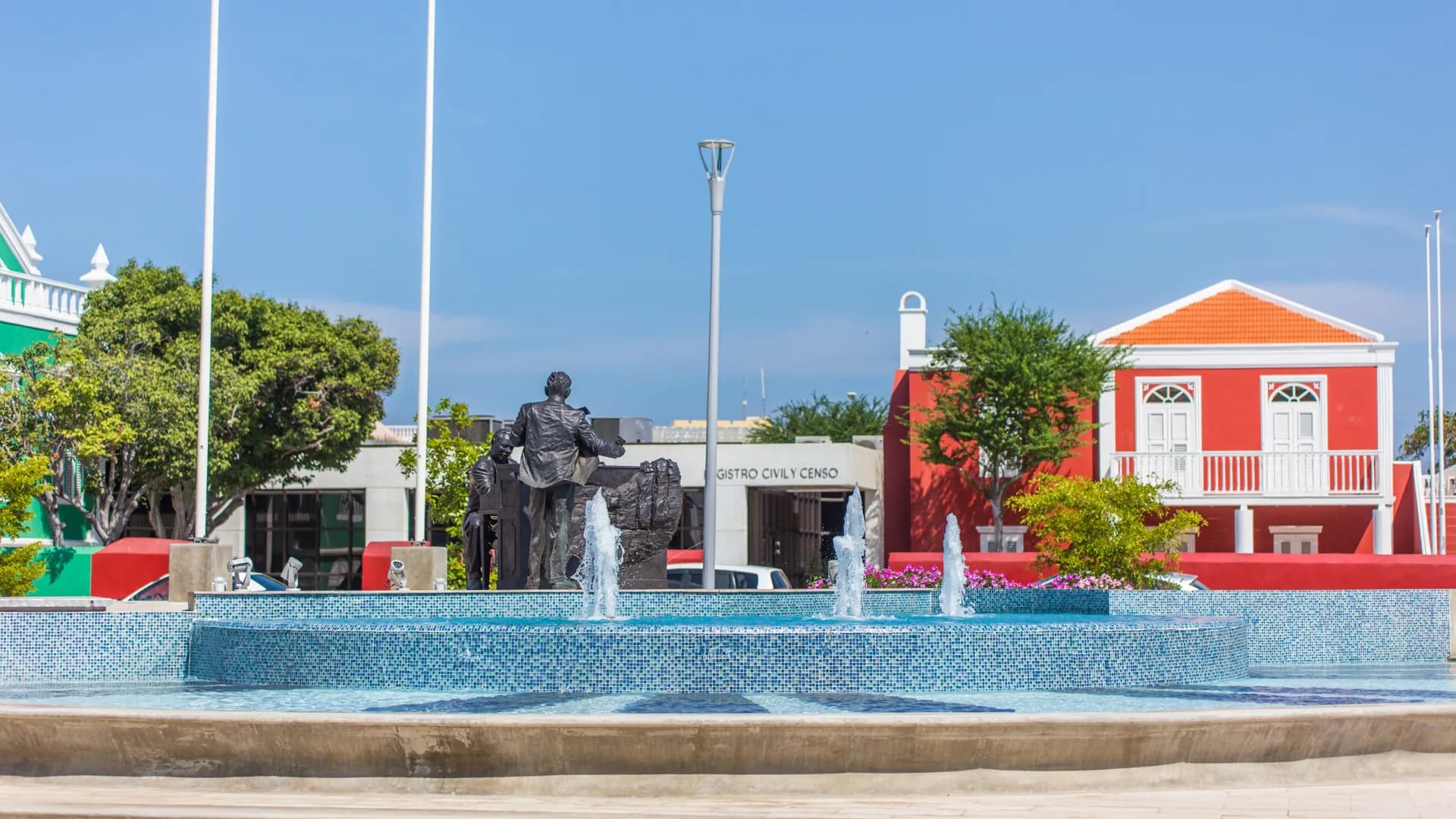
Downtown Oranjestad. The main shopping stretch runs along L.G. Smith Boulevard and the Caya G.F. Betico Croes pedestrian street, both an easy walk from the cruise terminal. This is where the bulk of the island's duty-free jewelry, watch, liquor, and perfume shops cluster, alongside general souvenir stores. Honest caveat: this strip is clearly built for cruise passengers, so browse it for the actual duty-free categories and skip past the racks of generic magnets and shot glasses that could have come from any port in the Caribbean. If you are only ashore for a few hours, our cruise port day itinerary shows how to fit a real shopping stop into a fuller day. And for everything else the capital offers beyond its storefronts, from Fort Zoutman to the free Tuesday Bon Bini Festival, our full Oranjestad guide covers the rest of a proper half-day here. Hungry after a stroll? Our Aruba food guide has downtown lunch picks within easy walking distance.
Renaissance Mall (Oranjestad). This is the island's luxury and designer mall, with brands like Gucci, Rolex, Michael Kors, and Prada under one roof, connected to the Renaissance hotel complex. Hours typically run something like 10 am to 7 pm, Monday through Saturday, though individual shops vary, so confirm before you plan a trip around it. Honest caveat: this is genuinely a luxury retail experience, not a browsing-for-fun mall, so it rewards visitors with a specific big-ticket item in mind rather than a casual wander.
Royal Plaza Mall (Oranjestad). You cannot miss this one: an ornate pink-and-white Dutch-colonial building right on the Oranjestad waterfront, one of the most photographed structures in the capital. It is a smaller, more general retail mix than Renaissance Mall. Honest caveat: the building itself is the real draw for a lot of visitors, worth a look even if nothing inside catches your eye.
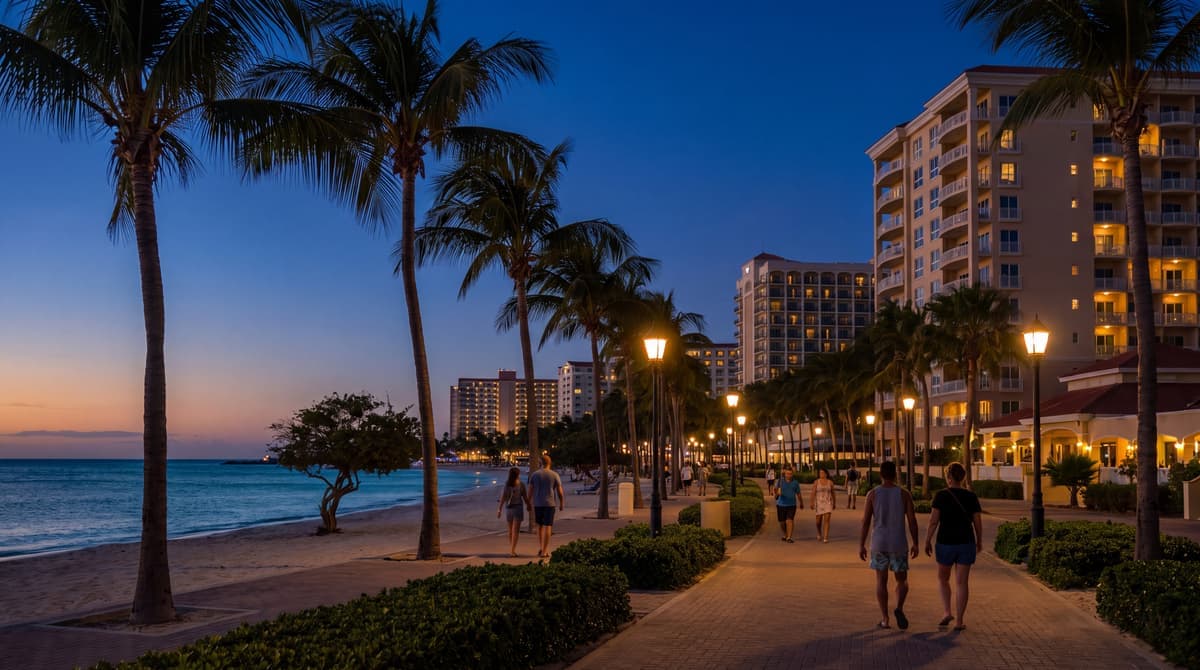
Paseo Herencia (Palm Beach). An open-air, heritage-style plaza closer to the resort strip, with shops, restaurants, and evening entertainment including a fountain show after dark. Honest caveat: it leans more toward a pleasant evening out, dinner, a walk, the fountain show, than a serious shopping haul, so treat the retail as a bonus to the atmosphere rather than the main event.
Palm Beach Plaza (Palm Beach). A multilevel mall that has shifted noticeably toward entertainment over the past several years: bowling, a cinema, and dining now make up a bigger share of the space than retail. Honest caveat, and it is an important one: a meaningful number of its retail units have closed, so go here for the entertainment, not expecting a big shopping trip. We would rather tell you that plainly than let you plan a shopping afternoon around a mall that cannot really deliver one anymore.
The airport, for your last chance. Queen Beatrix International Airport has a duty-free area past security for last-minute liquor, tobacco, and cosmetics purchases before you fly home. If you have been holding off on a specific duty-free category, checking whether the airport has a better selection or price than downtown before you commit is worth the five minutes.
Once shopping is checked off, our activities page and trip planner can help you build the rest of the day or the week around it.
Browse 32 vetted Aruba experiences
Most confirm instantly with free cancellation up to 24h, and 4 of them are free.
How to Actually Pay: Dollars, Florins, and Fixed Prices
Aruba's official currency is the Aruban florin, but US dollars are accepted essentially everywhere, from the malls to the smallest downtown shop, and prices in tourist-facing stores are frequently posted in both currencies. You genuinely do not need to exchange money before or during a typical trip unless you want florins as a keepsake or plan to use vending machines and a handful of local-only spots that prefer them.
Prices in Aruba's shops, malls, and duty-free stores are generally fixed. This is not a market-stall culture where haggling is expected or welcomed, so do not go in planning to negotiate a mall price down, that approach will mostly just create an awkward moment. The one place bargaining sometimes has a little more give is directly with individual craft vendors or at informal stalls, and even there it is modest, polite, and never assumed.
The Bottom Line
Aruba is not a blanket tax-free shopping paradise, and we would rather you know that before you land than find it out at the register. The real duty-free wins are narrow and specific: fine jewelry, watches, perfume and cosmetics, liquor, and tobacco, best checked against your home price first and often best found at the airport on your way out. Everything else on the island is priced the way retail is priced anywhere. What is genuinely worth carrying home has nothing to do with a tax break at all: a bottle of Aruba Aloe from the company that has made it here since 1890, a SEYO-authenticated piece from Cosecha that was actually made on this island, and maybe a wedge of Dutch Gouda you cannot easily find at your local store. Skip the shot glasses, know your numbers on the big stuff, and spend the rest of your shopping time on what only Aruba can actually sell you.