There is a specific moment that sells more January trips to Aruba than any ad campaign: the first week back at work after the holidays, somewhere in the US Northeast, scraping ice off a windshield in the dark. Aruba in January is the direct answer to that moment. Four and a half hours from New York or Boston, it is 86°F, the trade winds are at their gentlest of the year, and an island-wide party season is just getting started.
January is firmly peak season, so this is not a budget month, and we will give you the honest numbers below. But it is also one of the smartest peak-season picks on the calendar: the New Year's price spike fades after the first week, the weather is drier than December, and Carnival season fills the calendar with events most visitors never knew existed. Here is the full picture.
What January weather is actually like
January might be the most comfortable month of the Aruban year. Daytime highs average 86°F, a touch cooler than the summer months, with nights around 77°F. The sea on the calm western side runs about 79°F, which is fully swimmable all day; you will see people floating at Eagle Beach from sunrise to sundown.
Rain drops off noticeably from December. January averages under 2 inches for the whole month, spread thinly across about 11 days with some rain, which in practice means the occasional brief shower and little else. The wet-ish season is winding down, and by late January you can go a full week without seeing a cloud do anything serious.
The detail that surprises returning visitors: January is one of the calmest wind months of the year, with breezes around 10 to 15 mph instead of the 20-plus that summer brings. Aruba's constant wind is usually a blessing, but the January version is the gentle setting: enough breeze to keep you cool on the sand, not enough to sandblast your shins or steal your hat. If you have ever found Aruba's wind a bit much, January is your month.
And carry-over good news from December: the sargassum seaweed risk is at its lowest of the year from December through March, and the leeward west-coast beaches sit largely outside the drift belt regardless. January sand is clean sand.
Renting a car? Compare every Aruba agency
One search across the island rental companies, free cancellation on most cars, no card to reserve.
What January costs, honestly
January is peak season, and peak-season pricing applies: figure roughly 40 to 60 percent above low-season rates for mid-range hotels, with all-inclusives running higher still. Anyone who tells you January in Aruba is cheap is selling something.
But within peak season, January has a useful shape. The first few days still carry the New Year's premium, and then rates ease noticeably once the holiday crowd flies home. Mid-January is the soft spot: the same perfect weather, smaller crowds than the holiday weeks, and the best prices you will see until late April. Then watch the Carnival calendar, because the big parade weekends create their own demand spikes, especially around the major Oranjestad events.
For booking lead times, 60 to 90 days out is the realistic window for a normal January week. If your dates overlap a parade weekend, treat it like a holiday and book 3 to 4 months ahead. Our Aruba vacation cost 2026 guide breaks down what every part of the trip costs so you can budget the whole thing, not just the room.
Carnival season: the January calendar nobody tells you about
Here is the thing most first-time January visitors do not know: Aruba's Carnival is not a single weekend. It is a season that officially opens on November 11 and builds for months, and January is when it hits the streets.
To show you the shape of it, here is what the 2026 season looked like. The Torch Parade, Parada di Flambeu, lit up Oranjestad on January 3, running from 8pm until 3am, the official start of the street-parade season and a genuinely electric night. The Tumba Festival followed on January 17, the music competition that crowns the official Road March, the song you will then hear from every speaker on the island for the next month. The Fantasy Parade ran January 18 in the afternoon, and the Soca Monarch finals closed the month on January 31.
One important caveat: Carnival follows the church calendar and shifts with Lent every year, so those exact dates apply to the 2026 season only. The rhythm repeats each season, an evening torch parade in early January, music competitions through the month, parades building toward the February climax, but the dates move. Before you book around Carnival, check the official schedule on aruba.com for your season. The reported 2027 dates, including the Torch Parade on January 2 and the late-January Jouvert and Lighting Parade weekend, are collected in our Carnival 2027 guide.
Do you need to care about Carnival if you just want a beach week? Not really, and that is part of January's charm: outside the event nights, the island operates normally. But if your trip overlaps an event, go. Carnival here is a community affair, visitors are welcome on the parade routes, and watching a torch-lit parade roll through Oranjestad at midnight beats anything on the resort entertainment calendar.
A few practical notes for event nights. The street parades are free, with no tickets required, and visitors are welcome along the routes. The music competitions are ticketed venue events, easy to attend if you ask your hotel desk early in the week. And on any parade night, the streets around the route close, so plan dinner on the right side of the closure and expect taxis to be scarce when it ends.
Want a local to plan the whole trip?
Our concierge builds your days around what you actually want, from $149. Real people who live in Aruba.
Betico Croes Day: the January holiday to know
January 25 is Betico Croes Day, a national public holiday honoring Gilberto Francois "Betico" Croes, the political leader who drove Aruba's path to Status Aparte, the separate status within the Dutch Kingdom that Aruba achieved in 1986. Croes was born on January 25, 1938, and the island marks the day with celebrations centered on Plaza Betico in Oranjestad.
For visitors, the practical notes are simple: banks and government offices close, some shops run holiday hours, and the resorts and restaurants carry on as usual. The better takeaway is cultural. If you are here on the 25th, the celebrations are open, festive, and a window into the island's modern history that most tourists never see. Aruba takes real pride in this day.
The kiteboarding window at Fisherman's Huts
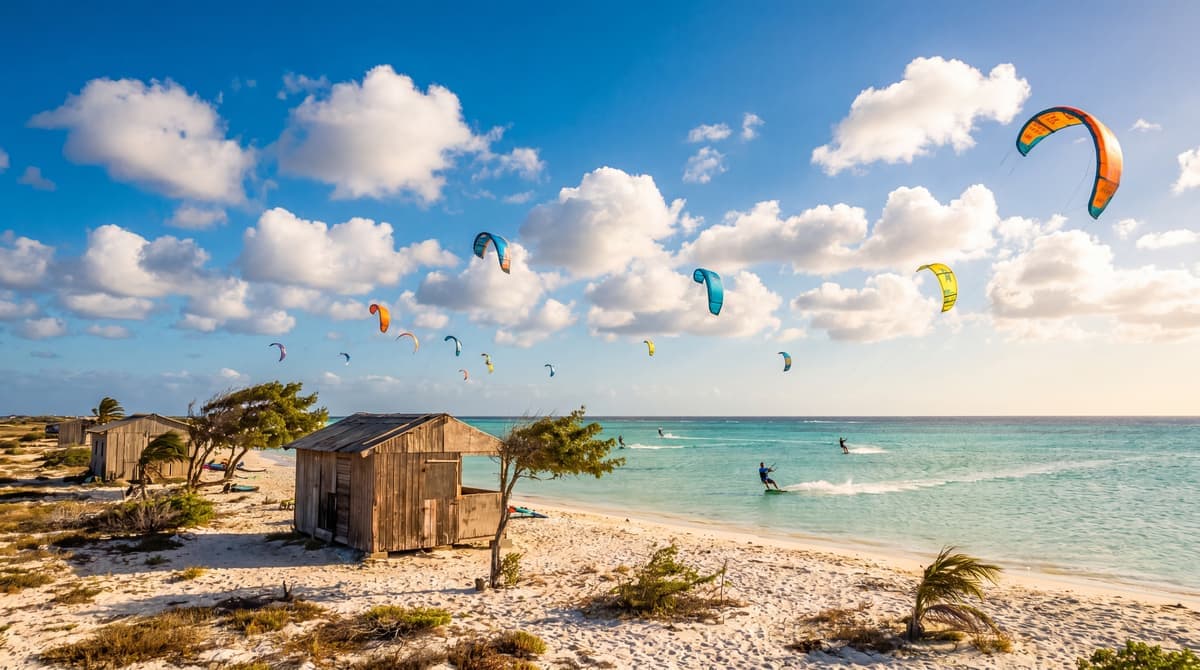
January's gentler winds come with a bonus for anyone who has wanted to learn a wind sport. Fisherman's Huts, the famous flat-water spot at Hadicurari just north of the Palm Beach high-rises, runs lessons year-round, and instructors love the early-year conditions: steady, manageable breeze and warm, waist-deep water over sand. Summer's stronger winds favor the experts; January favors the learners.
If you have ever watched the kites from a beach chair and wondered, this is the month to book a kiteboarding lesson at Fisherman's Huts. Most first-timers are riding short runs by the end of a multi-day course, and the spot itself, dozens of kites against the sunset with the high-rises behind, is one of Aruba's great free spectacles even if you never leave your towel.
Let us plan this trip for you
We live in Aruba and vet every spot ourselves, share your dates and we'll build the rest.
What else to do in January
January is prime condition season for almost everything on the island.
Get on the water. A catamaran sail and snorkel cruise over the Antilla shipwreck is the classic Aruba day, and January's calm seas and clear water make it an easy yes for mixed groups and nervous snorkelers. Morning departures get the calmest water.
Get into the desert. An Arikok National Park 4x4 safari covers the wild side of the island, the caves and the crashing east coast, in January temperatures that make the rugged interior genuinely pleasant. The Natural Pool tour is the signature version, ending in a swim in a rock-ringed ocean pool on the windward coast.
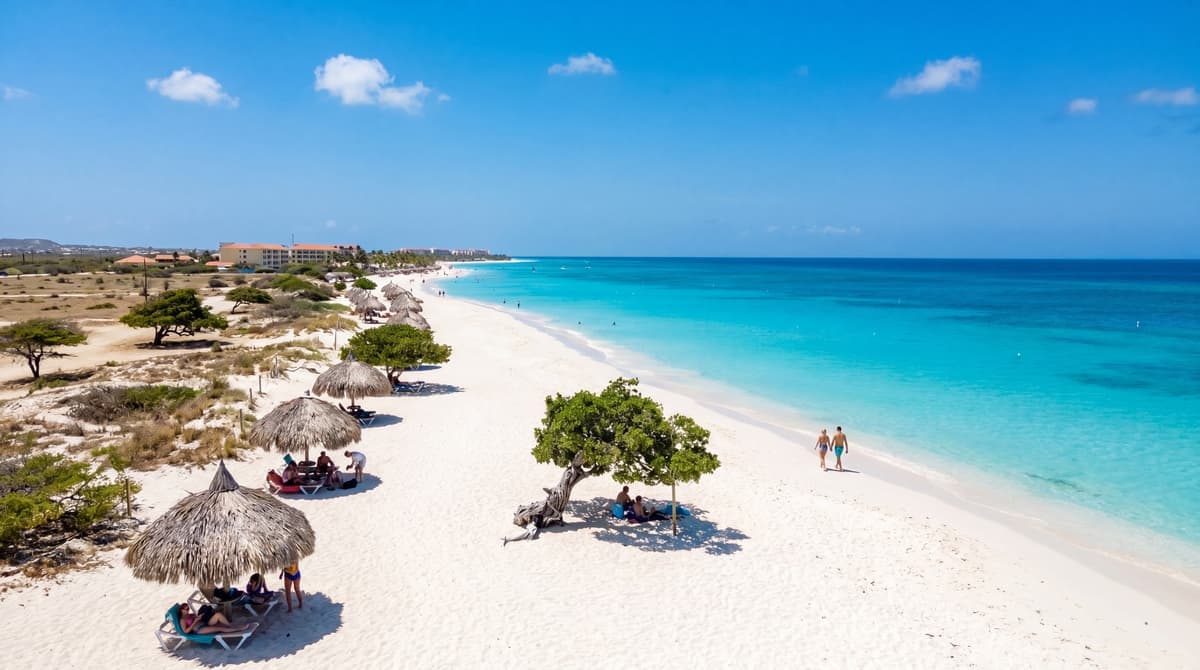
Beach-hop. With the calm winds and low seaweed risk, January is the month to work through the full list, from Eagle Beach's famous fofoti trees to Baby Beach's shallow lagoon in the south. Rent a car for a day and chase three of them.
Eat outside. January evenings around 77°F with a light breeze are what restaurant patios were invented for. In peak season, book the popular rooms a few days ahead.
What peak season crowds actually feel like
"Peak season" makes some travelers picture shoulder-to-shoulder sand, so here is the honest calibration. Aruba in January is full but functional. Hotel occupancy runs high across the whole winter, and it stays that way deep into spring; in March 2026 the island's hotels were running at 86.4 percent occupancy, which tells you how long the high season holds. In practice, a full island means the famous beaches have plenty of company at midday, the popular restaurants need reservations, and the headline tours sell out a few days ahead. It does not mean gridlock. Mornings are quiet everywhere, the southern half of the island stays uncrowded all season, and even Eagle Beach has open sand if you walk five minutes away from the nearest resort.
The one logistical item to lock early besides the room is a rental car. January demand empties the lots, and a car is the difference between seeing the island and only seeing your resort. Compare prices for your dates on our car rental page when you book the room, not after you land. While you are at it, use the trip booking hub to bundle the hotel and flight in one place.
Browse 33 vetted Aruba experiences
Most confirm instantly with free cancellation up to 24h, and 4 of them are free.
The free 7-day itinerary
The exact 7 days we send friends
One email with our day-by-day Aruba plan: which beach on which day, where to eat, and the tours worth booking. No spam, unsubscribe anytime.
What to pack for January
January packing is blessedly simple:
- Reef-safe SPF 50 or higher, since the UV index stays high in winter
- A hat, though January's gentler winds are kinder to it than summer's
- A light layer for breezy evenings and over-air-conditioned restaurants
- Water shoes for the rocky snorkel entries
- A reusable water bottle, because Aruba tap water is desalinated and excellent
- Swimwear you can live in, because at 86°F every day, you will
Leave the winter coat in the car at your home airport. You will not think about it again until the drive home.
A sample January week
Here is how we would shape seven January days:
Day 1, arrival. Beach walk, sunset, early dinner. Nothing else.
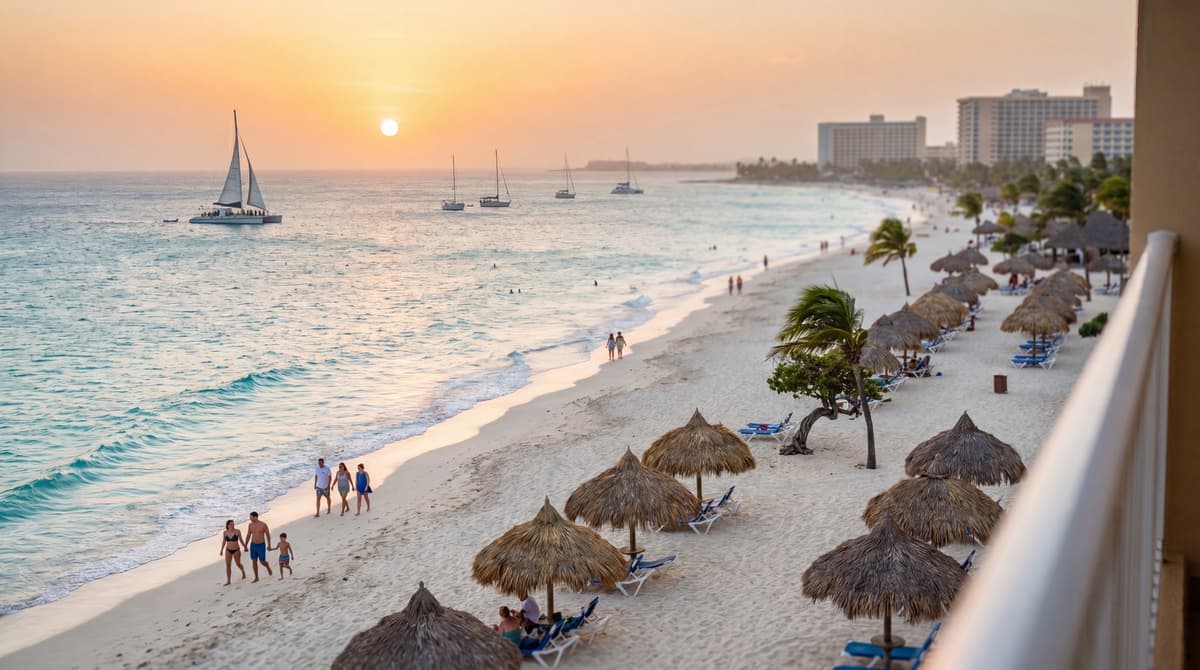
Day 2. Eagle Beach morning under the fofoti trees, pool through midday, sunset drinks on Palm Beach.
Day 3. Morning catamaran snorkel cruise over the Antilla shipwreck while the water is at its calmest. Afternoon nap, dinner in Oranjestad.
Day 4. Jeep day. Arikok National Park early, the Natural Pool swim, then Baby Beach in the south for the calm afternoon.
Day 5. Kiteboarding lesson at Fisherman's Huts in the morning, then stay for the sunset kite show with a drink in hand.
Day 6. Whatever the Carnival calendar offers. If an event lands on your week, build the day around it. If not, this becomes the spare beach day, and nobody has ever complained about a spare beach day.
Day 7, departure. Arrive at the airport about 3 hours early for US preclearance, then walk straight out as a domestic passenger when you land back home.
If your dates include the 25th, add the Betico Croes Day celebrations at Plaza Betico to the plan. If they include a parade night, adjust your dinner plans, because the routes close streets in Oranjestad and taxis get scarce afterward.
Find your hotel by month, beach & budget
Compare current Aruba rates across the major booking sites in one place, in USD. Most rooms are free to cancel.
Three January mistakes to avoid
Booking the first week and expecting post-holiday prices. The New Year's premium lingers through the first few days of January. If value matters, start your trip on or after the second week of the month.
Ignoring the Carnival calendar. Every season, travelers book a quiet week that turns out to include a major parade, then discover their dinner reservation sits on a closed street. Five minutes on visitaruba.com before you book prevents the surprise, or turns it into the highlight of the trip.
Scheduling outdoor exertion at 1pm. Even in the gentle months, the midday sun 12 degrees off the equator is serious. Hike and tour in the morning, swim and rest at midday, then go again toward sunset.
January or February: which winter month to pick
We get this question constantly from winter planners, so here is the short version. Pick January for the calmest winds of the year, the slightly easier hotel market between New Year's and the parade weekends, and the early Carnival events with smaller crowds. Pick February for the driest weather of the year and Carnival's climax, the Grand Parades, accepting New-Year's-level hotel pressure on the big weekend. The weather difference between them is honestly minor; both deliver the winter escape completely. The real decision is simpler: do you want to be on the island for the biggest party of the Aruban year, or just comfortably near it? Our Aruba in February guide covers the other side of that coin.
Renting a car? Compare every Aruba agency
One search across the island rental companies, free cancellation on most cars, no card to reserve.
Where to stay in January
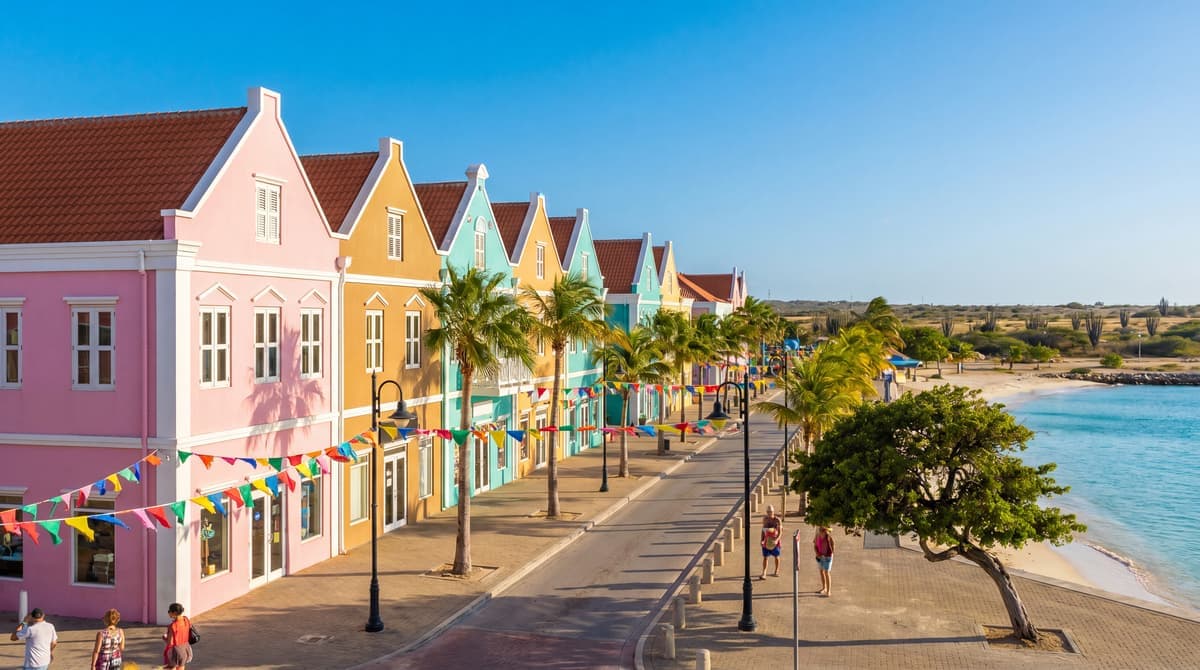
The usual Aruba logic applies, with one January note. Palm Beach is the lively high-rise strip, walkable to restaurants and nightlife, and closest to the Fisherman's Huts kite scene. Eagle Beach is the quieter, wider, low-rise stretch. In January both are in full peak swing, so the real decision is booking early enough to have a choice at all, especially around the parade weekends.
Our where to stay in Aruba guide walks through every neighborhood, including the value plays beyond the two famous beaches.
Getting there: the escape-the-cold math
This is where January Aruba makes its strongest case to anyone north of Washington DC. Nonstop flights run about 4 hours 30 minutes from New York and Boston, and Aruba has nonstop service from around 16 US airports. An early flight out of a frozen Northeast morning has you in 86°F sunshine by mid-afternoon, and the airport's US preclearance means the trip home ends with no customs line.
The math gets even better when you count the days. A Thursday-to-Monday long weekend, four nights, is genuinely workable from the East Coast in January: leave in the dark, land in time for a beach afternoon, and bank four full days of 86°F before the flight home. Plenty of our January travelers do exactly that instead of a full week, and the cure rate for winter misery appears to be identical.
January fares are peak-season fares, so the booking advice matters: be flexible by a day or two, favor midweek departures, and set alerts early. Our getting to Aruba in 2026 guide covers every route and the cheap-seat tactics in detail.
Want a local to plan the whole trip?
Our concierge builds your days around what you actually want, from $149. Real people who live in Aruba.
Bottom line on January
January is peak season and priced like it, roughly 40 to 60 percent above the low-season floor, and the parade weekends book up like holidays. In exchange you get arguably the most comfortable weather of the Aruban year: 86°F days, the calmest winds, under 2 inches of rain, clean beaches at the bottom of the sargassum cycle, and a Carnival season calendar that turns ordinary trip dates into something you will talk about for years. Book 60 to 90 days out for a normal week, stretch that to 3 or 4 months around the parades, and aim for mid-month if you want the best price-to-weather ratio of the winter.
When you are ready to trade the ice scraper for a beach chair, tell us your dates on the trip planner and we will build the week around what is actually happening on the island when you land.