If Aruba's year has a crescendo, it is February. The rain all but stops, the island hits the driest stretch of its calendar, and Carnival, which has been building since November, finally explodes into its biggest weeks: pre-dawn paint parties in San Nicolas, illuminated night parades, and two enormous Grand Parades that bring the whole island into the street before the season burns out, literally, with an effigy on a pyre.
It is also deep peak season, with parade weekends that squeeze hotel availability as hard as New Year's does. So this guide does two jobs: it shows you what February is actually like, Carnival and all, and it gives you the booking math to do it without overpaying or getting shut out. We will also make the case that even if you skip every parade, February is quietly the best pure beach-conditions month of the Aruban year.
What February weather is actually like
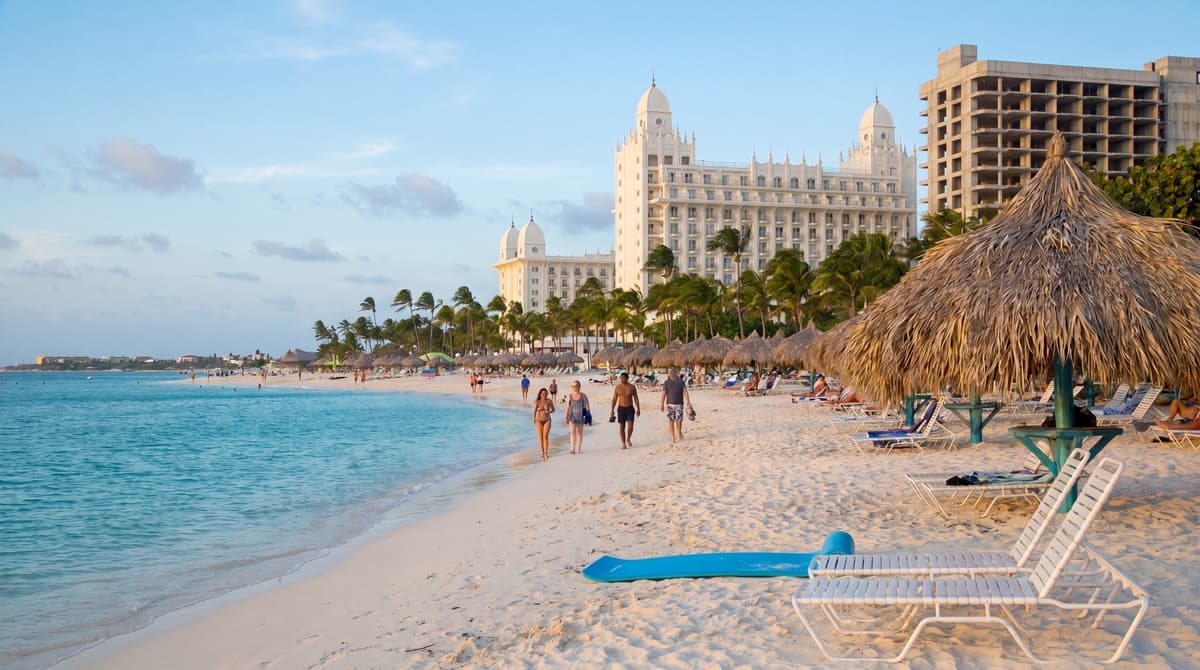
February is one of the driest months on an island that is dry to begin with. The month averages well under an inch of rain, around 0.8 inches in total, falling on only about 4 days. That is not a typo. You can spend two weeks here in February and never feel a drop.
Daytime highs run around 88°F with nights near 77°F, and the sea on the calm western side holds around 79°F, warm enough for hours in the water. The trade winds begin to pick up a little compared with January's gentle lull, though they stay well short of the summer blast. The practical effect is a perfect beach formula: hot sun, dry air, a steady cooling breeze, and a sea that behaves.
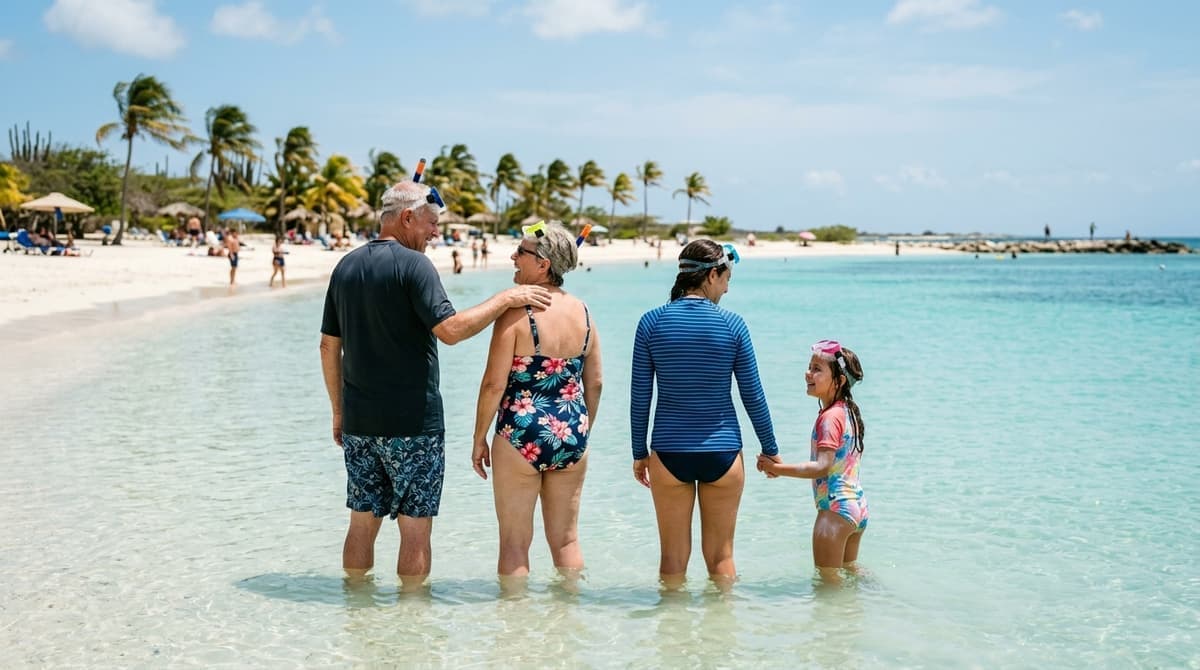
The dryness pays a bonus underwater too. With almost no rain runoff, February delivers some of the best west-coast snorkeling visibility of the year. The Antilla shipwreck, Boca Catalina, and the Arashi reef are all at their clearest. If snorkeling is a priority, this is your month, and the calm morning hours are when to go.
And February sits inside the year's lowest-risk sargassum window, which runs from December through March, with Aruba's leeward west and south coasts largely outside the drift belt anyway. Clean sand, clear water, dry sky. That is February.
Renting a car? Compare every Aruba agency
One search across the island rental companies, free cancellation on most cars, no card to reserve.
Carnival: what the climax actually looks like
Aruba's Carnival season opens back on November 11 and builds for months, but February is what it has all been building toward. To show you the shape of the big weeks, here is what the 2026 season looked like, with one essential caveat up front: Carnival shifts with Lent every year, so these exact dates apply to the 2026 season only. For your season, check the official schedule on aruba.com before you book anything around it. For 2027, the reported Grand Parades land on February 6 (San Nicolas) and February 7 (Oranjestad) with Carnival Monday on February 8, pending the official calendar; our Carnival 2027 guide tracks the full schedule.
Some context helps the scale land. Carnival is Aruba's biggest cultural event, months of music competitions and neighborhood events that pull in a huge share of the island's population as participants, not spectators. Groups spend much of the year designing costumes and building floats, the winning Road March song soundtracks every event, and by the final weeks the parades stretch for hours because that is how many people are marching. Visitors are welcome at all of it, and the welcome is genuine. This is a party the island throws for itself that happens to have room for you.
Jouvert Morning, San Nicolas. In 2026 this ran on February 7, starting at 3am. Yes, 3am. Jouvert is the pre-dawn street party where the crowd marches through San Nicolas covered in paint and powder as the sun comes up, and it is a participation event, not a spectacle: you go to get painted, not to watch from the sidewalk. Wear clothes you are willing to sacrifice. It runs until mid-morning, and it is the rawest, most joyful event on the entire Carnival calendar.
The Lighting Parades. Carnival's night parades are a different art form: costumes and floats strung with thousands of lights rolling through the dark. In 2026, the Grand Lighting Parade lit up Oranjestad on the evening of February 7, and San Nicolas answered with its own Lighting Parade, the Parada di Luz, on February 12, running from 8pm into the small hours.
The Grand Parades. The season's two biggest days. In 2026, San Nicolas held its Grand Carnival Parade on Saturday, February 14, and Oranjestad followed with the Grand Carnival Parade on Sunday, February 15, the 72nd edition, the single biggest event of the Aruban year. Both ran from late morning into the evening, hours of full-costume groups, music trucks, and dancing that takes over the parade routes completely. Locals stake out spots early with tents and coolers; visitors can simply walk up and find a gap, though shade is the thing to plan for.
The Burning of Momo. On the evening of the final Grand Parade, the season ends the way it has for generations: King Momo, the spirit of Carnival, goes up in flames at the harbor, closing the season until November 11 comes around again. Ash Wednesday follows, Lent begins, and the island exhales.
If you take one planning note from this section, take this one: you do not need tickets for any of it. The parades are public street events. You need a hotel room near the action, booked early, and that is the next section.
The booking math: parade weekends are the new New Year's
Here is the honest pressure map. February is full peak season across the board, with mid-range hotels running roughly 40 to 60 percent above low-season rates, the same premium that applies all winter. On top of that baseline, the Grand Parade weekend creates a demand spike that rivals New Year's Eve for hotel pressure. In 2026 that meant the weekend of February 14 and 15; in your year it will be whichever weekend the Grand Parades land on, so again, check aruba.com.
The lead times that actually work:
- Grand Parade weekend: book 3 to 4 months out. Treat it exactly like Christmas week. The well-located rooms go first and do not come back.
- The rest of February: 60 to 90 days out is usually enough for good choices.
- After Ash Wednesday: the squeeze eases. The day after the final Grand Parade, Carnival ends, the absolute peak passes, and rates begin drifting down toward the March and April shoulder. Late February is quietly the best-value week of the deep winter.
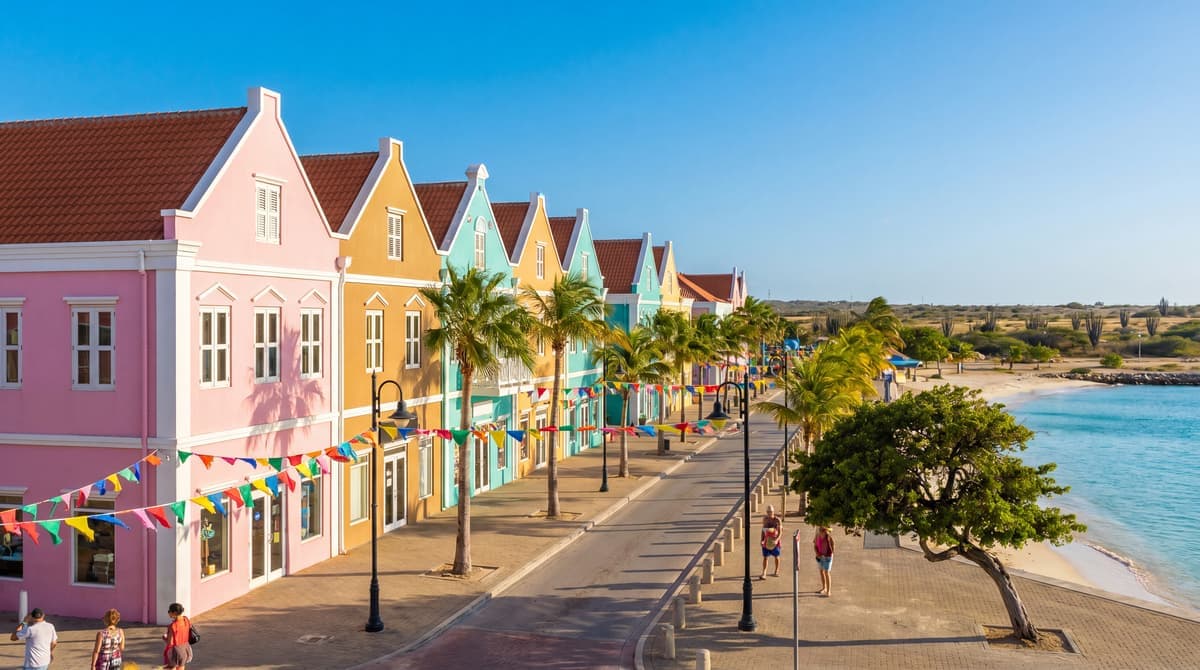
One more pressure valve worth knowing: lodging outside the two famous beach strips. Stays in and around Oranjestad hold availability longer than the beachfront resorts on parade weekends, and on parade days a downtown base is arguably the best-located bed on the island, walking distance from the route and immune to the road closures.
Flights follow the same curve, and the Northeast nonstops fill earliest. Our getting to Aruba in 2026 guide covers every route and how to catch cheap seats in a peak month, and the full trip budget lives in our Aruba vacation cost 2026 breakdown.
Want a local to plan the whole trip?
Our concierge builds your days around what you actually want, from $149. Real people who live in Aruba.
The Valentine's angle
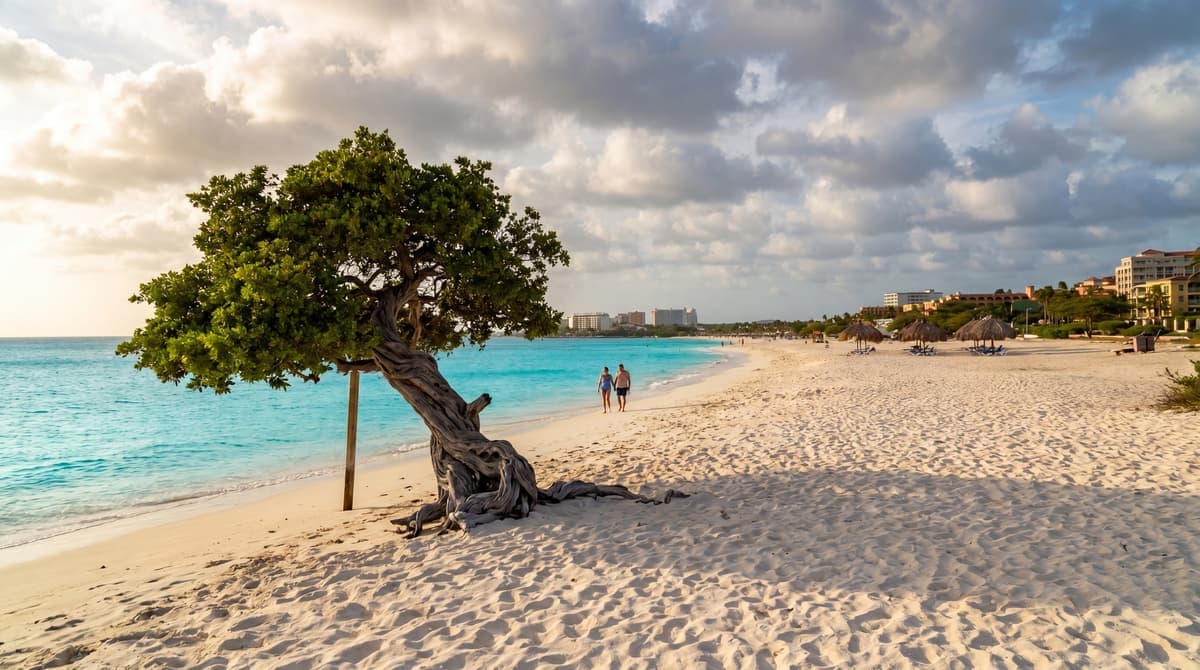
February doubles as couple season, and Aruba leans into it well. The formula is not complicated: a sunset catamaran sail along the west coast, dinner with your feet in the sand at one of the beachfront rooms in our dining guide, and a quiet stretch of Eagle Beach under the fofoti trees. If your trip overlaps the Grand Parade weekend, you get the unusual combination of a romantic island week and the biggest party in the southern Caribbean, which is a better date than most anniversaries manage. One planning note: book the Valentine's dinner as far ahead as the room, because the beachfront tables on February 14 are the scarcest seats of the month, and in a Grand Parade year they compete with the parade crowd too.
Couples after real quiet should look at the adults-only resorts along Eagle Beach, which are built for exactly this trip.
Wind sports: the season starts waking up
As the winds pick up from January's lull, February marks the start of the serious kite and windsurf conditions, while staying friendlier than the howling summer months. The two spots to know:
Fisherman's Huts (Hadicurari), just north of the Palm Beach high-rises, is the flat-water playground: steady breeze, waist-deep water over sand, and the island's lesson operations. February is a sweet spot where beginners can still learn comfortably and improving riders get enough power to progress. Book a kiteboarding session at Fisherman's Huts and you will see why the spot has a global reputation.
Boca Grandi, on the southeast coast near San Nicolas, is the experts' wave spot: stronger wind, real swell, and no lesson traffic. If you already ride, it is one of the best sessions in the Caribbean. If you do not, it is a spectacular beach to watch from, conveniently close to the Carnival action in San Nicolas.
Let us plan this trip for you
We live in Aruba and vet every spot ourselves, share your dates and we'll build the rest.
What else to do in February
The driest month is the best month for the island's outdoor headliners.
The desert interior. An Arikok National Park 4x4 safari covers the caves, the windward cliffs, and the cactus country in reliably dry conditions, and the Natural Pool jeep tour ends with a swim in the famous rock-ringed ocean pool, which February's settled weather makes accessible more often than the rough-sea months do.
The full beach circuit. With the year's best conditions, February is the month to go beyond your resort's sand. Work through our beaches guide, and do not skip Baby Beach in the south, an easy pairing with a San Nicolas Carnival day.
Morning snorkeling. Calm seas plus zero runoff equals the year's clearest water. Boat trips over the Antilla get the best of it before the afternoon breeze builds.
The free 7-day itinerary
The exact 7 days we send friends
One email with our day-by-day Aruba plan: which beach on which day, where to eat, and the tours worth booking. No spam, unsubscribe anytime.
Parade-day logistics, the local way
A few practical notes that save February visitors real friction:
Streets close. The Grand Parade routes shut down central Oranjestad and San Nicolas for most of the day, and the lighting parades close them at night. Do not plan to drive through town on a parade day; plan to be parked, fed, and positioned before it starts.
Arrive early, claim shade. The daytime parades run for hours under full sun. Locals stake out shaded spots with tents and coolers in the morning. Visitors do not need a tent, but a hat, water, and a position with afternoon shade make the difference between a great day and a sunburnt retreat.
Carry small cash. Street vendors along the routes sell food and drinks all day, and they are part of the experience.
Solve transport before, not after. Taxis around the parade zones are scarce when an event ends. Either stay within walking distance, set a pickup point well away from the route, or have a designated driver who parked on the right side of the closures.
Browse 33 vetted Aruba experiences
Most confirm instantly with free cancellation up to 24h, and 4 of them are free.
What to pack for February, parade kit included
The standard Aruba kit applies: reef-safe SPF 50 or higher, a hat with a chin strap, water shoes, a light layer for breezy evenings, and a reusable bottle for the excellent desalinated tap water. February adds the parade kit:
- Clothes you are genuinely willing to ruin, if Jouvert Morning is on your list, because the paint and powder do not negotiate
- Closed shoes for street events, since parade days are long days on pavement
- A waterproof phone pouch, useful at Jouvert and on the boats alike
- Small bills for the street vendors
- Earplugs for light sleepers staying near a parade route, because the music trucks run late
A sample Carnival-week itinerary
Using the 2026 dates as the template, here is how a parade-climax week fits together. Shift everything to match your season's schedule.
Thursday, arrival. Beach walk, early dinner, sleep. The week ahead earns it.
Friday. Classic Aruba day: Eagle Beach in the morning, pool at midday, sunset sail in the evening.
Saturday. The doubleheader. Up at 2am for Jouvert Morning in San Nicolas, painted and dancing at sunrise, back to the hotel to sleep it off by late morning. In the evening, the Grand Lighting Parade in Oranjestad if your legs cooperate.
Sunday. Recovery day. Calm-water snorkeling in the morning, nothing ambitious after.
Monday and Tuesday. Island days: Arikok and the Natural Pool one day, the southern beaches the other.
The Grand Parade weekend. San Nicolas on Saturday, Oranjestad on Sunday, the Burning of Momo on Sunday night to close the season. Pick one parade or do both; either way, position early and stay hydrated.
Departure day. If you fly out the Monday after the Grand Parade, you will share the airport with half the island's visitors. US preclearance lines run long that morning, so 3 hours early is not paranoia, it is the schedule.
That is a packed template, and it is fine to cut it in half. Even one parade plus four beach days makes a February trip people talk about for years.
Find your hotel by month, beach & budget
Compare current Aruba rates across the major booking sites in one place, in USD. Most rooms are free to cancel.
February with kids
Carnival is more family-friendly than first-timers expect. The daytime Grand Parades are full of children, both watching and marching, and kids on shoulders line the route. The honest exceptions: Jouvert Morning starts at 3am and draws an adult crowd, and the late-night lighting parades will test small kids' stamina. Build parade days around the daytime events and everyone goes home happy. One more family note: February's near-zero rain makes it the most reliable month of the year for the beach-every-day trip that kids actually want, and the calm leeward water at spots like Baby Beach stays warm enough for all-day swimming.
Where to stay in February
Location matters a little more in February than in other months because of the parade map. Palm Beach and Eagle Beach remain the main bases, and both work for everything; Oranjestad puts you walking distance from the Grand Parade route and the lighting parades, which on parade weekend is worth a lot. San Nicolas has very limited lodging, so most people do Jouvert Morning and the San Nicolas parades as a drive or taxi trip from the hotel zones.
For the complete neighborhood breakdown, read our where to stay in Aruba guide, then book with the lead times above.
Renting a car? Compare every Aruba agency
One search across the island rental companies, free cancellation on most cars, no card to reserve.
Bottom line on February
February is the driest month of the Aruban year, around 4 rain days in total, with 88°F sun, steady breezes, the clearest snorkeling water, low sargassum risk, and prime conditions at Hadicurari and Boca Grandi. It is also Carnival's climax, with Jouvert Morning, the lighting parades, two Grand Parades, and the Burning of Momo packed into the biggest weeks, all public and free to attend. The price is peak-season rates, 40 to 60 percent above the low-season floor, and a Grand Parade weekend that books up like New Year's, so the whole game is booking 3 to 4 months ahead for the big weekend or aiming for the post-Ash-Wednesday lull when rates start to slide.
If February is calling, the planning window matters more this month than any other. Tell us your dates on the trip planner and we will help you land the right base, the right tours, and the right spot on the parade route.