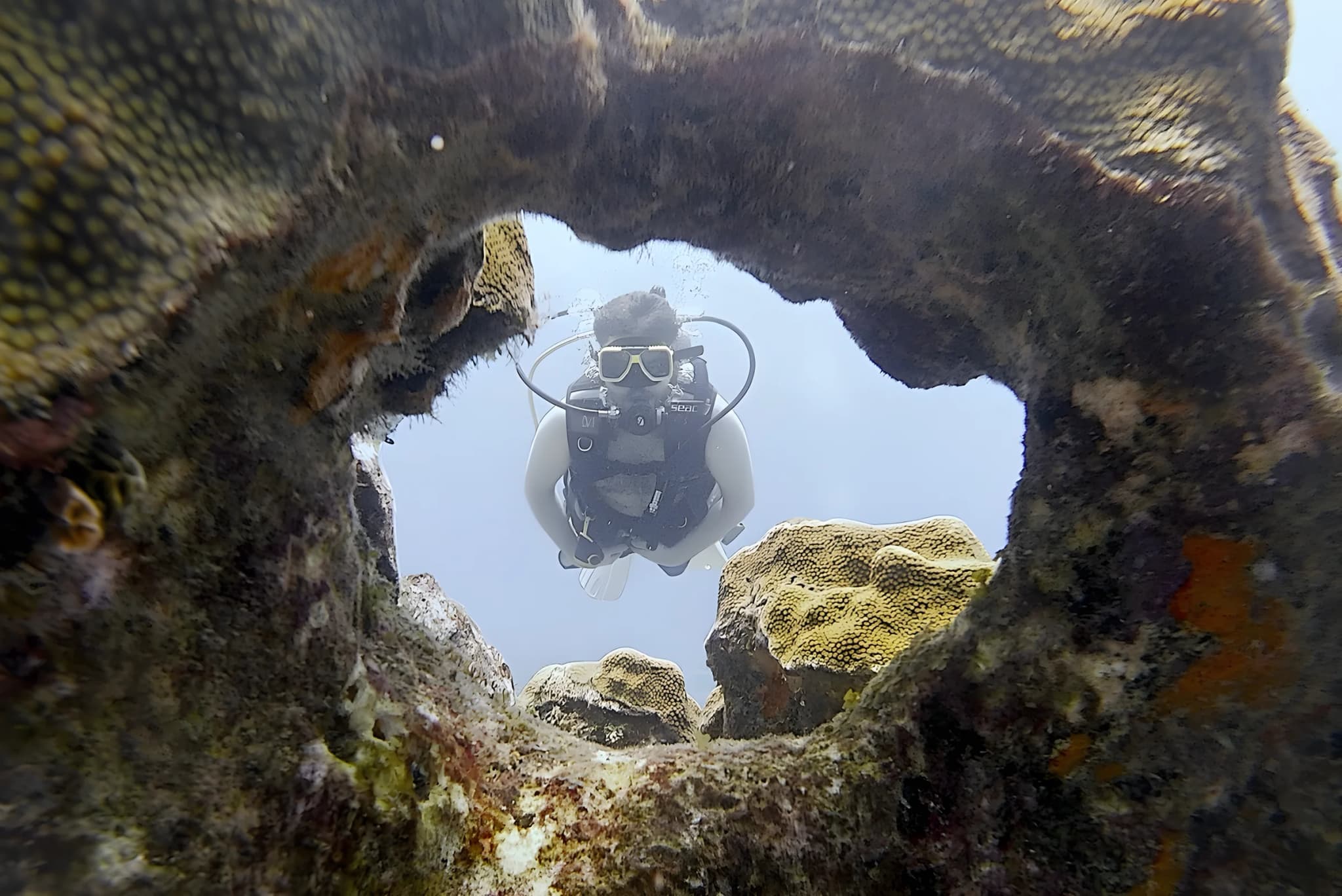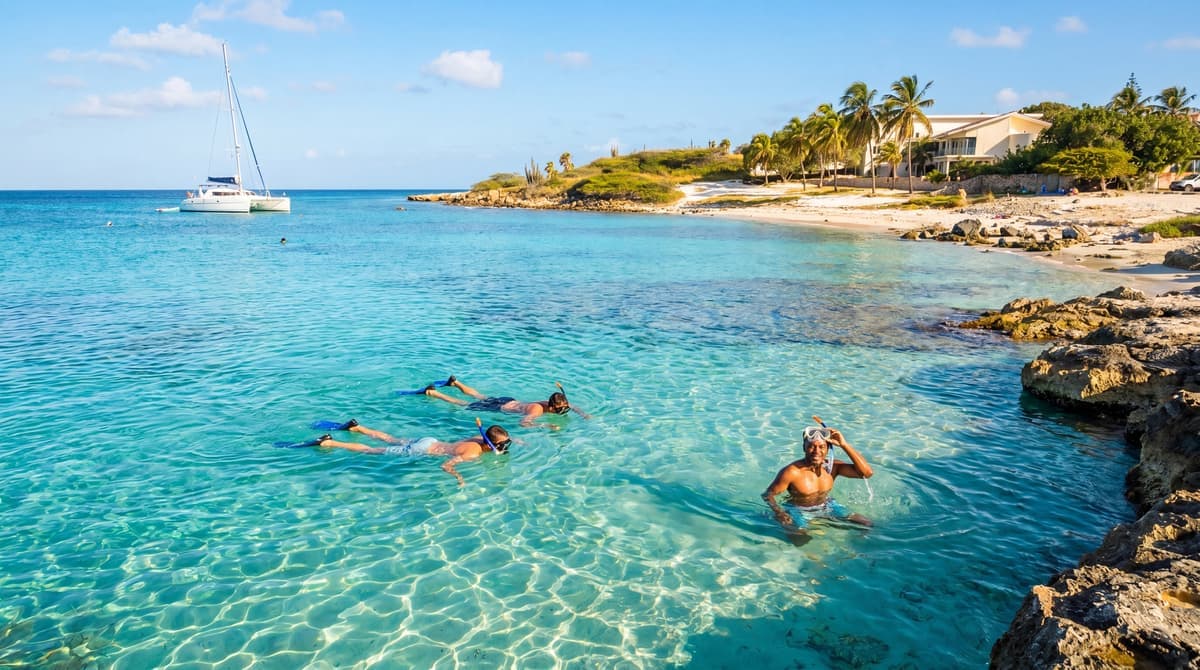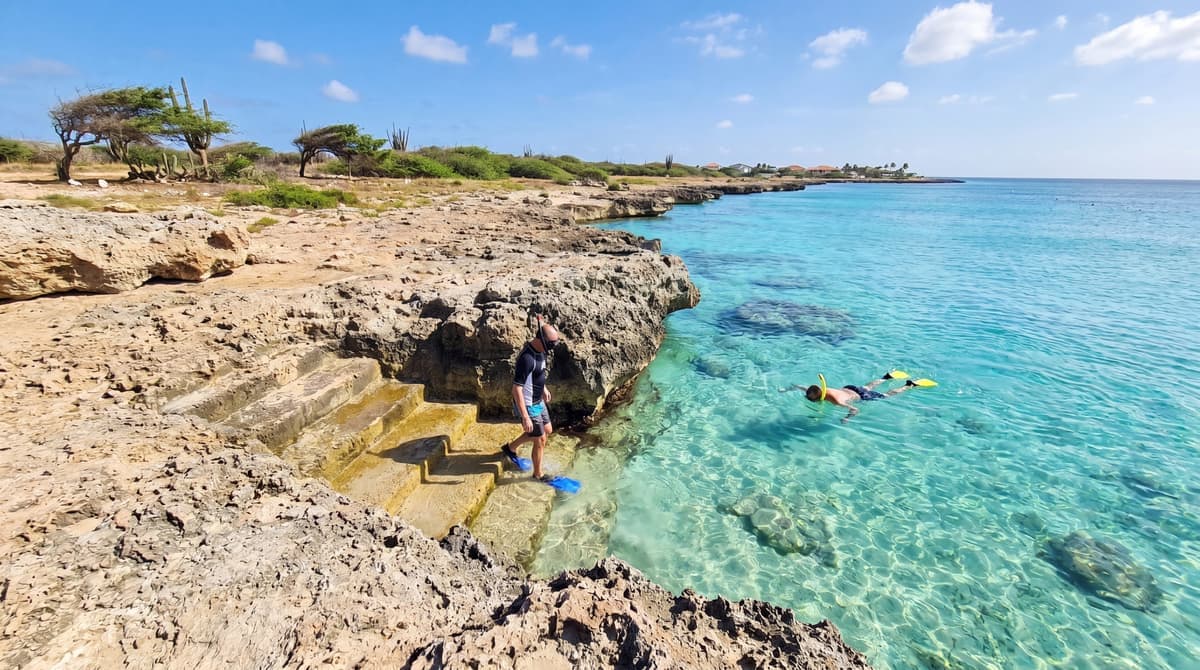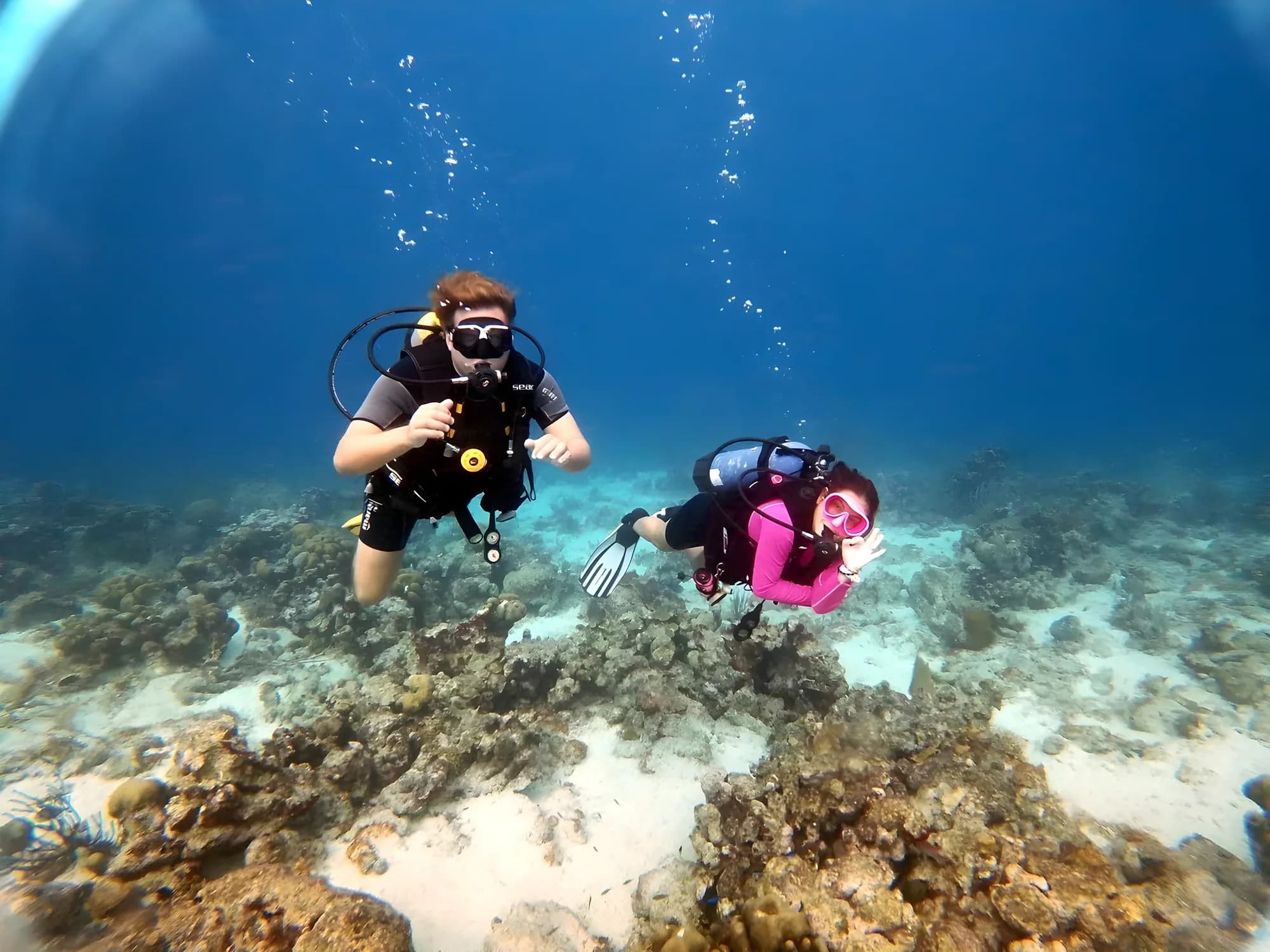
Aruba sells itself on the west coast: the calm water off Palm Beach, the big wreck, the snorkel sails. The diving is a different story, and the best of it is on the other side of the island. The south east coast is where a small crew we book directly takes certified divers most mornings of the week: two guided boat dives on reefs and a few wrecks, with the sites chosen on the day. This guide is the booking half of that story: what the morning costs, who qualifies, how it runs hour by hour, and where the money and the caveats sit. For the wrecks themselves and the wider dive scene, our scuba diving guide is the companion piece. Every figure below comes from the crew's own terms, recorded on our two-tank boat dive page.
Who this morning is for
Certified divers. This is not a course and not a discover dive: every diver brings valid proof of certification, a physical card or the digital version in your agency's app, and the crew checks it at registration. Open Water is enough for the reefs and most of the wrecks the boat visits; the deeper wrecks the guide may pick on a calm day suit Advanced Open Water, and the form asks for the highest certification in your group so the crew can plan the sites around it.
Two rules to know before you book. Divers aged 60 and over, and anyone with a medical condition that could affect dive safety, bring a medical clearance. And the crew wants to know roughly when your last dive was: a long gap does not disqualify you, but it changes how the guide briefs and buddies you.
If you are not certified and want to breathe underwater once, the resort-style discover programs are covered in the scuba diving guide. If you want a wreck without the tank, the big wreck off the west coast sits on the snorkel sails instead.
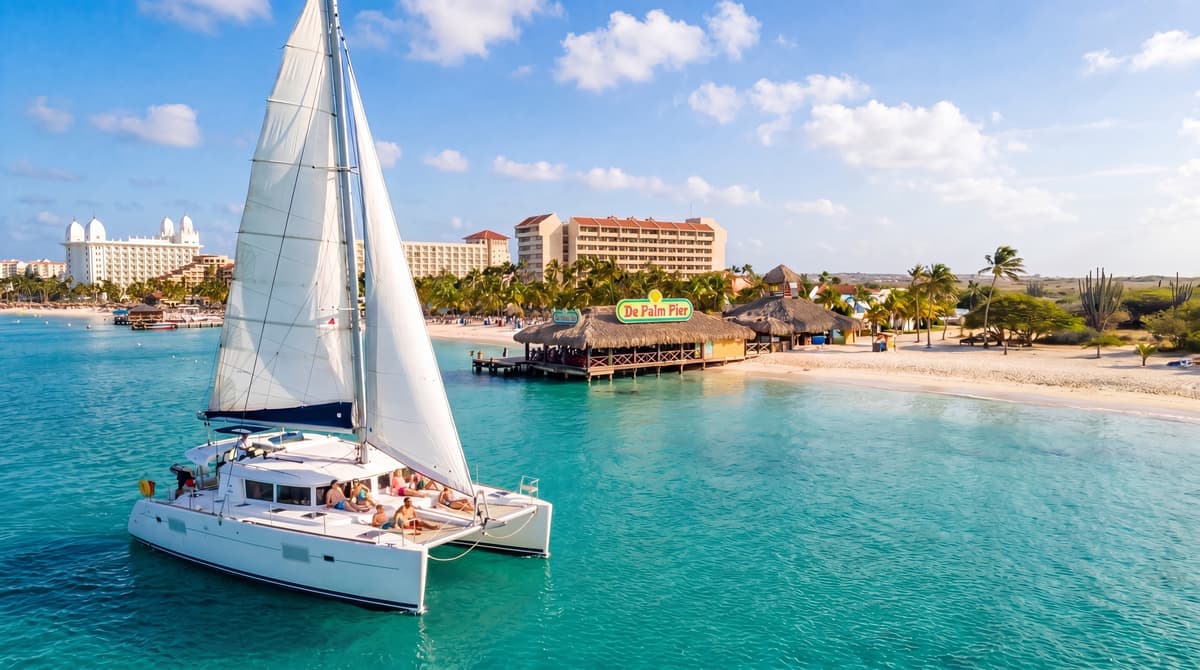
Catamaran Sail & Snorkel Cruise
2.5 Hours · from $63 per person. Live prices, dates, and the honest details, one page.
The two prices, and what rental equipment means
There are two prices for the same morning, and the difference is only the gear you carry on.
- $135 per diver with rental equipment. The crew provides the BCD and regulator. Tanks and weights are included.
- $100 per diver with your own BCD and regulator. You bring those two pieces; tanks and weights are still included.
The $35 gap is exactly the rental of the BCD and regulator, so the arithmetic is simple: if you already own them and have the bag space, bring them. Whether fins, a mask and a wetsuit are part of the rental set is a question for the details box when you book; the two published prices turn only on the BCD and regulator.
Not included: gratuities, and lunch. Fresh snacks and refreshments come out after each dive, which carries most people to a late lunch back on land.
How the morning runs
8:30 AM, check-in. At the dive center in Oranjestad, or on the crew's pickup route if you booked it. Registration is where two things happen: your certification is checked and the balance is settled, in cash or by Visa or Mastercard. Nothing about the balance passes through this site.
9:00 AM, the boat leaves. All dives are by boat and guided. The briefing on the way out covers the site the guide has picked for the first dive.
Dive one. When a wreck is on the plan it is usually the first dive, while everyone is freshest, although on some days it becomes dive two.
The surface interval. Snacks and refreshments on the boat, then the move to the second site.
Dive two. A reef on most days. The south east coast is the quiet side of the island underwater, in water that is calmer than the north and far less trafficked than the west.
About 1:00 PM, back at the dock. The afternoon is yours. If you fly the next day, the training agencies' usual guidance is a surface interval of at least 18 hours after repetitive dives before you board.
Where you dive, and why nobody can promise you a wreck
The honest line, straight from the crew: the sites and the order are chosen every morning on the conditions and the group, and no wreck or specific site is guaranteed. Most mornings run on the south east coast, reefs and some wrecks, and a wreck, when it is included, is usually dive one and sometimes dive two. If one particular wreck is the whole point of your trip, say so in the booking form; the crew plans around what the group most wants when the sea allows it, and will tell you plainly when it does not.
That is a feature rather than small print. The alternative is a fixed itinerary that sends the boat to a rough site because the brochure said so.
Getting to the boat: rental car or the free pickup
With a rental car you meet the crew at the dive center in Oranjestad for the 8:30 AM check-in; the address comes with your confirmation. Without a car, the pickup is complimentary and runs on the crew's set route, for hotel guests and cruise passengers alike; your pickup time and spot come by email the day before. The booking form asks which of the two you want, so the crew knows how many seats to plan.
Cruise passengers: a 9:00 AM boat that is back by about 1:00 PM fits most port days, and the pickup route includes cruise passengers. Book with your ship as the place you are staying and mention it in the details box. Our cruise port day guide covers the return timing.
Browse 32 vetted Aruba experiences
Most confirm instantly with free cancellation up to 24h, and 4 of them are free.
What it costs against the alternatives
The wider market for a two-tank morning here runs roughly $105 to $145 depending on the operator and whether gear is included, as our scuba diving guide sets out. This crew sits inside that range on both prices, and the difference is the route: you book with the people who run the boat, a small deposit out of the price confirms it, and the balance goes to them at registration. There is no platform in the middle and no markup for booking direct.
If your group is split between divers and non-divers, the private boat charter we book direct on the west coast keeps everyone on one boat with snorkel stops instead, and the snorkel sails do the same per seat.
Booking direct, and the terms worth reading first
Pick a date from Monday to Saturday, count the divers on each price, tell the crew how you get to the boat and the highest certification in the group, and send the request. We set the morning with the crew, then a secure deposit link arrives by email: $27 per diver with rental gear, $20 per diver with your own, out of the price rather than on top of it. The booking is confirmed once the deposit is paid, and the voucher that follows is your ticket for the day, with the meeting point and the exact balance.
Three terms matter here.
The minimum. A departure needs 4 certified divers in total and carries at most 12. A booking of two divers is welcome, but the morning only sails once the boat reaches 4. If it does not, you get every cent of the deposit back, or the next good day if you prefer.
Cancellation. Cancel 48 hours or more ahead and the deposit comes back in full. Inside 48 hours the deposit is not refunded, but the date can move or the booking can transfer to someone else in your group. If the crew calls the morning off for weather, the deposit comes back in full, always. The full picture is on our refunds and cancellations page.
The balance. $108 per diver with rental gear or $80 with your own, paid at the dive center during registration on arrival, before boarding, in US dollars, cash or Visa or Mastercard.
What to bring
Your certification card or its digital version. A medical clearance if you are 60 or over or have a relevant condition. Your own BCD and regulator if you booked the $100 option. A towel, sunscreen and water for the boat, and a plan for the afternoon that does not involve an aircraft.
The photographs on the dive page are the crew's own, taken on these sites.