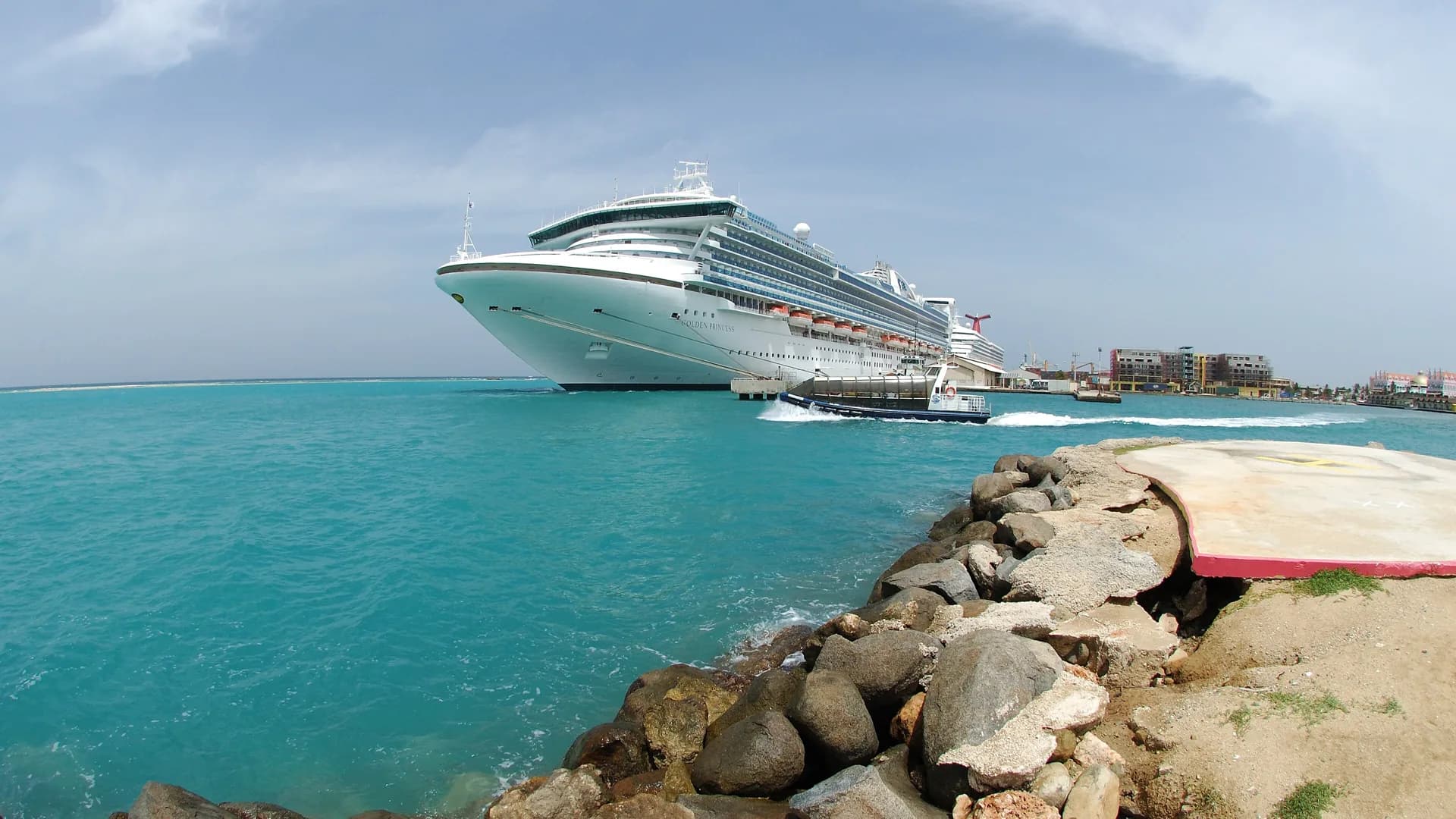
This is almost always a cruise question. Someone has booked a Caribbean sailing that stops in Aruba for the day, a passport is expired or the kids never had one, and they want to know whether a birth certificate is enough to still go ashore. We live here, and we watch both versions of this play out: the cruise passengers who walk off the ship with an ID in hand, and the flyers who get turned away at their US departure gate for bringing the wrong document. The honest answer depends entirely on how you are arriving, so here it is both ways, including the one catch that trips people up even when the birth certificate technically works.
The Short Answer, Both Ways
If you are flying to Aruba, no. A birth certificate will not work, and neither will a REAL ID or a passport card. You need a valid US passport book, the same as flying to any other foreign country.
If you are arriving on a closed-loop cruise, meaning one that departs from and returns to the same US port, then yes, a birth certificate can be enough. US citizens age 16 and over can sail with a state-issued certified birth certificate plus a government photo ID, and children under 16 can travel on a birth certificate alone. Aruba lets closed-loop cruise passengers ashore for the day on those documents, without the passport-and-ED-card process that air arrivals go through.
The catch, which we will come back to, is that even when the birth certificate is allowed, bringing a passport anyway is the smarter move. Here is the full picture.
Booked direct
The whole boat, private, for up to 10 guests
$900 for a private 3-hour charter with captain and crew: three departures daily, snorkel stops included.
Flying to Aruba: It Has to Be a Passport Book
There is no birth-certificate shortcut for air travel, and this is where we see people get stranded. Aruba is a constituent country of the Kingdom of the Netherlands, not a US territory, so flying there is international travel in exactly the way a flight to France or Mexico is. A driver's license, a REAL ID, a certified birth certificate, even a US passport card: none of them will board you on a plane to Aruba. The passport card is valid only for land and sea crossings, never international flights. For any flight you need the full passport book, and your airline may want to see at least six months of validity left on it, even though Aruba itself only asks that it stay valid for your whole stay. Our full passport guide for flyers lays out the complete document checklist, and the ED card guide covers the free online form and the $20 sustainability fee that every air arrival pays. When you are ready to book the flight itself, our guide to getting to Aruba has the current nonstop routes.
On a Closed-Loop Cruise: What a Birth Certificate Actually Covers
A closed-loop cruise is one that begins and ends at the same US port, for example a round trip out of Fort Lauderdale, Miami, Galveston, or San Juan. Under the US Western Hemisphere Travel Initiative, US citizens on these sailings are allowed to re-enter the country without a passport book, and that is the rule that lets a birth certificate work for an Aruba stop. Here is exactly what each traveler needs:
- Adults and anyone 16 or older: an original or certified copy of a birth certificate issued by a state or county vital records office, plus a government-issued photo ID such as a driver's license. A US passport card, an enhanced driver's license, or a Trusted Traveler card (NEXUS, SENTRI, FAST) also works in place of the birth-certificate-and-ID combination.
- Children under 16: proof of US citizenship on its own, which in practice means a birth certificate. No photo ID is required for minors.
One trap matters more than any other here. The birth certificate has to be the state or county government version, the one from vital records with a raised seal or official certification. The decorative hospital certificate, the keepsake with the baby footprints, is not accepted. If that is the only copy you have, order the certified one from your state well before you sail, because it can take weeks to arrive.
On the Aruba side, closed-loop cruise passengers are generally not processed through immigration the way air travelers are. You typically do not complete Aruba's ED card, and you are not charged the $20 sustainability fee for a day in port, because the cruise line handles the arrival paperwork. So the birth-certificate route works end to end: it gets you ashore in Aruba, and it gets you back into the US at the end of the sailing. Once you are off the ship, our one-day cruise port guide and our list of things to do map out how to make the most of the hours you have.
The Catch: Bring a Passport Anyway
This is the part that gets left out of the quick yes. US Customs and Border Protection, the State Department, and the cruise lines themselves all strongly recommend carrying a passport even when a birth certificate is technically allowed, and it is genuinely sound advice rather than an upsell. The reason is simple: the birth-certificate rule only covers the cruise. It does nothing for a flight. If you miss the ship in Aruba, or a medical issue or a family emergency means you have to fly home early, you will be standing at Queen Beatrix airport unable to board any flight to the US, because that requires a passport book you would not have with you. Sorting an emergency travel document from a foreign island is slow, stressful, and expensive, and it is the one scenario where the money saved by not renewing a passport turns into the most expensive decision of the trip. If everyone in your party already holds a valid passport, bring the passports and skip the birth-certificate route entirely. It removes every edge case at once.
When a Birth Certificate Does Not Work, Even on a Cruise
Two situations override everything above:
- Open-loop and one-way cruises. If your sailing starts in one country and ends in another, or begins or ends outside the US, it is not closed-loop, and you need a passport book. Repositioning cruises and many one-way itineraries fall into this group.
- Cruise lines with stricter rules. The birth-certificate allowance is the legal minimum, not a guarantee that every line accepts it. Some luxury and longer-itinerary lines, with Regent Seven Seas the one travelers mention most, require every guest to carry a passport regardless of the route. Your cruise line's own document policy always wins, so confirm it in writing when you book instead of assuming the minimum applies.
Our pick
Let us plan this trip for you
We live in Aruba and vet every spot ourselves, share your dates and we'll build the rest.
Traveling With Kids
Families are where the two sets of rules diverge the most, so keep them separate in your head. If you are flying, every traveler needs an individual passport book, newborns included, and there is no exception for a baby. If you are on a closed-loop cruise, a US citizen child under 16 can travel on a certified birth certificate alone, with no photo ID. And one rule applies no matter how you arrive: if a minor is traveling with only one parent, or with an adult who is not a parent, carry a notarized consent letter along with the child's birth certificate, because US Customs can ask for it on the way home.
If You Are Not a US Citizen
The birth-certificate route is a US-citizen rule. Canadian citizens on a closed-loop cruise can generally use similar proof-of-citizenship documents, but if you are a permanent resident (a US green card holder) or a citizen of another country, you will almost always need your passport, and possibly a visa, for both the cruise and any flight. Check with your cruise line, and if there is any doubt, with the Aruban consulate or your own government's travel advice, before you book.
The Bottom Line
Can you go to Aruba with just a birth certificate? On a closed-loop cruise, yes, with a state-certified birth certificate and a photo ID for anyone 16 or older, and a birth certificate alone for children under 16. On a flight, no, it has to be a passport book, every single time. And even on the cruise where the birth certificate is allowed, the travelers who have the smoothest trips are the ones who bring a passport anyway, because it is the only document that gets them home in a hurry if a day goes sideways. If a cruise stop is your whole plan for the island, our one-day Aruba cruise port guide makes the most of your hours ashore, and if you are flying in for a full stay, start with the complete passport and entry checklist and our trip planner.