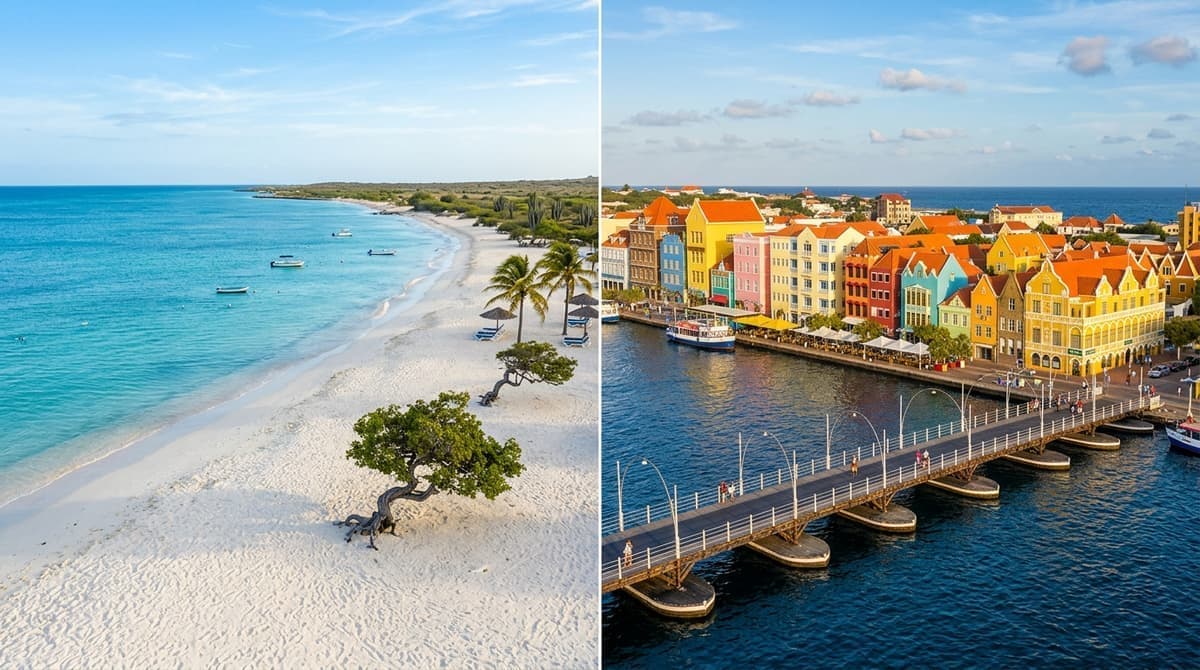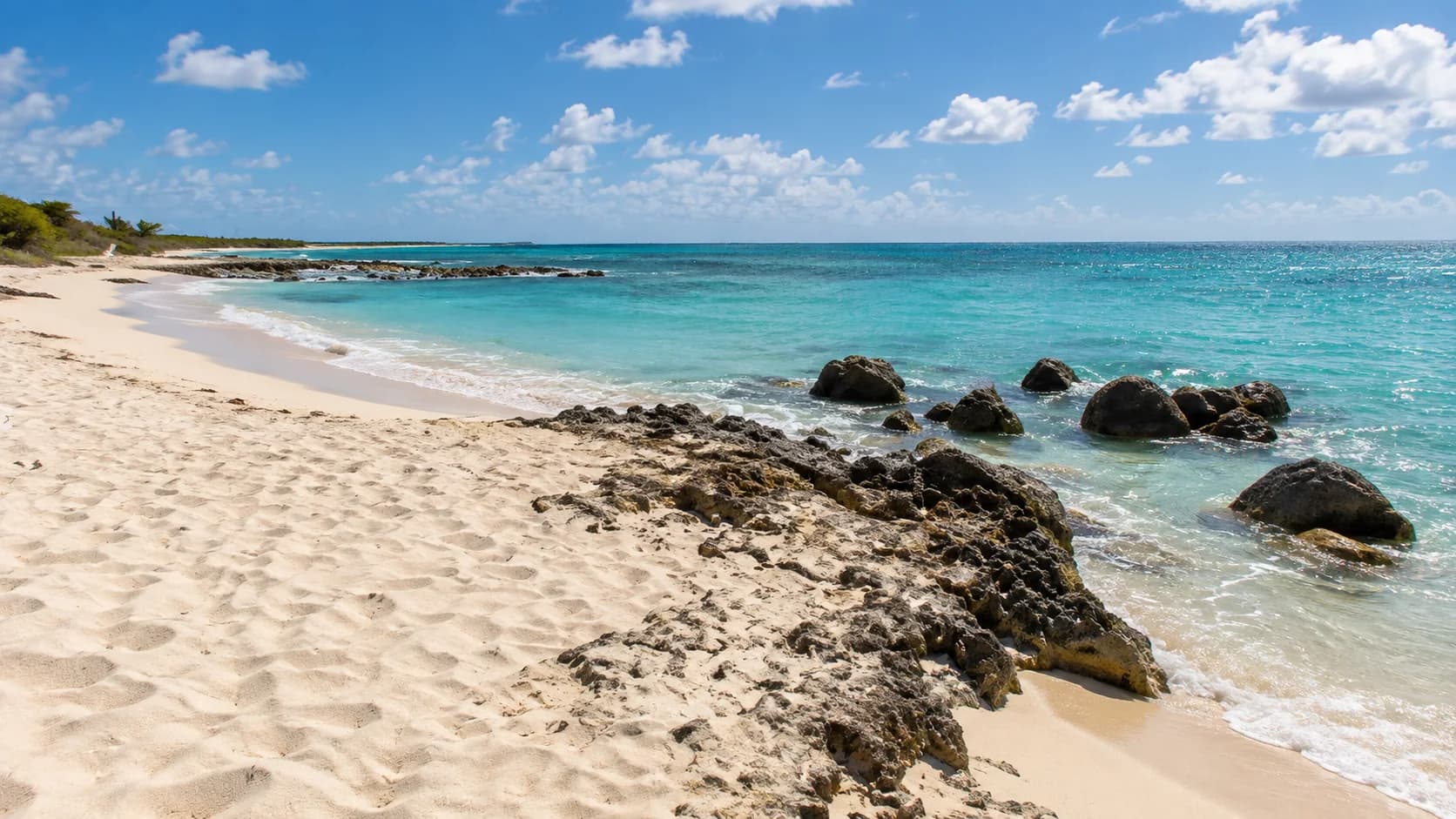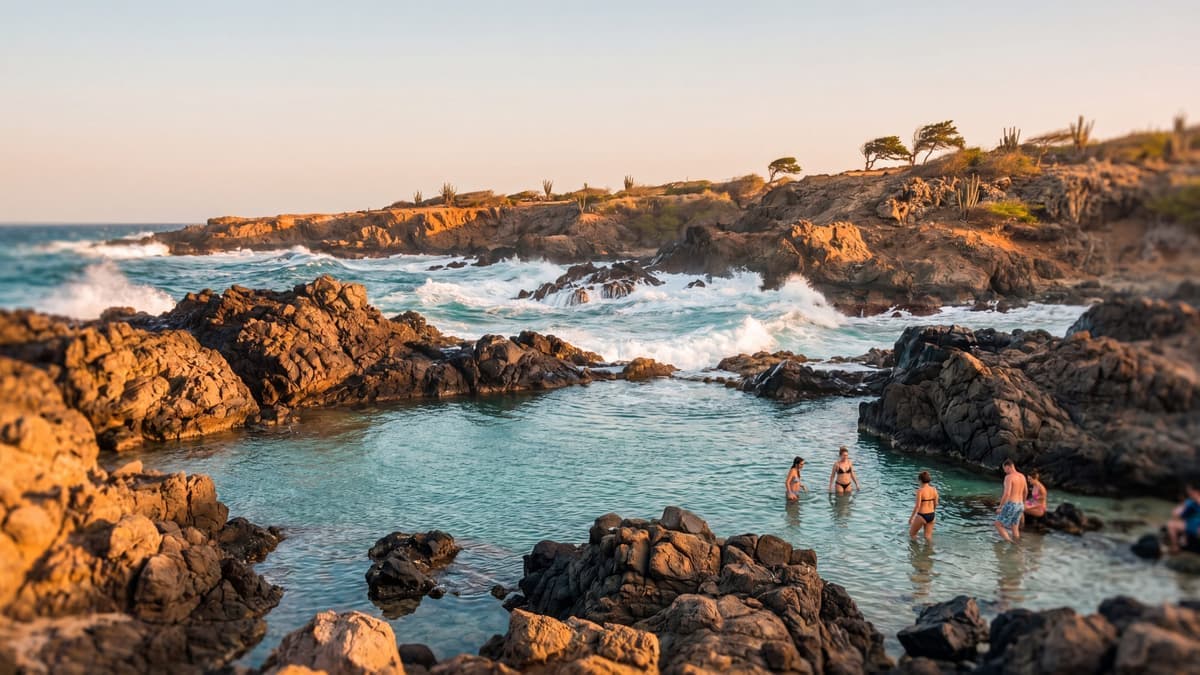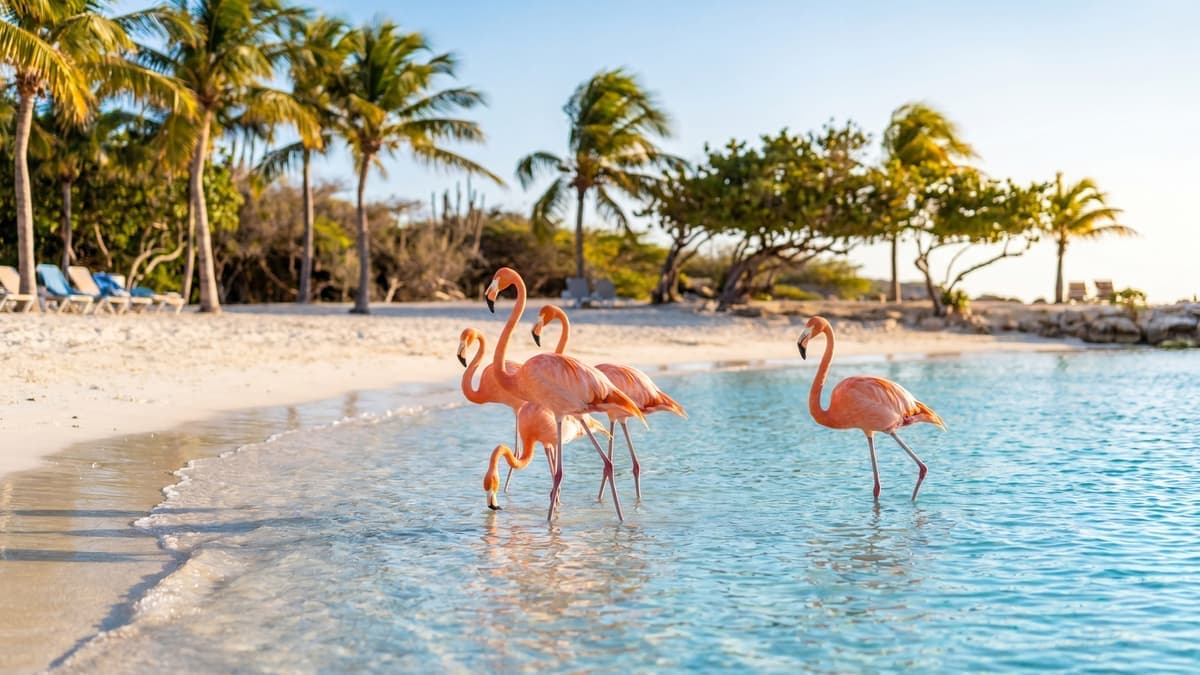
The ABC islands. Aruba, Bonaire, and Curacao. Sit just off the coast of Venezuela and share Dutch heritage, year-round sunshine, and that signature Caribbean turquoise water. But that is where the similarities end. Each island has a dramatically different personality, and choosing the wrong one for your travel style can mean the difference between a dream vacation and a disappointing one.
We have spent extensive time on all three islands, and this guide breaks down every important factor so you can pick the right ABC island. Or plan an island-hopping trip that hits all three.
Quick Overview: What Makes Each Island Unique
Aruba is the most developed, touristy, and accessible of the three. Think resort strips, white sand beaches, casino nightlife, and a polished tourism infrastructure. It is the easiest ABC island for first-time Caribbean visitors.
Curacao is the cultural capital with a UNESCO World Heritage capital city, incredible street art, diverse local cuisine, and a mix of resort and independent travel. It is the largest of the three and feels the most like a real, lived-in Caribbean island.
Bonaire is the diver's paradise. Almost the entire coastline is a protected marine park, there is virtually no nightlife, and the island attracts people who want to spend most of their time underwater. It is the smallest and quietest of the three.
Want a local to plan the whole trip?
Our concierge builds your days around what you actually want, from $149. Real people who live in Aruba.
Beaches Compared
Aruba: The Clear Winner for Beach Lovers
Aruba has the best beaches of the three islands, and it is not close. Eagle Beach consistently ranks in the top 5 beaches in the world. Wide white sand, calm turquoise water, and those iconic fofoti trees. Palm Beach is the lively resort strip with every water sport you can imagine. Baby Beach on the south tip is a calm lagoon perfect for families. Arashi and Boca Catalina offer excellent snorkeling right from shore.
Aruba's west coast beaches have calm, crystal-clear water with almost no waves. The sand is fine and white. You can walk into the water for 50 yards and still be waist-deep. For a complete breakdown, check out our Aruba beaches guide.
Beach score: 10/10
Curacao: Diverse and Dramatic
Curacao has over 35 beaches, more than the other two islands combined. The variety is impressive. From the popular Cas Abao and Grote Knip (Playa Kenepa) with their postcard-perfect coves to hidden gems like Playa Lagun, a tiny sheltered bay between two cliffs.
The trade-off is that many of Curacao's best beaches require a car to reach, and some charge $3-5 entrance fees. The sand varies from white to golden to rocky. Some beaches have steep entries. The water is just as clear as Aruba but the beach infrastructure (chairs, bars, restrooms) is inconsistent.
Grote Knip is genuinely stunning. A crescent of white sand in a cliff-lined cove with vivid blue water. It rivals anything in Aruba for pure beauty, though it is smaller and more crowded on weekends.
Beach score: 8/10
Bonaire: Functional, Not Glamorous
Bonaire is not a beach destination. Te Amo Beach near the airport and Sorobon Beach (a windsurfer haven) are pleasant but they do not compare to Aruba or Curacao. Most of Bonaire's shoreline is rocky ironshore. Perfect for shore diving entries but not for sunbathing.
If you are coming to Bonaire for the beaches, you are coming for the wrong reasons. The beach is essentially the entry point to what matters: the underwater world.
Beach score: 5/10
Diving and Snorkeling
Bonaire: World-Class, Shore-Based Diving
This is Bonaire's crown jewel. The entire coastline is the Bonaire National Marine Park, and there are over 80 marked dive sites accessible directly from shore. You rent a truck, load your gear, drive to a painted yellow stone marker, walk in, and dive a pristine reef. No boat needed. No dive guide needed (though they are available).
The coral is among the healthiest in the Caribbean because Bonaire has protected it since 1979. You will see everything from seahorses to spotted eagle rays to massive brain corals. Visibility regularly exceeds 100 feet.
Bonaire is also one of the cheapest places in the Caribbean to dive once you factor in the shore-access model. A week of unlimited shore diving with gear rental runs $200-350. Compare that to $100+ per boat dive elsewhere.
Diving score: 10/10
Curacao: Excellent and Underrated
Curacao has phenomenal diving that often gets overlooked because of Bonaire's reputation. The Mushroom Forest. An underwater landscape of giant pillar corals that look like mushrooms. Is unlike anything else in the Caribbean. Tugboat Beach has a shallow wreck perfect for snorkelers and beginner divers. The Superior Producer wreck is a world-class deep dive.
Curacao has a good mix of shore and boat diving. Shore dives at spots like Playa Kalki and Director's Bay are outstanding. Two-tank boat dives run $85-120.
Diving score: 8.5/10
Aruba: Good but Not the Main Attraction
Aruba has solid diving and snorkeling, anchored by the Antilla Shipwreck. One of the largest wrecks in the Caribbean. You can snorkel it on an Antilla shipwreck snorkel cruise. Boca Catalina and Mangel Halto offer great shore snorkeling straight off the beach. Catamaran snorkel cruises are the most popular activity on the island, and you can book a catamaran sail and snorkel trip in advance.
But the reefs are not as pristine as Bonaire's, the variety is not as great as Curacao's, and the diving is supplementary to Aruba's beach and resort experience rather than the main draw. For our complete snorkeling guide, check out the Aruba snorkeling guide.
Diving score: 7/10
Nightlife and Entertainment
Aruba: The Party Island
Aruba has the most nightlife of the three islands by a wide margin. The Palm Beach strip is lined with bars, clubs, and restaurants open late. There are over a dozen casinos. The Kukoo Kunuku party bus runs nightly bar crawls. Beach bars host live music. Oranjestad has a waterfront bar scene.
During high season (December through April), the energy is electric. You will never struggle to find something to do after dark.
Nightlife score: 9/10
Curacao: Diverse and Authentic
Curacao has a genuine local nightlife scene centered around the Pietermaai district in Willemstad. This restored neighborhood of colonial mansions is now packed with bars, restaurants, and live music venues. Mundo Bizarro, Saint Tropez Ocean Club, and Miles Jazz Cafe are standouts.
The nightlife is more authentic and varied than Aruba's. You are mixing with locals rather than staying in a tourist bubble. There is also a growing craft cocktail scene and regular cultural events.
Nightlife score: 7.5/10
Bonaire: Early to Bed
Bonaire's idea of nightlife is a sunset drink at Karel's Beach Bar followed by dinner and an early bedtime before a 6 AM dive. There are a handful of bars and restaurants, but nothing resembling a club or party scene. If you need nightlife, Bonaire is not your island.
Nightlife score: 3/10
Cost Comparison
Daily Budget Estimates (Per Couple)
Budget Tier:
- Aruba: $180-300/day (vacation rental, local food, free beaches)
- Curacao: $120-220/day (more affordable accommodations, cheaper local food)
- Bonaire: $140-250/day (moderate accommodations, diving packages offset food costs)
Mid-Range Tier:
- Aruba: $350-600/day (resort, mix of dining, activities)
- Curacao: $250-450/day (boutique hotel, varied dining, rental car)
- Bonaire: $250-400/day (dive resort, unlimited shore diving package)
Luxury Tier:
- Aruba: $700-1,500/day (high-end resort, fine dining, private tours)
- Curacao: $450-900/day (luxury hotel, upscale dining, private experiences)
- Bonaire: $400-700/day (premium dive resort, boat dives, best restaurants)
Curacao is generally the most affordable of the three due to a wider range of accommodation options and cheaper local food. Aruba is the most expensive, especially during peak season when resort rates skyrocket. Bonaire falls in the middle. Accommodations are moderate but diving packages keep costs reasonable for divers.
Groceries on all three islands are expensive since nearly everything is imported. Expect to pay 30-60 percent more than US mainland prices.
Culture and Authenticity
Curacao: The Cultural Capital
Curacao is the richest of the three islands culturally. Willemstad's Handelskade. The row of colorful Dutch colonial buildings along the harbor. Is a UNESCO World Heritage Site and one of the most photographed spots in the Caribbean. The Queen Emma floating pontoon bridge opens for ship traffic and is an experience in itself.
The island has excellent museums, a thriving art scene, the Curacao liqueur distillery you can tour, and distinct neighborhoods with different characters. The food scene is the most diverse in the ABC islands, with everything from Indonesian rijsttafel (a legacy of Dutch-Indonesian connections) to Venezuelan arepas to high-end Caribbean fusion.
Papiamentu (slightly different spelling from Aruba's Papiamento) is the local language, and the culture feels more deeply rooted and less influenced by American tourism than Aruba.
Aruba: Polished and Welcoming
Aruba has genuine culture. The Bon Bini Festival, San Nicolas street art, Aruban cuisine like keshi yena and pan bati. But the resort infrastructure can make it easy to spend an entire trip in a tourist bubble. Getting out to Savaneta and San Nicolas reveals the real Aruba, which is warm, friendly, and culturally rich.
The cultural experience in Aruba requires slightly more effort to find because the tourism machine is so well-oiled. But it is there, and it is wonderful when you seek it out.
Bonaire: Small-Town Charm
Bonaire's culture is centered around Kralendijk, a tiny capital with pastel buildings, a few museums, and a handful of restaurants. The island has a strong conservation ethic. Locals genuinely care about protecting the reef. The donkey sanctuary and flamingo watching at Goto Lake are charming local experiences.
The cultural offering is limited compared to the other two islands, but there is an authenticity to Bonaire's quiet, nature-focused community that some travelers find deeply appealing.
Getting There: Accessibility
Aruba: Easiest to Reach
Aruba has the most flights from the US by far. Nonstop service from Miami, JFK, Newark, Atlanta, Charlotte, Houston, Dallas, Philadelphia, Chicago, and more. American, Delta, United, JetBlue, Southwest, and Spirit all fly to Queen Beatrix International Airport (AUA).
Aruba also has US Customs pre-clearance, meaning you go through immigration before your return flight and arrive in the US as a domestic passenger. This is a massive convenience that neither Curacao nor Bonaire offers. For a full breakdown of what to expect, read our Aruba airport guide.
Curacao: Good Connections
Curacao's Hato International Airport (CUR) has nonstop flights from Miami, Newark, New York JFK, and Charlotte, plus connections through other Caribbean hubs. There are fewer options than Aruba but still solid. KLM flies direct from Amsterdam for European visitors.
No US pre-clearance. You will go through customs when you land in the US.
Bonaire: Requires More Planning
Flamingo International Airport (BON) has limited nonstop service from the US. Primarily from Newark, Houston, and Atlanta, and not all year-round. Many visitors connect through Curacao or Aruba on Divi Divi Air or EZ Air (small prop planes, about 30 minutes).
The limited flight options mean Bonaire trips require more planning and often cost more for airfare.
Find your hotel by month, beach & budget
Compare current Aruba rates across the major booking sites in one place, in USD. Most rooms are free to cancel.
Island Hopping: Combining the ABC Islands
If you have 10 or more days, consider combining two or all three islands. Interisland flights on Divi Divi Air and EZ Air run $80-150 one way and take 25-40 minutes.
Aruba + Curacao (10 days): The most popular combination. Spend 5-6 days in Aruba for beaches and resort life, then 4-5 days in Curacao for culture, food, and diverse snorkeling. Fly Divi Divi between the two islands.
Curacao + Bonaire (10 days): The diver-culture combo. Spend 4 days in Curacao exploring Willemstad and beach-hopping, then 6 days in Bonaire doing unlimited shore diving. The interisland flight is just 25 minutes.
All Three (14 days): Start in Aruba for 5 days of beach relaxation, fly to Curacao for 4 days of cultural immersion, then end in Bonaire for 5 days of diving. This gives you the full ABC experience.
For those planning a longer Aruba stay before hopping, our 10-day Aruba itinerary covers how to fill an extended visit before potentially adding Curacao as a day trip or short extension.
Which Island Is Best for You?
Choose Aruba if: You want the best beaches, easiest logistics, most dining and nightlife options, and a polished resort experience. Best for first-time Caribbean visitors, couples seeking romance, families with kids, and anyone who prioritizes convenience.
Choose Curacao if: You value authentic culture, diverse food, unique architecture, and want a mix of beach and exploration. Best for independent travelers, foodies, photographers, history buffs, and those who want to feel like they have discovered something real.
Choose Bonaire if: You are a diver or snorkeler and the underwater world is your primary reason for traveling. Best for certified divers, nature lovers, people who want quiet, and anyone who does not need nightlife or resort amenities.
Choose all three if: You have the time and budget to experience the full spectrum of the Dutch Caribbean. Each island is different enough that you will never feel like you are repeating yourself.
Final Verdict
There is no objectively best ABC island. Only the best one for you. Aruba wins on beaches, convenience, and entertainment. Curacao wins on culture, food, and variety. Bonaire wins on diving and tranquility.
Our recommendation for first-timers to the region: start with Aruba. It is the most forgiving island for planning, offers the widest range of experiences, and virtually guarantees a great vacation regardless of your travel style. Once you have the ABC bug. And you will get it. Curacao and Bonaire will be calling you back.
If the Dutch Caribbean shortlist reaches further north, our Aruba vs St Maarten comparison covers that island against Aruba.
For detailed guides on making the most of your Aruba visit, explore our where to stay guide, things to do guide, and restaurant recommendations. And if you want a plan built around your own dates, our free trip planner puts one together in a couple of minutes.