If you are staying in a vacation rental, condo, or any accommodation with a kitchen, grocery shopping in Aruba can save you hundreds of dollars over a week-long trip. But walking into an Aruba grocery store for the first time can be disorienting. Prices are in Aruban florins (or sometimes dollars), brands are different, and some things cost twice what you would pay at home.
This guide breaks down every major grocery store on the island, what to buy where, how prices compare to the US, and strategies for keeping your food budget under control. For the full picture of what a week in Aruba costs, see our Aruba vacation cost breakdown.
The Major Grocery Stores
Super Food
Location: Bubali, Noord, on the main road a few minutes' drive from the Palm and Eagle Beach hotel zones Hours: Monday-Saturday 7:00 AM - 8:00 PM, Sunday 9:00 AM - 6:00 PM Parking: Large lot, usually available
Super Food is the island's largest and most modern grocery store, and it is the closest thing to an American supermarket you will find in Aruba. The layout is clean and familiar, the selection is extensive, and they carry many US brands alongside Dutch, South American, and local products.
Best for: One-stop shopping, US brand familiarity, fresh produce, deli counter, bakery Price level: Mid-range to high (comparable to Whole Foods pricing) Payment: Cash (AWG or USD), credit cards, debit cards
The produce section is solid with both local and imported fruits and vegetables. The bakery makes fresh bread daily. The deli counter has prepared foods, sliced meats, and cheeses. There is a good wine and beer selection including local Balashi beer.
Pro tip: Super Food runs weekly specials advertised in the local newspaper and on their social media. If you happen to time your visit right, you can find solid deals on staples.
Ling & Sons
Location: Schotlandstraat, Oranjestad Hours: Monday-Saturday 7:00 AM - 8:00 PM, Sunday 9:00 AM - 3:00 PM Parking: Somewhat limited at the Oranjestad location
Ling & Sons is the gourmet option. If Super Food is Aruba's Kroger, Ling & Sons is its Whole Foods or Trader Joe's equivalent. The Oranjestad location is particularly impressive with a wide selection of organic products, specialty items, international foods, and a fantastic prepared food section.
Best for: Specialty and organic items, international products, prepared meals, wine selection, cheese Price level: High (premium positioning, premium prices) Payment: Cash (AWG or USD), credit cards, debit cards
The prepared food section is a hidden gem. Rotisserie chickens, salads, sushi, and hot meals ready to take back to your rental. This can actually save money compared to eating out, with prepared dinners running $12-20 per person versus $30-60+ at a restaurant.
Ling & Sons also has the best wine selection on the island, with bottles ranging from $8 everyday wines to $200+ premium bottles. Their cheese counter rivals what you would find in a European deli.
Pro tip: Their webshop delivers to most of the island, which beats a second trip into town if your rental has a fridge to fill.
Kong Hing Supermarket
Location: Caya Betico Croes, Oranjestad (main street) Hours: Monday-Saturday 8:00 AM - 7:00 PM, Sunday closed Parking: Street parking only (can be challenging)
Kong Hing is a local institution and the best value grocery store in the tourist-accessible area of Aruba. It is where locals shop for everyday essentials, and prices are noticeably lower than Super Food or Ling & Sons on many items.
Best for: Budget shopping, local products, Asian ingredients, basic staples Price level: Low to mid-range (best prices for staples) Payment: Cash preferred (AWG or USD), some cards accepted
The store is older and less polished than Super Food or Ling & Sons, but the prices reflect that. You will find a good selection of rice, beans, canned goods, snacks, and household items at the best prices in Oranjestad. The store has a particularly good selection of Asian products thanks to its Chinese-Aruban ownership. Soy sauce, noodles, rice varieties, and specialty sauces at great prices.
Pro tip: Go here for staples and basics, then supplement with specialty items from Ling & Sons or Super Food. This two-stop strategy gives you the best of both worlds.
Hilo Supermarket
Location: Multiple locations including San Nicolas, Santa Cruz, and Noord Hours: Vary by location, typically 8:00 AM - 8:00 PM Monday-Saturday
Hilo is the chain that locals in the residential areas depend on. Multiple locations across the island make it convenient wherever you are staying. Selection varies by location. The larger stores rival Super Food, while smaller ones are more like corner markets.
Best for: Convenience (nearest store to many vacation rentals), local products, everyday prices Price level: Mid-range Payment: Cash (AWG or USD), credit cards at most locations
If you are staying in Noord, Bakval, or anywhere near the hotel strip, the nearest Hilo may be your most convenient option. The prices are reasonable and the selection covers all the basics.
Chinese Mini-Markets (Toko)
Throughout Aruba, you will see small convenience stores called "tokos" or "Chinese shops". Locally owned mini-markets that are open long hours, often 7 AM to 10 PM, sometimes later. They sell basic groceries, drinks, snacks, beer, and household items.
Best for: Quick needs, cold drinks, late-night snacks, beer at better-than-hotel prices Price level: Varies (some items are cheap, others have convenience markups)
These are your late-night lifeline when you realize you need more beer, forgot to buy breakfast supplies, or just want a cold drink on a Sunday afternoon. Every neighborhood has at least one.
Want a local to plan the whole trip?
Our concierge builds your days around what you actually want, from $149. Real people who live in Aruba.
Price Comparison: Aruba vs US
Almost everything in Aruba is imported, which means grocery prices are significantly higher than the US mainland. Here is a realistic comparison:
| Item | US Price (approx) | Aruba Price (approx) | Markup |
|---|---|---|---|
| Gallon of milk | $4.00 | $6.50-8.00 | 60-100% |
| Dozen eggs | $3.50 | $4.50-6.00 | 30-70% |
| Loaf of bread | $3.50 | $4.00-5.50 | 15-55% |
| Chicken breast (per lb) | $4.00 | $5.50-7.00 | 35-75% |
| Ground beef (per lb) | $5.50 | $7.00-9.00 | 25-65% |
| Rice (5 lb bag) | $4.00 | $5.00-6.50 | 25-60% |
| Pasta (1 lb) | $1.50 | $2.50-3.50 | 65-130% |
| Cereal (box) | $4.00 | $6.00-8.00 | 50-100% |
| Local beer (6-pack Balashi) | N/A | $7.00-9.00 | N/A |
| Imported beer (6-pack) | $10.00 | $12.00-16.00 | 20-60% |
| Wine (decent bottle) | $10.00 | $12.00-18.00 | 20-80% |
| Fresh fish (per lb) | $10.00 | $8.00-12.00 | 0-20% |
| Bottled water (1.5L) | $1.50 | $1.50-2.50 | 0-65% |
Key takeaway: Expect to pay 30-60% more on average, with some items (especially processed/packaged goods) approaching double US prices. Fresh fish is the notable exception. It is locally caught and competitively priced. And remember, Aruba's tap water is perfectly safe to drink, so you can skip bottled water entirely.
What to Stock Up On
Breakfast Supplies (Save the Most Here)
Hotel breakfasts cost $15-30 per person. Making your own breakfast saves $20-50 daily for a couple.
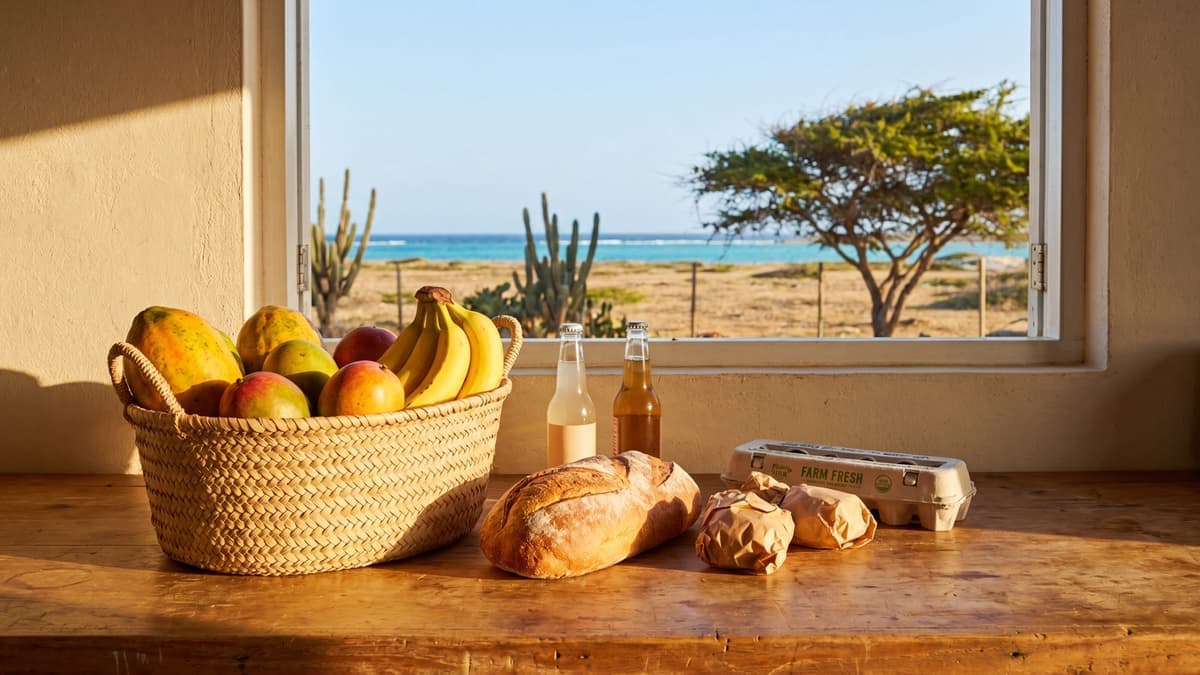
Buy: eggs, bread, butter, jam, coffee, milk, fruit, yogurt, cereal. A week of breakfasts for two costs $30-45 in groceries versus $200-400+ at hotel restaurants.
Snacks and Beach Supplies
Buy: chips, crackers, nuts, fruit, cookies, granola bars. Pack a cooler bag (buy one at the store for $5-10) and stock it with cold drinks and snacks for beach days.
Cold drinks from a hotel beach bar cost $5-8 each. A cooler with store-bought beers, sodas, and water is a fraction of that.
Alcohol
The markup on alcohol at restaurants and bars is significant. A beer at a bar costs $5-8. A six-pack from the grocery store costs $7-12. Wine by the glass runs $10-15 at restaurants; a full bottle from Ling & Sons costs $10-25.
Stock your rental with:
- Balashi beer (local, refreshing, affordable)
- A couple bottles of wine
- Rum for cocktails (Mount Gay or Brugal are available and affordable)
- Mixers (tonic water, Coca-Cola, juices)
- Limes (cheap and abundant)
Your sunset drinks on the balcony will cost a quarter of what they would at a beach bar.
Lunch Supplies
Buy: deli meats, cheese, sandwich bread, condiments, lettuce, tomatoes. Making sandwiches to bring to the beach saves $15-30 per person per lunch compared to beach bar dining.
Local Products to Try
- Funchi mix. Instant Aruban polenta, just add water ($3-4)
- Pan bati mix. Sweet cornbread mix ($3-4)
- Hot sauces. Local Aruban pepper sauces make great souvenirs ($4-7)
- Dutch products. Stroopwafels, hagelslag (chocolate sprinkles for toast), Gouda cheese
- Bolo di cashupete. Cashew cake, a local specialty sometimes available at bakeries
Money-Saving Strategies
The Two-Store Strategy
Do your main shopping at Kong Hing or Hilo for basics (rice, beans, eggs, bread, canned goods, cleaning supplies) and then hit Super Food or Ling & Sons for specialty items, fresh produce, and prepared foods. This saves 15-25% versus doing everything at one premium store.
Cook Breakfast, Snack for Lunch, Eat Out for Dinner
The most cost-effective approach for vacation rental travelers. Make a full breakfast at your rental ($5-8 for two), pack snacks and sandwiches for the beach ($5-10 for two), and then enjoy one nice restaurant dinner ($60-120 for two). Your daily food cost: $70-140 for two versus $120-250+ eating every meal out.
Buy Local When Possible
Local fish from Zeerovers-style fish markets is fresher and cheaper than imported protein. Local produce (when available) is generally more affordable. Balashi beer is cheaper than imported brands.
Check Expiration Dates
Because everything is shipped to Aruba, some products sit on shelves longer than they would in a US store. Check dates on dairy, bread, and packaged goods. This is not a safety issue. Stores are responsible about pulling expired items. But freshness can vary.
Bring Non-Perishables from Home
If you have room in your luggage, bringing a few things from home at US prices makes sense:
- Spice packets and seasonings
- Coffee (Aruba coffee prices are high)
- Protein bars and specialty snacks
- Electrolyte packets (see our Aruba drinking water tips)
- Ziplock bags (overpriced on the island)
- Reef-safe sunscreen (significantly cheaper in the US)
Use the Prepared Food Counter
Ling & Sons and Super Food both have excellent prepared food sections. A rotisserie chicken ($8-12), a container of salad ($5-8), and a baguette ($3-4) makes a complete dinner for two for under $25. Restaurant quality at a fraction of restaurant prices.
Practical Shopping Tips
-
Bring reusable bags. Aruba has been reducing plastic bag usage. Most stores charge for bags or have switched to paper.
-
Shop early on Sundays. Most stores have reduced Sunday hours (closing at 1-3 PM). If you need Sunday supplies, go in the morning.
-
Prices may be in Florins. Some stores show AWG prices, some show USD, some show both. The conversion is 1.80 AWG = $1 USD. A quick mental trick: divide the florin price by 2 and add 10% for an approximate USD conversion.
-
Credit cards are widely accepted at the major stores. Smaller tokos may prefer cash.
-
Parking at Oranjestad stores can be tight, especially at Kong Hing (street parking only). Go early morning for easiest parking.
-
Buy a cooler bag on day one. A $5-10 insulated bag from any grocery store will save you hundreds on cold drinks and beach snacks over your trip.
-
Do not over-buy. It is tempting to stock up like you are at Costco, but with a kitchen and stores nearby, you can shop every 2-3 days and keep things fresh.
Browse 32 vetted Aruba experiences
Most confirm instantly with free cancellation up to 24h, and 4 of them are free.
Where to Find Specific Items
Reef-safe sunscreen: Ling & Sons has the best selection. Super Food also carries some options. Cheaper if you bring from home.
Baby supplies: Super Food and Ling & Sons carry diapers, formula, and baby food. Selection is more limited than the US, so bring specialty items.
Gluten-free products: Ling & Sons is your best bet with a dedicated section. Super Food has some options as well.
Vegan/vegetarian: Both Ling & Sons and Super Food carry plant-based milks, tofu, and meat alternatives. Selection is growing but still limited compared to US stores.
Fresh seafood: The fish counter at Super Food is good. For the freshest catch, visit the fish market at the Oranjestad harbor or buy directly at Zeerovers in Savaneta.
The Bottom Line on Grocery Shopping in Aruba
Grocery prices in Aruba are 30-60% higher than the US mainland, but cooking even some of your meals saves dramatically compared to eating every meal at restaurants. A couple cooking breakfast daily and packing beach lunches can save $500-800 over a 7-day trip. Enough to pay for a catamaran cruise and a fine dining splurge.
The stores are clean, well-stocked, and manageable once you know which ones to visit. Use the two-store strategy, focus your grocery spending on breakfast and snack supplies, and save your restaurant budget for the dinners that make Aruba dining special.
For more money-saving strategies, check out our Aruba budget travel guide and our first-time visitor tips.